'Our findings represent a significant advancement in understanding colorectal cancer.'
Ian Tomlinson (@OxfordOncology) comments on the most comprehensive analysis to date of the genetic makeup of #ColorectalCancer, just published in @Nature.
https://t.co/R5yjwmU3yA
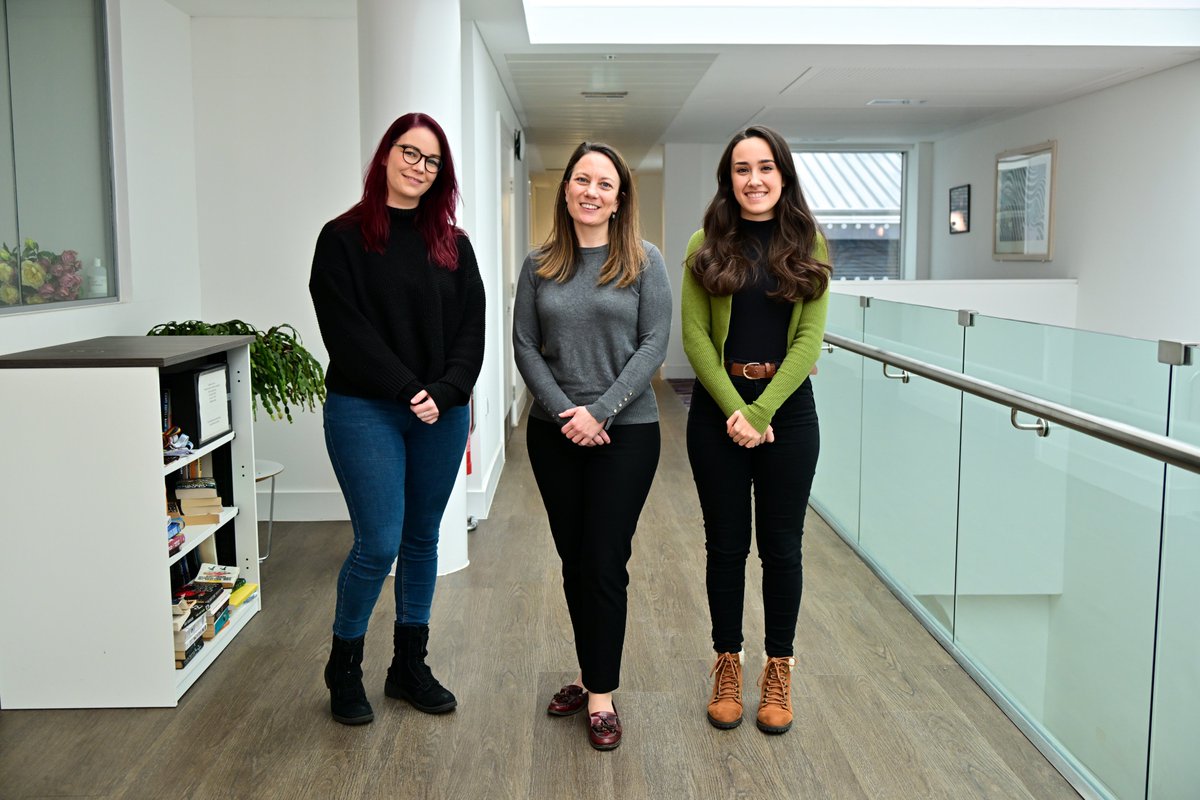
@Nature Incredibly honoured to have contributed the subgroup analysis to this paper. It was a privilege to work with such amazing and super talented people. Phenomenal teamwork and dedication!🧬🙌🔬#ColorectalCancer#CancerResearch#Teamwork
Yesterday I presented a webinar about solving The Red Line Problem with PyMC. You can watch the video and get the slides here:
https://t.co/1413XdiL7w
Come for the Bayesian statistics -- stay for the Banana of Ignorance!
New paper! Maximally dysregulating APC should provide the maximal selective advantage to colorectal cancer cells? Doesn't appear so.
We quantify 'just-right' APC inactivation, at scale, in a variety of contexts, in our preprint:
https://t.co/jolh5RoIBC
Finally published. In this paper we showed that despite heterozygous exonuclease deficiency of pold1 has a minor effect on the germline and somatic mutation rate. Homozygous deficiency increase mutation rate by 2 orders of magnitude and causes cancer https://t.co/fFBK2eeMo8
Does a significant GSEA result also mean your groups are biologically distinct for that signature?
In short; no
To avoid inaccurate interpretation, we developed “dualGSEA” to distinguish Statistical Significance & Biological Distinction
Preprint: https://t.co/C9JXHHgTrj
🧵👇
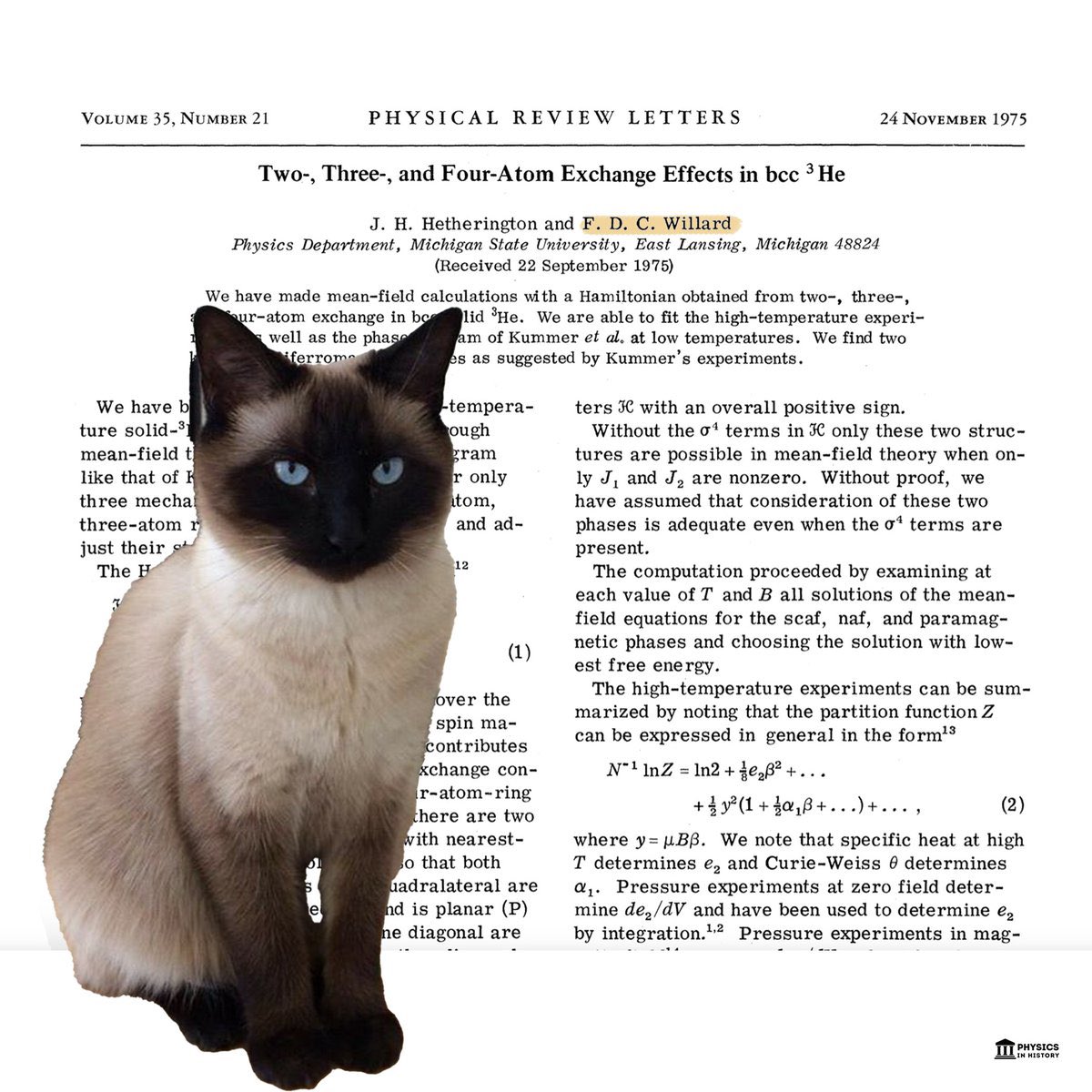
A cat co-authored a scientific paper in 1975, when his owner, a physicist named Jack H. Hetherington, decided to add him as a second author to avoid changing the plural pronouns in his manuscript. The cat’s name was Chester, and he was given the pen name F.D.C. Willard, which stood for Felix Domesticus, Chester. Willard was also the name of Chester’s father. The paper was about atomic behavior at different temperatures, and it was published in Physical Review Letters, a prestigious physics journal.
Chester’s co-authorship was revealed when Hetherington sent some signed copies of the paper to his friends and colleagues, and included the cat’s paw prints as his signature. The story became widely known and amused many people in the scientific community. Chester even published another paper as the sole author in 1980, in a French popular science magazine. He died in 1982, but he is still remembered as the first and only cat to have authored a published scientific paper.
We are looking for a Research Assistant to join our fabulous new group at @EdinUni_IGC studying liver plasticity and cancer. Come join our team!
https://t.co/kE45vOeZX2
My "Friends don't let friends make bad graphs" repository has reached 1000+ stars on GitHub! I can't believe it! Thanks everyone for the interest and support. Gonna add this to my CV. 😂😂😂
https://t.co/KeSsEcrvOk
Did you miss out on our summer #bioinformatics workshops? Good news - lectures are now available on our Youtube channel, with all our course materials on https://t.co/yhHzCuyqmz . Keep reading for a listing of everything we've recently published (for free!)... 🧵#OpenScience
Really excited to share our paper out today! We show how germline de novo mutation rates and signatures are associated with parental germline mutation status in POLE, POLD1 and MUTYH 🧬
Huge thanks to everyone involved! @EdinCRC@group_tomlinson@clpalles
https://t.co/L6bseAK5Xz
We are now hiring a core-funded PDRA position
***Please share!!***
Interested in #sustainable#invertebrate#aquaculture#immunology & molecular biology??
Enquiries welcome.
Full details here 👇
https://t.co/GkxLzvszzG
📣Our work on identifying cancer subtypes by splicing signatures came out @NatureComms https://t.co/UKVs8ZhMXb 😀🎊Beautiful work led by the incredibly talented David Wang 👏💪. Why am I excited about it? 🧵 1/n
In the LLM-science discussion, I see a common misconception that science is a thing you do and that writing about it is separate and can be automated. I’ve written over 300 scientific papers and can assure you that science writing can’t be separated from science doing. Why? 1/18