Llegué a NY en agosto de 1982 para estudiar en la universidad de Columbia . El primer domingo fui ansioso a comprar el New York Times . La revista del diario llevaba en la etapa a Paul Volcker , entonces Chairman de la reserva federal . El título del artículo era : volcker , la persona más importante del mundo . Es lamentable que el presidente Trump se dedique a perseguir a la institución que vela por la estabilidad de la economía mundial . Nunca se vivió algo así
Las preguntas difíciles pensando más allá del resultado.
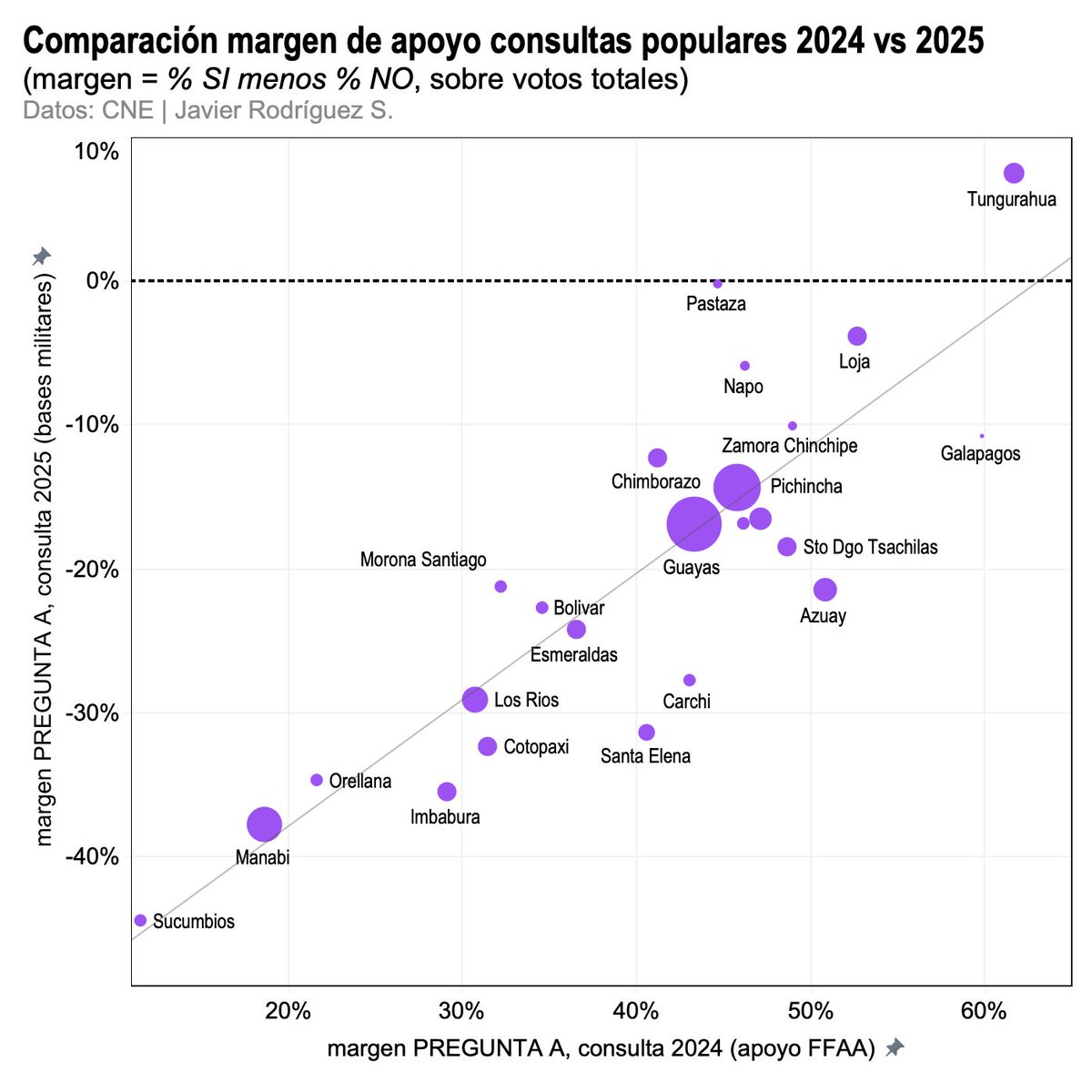
Ganó el NO y eso es una derrota para el gobierno, pero la derrota es por mucho o por poco y con respecto a qué.
Puntos de comparación:
-Consulta de 2024 (abril)
-Resultados 2da vuelta 2025
1/6
How do you manage your todo's?
Usually it's not about the tool, but the constraints, and the clear rigidness, to not add more work to your plate than needed.
AI-powered data monopolies are consolidating power and shaping societal norms. The danger lies not in the technology itself but in the vested interests of those who control it. Democracy could be sidelined for corporate profit. Structural change and urgent regulation are needed.
Las históricas tensiones políticas entre el presidente y su vice en la Argentina, son un juego de niños en relación a lo que está pasando en Ecuador con Noboa y Verónica Abad. Una grave crisis institucional por delante
If @realDonaldTrump followed through on his promise of higher tariffs, prices for goods consumed by lower-income people – including his supporters – would rise dramatically. In the best case, his promises are empty, writes Simon Johnson. https://t.co/p0uiR1zPhU
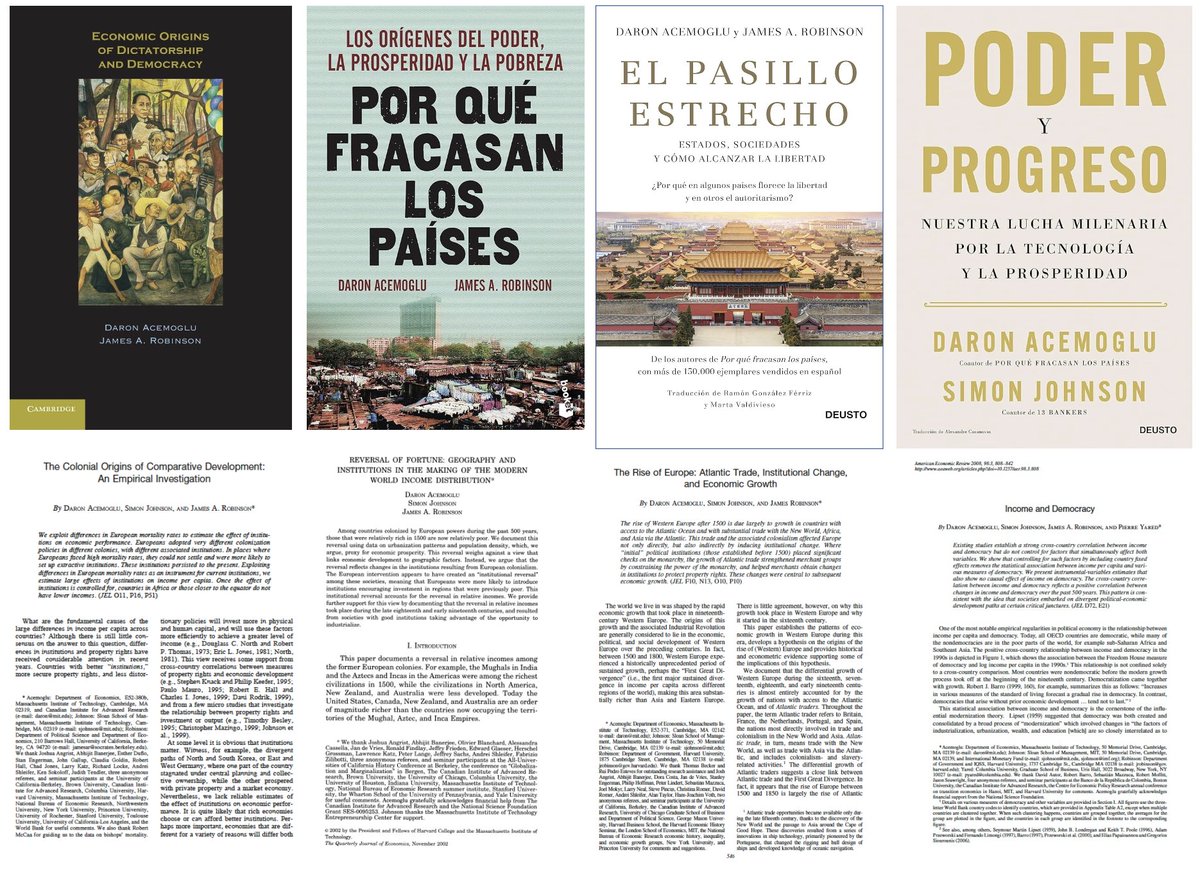
Los cuatro libros por los que Acemoglu, Johnson y Robinson - que recibieron hoy el Premio Nobel de Economía - son conocidos en la amplia comunidad de científicos sociales y más allá, junto con cuatro de sus influyentes artículos.
🧵con enlaces a los 4 artículos
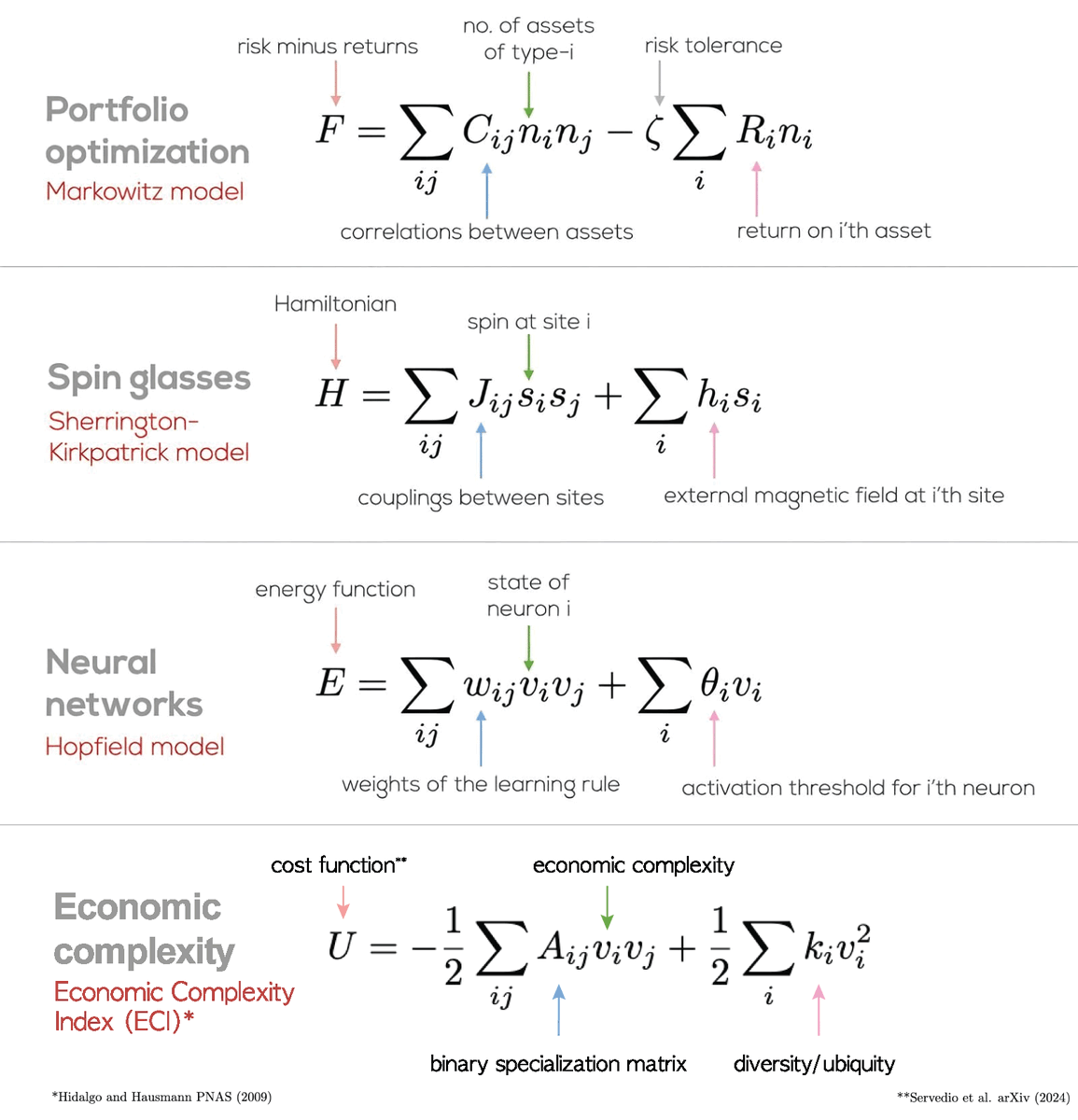
I couldn't resist. Since this week seems to be a lot about the boundaries between AI and physics, I couldn't help but notice that economic complexity also seems to fit the mold :-)
New PNAS paper.
Historical GDP per capita data is scarce, but data on the places of birth, death, and occupations of famous individuals is abundant. In this paper we estimate the historical GDP per capita of hundreds of regions in Europe and North America using a machine learning model that leveraged data on about 500k famous biographies. Our estimates more-or-less quadruple the availability of historical GDP per capita estimates for the last 700 years.
So why use biographies to augment historical GDP per capita data?
Biographical data contains information about people who might have contributed directly to economic growth, like James Watt, or that were attracted to wealthy places looking for patrons, like Michelangelo. So we--mainly Philipp (@philippmkoch)--used this data to construct hundreds of features describing each European region. Then, we trained a machine learning model to find the features that explained most of the variance in a cross-validation test, where we split regions multiple times into a training set and a test set. On average, the model explained about 90% of the variance in GDP per capita of the regions it had not seen during training.
But we wanted to go further, and Philipp really went to town by looking at different ways to validate our estimates. We found our estimates correlate positively with historical measures of wellbeing, church building activity, urbanization, and body height. We also used these measures to reproduce the basic Atlantic trade result of Acemoglu, Johnson, and Robison and to explore the economic consequences of the famous Lisbon earthquake of 1755.
But what I personally loved most about this project, other than working with @philippmkoch and @ViktorStojkoski, is that it shows that we can use machine learning methods not only to explore the future, but the past. There is a bright and growing future in the use of machine learning for economic history.
Hope you enjoy the paper and the data. You can find links to the paper and a data exploration tool in the first comment.
Nadie debiera estar legitimando un tipo de democracia en el que proscribir a candidatos opositores, destituir o meter presos a alcaldes no oficialistas a días de los comicios o reprimir brutalmente a manifestantes dejó de ser "criminalizacion de la protesta social"
Es validar
Europa gira a la derecha, pero…
1) Los extremistas ganan en Francia y son segundos en Alemania, pero retroceden en los países nórdicos e ibéricos.
2) La derecha italiana se desmarca: es atlantista, pro-europea y anti-Putin.
3) Los europeístas mantienen mayoría en el Parlamento.
Chips Act is attracting insane amount of investment. US is now on pace to add more investment in electronics manufacturing construction this year alone as it did TOTAL from 1996 until passage of the chips act in 2020 (funding not yet secured then, but investment started)