🧠🤖New preprint
Algorithmic Grammar of Flexible Cognition:
A Walk through Latent Operations
https://t.co/pgBHEw0TtB
Flexible cognition moves adaptively btwn cognitive modes. We formalize it as navigation, a walk over latent operations in neural space as much as the environment.
How does a speech plan become fluent movement?
In Nature Human Behaviour, led by @dsuseendar:
Intracranial recordings reveal how hierarchical speech plans become continuous motor sequences across planning, articulation, and monitoring networks.
https://t.co/OHCKfcAARY
1/5
The manuscript from the second part of my PhD is out. Thanks to @Cogan_G & Dr. Jonathan Viventi for their support throughout!! and sincere thanks to patient participants for volunteering their time to our research.
Two new papers from the lab in Nature Human Behaviour and Nature Communications, spanning the neural mechanisms of speech production and new approaches to speech neurotechnology!
🧠 Speech plans → fluent motor sequences
🗣️ Speech BCIs across people
Links below 👇
1/3
Our new review paper lead by CNAP PhD Student @jimmyjam6290 and @EgnerLab is now published in Neuroscience & Biobehavioral Reviews: “Insights into the neural mechanisms supporting cognitive stability and flexibility from human intracranial EEG.”
https://t.co/oTMSXixbeu
1/5
We’re happy to present @zspald11 's work on shared neural representations of speech production across individuals! We find that patient-specific data can be aligned to a shared space that preserves speech information, enabling cross-patient speech BCIs. https://t.co/Oe1Q5KPsj3
Our language neuroscience lab (https://t.co/2uchBfwFQd) is looking for a new lab manager/FT RA to start in the summer. Apply here: https://t.co/FRJqOYaA03 We'll start reviewing apps in early Mar. (Unfortunately, MIT does not sponsor visas for these positions, but OPT works.)
It was great fun contributing to this whitepaper, and it turned into a great read. A deep dive into a number of important and new research directions in neuroAI.
Last week, undergraduate Raymond Xiong presented @JasonHsiehMD and colleagues’ new paper on network analysis & machine learning techniques to explore how focal cortical stimulation interacts with complex brain networks for language function. This 🧵 explores our thoughts (🤍& ❔)
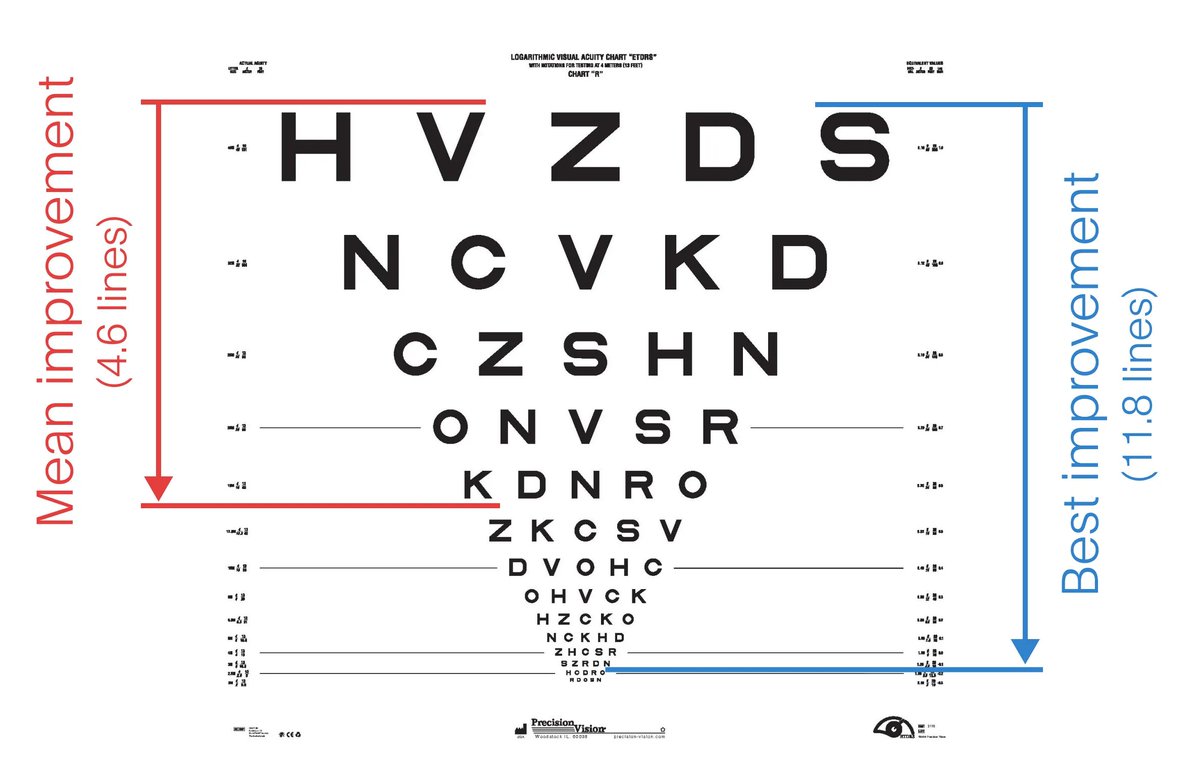
I'm super excited to share some results from the Science PRIMA retinal prosthesis clinical trial, including that it's exceeded its main efficacy endpoint with a mean acuity improvement of 4.6 EDTRS lines. Trial participants are almost completely blind due to macular degeneration. There are no good options available to these patients today.
Our preprint on the transition from planning to execution for speech production using intracranial recordings is online at @biorxiv_neurosci! https://t.co/aPbihyQvKO
1/10
I defended my PhD yesterday. A sincere thanks to Dr. Cogan and Dr. Viventi for their support and supervision for the past 5 years. Looking forward to continuing my journey in the field of cognitive science s!
Congratulations @dsuseendar! It's been a pleasure and a privilege having you in the lab. I'm proud of all the great work you've done here and I'm excited to see what you accomplish next!🧠🤩
Last week, Kumar Duraivel (@dsuseendar, Senior PhD candidate) presented Matt Leonard, @GwilliamsL and colleagues paper on neuronal mechanisms of speech perception in the STG using state-of-the-art ultrahigh-density Neuropixel probes. This 🧵 explores our thoughts (🤍 & ❔)
Our recent lab paper led by @dsuseendar was one of the top 25 most read Nature Communications articles in health sciences in 2023! Big thanks to the whole lab and our collaborators for all of their hard work! #NCOMTop25
https://t.co/IIyA7O6hOC