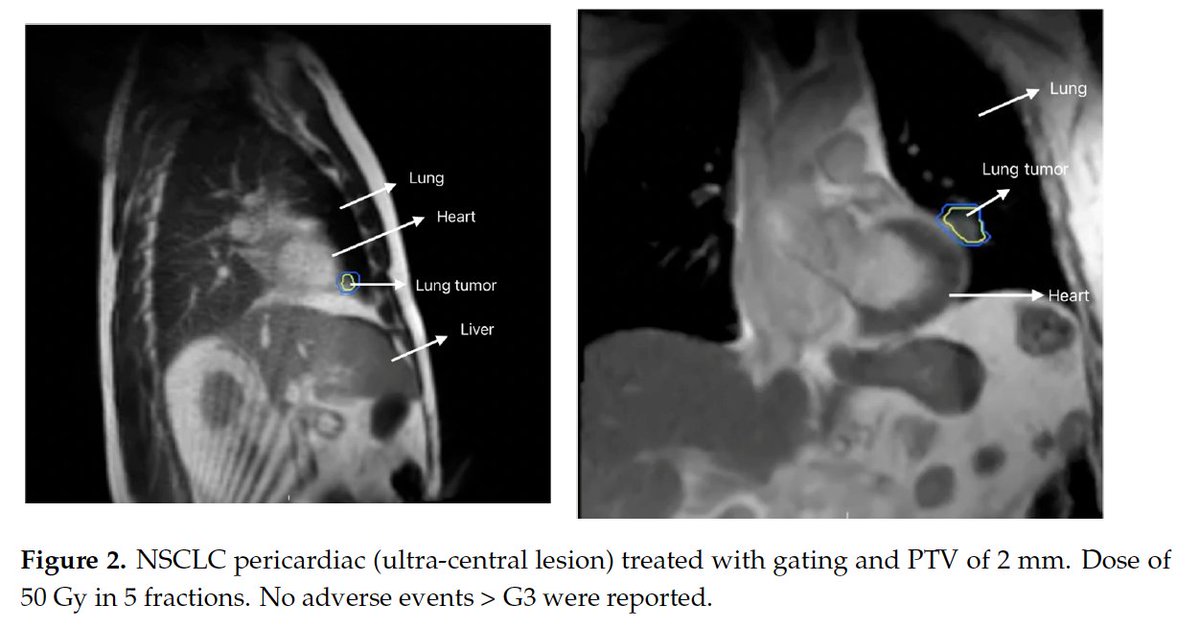
¿Cómo es la radioterapia adaptativa guiada por resonancia magnética en el cáncer de pulmón?
Mediante el uso de imágenes simultaneas, es posible monitorear el desplazamiento tumoral y ajustar cada sesión de tratamiento.
Un trabajo con la valiosa participación de la Dra. Dulce Urías @dulceua del @INCanMx.
#INCanInvestiga #INCanPublica
Con la participación de la Dra. Dulce Urías del @incanMX, este trabajo analiza la radioterapia corporal estereotáctica guiada por resonancia magnética en el lecho prostático: un estudio prospectivo de seguridad, tolerabilidad y resultados de calidad de vida reportados por los pacientes.
#INCanInvestiga #PublicacionesINCan
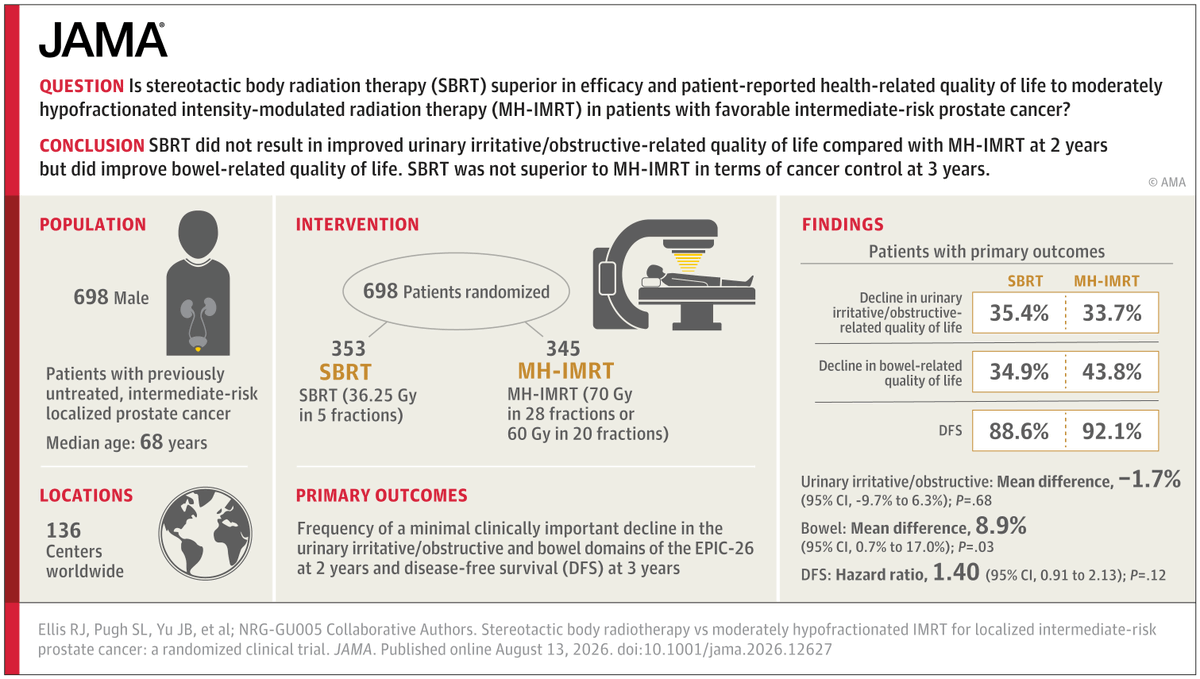
Among patients with localized intermediate-risk #ProstateCancer, stereotactic body #Radiotherapy was not superior to moderately hypofractionated intensity-modulated radiation therapy for disease-free survival.
https://t.co/t1dPq0kcVJ
Is whole-pelvic radiotherapy still justified for everyone with high-risk prostate cancer—or are we treating beyond the evidence?
Article 🗞️
https://t.co/SdAepBeqbH
Whole-pelvic Versus Prostate-only Radiotherapy in Clinically Node-negative High-Risk Localised Prostate Cancer: A Systematic Review and Meta-analysis with Reconstructed Individual-patient Data
A meta-analysis of five phase III trials involving 5,172 patients found that whole-pelvic radiotherapy ☢️ (WPRT) does not 🚫 improve overall survival compared with prostate-only radiotherapy (PORT) in high-risk localized #ProstateCancer
Apparent progression and metastasis-free benefits were driven entirely by one PSMA-staged, single-centre trial and disappeared when excluded.
✅ Reconstructed individual-patient data confirmed these findings. Routine elective pelvic irradiation therefore remains unsupported, with potential for modest late toxicity.
@josedsh, @Julia_Aumatell, @jgomezrivas, @alongi_filippo, @CZamboglou, @NicosiaMd, @Antoniojconde, @fcounago, @lsanjosemanso, @oscar_buisan@OncoAlert @LPCCC27
@Silke_Gillessen@AOmlin@ProfKHerrmann@weoncologists
🚀 Our meta-analysis comparing whole-pelvic vs prostate-only RT in cN0 high-risk prostate cancer is now published.
WPRT did not improve OS, and the progression benefit disappeared after excluding one PSMA-enriched single-centre trial.
🔗 https://t.co/S9vdhzcef2~
🎗️ World Radiotherapy Awareness Day
Radiotherapy is not just machines, technology or dose.
It is biology, precision, innovation and teamwork — always with the patient at the center.
Proud to be a radiation oncologist and part of a field that never stops evolving.
#RadOnc
🚀 New publication!
Our prospective study shows that MR-guided adaptive SBRT to the prostate bed after radical prostatectomy is safe and feasible, with no Grade ≥3 toxicity, no Grade ≥2 GI toxicity, preserved quality of life.
🔗https://t.co/R7Oxzbwx3U
👏Thanks to all authors!
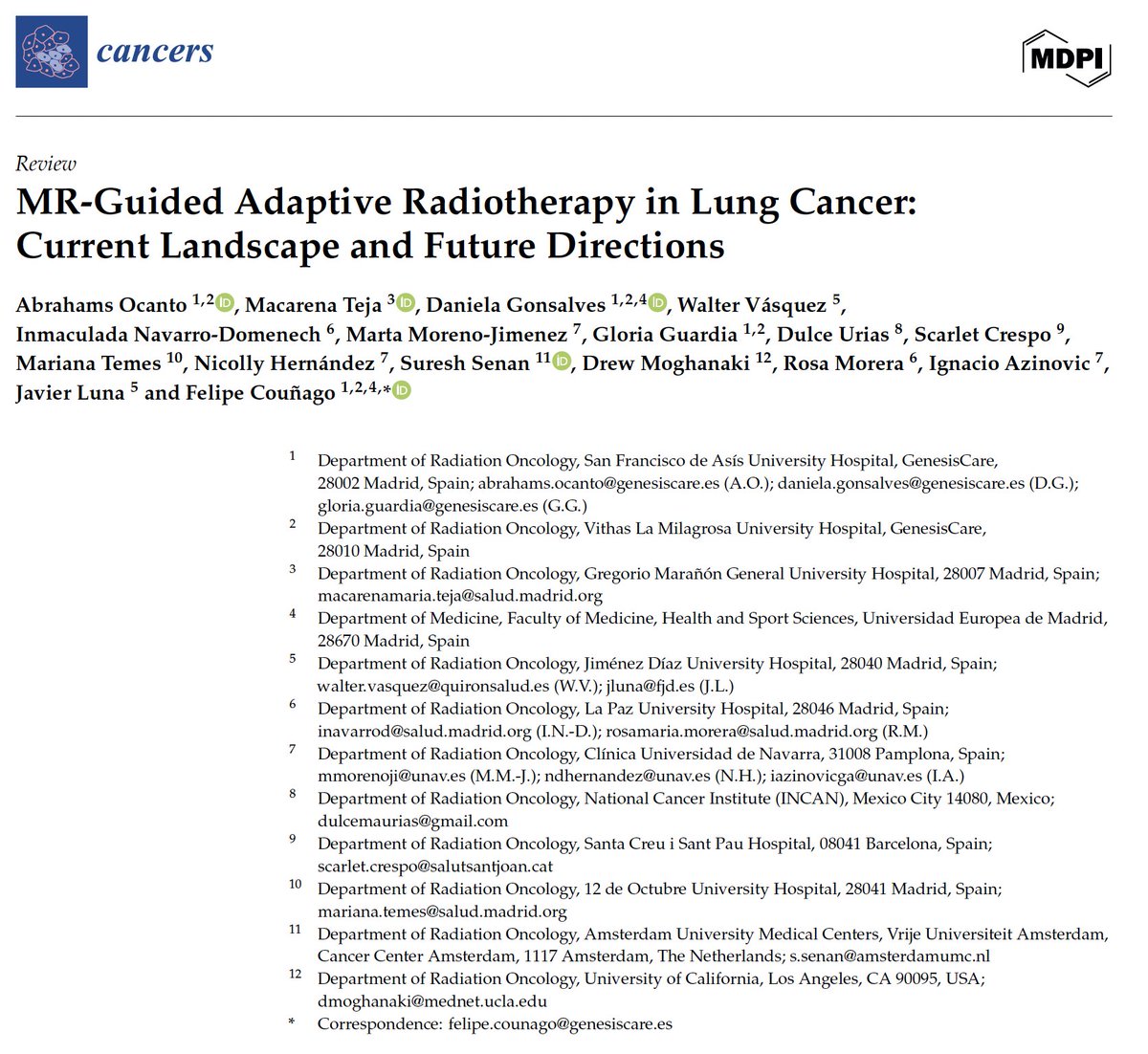
📢 New publication in @Cancers_MDPI !
Our review explores the current role of MR-guided adaptive radiotherapy in lung cancer, with particular potential in central/ultra-central tumors, locally advanced NSCLC and re-irradiation
https://t.co/sdS2QYLAmB
🙏Thanks to all co-authors!
🔴Online now: Chemoradiotherapy versus short-course radiotherapy for response-adapted organ preservation in early-stage and intermediate-stage rectal cancer (STAR-TREC): 12-month results of a randomised, phase 2/3 trial
📉https://t.co/mSUhxInQDn
&
✏️https://t.co/saMgPZlObo
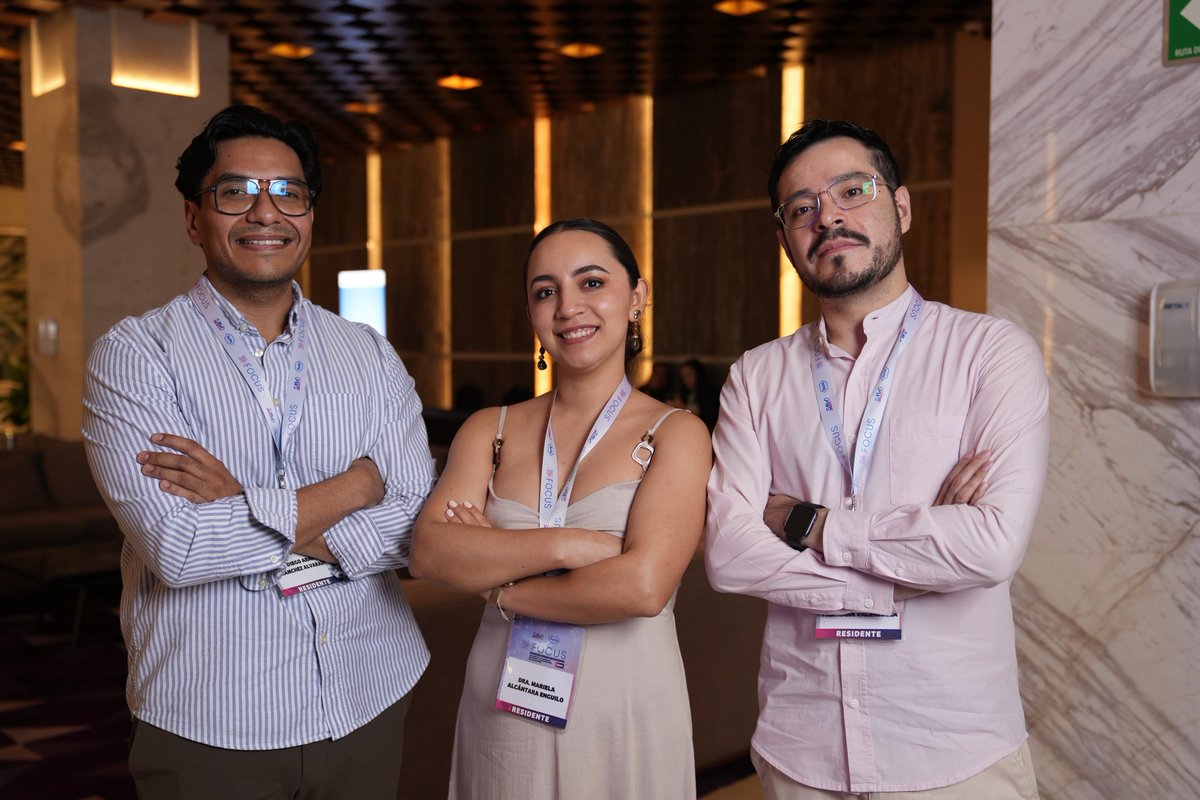
En FOCUS 2026, cada argumento encontró una respuesta y cada postura tuvo que sostenerse frente a una mirada distinta.
Los residentes llevaron la discusión más allá de una respuesta correcta o incorrecta: defendieron criterios, confrontaron perspectivas y pusieron a prueba su capacidad para analizar, responder y decidir bajo presión académica.
Cada enfrentamiento abrió nuevas preguntas. Cada réplica obligó a reconsiderar certezas. Y cada diferencia de opinión se convirtió en una oportunidad para profundizar en el razonamiento clínico.
Porque debatir también es una forma de aprender: escuchar otras perspectivas, cuestionar las propias decisiones y construir argumentos cada vez más sólidos.
En Mérida, la intensidad no estuvo únicamente en el ambiente. También estuvo en cada discusión, en cada respuesta y en cada decisión defendida hasta el final.
#FOCUS2026 #SMeO #Oncología #EducaciónMédica #DebateClínico
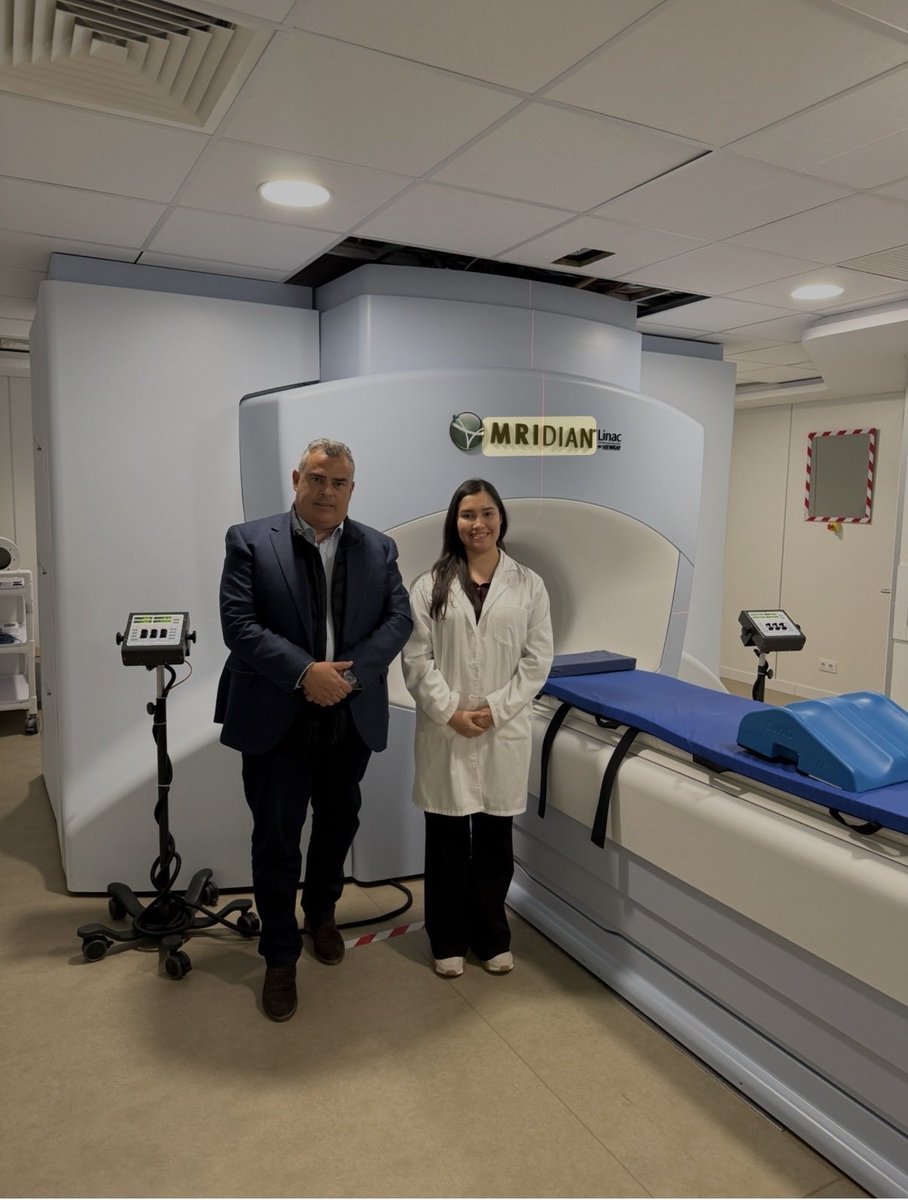
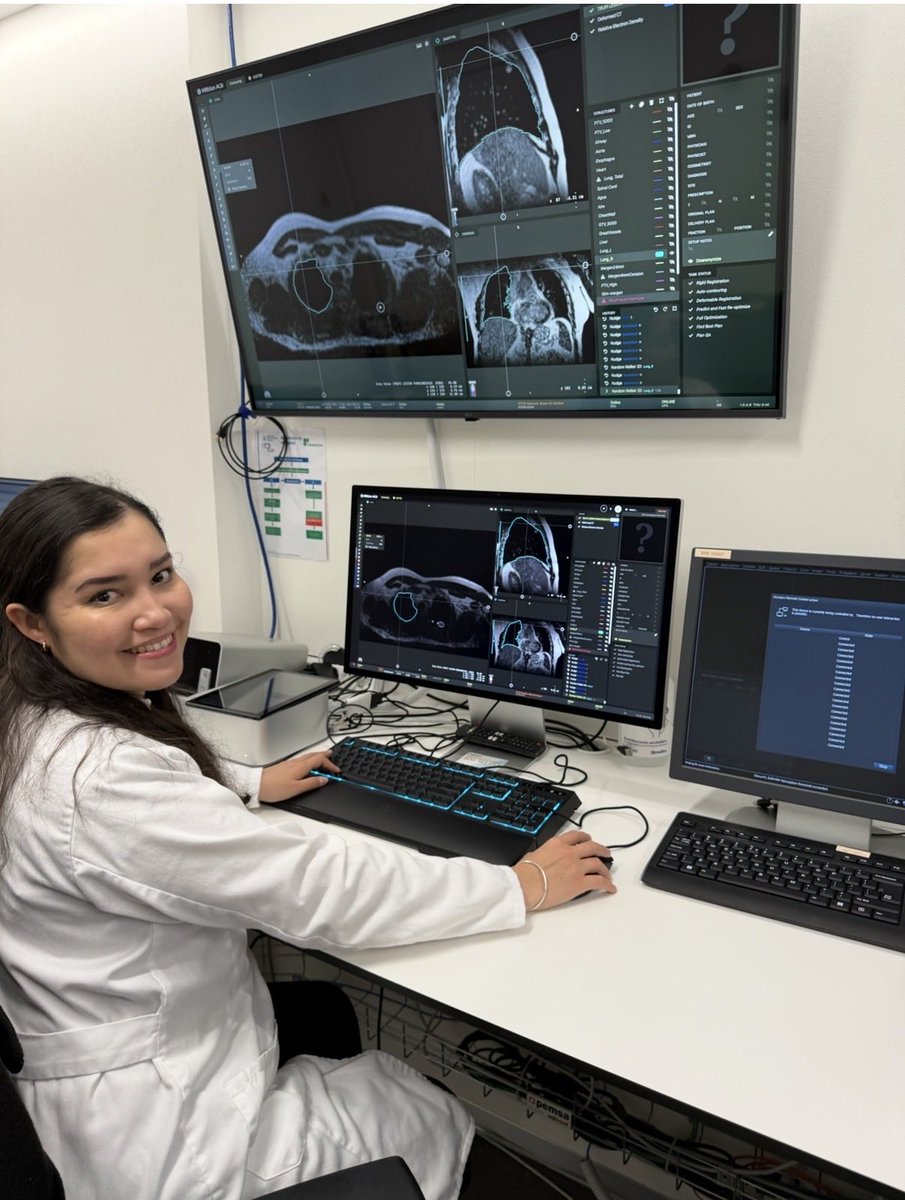
La Dra. Dulce Urias 🇲🇽 (INCAN) finaliza su fellowship en GenesisCare Madrid 🇪🇸
🔬 Radioterapia adaptativa con MR-Linac e Investigación
👏 Rotante ejemplar
¡Gracias por todo, Dulce! Mucho éxito ✨
#Radioterapia#MRLinac#Oncología
From @JAMA_current: #Obesity is associated with higher risk for 12 #cancer types and accounts for approximately 10% of annual new cancer cases in the US.
📄 This Review summarizes the biological pathways connecting obesity and cancer development. https://t.co/IRR2YtuWFN
Radiation oncology is changing fast.
But radiation can still injure normal tissue.
An excellent review in @NEJM explains how modern RadOnc is reducing that risk:
-Precision planning
-Adaptive radiotherapy
-Biologic personalization
-AI-assisted treatment design
the goal is simple: maximize tumor control while protecting normal tissue
https://t.co/Kvj2WKgDKX @OncoAlert
#ASCOGU26 🚨 CYTOSHRINK Trial - SBRT + Ipi/Nivo in de novo mRCC
Can we replace cytoreductive nephrectomy with SBRT in the IO era? 🎯
Phase II randomized trial testing primary kidney SBRT + Ipilimumab/Nivolumab vs Ipi/Nivo alone in untreated IMDC intermediate/poor-risk clear cell mRCC.
🧪 Design
• 2:1 randomization
• SBRT 30-40 Gy in 5 fractions between cycles 1-2
• Primary endpoint: 12-month PFS
• n = 67 (target 78)
• Median follow-up: 23.5 months
👥 Baseline
SBRT arm had worse disease biology
• More T3/T4 tumors 70% vs 46%
• Larger primary tumors
• More liver metastases 23% vs 8%
📊 Efficacy (ITT)
• 12-mo PFS: 35% vs 48%
HR 1.29
• ORR: 33% vs 42%
• 18-mo OS: 59% vs 70%
No PFS improvement with addition of SBRT.
📊 Per-protocol (received 4 cycles)
• 12-mo PFS: 46% vs 56%
• ORR: 50% vs 44%
• 18-mo OS: 74% vs 79%
🛡 Safety
Grade 3-4 AEs: 23% vs 29%
No new safety signals from SBRT.
🧠 Takeaway
Early cytoreductive SBRT to the primary did not improve 12-month PFS when added to Ipi/Nivo. However, baseline imbalances favoring the control arm and small sample size limit conclusions.
The nephrectomy vs radiation cytoreduction question in the IO era remains open.
@OncoAlert@myesmo@esmo_open@asco@larvol
#GU26 #OncoTwitter #KidneyCancer