It is dangerous to believe things just because you want them to be true. You can get tricked if you don’t question yourself or others, especially people in authority.
Anything that’s truly real can stand up to scrutiny.
— Carl Sagan
#PPOD: One Hour of Satellites 🛰️
This image shows #satellites crossing the night sky above the northern #Atacama Desert in Chile over just one hour. It is a stack of a time-lapse video taken on 15 October 2025 about two hours after sunset. A few streaks are caused by planes and can be easily identified by their blinking colored lights, but most trails are due to satellites.
In the foreground, we see the dome of ESO’s Extremely Large Telescope (ELT), the world’s largest optical/infrared telescope, currently under construction atop Cerro Armazones. Behind it, we see the lasers of ESO’s Very Large Telescope (VLT) at Paranal Observatory, 22 km away from the ELT.
Credit: F. Kamphues, @ESO / M. Kornmesser
#planetaryscience
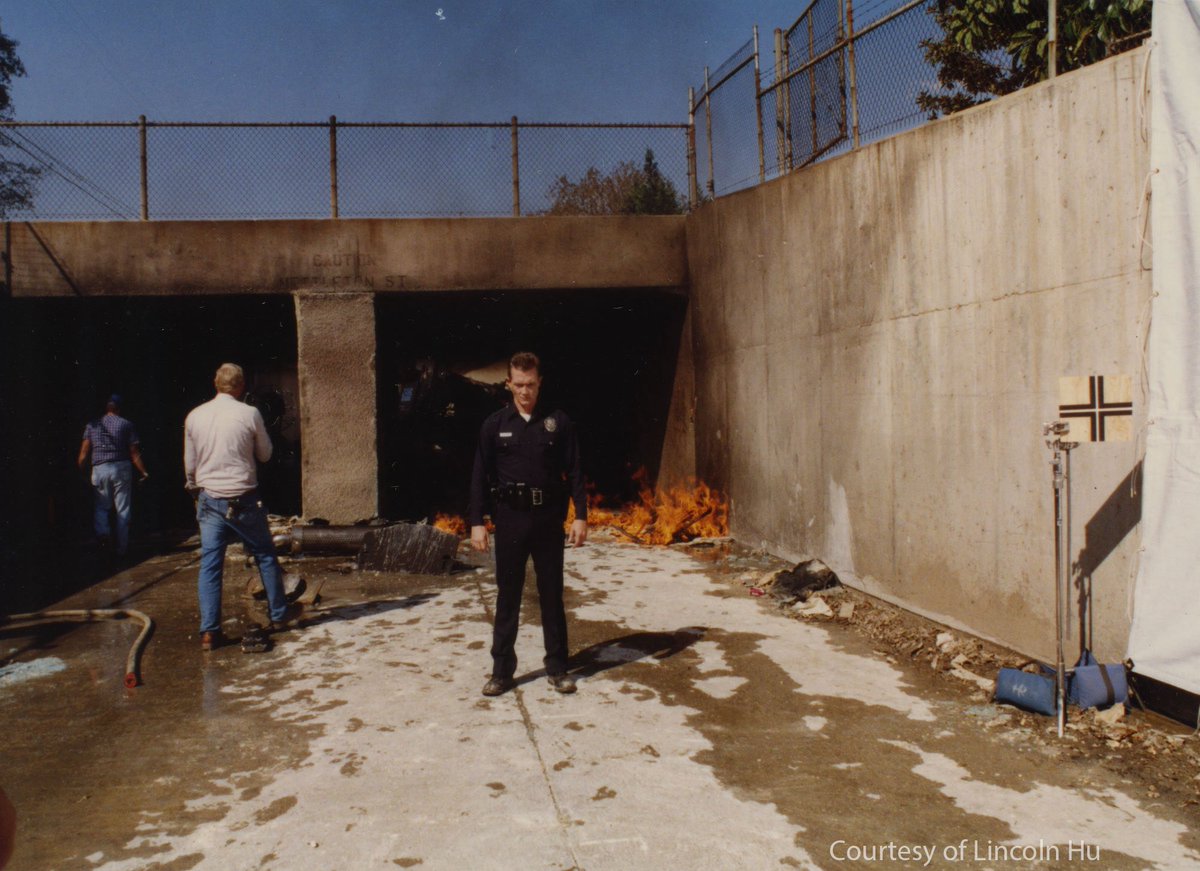
During production of Terminator 2: Judgment Day–now celebrating its 35th anniversary–the ILM CG crew shot plate reference photography on location with director James Cameron and the live action team. CG shot supervisor Lincoln Hu generously shared these images from his personal archives, which he snapped while some of T2's most iconic moments were being filmed. It was up to Lincoln and his ILM colleagues to bring the digital T-1000 character to life within these live action shots. Among the ILM team were visual effects supervisor Dennis Muren, assistant visual effects supervisor Mark Dippé, and CG animation supervisor Steve Williams, seen here alongside Hu in an early "selfie" shot in the reflection of their chrome sphere.
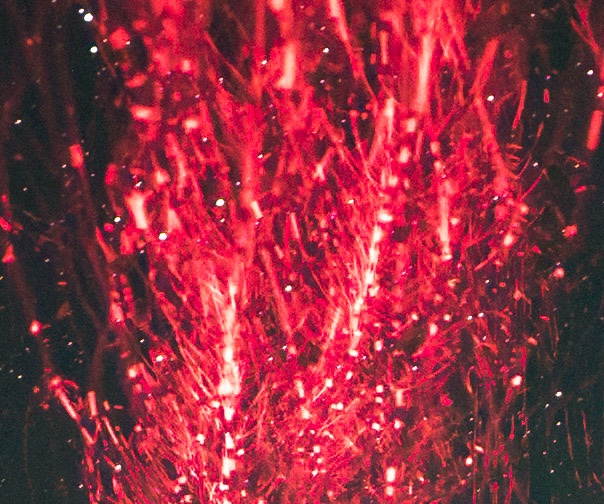
🎵Baby, you’re a firework!🎆
#RadioImageoftheWeek Composite image of the Orion Molecular Cloud 1 (OMC-1), a dense and active star factory about 1,500 light-years from Earth.
Roughly 500 years ago ... ⤵️ (1/4)
🚨 Pet Safety Reminder 🚨
Fireworks can cause pets to panic and run away. Keep them indoors, keep them calm, and make sure their ID tags and microchip information are current.
One night of preparation can prevent a lifetime of heartbreak.
Please share to help spread the word. 🐾
Two of the four RS-25 engines that will help launch @NASAArtemis III have arrived at @NASAKennedy. Together, the engines generate over 2 million pounds of thrust at liftoff, powering the SLS rocket for the first 8 minutes of flight.
🔗 https://t.co/njPcmlrih0
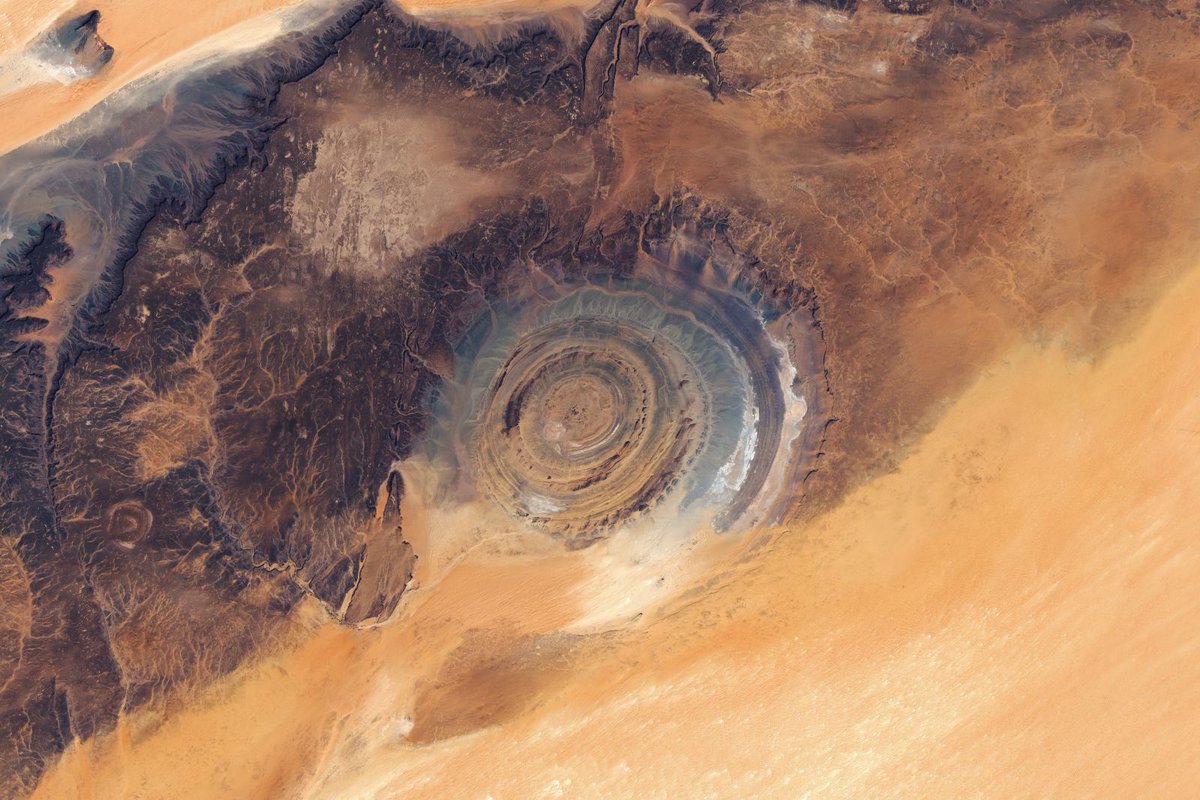
#PPOD: Eyeing the Richat Structure 👁️
In a remote part of northern #Mauritania, on the Adrar Plateau, lies a desert landscape that appears to be shaped primarily by natural forces. The region's most eye-catching feature when seen from above is the Richat Structure—a large geologic formation made of concentric ridges on the eastern side of the plateau.
The 40-kilometer-wide structure was initially thought to be an impact crater. However, researchers later showed that it is actually a deeply eroded geologic dome formed by the uplift of rock above an underground igneous intrusion. Over time, differing erosion rates among rock types in the exposed upper dome led to the development of circular ridges known as cuestas. The orange and gray colors reflect differences in sedimentary and igneous rock types across the structure and the surrounding landscape.
Credit: @NASAEarth Observatory/Lauren Dauphin
#planetaryscience
@SETIInstitute Another hypothesis based on physics & naturally occurring geological processes would also include impact ejecta & subsequent ShockBubble formation.
After plasma impact event magmatic crust is ejected across Earth & into space, has to land somewhere.🖖🏽
https://t.co/y2IwAkbHYD
118 years ago today, an asteroid exploded over Siberia, flattening an estimated 80 million trees.
On June 30, 1908, an asteroid or comet roughly 30 meters (100 feet) across, entered Earth’s atmosphere and exploded high above the remote Tunguska region of Siberia. The blast leveled approximately 80 million trees across 2,150 square kilometers (830 square miles).
The explosion is estimated to have released energy roughly 1,000 times greater than the atomic bomb dropped on Hiroshima. Had it occurred over a major metropolitan area, an entire city could have been devastated. Fortunately, it happened in one of the most remote regions on Earth, and no confirmed fatalities are known.
Every year on June 30, the global space community marks Asteroid Day, commemorating the Tunguska event and reminding us that near-Earth objects (NEOs) pose a real, natural hazard. Detecting, tracking, and characterizing these objects is one of the best ways to protect our planet.
That’s why The Planetary Society funds astronomers searching for NEOs. Investing in planetary defense today helps safeguard our world for future generations. 🌎
Shooting scenes for ‘Prehistoric Planet: Ice Age’ -->
Puppet passes, and the art of the nature doco, without animals to film.
An excerpt from the new issue #61 of @beforesmag, featuring the on-set shoot involving Practic Creations and @Framestore.
https://t.co/ToW0zDIaID
I was shooting storms in some prime jet conditions in Oklahoma, and almost got a gigantic jet right by me. This is one of those cloud-top features that could develop into a GJ with just a little more juice. Crazy and beautiful plasma