AI agents are leaving the browser. 🤖🚚
@Samsara's Beyond 2026 keynote wasn't about writing emails or generating code.
It was about AI helping fleets, warehouses, job sites, and supply chains make better decisions in the physical world.
Here's what stood out. 👇
@venturetwins@robertmclaws Same thing. I was macro tracking and told it I sometimes binge eat on weekends...suddenly it would only send an eating disorder hotline #
I bruteforced it by literally telling it exactly what I meant by binge and saying I used exaggerated language.
It's far too strict though.
@karpathy I keep specific degradation instructions in agents.md. It is imperfect.
E.g. prioritize things from L30d ~forget things I've mentioned >6 months ago.
I think the "off the shelf" experience will get better once models remember more "trends" and fewer "facts"
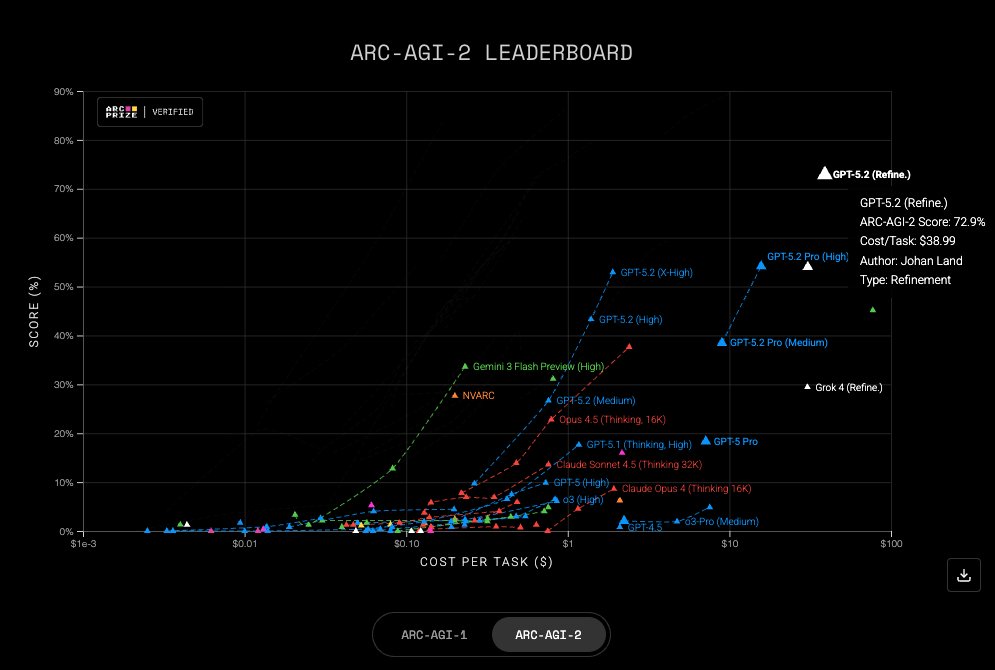
New SOTA public submission to ARC-AGI:
- V1: 94.5%, $11.4/task
- V2: 72.9%, $38.9/task
Based on GPT 5.2, this bespoke refinement submission by @LandJohan ensembles many approaches together
@patrickc In places with permanently posted or aerial speed traps, there's always signage about that.
And, when there are DUI checkpoints, those are also advertised.
What's the difference?
@xleaps I've been experimenting with cursor atop obsidian on all of my docs (notes, PRDs, musings, etc.) and it looks like it just may become my default - it's amazing. Having all of that context & avoiding re-uploading each time makes a huge difference.
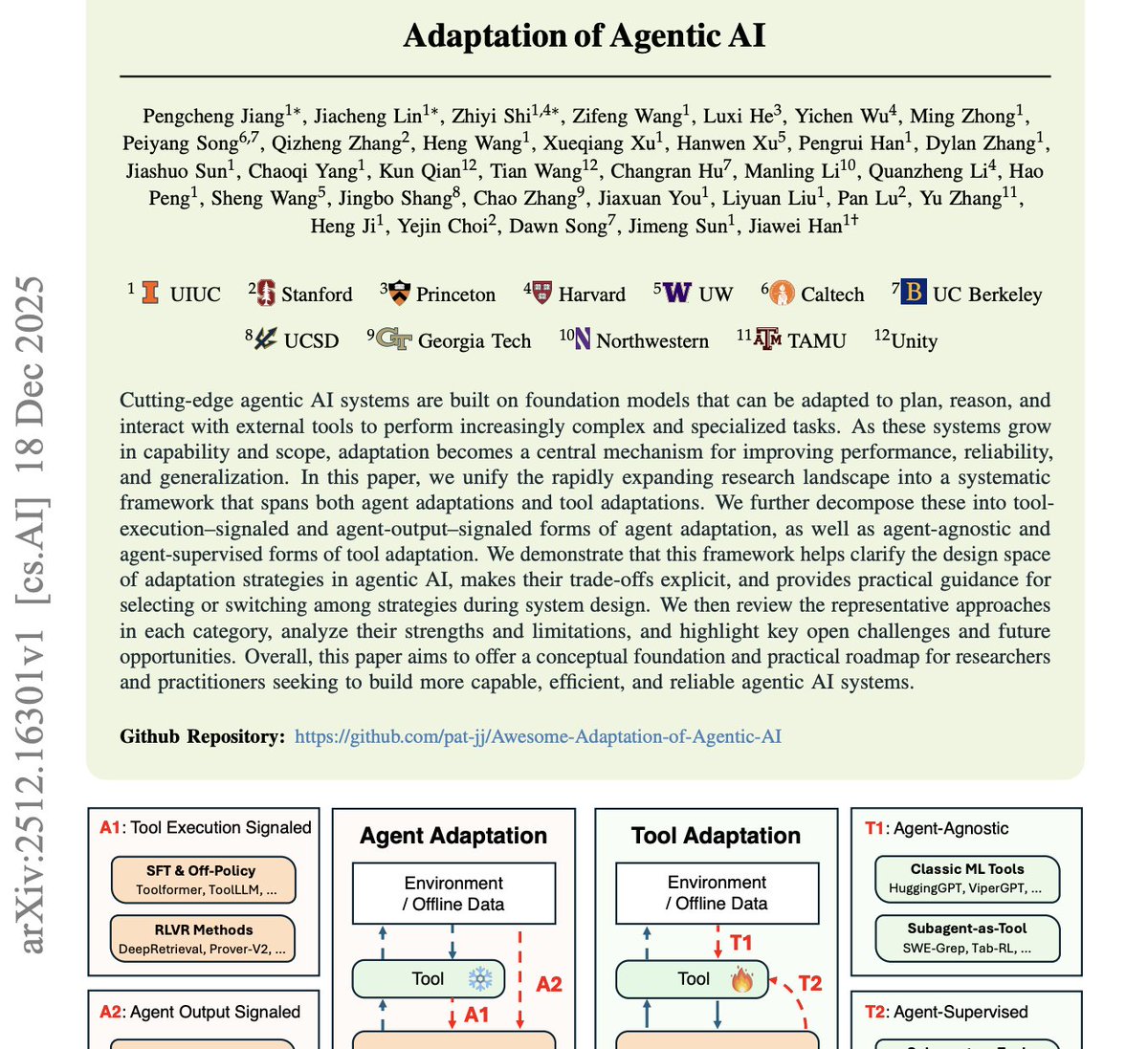
This paper from Stanford and Harvard explains why most “agentic AI” systems feel impressive in demos and then completely fall apart in real use.
The core argument is simple and uncomfortable: agents don’t fail because they lack intelligence. They fail because they don’t adapt.
The research shows that most agents are built to execute plans, not revise them. They assume the world stays stable. Tools work as expected. Goals remain valid. Once any of that changes, the agent keeps going anyway, confidently making the wrong move over and over.
The authors draw a clear line between execution and adaptation.
Execution is following a plan.
Adaptation is noticing the plan is wrong and changing behavior mid-flight.
Most agents today only do the first.
A few key insights stood out.
Adaptation is not fine-tuning. These agents are not retrained. They adapt by monitoring outcomes, recognizing failure patterns, and updating strategies while the task is still running.
Rigid tool use is a hidden failure mode. Agents that treat tools as fixed options get stuck. Agents that can re-rank, abandon, or switch tools based on feedback perform far better.
Memory beats raw reasoning. Agents that store short, structured lessons from past successes and failures outperform agents that rely on longer chains of reasoning. Remembering what worked matters more than thinking harder.
The takeaway is blunt.
Scaling agentic AI is not about larger models or more complex prompts. It’s about systems that can detect when reality diverges from their assumptions and respond intelligently instead of pushing forward blindly.
Most “autonomous agents” today don’t adapt.
They execute.
And execution without adaptation is just automation with better marketing.