@EASLedu brings you the latest on #liver research & education. Visit #EASLCampus
-----------------
EASL does not express any political opinion.
RT ≠ endorsement
How should we approach the risk of cholangiocarcinoma in patients with PSC?
Who should undergo surveillance? What should that surveillance involve? And which changes should trigger concern?
🎙️ In this episode of Talk Liver To Me, experts tackle the practical challenges of translating CCA risk into everyday clinical care, including how to discuss that risk with patients without creating unnecessary anxiety.
Listen now on EASL Campus: https://t.co/XxhS7BHPLV
Spotify: https://t.co/7c3mGZYNJ3
Apple Podcasts: https://t.co/9rqVdc5ZnQ
Join us tomorrow for an #EASLGGR exploring two cases of rare genetic causes of #cholestasis!
Discover how to approach complex genetic variants, interpret findings in novel genes, and navigate diagnostic challenges in clinical practice.
More info and registration below👇👇
@KeitelVerena@JesusMBanales@PSCSupportUK
🧬 From genetic discovery to clinical relevance: how do we connect the dots in cholestasis?
Our upcoming #EASLGGR will use a clinical case to explore the challenges of evaluating newly identified cholestasis-associated genes and their potential implications for patient care.
📅 Wednesday, 18 November, 18:00 CET
Register here: https://t.co/I1r5XUtqf1
🩺 LIVER MATTERS: LET'S PUT LIVER HEALTH ON THE PRIMARY CARE AGENDA!
Liver disease is a growing healthcare challenge, yet it is often under-recognised and diagnosed too late.
How can we change this? And how can primary care professionals play a greater role in improving liver health?
🎥 Discover the Liver Matters Webinar: Clinical Basics in Primary Care
Developed in partnership with WONCA, this educational initiative brings together experts from primary care and hepatology, alongside patient representatives, to explore practical ways to improve the recognition and management of liver disease.
In this introductory episode, meet our experts:
🔹 Dr. Kush Abeysekera – Consultant Hepatologist and Senior Lecturer, University of Bristol.
🔹 Dr. Helen Jarvis – General Practitioner and Academic Clinical Lecturer, Newcastle University.
Get a first look at the topics, challenges and practical insights that will shape this educational series.
📅 The webinar series starts on 26 November 2026 at 12:00 CET.
Don't miss out – register now and be part of the conversation!
👉 Explore the introductory episode and register here:
https://t.co/461cEnBv2b
Whether you work in primary care, hepatology or another area of healthcare, this is an opportunity to strengthen your knowledge and contribute to better liver health.
Better awareness. Earlier recognition. Better liver health.
Cholangiocarcinoma surveillance in PSC remains one of the most challenging areas of clinical practice.
In the latest Talk Liver To Me, experts discuss:
👉 Who should undergo surveillance
👉 The roles and limitations of imaging
👉 What should trigger referral or further investigation
👉 How to manage inconclusive findings
Tune in this Wednesday to catch up on this discussion!
🔗 https://t.co/PJkvZR9cMP
Register for the EASL Liver Cancer Summit: https://t.co/6mNah7wMAD
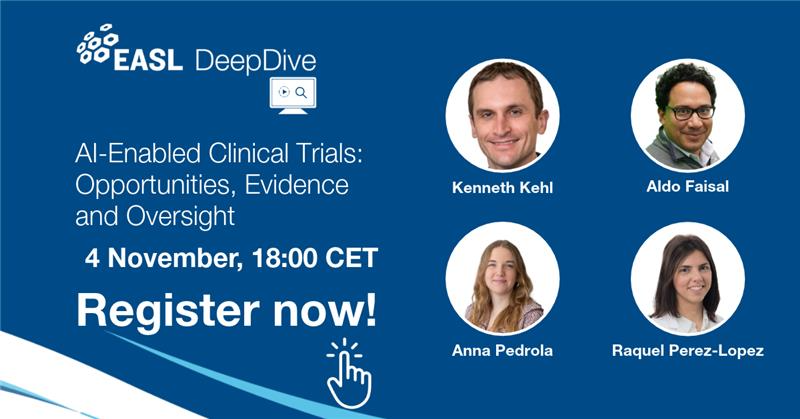
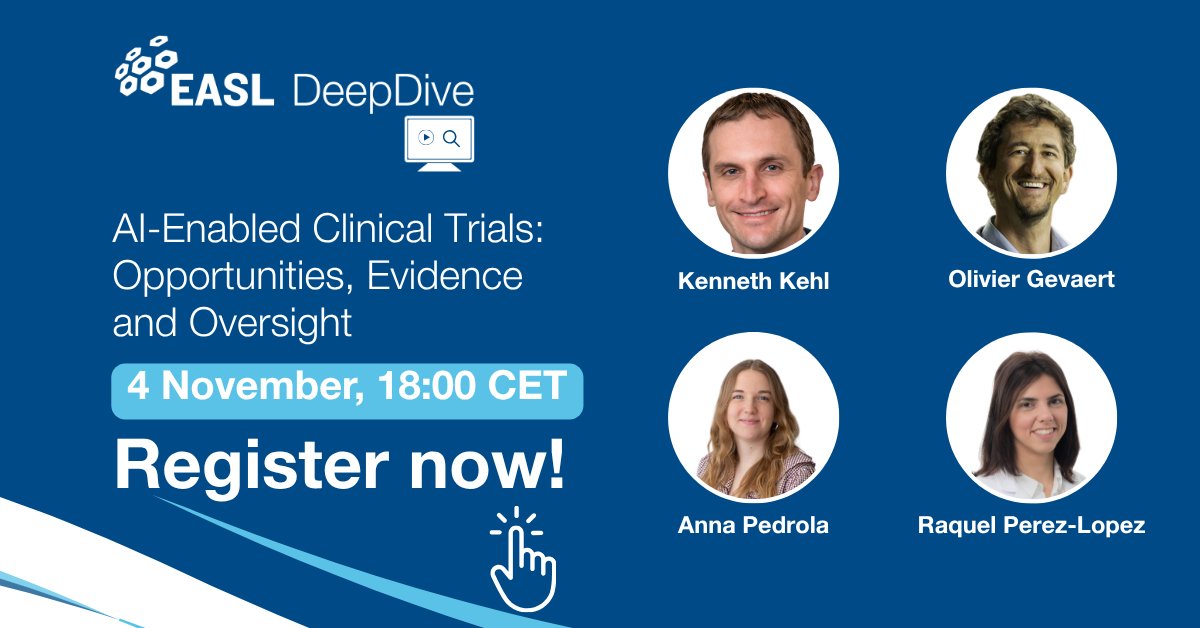
Register for the #EASLDeepDive tonight!
Explore AI-driven trial design with a focus on:
👉Patient selection
👉Digital twins,
👉Use of real-world data to strengthen clinical evidence
Discover the opportunities, scientific challenges, and limitations of AI in clinical research.
🖋️https://t.co/284v2HlYMt
@kenlkehl@FaisalLab@AnalogAldo@RaqPerezLopez@aapedrol@FrancqueSven
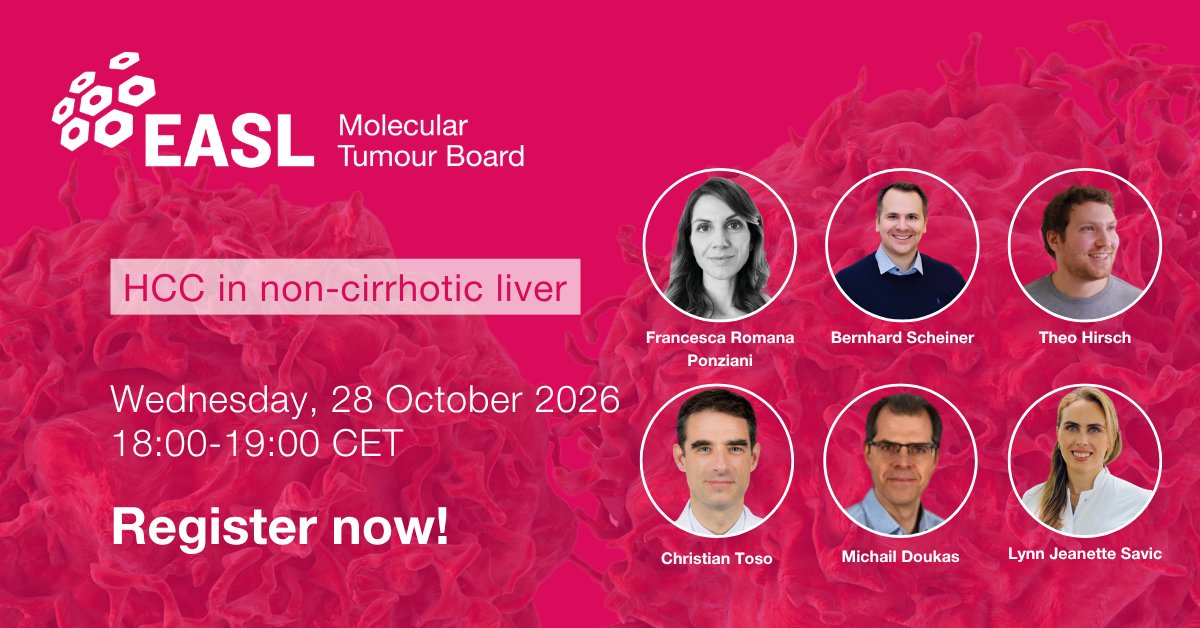
🔬 #HCC without cirrhosis or underlying liver disease, what does that change?🧐
Now available on demand, this #EASLMTB uses a challenging case to explore tumour biology, early recurrence, adjuvant therapy, and the role of liver transplantation in non-cirrhotic HCC.
Watch the full discussion now.
📺https://t.co/RPTdLWpcMl
@FRPonziani@BernharScheiner@TZ_Hirsch@LynnSavic@FrancqueSven@MattiasMandorf1
🧬 A major milestone in gene therapy for liver disease!
For the first time, researchers have published a peer-reviewed clinical case demonstrating successful in vivo base editing in a patient with alpha-1 antitrypsin deficiency.
🔬 Published in the @JHepatology, the study reports:
💠First peer-reviewed publication of a successfully treated PiZZ AATD patient with in vivo gene therapy
💠High correction efficiency, precise editing, and promising safety profile
💠Conversion of homozygous to heterozygous genotype – a major therapeutic achievement
💠Potential to treat numerous hereditary liver diseases and rare variants
These promising findings mark an important step towards precise, minimally invasive treatments for inherited liver diseases.
While further research is needed to establish long-term safety and efficacy, the study highlights the transformative potential of gene editing in hepatology.
🔗 Read the press release: https://t.co/bcaey2y8Z2
👉Read the article: https://t.co/0SVwJ8mNK7
@DebbieShawcros1@analleo #MHH
From optimising patient stratification to simulating treatment responses using digital twins, AI offers new possibilities for clinical research.
Register for the next EASL DeepDive to examine the evidence behind these approaches, their clinical applications, and their limitations.
📅 Wedneday, 4 November, 18:00 CET
Register here: https://t.co/V7tr6E5lgm
🎙️ Tune in for a thought-provoking discussion on one of the key challenges in #HCC care.
Plenty of questions, not always straightforward answers!🧐
More info below 👇
#TalkLiverToMe#LiverX
📊 How should HCC surveillance evolve as risk profiles change?
This new episode of #TalkLiverToMe explores the evidence behind patient selection, surveillance timing and modality choice, while addressing persistent variation between guidelines and the limitations of current surveillance strategies.
Now on EASL Campus: https://t.co/3USZWFrwTA
Also on Spotify: https://t.co/745G6iLFg7
and Apple Podcasts: https://t.co/ESjc0LgoON
🩺 One complex case. Key clinical questions. Expert insights.
Explore the case of a 44-year-old woman with HCC arising without cirrhosis or underlying liver disease. From surgical resection and recurrence management to liver transplantation, discover the clinical challenges and treatment considerations discussed by our experts.
🔬 Join our upcoming Molecular Tumour Board, next Wednesday!
Register now: https://t.co/Y2ej8Frt5X
HCC surveillance: A simple, pragmatic decision ... yeah, right! 🤡
Ingredients:
1💡Hepatoepidemiologist from 🇩🇰 , where cirrhosis per se is NOT an indication
1 🇺🇸 KOL
Honestly, this was the most exciting TLTM episode I moderated so far!
Don't miss it #LiverTwitter 🍿
In the next #TalkLiverToMe, experts revisit the fundamentals of hepatocellular carcinoma surveillance, with a practical look at patient selection, timing and the modalities available for early detection.
Tune in this Wednesday on your Spotify, Apple Podcasts or EASL Campus to listen to this interactive discussion.
More information: https://t.co/ukMPTf1rfN
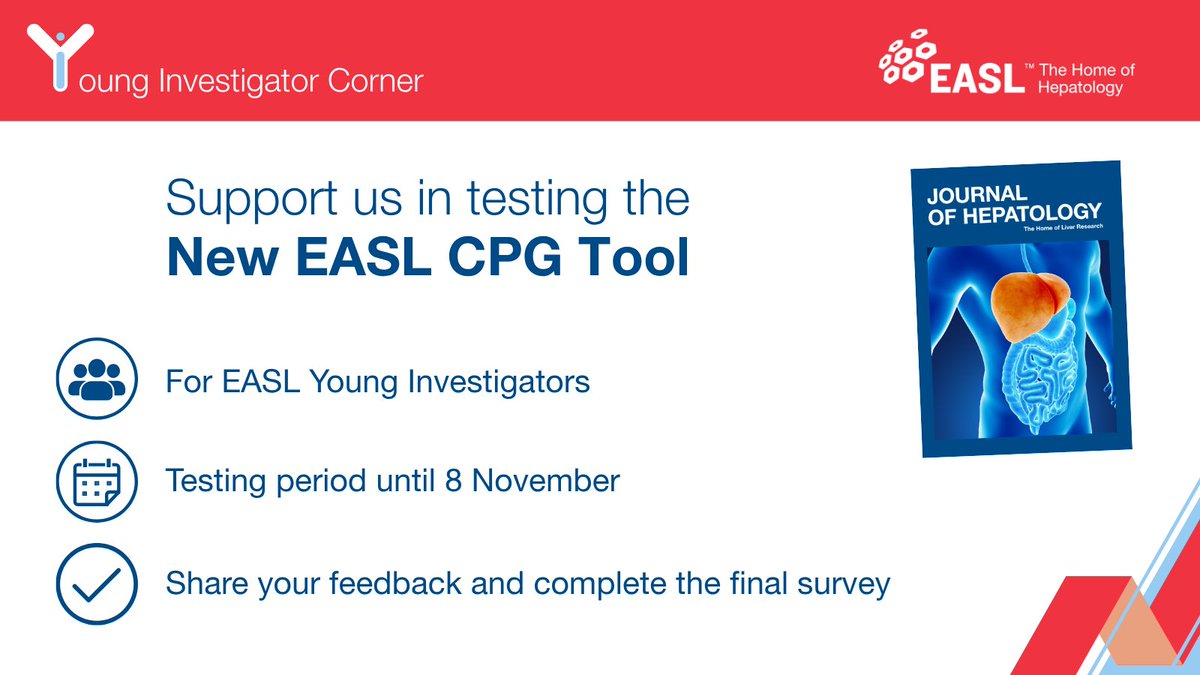
📢 Calling all EASL Young Investigators with valid membership! Help us improve the EASL CPG Tool by testing it and sharing your experience.
Your feedback will help us enhance its usability, functionality, and clinical relevance!
How can you contribute?
- Explore and test the EASL CPG Tool
- Share your experience and suggestions through our feedback survey
📅 Deadline: 8 November 2026
🔗 Access the tool: https://t.co/DQbFFAy7Il
Your insights matter! Take this opportunity to contribute to the development of a tool designed to make EASL Clinical Practice Guidelines more accessible and easier to use in daily practice.
Thank you for helping us improve EASL's digital resources!
#LiverTwitter #LiverX
How well do you know your Guidelines? Test yourself today as we examine the case of a 63-year-old man presented with painless jaundice, pruritus and a 3 kg weight loss over the previous 4 weeks, ECOG PS 1.
Take the quiz now: https://t.co/f8EKHIuvvn
🔬 Can #HCC develop in the absence of cirrhosis or underlying liver disease? And how should we approach treatment when recurrence occurs?
Join the next #EASLMTB as a multidisciplinary panel of experts explores a challenging case of non-cirrhotic HCC, examining the evidence, debating treatment decisions and tackling the challenges of managing recurrence and selecting patients for liver transplantation.
More information below
👇👇👇
@FRPonziani@BernharScheiner@TZ_Hirsch@LynnSavic
#LiverX
🔬 HCC without underlying liver disease: What are the challenges?
Join our upcoming Molecular Tumour Board to explore the molecular characteristics of hepatocellular carcinoma, strategies for managing high-risk recurrence, and the potential role of liver transplantation in selected patients.
📅 Don’t miss this case-based expert discussion! Live on Wednesday, 28 October 2026.
Register now: https://t.co/Y2ej8Frt5X
The EASL Nurses & AHPs Task Force has launched the call for nominations for the Excellence in Liver Care Award 2027.
For more information about the award and how to apply, please visit:
https://t.co/021NBtK1ha
#EASL#liverahp#awards#liver@EASLedu@BASLedu
New episode out! Tune in #TalkLivertoMe for a discussion on psychohepatology, the gut–liver–brain axis, addiction biology, trauma, PTSD, and integrated approaches to care.
Listen now on EASL Campus: https://t.co/IFYBIf1Nc7
Also on Spotify and Apple Podcasts!
Host an EASL School in 2028: https://t.co/sXUWCMv6S1
Are we overlooking mental health in liver disease care?
In this episode of #TalkLivertoMe we explore psychohepatology, from the gut–liver–brain axis to the links between liver disease, addiction, trauma, depression, and anxiety.
https://t.co/omWMM7AR0W
Host an EASL School in 2028: https://t.co/sXUWCMv6S1