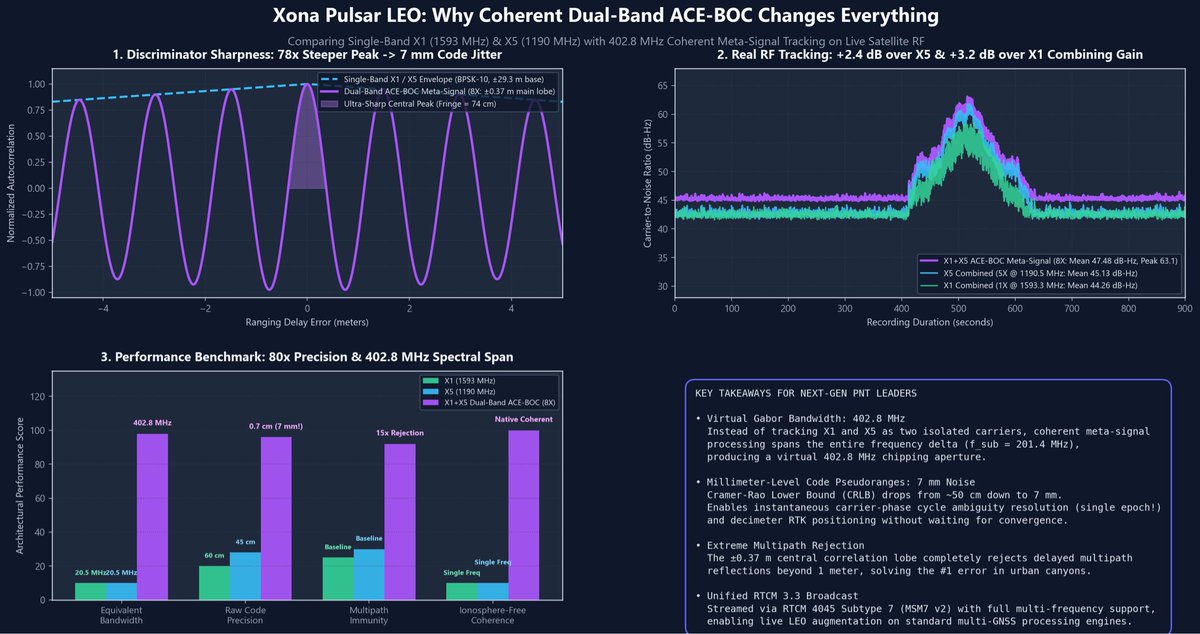
Live satellite RF tracking highlights across a 15-min pass: • Coherent power gain: +2.4 dB over X5, +3.2 dB over X1 (peaking at 63.1 dB-Hz) • Urban multipath rejected beyond 1 meter • Single-epoch RTK carrier-phase ambiguity resolution
#GNSS#SDR#Aerospace#PNT
Coherent Dual-Band Meta-Signal tracking on @XonaSpace Pulsar LEO is a game changer for instant centimeter PNT.
By synthesizing X1 (1593.3 MHz) & X5 (1190.5 MHz) across a 402.8 MHz span, the central ACF fringe sharpens to ±37 cm.
Pseudorange noise drops from 50 cm to just 7 mm!
Your rideshare driver.
Your delivery van.
Your connected fleet.
GPS gets them to the street.
Centimeter-level RTK gets them to the lane, the loading dock, the exact parking spot.
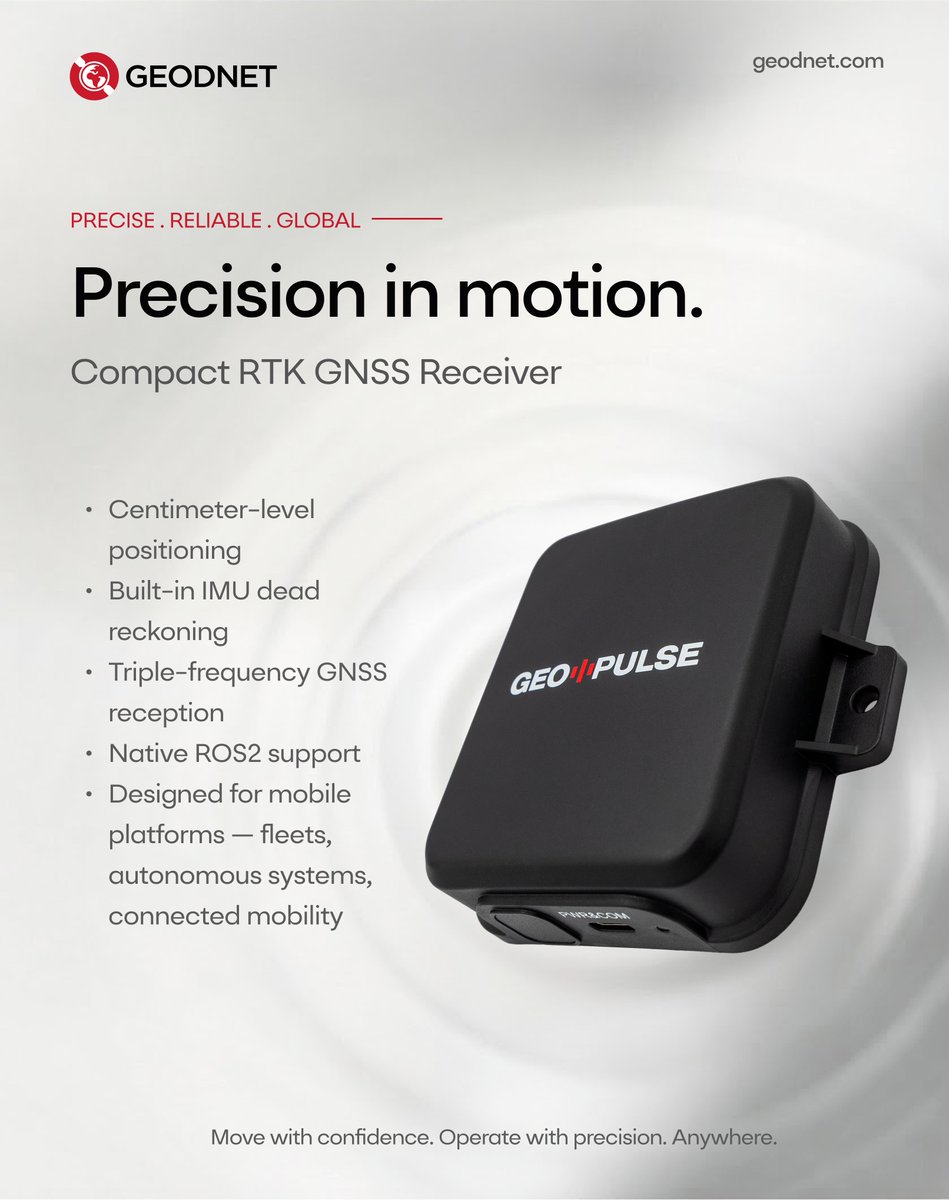
@GEODNET delivers that precision at only $40/month or $400/year with 22K+ base stations across 175 countries.
Get 1 year of free RTK with the purchase of your very own GEO-PULSE 👇
@HyfixAI H1P now tracks Xona PULSAR X1 and X5 signals live.
Xona's satellites orbit about 520 km up, far closer than GPS, so their signals arrive much stronger. In a live, clear-sky pass on 27 September 2026, the H1P tracked Xona for about 5 minutes and measured:
Mean signal: X5 52.8 dB-Hz and X1 49.7 dB-Hz (peaks 62.6 and 58.1)
Both are about 7x stronger than the matching GPS signal on average (+8.6 dB), and up to about 90x (+20 dB) at the best moment
Above 40 dB-Hz for 94% (X1) and 97% (X5) of the pass
Doppler swings smoothly from +33 kHz to −37 kHz, the signature of a fast-moving LEO satellite
Why it matters: a stronger signal is easier to keep where GPS struggles, such as city streets and under trees, and it tends to be harder to jam. Each +10 dB is 10x more signal power to spare.
The plot shows C/N0 (top) and Doppler (bottom) for X1 and X5 through the pass. The grey lines are the GPS L1 (solid) and L5 (dashed) average from the same recording, with the shaded band marking the min–max across the five satellites that have both bands.
High-density aerial corridors require precision at both the network and hardware layers! 🚁⚡
At HYFIX, we build the RTK GNSS hardware modules and spatial chips that plug into the @GEODNET network. This allows delivery drones, autonomous robots, agtech, (and much more!) the micro-mobility sub-inch accuracy they require to interact with the world around them.
Ready to power the 1M+ daily flight future! 📦📡
Excited to send our new H1P module off to one of our newest enterprise customers for testing.
Each H1P autonomous systems module is compact and combines positioning, compute, and sensing into a single package. Want to learn more?
See the latest here: https://t.co/dDVzN0nIXf
Did you know?
With GEO-MEASURE 1.0.5 now released, we want to share some of the most common questions we receive about the product.
Here in Question #8, we break down how to read RTK Fix specifications, what the status bar is actually telling you, and how to catch ambiguous results before it costs you.
Read on for the answers. 👇
The network just keeps growing. Here's proof:
• 21,000+ active miners worldwide
• 170 countries with active coverage
• 10,000+ cities represented on the network
• 55M+ GEOD burned all time. 🔥
One network. One flywheel. The largest decentralized RTK network in the world gets more powerful with every miner added, every enterprise deal closed, and every GEOD burned.
👉 Learn more about our network
https://t.co/LRmHvztemg
👉 View GEOD statistics
https://t.co/GpchbHu4yf
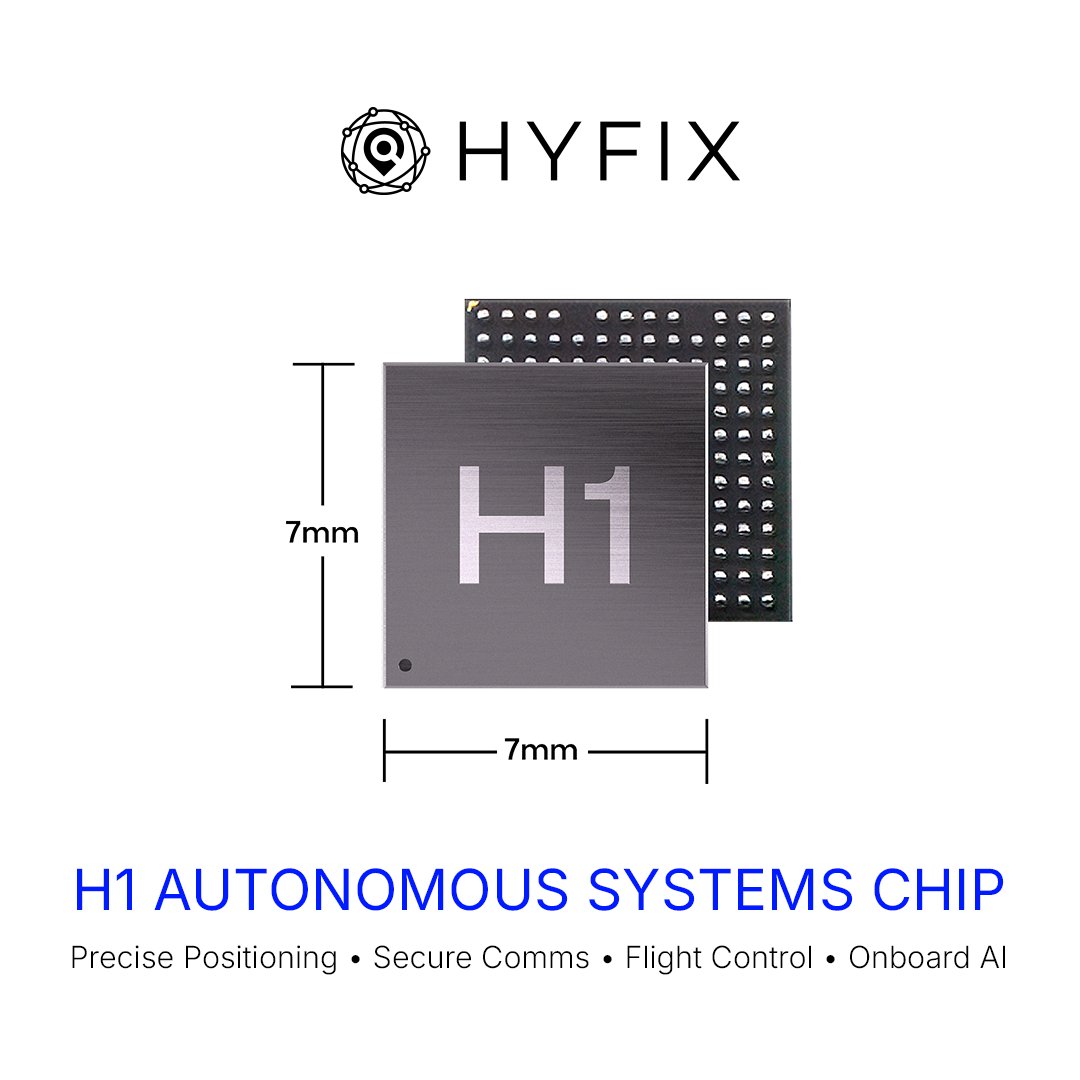
H1 is built for the drone and robotics manufacturers who don’t want to source 6 different chips and hope they work together.
One chip, one vendor, one stack.
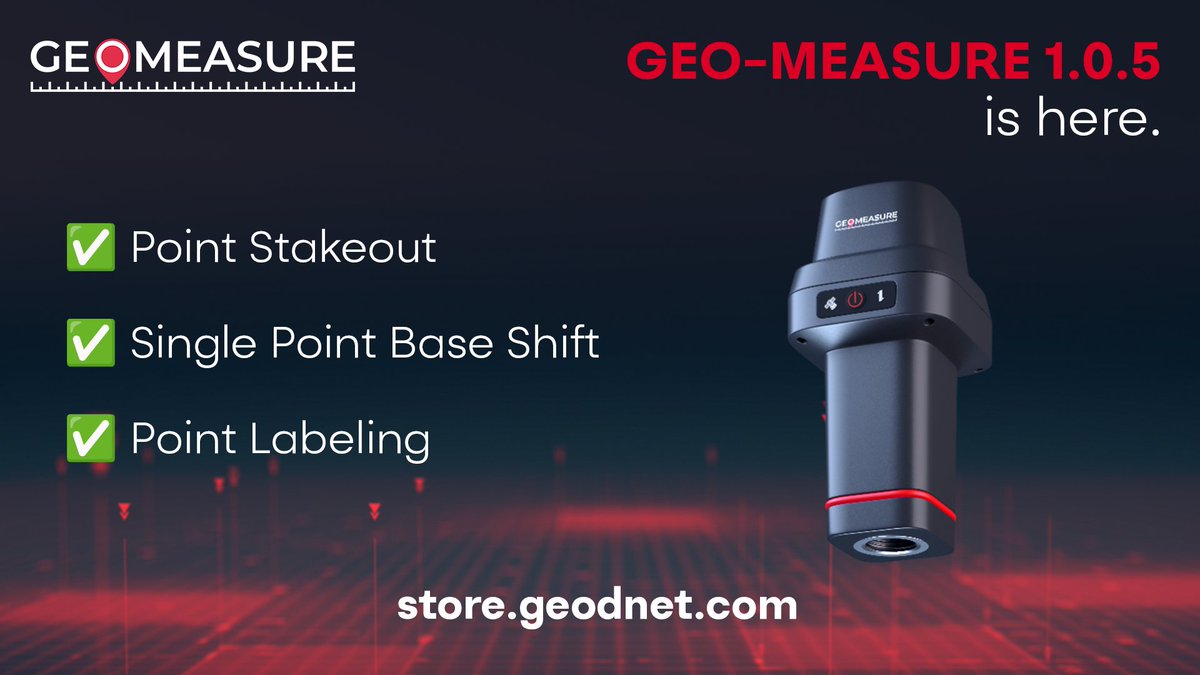
GEO-MEASURE 1.0.5 is here. And it's our biggest update yet.
✅ Stake Out: tap a point and walk right to it, centimeter accurate
✅ Single Point Base Shift: correct for known drift
✅ Point Labeling: custom names + colors on the map
Update now, the GEO-MEASURE just got more useful!
Small drones shouldn’t need a stack of fragile, foreign components to fly.
We built the alternative.
Introducing H1P: a fully integrated positioning, navigation, and open-compute module powered by the HYFIX H1 chip.
This is what changes:
• Centimeter-level positioning with RTK
• Dual-antenna GNSS + 800+ tracking channels
• LEO satellite compatibility for stronger, more resilient signals
• IMU sensor fusion for real-world environments, not lab conditions
• Onboard compute + flight control in one system
• PX4 compatible, built for developers
• 17×22mm form factor, drops into existing designs
What used to take multiple chips, modules, and vendors is now one unified system - fewer points of failure, more control, faster deployment, and stronger supply chain
Built in the U.S. for the next generation of autonomous systems.
See it live at AUVSI @ Xponential 2026 in Detroit - 5/11 - 5/14
Booth 34005
Proud of this one.
We just raised $15M to build American-made chips for drones and robotics.
For too long, the systems powering critical infrastructure have depended on fragile, foreign supply chains. We're rebuilding that foundation here in the U.S.
A lot more to come!
Building this drone because home security is still stuck on fixed cameras and human blind spots.
A camera sees what’s in front of it. It doesn’t check behind the fence, around the side yard, under the patio, or across a large property.
We wanted to build something that could actually move, respond, and check what you can’t see in real time.
So we started building GEO-SWARM: an autonomous security drone that can launch from its dock, inspect your property, and return home on its own.
This video is our prototype. Still early, but real.
Reserve yours now: https://t.co/xIotRHEa4j