WE-UNet is an AI that cleans up noisy X-ray images. We showed it can take chest X-rays at 90% lower radiation and make them look full-dose: radiologists couldn't tell the difference. Published in JACMP 2026.
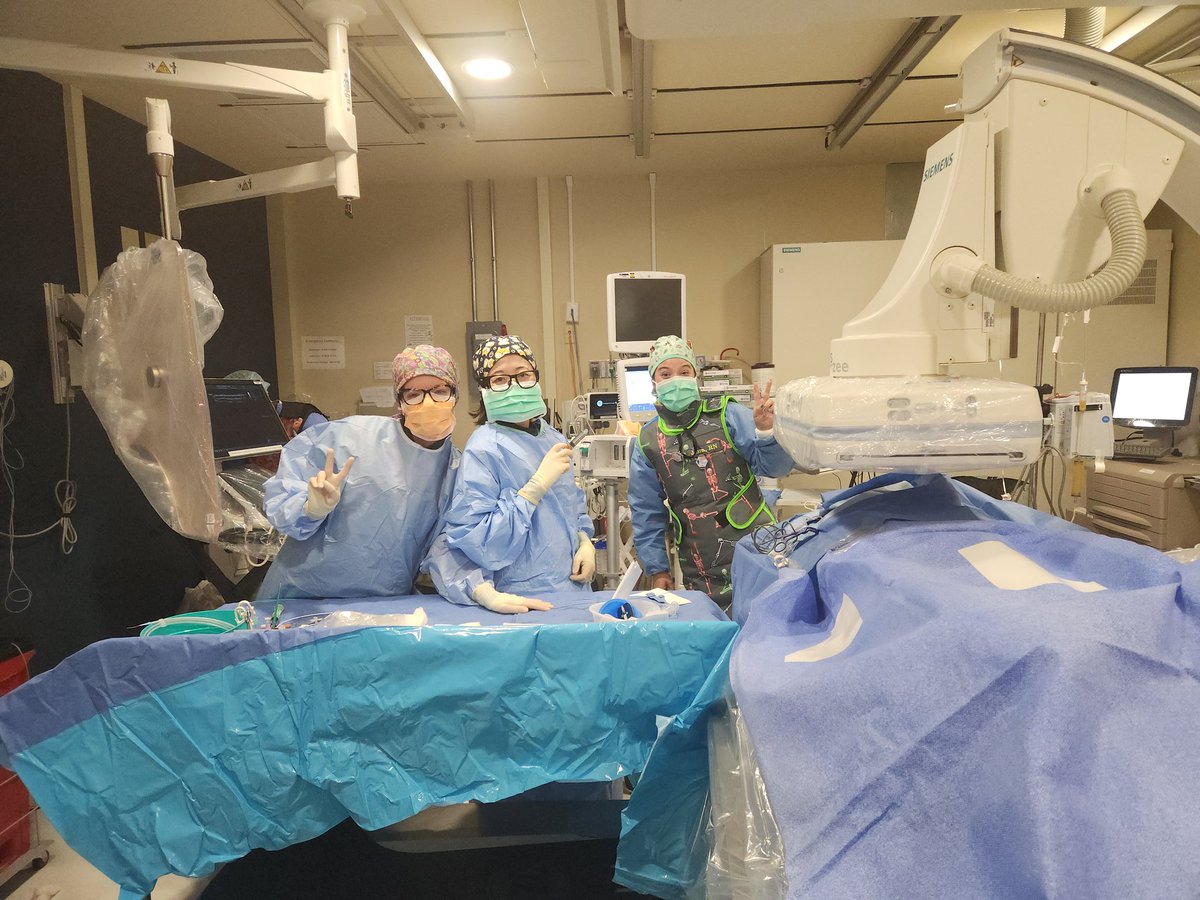
Next: Applying WE-UNet to fluoroscopy: used in interventional radiology & cardiology (stents, catheters, etc). If it works on individual fluoro frames, we could slash radiation exposure during procedures for both patients and physicians.
Reader study should be launching in the next few weeks🚀
Thrilled to share our latest research published in the Journal of Applied Clinical Medical Physics! 🏥
We introduced WE-UNet: A Wavelet-enhanced U-Net framework designed to significantly reduce radiation dose in chest radiography while maintaining high diagnostic quality.
Read the full open-access paper here:
🔗 https://t.co/8jLGW2W3Uy
#MedicalPhysics #DeepLearning #AIinHealthcare #Radiology
OpenAI is offering US healthcare workers early access to a special model which includes their prothinking mode in the eval process. On my first couple of queries, it has performed admirably on tough simulated cases providing good insight and citing sources.
https://t.co/xTIIQ0wD2l
.@SIRspecialists has today announced the appointment of @saherssabri, an interventional radiologist at MedStar Georgetown University Hospital in Washington, USA, as president of the society for the 2026–2027 term
https://t.co/4yHxf3Jmui
Honored to welcome Dr. Edward Kim, FSIR, a leader in HCC treatment, to MedStar Georgetown University Hospital for today’s Grand Rounds on hepatocellular carcinoma. 🙏
Dealing with arthritis pain? There are treatments that could help.
Dr. Saher Sabri, interventional radiologist, joined @fox5dc to highlight minimally invasive treatments that can alleviate knee pain in older adults without the need for surgery. https://t.co/gGYSs0ulj3
Had an awesome time talking AI in IR with on @BackTablePodcast!
We covered why AI is your new best assistant, not your replacement.
Plus: maskless subtraction angiography and 3D from 2D
#IR#AIinMedicine
Artificial Intelligence (AI) has been continuously evolving and starting to be used in medical settings. How has the rise of AI become applied in interventional and endovascular spaces?
Join computer scientist and interventional radiologist Dr. Emil Cohen with host Dr. Chris Beck on our 600th episode! Dr. Cohen and Dr. Beck discuss both the advantages and key limitations of AI resources and tools like OpenEvidence and ChatGPT. They explore different applications of AI like daily workflows and predicting outcomes. Dr. Cohen dives into integrating AI and enhancing existing technology, such as maskless subtraction angiography and rotational cone beam CT. Finally, Dr. Cohen speaks on the claim of AI replacing interventional radiology, informing those that are nervous about artificial intelligence.
Thank you to our team and cherished guests for all of the hard work! Here’s to 600 more!
Tune into the full episode: https://t.co/sHaaZg8lAP
#VI600 #InterventionalRadiology #ArtificialIntelligence #AI #MasklessSubtractionAngiography #RotationalConeBeamCT #MaximumIntensityProjectionAngiogram #BackTable @ec2904@MedStarHealth
We are less than 2 weeks away from the 7th annual DC IR medical student symposium and excited to announce our star studded lineup of speakers! Check out our website https://t.co/p6vU03G9CW and be sure to register!!