Indonesian dilettante.
Macro, monetary, int'l econs, dev't econs, history, and more.
My opinions are just that, not my employer's nor investment advice
In China, I heard an opinion
When doing a purge, Xi Jinping accuses his victims of “corruption”. Which is not a real reason, of course. Everyone is doing corruption
BUT
It is much preferable to him accusing them of something else, like “treason” or “espionage”
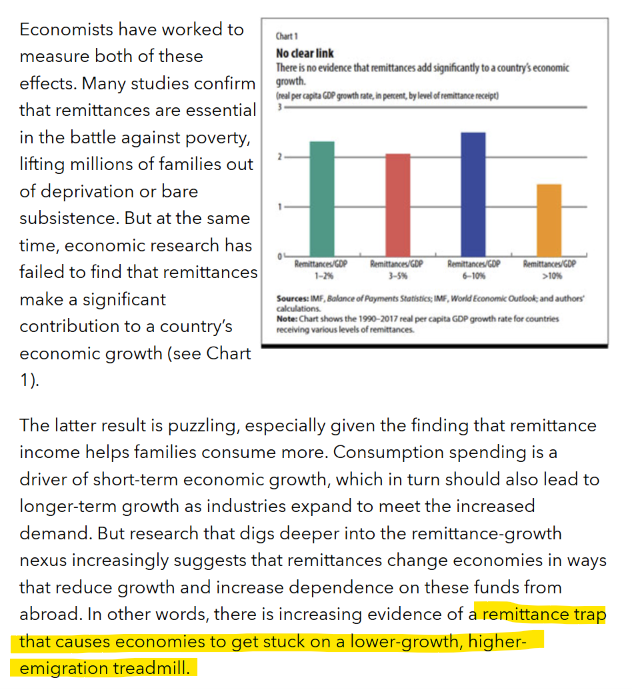
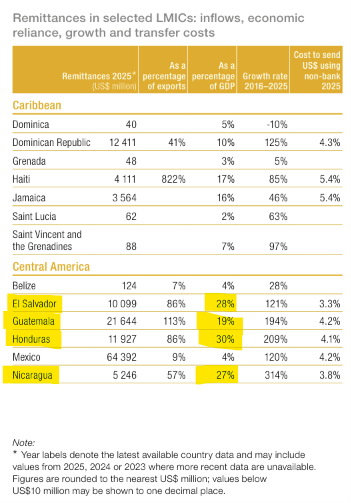
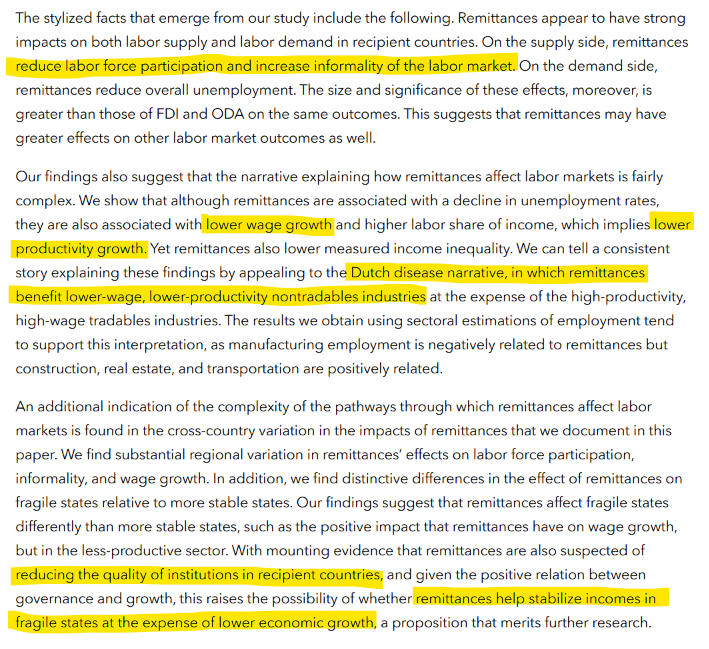
Most of Central America is now comprised of zombie economies caught in the Remittance Trap
Allowing (and facilitating) continued mass migration to the U.S. creates a vicious circle of economic stagnation and emigration, leaving them worse off
A resource curse of population
overheard from friends talking about AI in China, and it’s very alarming
- AI short films went massive in China market because of how good the video models are now
- the first wave of people who mastered using AI to generate short films and comics made quite some money because they could produce a lot more content than traditional workflows
- but within just a few months, everybody and their mom could make equally good short films because all the expertise could be written in a markdown file
- when everyone’s more productive, no one actually has an advantage and it’s a race to the bottom. very quickly it became impossible to make money, and everyone’s busier than they were without AI
- the only one making money now is companies like bytedance who owns user demand and distribution. they sell ads to creators who pay to get traffic, and eventually ad spend became 80% of those creators’ operating expense, while AI tokens is less than 5%
so what are the problems here?
1. there’s no moat if you are creating anything with AI
if a human is really good at something, and it’s hard to find more humans who can do the same, they can leverage the scarcity of their skill to get paid very well
but if AI is good at something, it will be infinitely replicated, so there’s no scarcity hence you can’t really expect a sustainable business by creating anything with AI
2. more creators created more content people actually liked. that’s a good thing
but the economical benefit of that all got absorbed by the distribution platforms
there’s a famous chinese poem 遍身罗绮者,不是养蚕人 - it basically says people who dress well aren’t the people making dresses. that’s exactly what’s happening here
if our society doesn’t figure out a better way to distribute wealth, AI will help billionaires become trillionaires while average people become more exhausted than ever
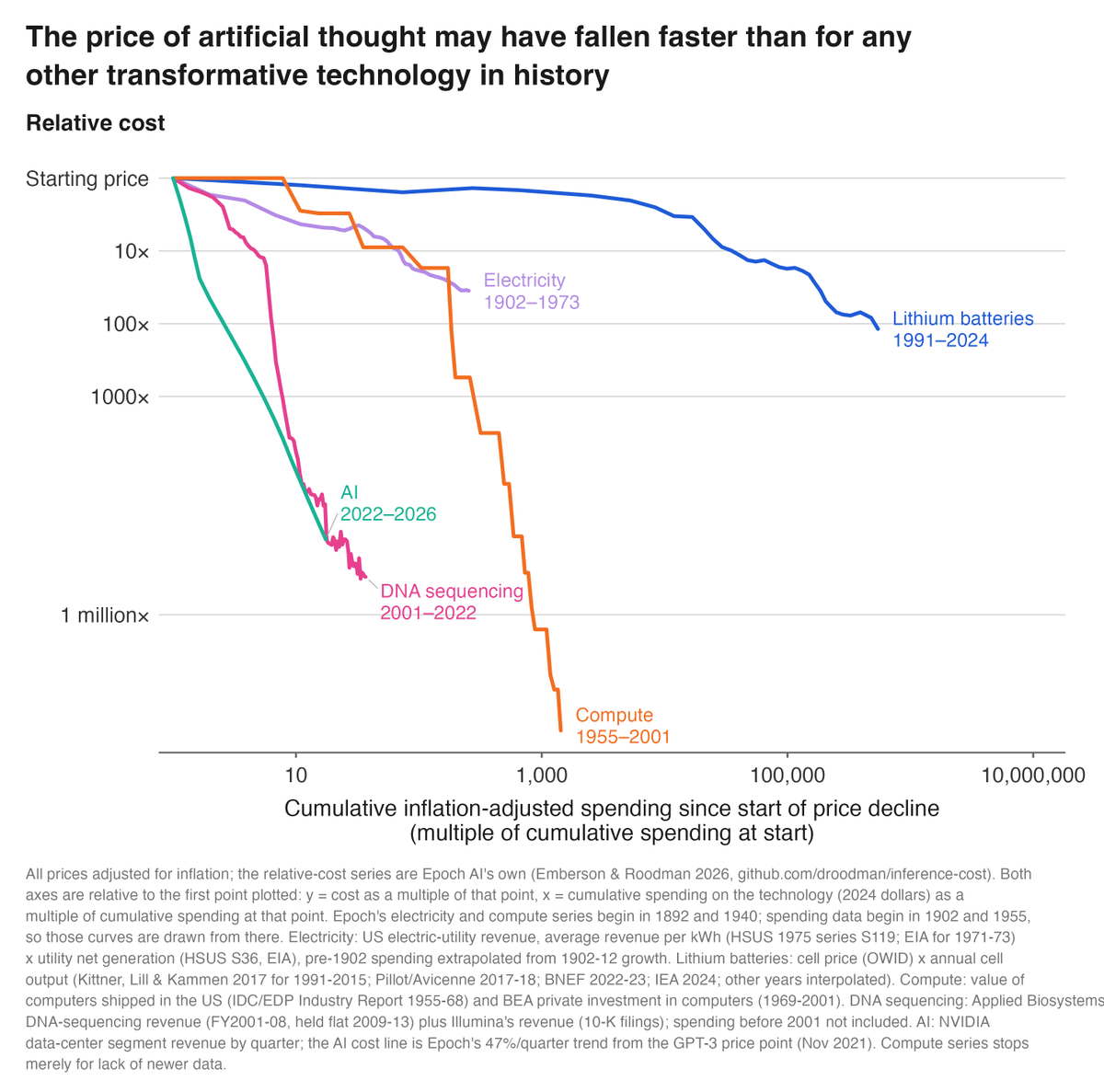
I'm noticing a general trend where AI only looks unique and exceptional if you plot things against time. But time is a stupid proxy that hides what's actually driving growth (investment). Plot against money spent and AI looks just like everything else.
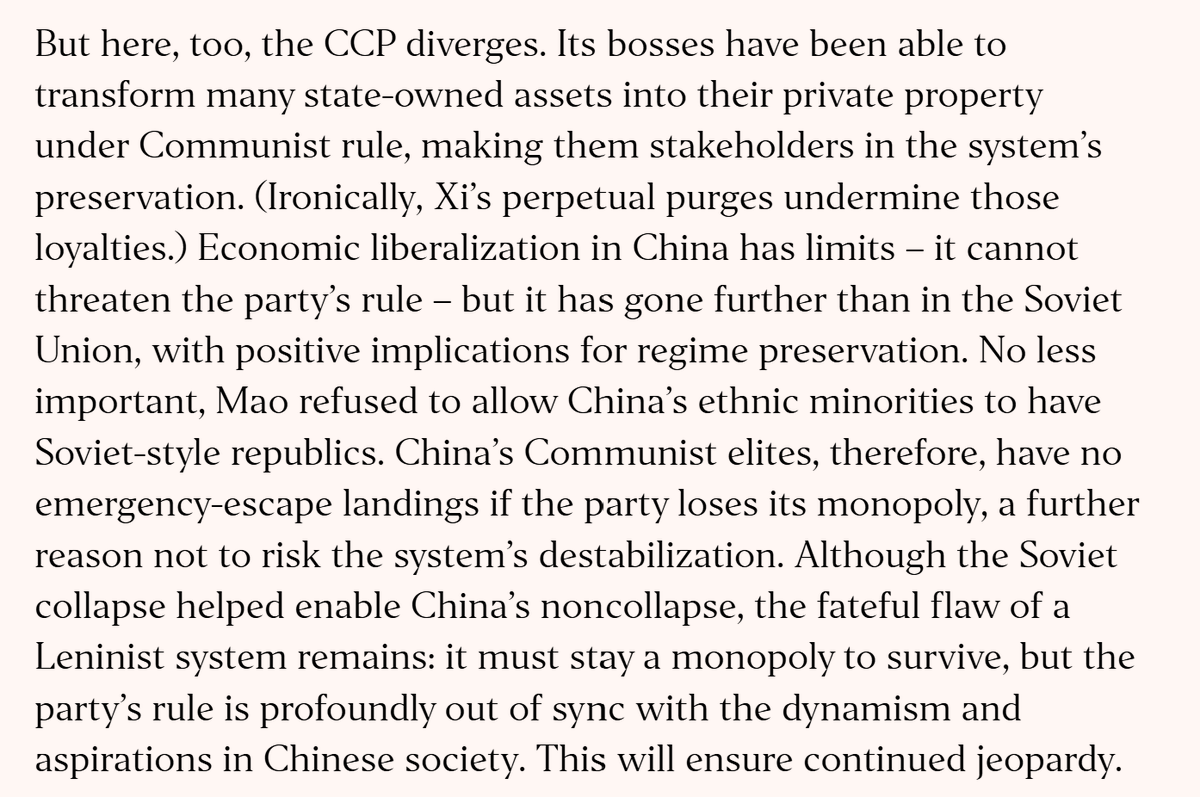
Insightful analysis by Kotkin on why Russia collapsed (hint: not "pope, nationalism, dissidents, economic collapse, Afghanistan, the military-industrial complex, or Reagan) and what China's CCP has done to avoid the fate of the Soviet Union.
What a pleasure it is going to be to read him every month at @wip_mag . https://t.co/CI1XMCuwe1
CHINA’S INDUSTRIAL SUPPLY CHAIN IS EXPERIENCING A BRUTAL PRICING-POWER DIVIDE.
China’s raw-material producer inflation has accelerated to 11.6% year-over-year, while processing-industry inflation stands at just 3.5%.
That is an extraordinary 8.1-percentage-point gap.
The historical comparison is revealing.
During the 2021 commodity boom, raw-material inflation exceeded 25%, while processing inflation peaked near 11%.
Following a prolonged deflationary period in 2023–2025, upstream inflation has returned aggressively.
But downstream pricing power has not recovered proportionately.
October’s widening negative processing-minus-raw-material spread signals intensifying pressure on manufacturing margins.
YCC Capital believes the implications extend across chemicals, machinery, industrial equipment, and export manufacturing.
Companies purchasing expensive inputs while competing in price-sensitive markets face deteriorating profitability.
China’s factory-price rebound is not a broad industrial recovery. It is a redistribution of profits toward upstream suppliers.
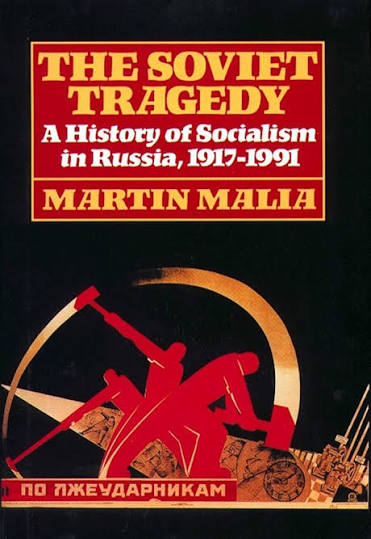
Martin Malia on Soviet economies: "Contrary to the declared goals of the regime, it was the opposite of a system of production to create abundance for the eventual satisfaction of the needs of the population; it was a system of general squeeze of the population to produce capital goods for the creation of industrial power, in order to produce ever more capital goods with which to produce still further industrial might, and ultimately to produce armaments."
High-income workers are fleeing Europe.
Economic theory tells us that the more
mobile a factor of production becomes,
the lower its optimal tax rate. This is why taxes on capital, which is relatively mobile, tend to be lower than taxes on labor, which historically has been less mobile.
However, as the chart below shows, as elite human capital has become more footloose, high taxes have become increasingly counterproductive.
This is a huge existential problem for European welfare states, which have traditionally relied on heavily taxing their most productive workers.
Hiç abartmıyorum, bu makale iktisat tarihinin ulaşabileceği zirveyi temsil ediyor. Makalede Pirenne tezi, 500 bin para sikkesinin coğrafi dolaşımı üzerinden test ediliyor. Makalenin en önemli bulgusu ise aşağıdaki iki görselde açıkça görülüyor: İslam fetihleri öncesi ve sonrası dönemde sikke akışlarının nasıl değiştiğini gösteren son derece etkileyici iki figür:
중국은 대졸자 1,270만 명이 쏟아져 석사가 배달을 뛰고, 한국은 신입 사다리가 좁아져 250만 명이 취업 고배를 마시고 있고, 일본은 일할 사람이 너무 없어서 회사가 망하는 중.
비행기로 두 시간 거리인 한·중·일 세 나라의 청년들이 지금 마주하고 있는 취업 시장의 현실은, 같은 시대가 맞나 싶을 정도로 극명하게 갈라져 있음.
1. 중국: 매년 대졸자 1,270만 명이 쏟아지는 무한 경쟁과 300만 명이 몰리는 공무원 시험
- 최근 한 커뮤니티에 올라온 중국 청년의 하소연은 현지 분위기를 그대로 보여줌. "월세도 겨우 메우는 박봉을 주면서 오전 9시부터 밤 9시까지 주 6일(996) 일하라고 한다. 불평 한마디 하면 뒤에서 줄 서 있는 절박한 신입으로 바로 교체된다. 평범한 자리 하나를 두고 수백 명이 싸우고, 석사 학위를 따고도 음식 배달을 하거나 부모님 집에 얹혀사는 형편이다. 사람을 완전히 일회용 소모품처럼 다룬다."
- 과장이 아니라 실제 통계가 이 말을 그대로 뒷받침함. 중국 교육부 기준 대학 졸업생 수는 2025년 1,222만 명에 이어 올해(2026년) 1,270만 명으로 또다시 사상 최대치를 갈아치웠음. 한국 한 해 출생아 수의 약 50배에 달하는 대졸자가 매년 한꺼번에 쏟아져 나오는 셈임.
- 부동산 침체와 내수 부진으로 민간 기업 채용이 얼어붙으면서, 재학생을 빼고 집계한 청년(16~24세) 실업률조차 올해 여름 졸업 시즌에 18.9%(9월 18.0%)까지 올랐음. 여기에 35세가 넘으면 해고 대상이 되고 재취업도 막히는 이른바 '35세의 저주' 공포까지 겹치자, 안정적인 일자리를 찾아 국가공무원 시험(궈카오) 자격 심사를 통과한 인원만 지난해 역대 최다인 371만 8,000명(평균 경쟁률 98:1)을 찍었고 올해도 302만 5,000명이 몰렸음.
- 이 경쟁에서 밀려난 고학력 청년들이 배달 플랫폼 라이더로 뛰거나, 부모에게 생활비를 받으며 집안일과 돌봄을 맡는 '전업자녀', 혹은 공사 중단된 부도 아파트(란웨이러우)처럼 비싼 학비를 들여 졸업하고도 갈 곳이 없어 방치됐다는 뜻의 '란웨이와(부실 자녀)'라는 신조어로 스스로를 부르고 있음.
2. 한국: 쉬었음 청년이라고 불리는 250만 명의 명암
- 한국은 중국처럼 인구가 넘쳐나는 구조가 아닌데도, 기업들의 극단적인 '경력직 선호'와 '일자리 양극화'가 맞물리며 청년들이 구직 시장에서 설 자리를 잃어가고 있음.
- 정기 신입 공채가 사라지고 수시 채용이 자리 잡으면서 기업들은 당장 현업에 투입할 수 있는 경력직이나 실무 경험이 있는 '중고 신입'만 찾고 있음. 게다가 과거 신입사원을 뽑아 가르치던 자료 조사, 초안 작성, 기초 코딩 같은 주니어 업무를 AI가 빠르게 잠식하면서 신입이 경력을 쌓을 첫 칸 사다리가 갈수록 좁아지는 중.
- 전체 일자리에서 대기업·공공기관 정규직 비중이 10%대 초반에 불과한 상황에서 이 바늘구멍을 뚫지 못하면 임금과 처우 격차가 워낙 크다 보니, 박봉에 여러 사람 몫을 해내는 소모품으로 갈려 나가느니 구직을 미루거나 포기하는 청년들이 적지 않음.
- 실제로 통계청 기준 청년층(15~29세) 취업자는 47개월 연속 감소했고, 대한민국 전체 '그냥 쉬었음' 인구는 250만 명(그중 15~29세 청년층 36만 4,000명, 30대 포함 시 70만 명 안팎)을 넘어섰으며, 단기 알바·구직 단념·취업 준비 등을 합쳐 온전한 일자리를 얻지 못한 채 표류하는 광의의 청년층 역시 250만 명 안팎으로 추산됨.
- 이런 상황이 길어지자 눈높이를 낮춰 중소기업으로 눈을 돌리는 구직자들도 늘어났으나, 막상 그나마 다닐 만한 중소·강소기업들은 뽑는 인원 자체가 한두 명 수준으로 지극히 제한적인 데다 지원자가 한꺼번에 몰리면서 중소기업조차 수십 대 일에서 수백 대 일의 경쟁률이 벌어지고 있는 중.
- 게다가 중소기업 역시 신입을 뽑아 가르칠 여유가 없다 보니 당장 실무에 투입할 경력직이나 한 사람이 여러 직무를 다 해내는 올라운더만 찾고 있어, 눈높이를 낮춰도 신입이 비집고 들어갈 틈이 없기는 마찬가지임.
3. 일본: 졸업생 1명당 갈 회사가 1.6곳인 '구직자 우위' 시장… 그러나 그 이면의 줄도산과 퇴사 대행
- 반면 바다 건너 일본은 저출산·고령화로 일할 젊은 인구가 급감하면서 한국·중국과는 정반대의 '초(超)구직자 우위 시장'이 펼쳐지고 있음.
- 일본 후생노동성·문부과학성 발표 기준 취업 희망 대졸자의 취업률은 98.0%(여성 98.7% 역대 최고)에 달하고, 리크루트웍스 연구소가 집계한 대졸 구인배율 역시 1.62~1.66배로 학생 1명당 일자리가 1.6개 이상 열려 있음. 신입사원을 뺏기지 않으려고 주요 기업들이 앞다퉈 대졸 초임을 인상하며 모시기 전쟁을 벌이는 중임.
- 하지만 일본이라고 마냥 유토피아인 건 아님. 대기업들의 임금 인상 속도를 따라가지 못한 중소·영세기업들이 사람을 못 구하거나 인건비를 감당하지 못해 문을 닫는 '인력 부족 도산'이 2025년 연간 427건으로 사상 처음 400건을 넘기며 역대 최다를 기록했고 올해도 최다 페이스를 이어가고 있음.
- 또 갈 수 있는 회사는 많지만 엔저와 고물가로 실질임금 체감은 여전히 팍팍하다 보니, 신입사원 일부가 입사 직후 회사가 마음에 안 들면 직접 사표를 내는 대신 돈을 내고 '퇴사 대행 서비스'를 이용해 회사를 그만두고 다른 곳으로 옮기는 사례가 늘며 화제가 되고 있음.
같은 시간대, 바로 옆에 붙어 있는 세 나라인데 중국은 '사람이 너무 많아서' 서로를 갈아 넣는 무한 경쟁이 벌어지고, 한국은 '중간 사다리와 신입 자리가 좁아져서' 진입 자체가 막히고 있고, 일본은 '사람이 너무 없어서' 중소기업이 무너지는 전혀 다른 풍경이 펼쳐지고 있고,
일부에서는 한국도 저출산으로 청년 인구가 줄어들고 있으니 조금만 지나면 일본처럼 자연스럽게 취업이 잘되는 시대가 올 거라 기대하기도 하지만 이미 AI로 주니어 업무를 대체하고 한 사람에게 여러 직무를 맡기는 구조에 익숙해진 기업들이 다시 예전처럼 대규모 신입을 뽑아 차근차근 키워줄 가능성은 현저히 낮음.
안 그래도 부의 양극화가 갈수록 심해지고 있는 가운데, 사회에 첫발을 내딛고 종잣돈을 모아야 할 일자리 사다리마저 이렇게 무너지면 앞으로 그 양극화는 훨씬 더 극단적으로 벌어질 수밖에 없음.
소수의 자리만 남고 대다수가 진입조차 못 하는 구조가 굳어지면서, 더 나아가서는 단순히 '좋은 직장에 가느냐 마느냐'의 문제를 넘어 평범하게 일해서 내 한 몸 생계를 온전히 유지할 수 있는 사람들의 자리 자체가 점점 줄어드는 시대로 가고 있는지도 모르겠음.
Perry Mehrling, RIP.
According to the History of Economics Society, Perry Mehrling died "Monday night from injury sustained in a fall several days earlier." He was Professor of International Political Economy at Boston University and, previously, longtime Professor of Economics at Barnard College. He was a highly esteemed historian of economics.
Here is his homepage:
https://t.co/H7rYc8Mk8T
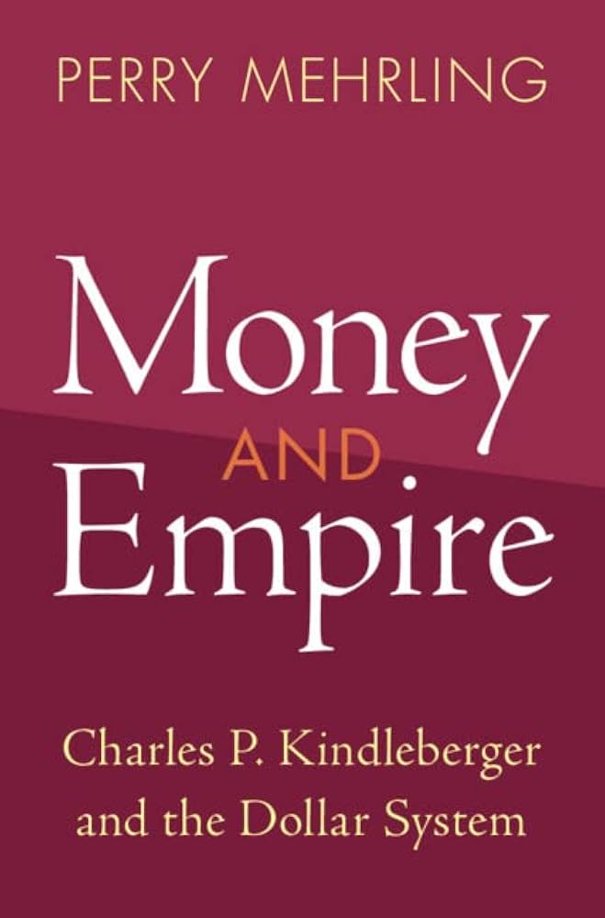
His last book: "Money and Empire: Charles P. Kindleberger and the Dollar System"
https://t.co/uwBlsl0VHS
"Charles Kindleberger ranks as one of the twentieth century's best known and most influential international economists. This book traces the evolution of his thinking in the context of a 'key-currency' approach to the rise of the dollar system, here revealed as the indispensable framework for global economic development since World War II. Unlike most of his colleagues, Kindleberger was deeply interested in history, and his economics brimmed with real people and institutional details. His research at the New York Fed and BIS during the Great Depression, his wartime intelligence work, and his role in administering the Marshall Plan gave him deep insight into how the international financial system really operated. A biography of both the dollar and a man, this book is also the story of the development of ideas about how money works. It throws revealing light on the underlying economic forces and political obstacles shaping our globalized world."
Charles Goodhart: "The discipline of economics is balanced, somewhat unsteadily, between two legs, with the skill of the historian on one side and of the mathematical modeler on the other. In the second half of the 20th century, the tide flowed strongly to elevate the second leg and to diminish the first. In this delightful biography of Charlie Kindleberger, a charming and loveable man, Perry Mehrling shows how Charlie, in his chosen role, as an international monetary economist, fought against that tide, often unsuccessfully. Perry writes so beautifully that one would only need a smattering of economics to enjoy the tale; while if one is interested in the history of economic thought in international monetary economics, then this book is, of course, a must read.'
https://t.co/uwBlsl0VHS
The great British historian Chris Wickham passed away this week. In April 2017, I published (in Spanish) a review of his book Medieval Europe, titled “The Middle Ages: Fiscal Capacity, State Strength, and Economic Growth.” In his memory, I reproduce the same review but translated into English.
This past week, later than I should have, I finished Chris Wickham’s Medieval Europe. Readers of this blog may remember that I have occasionally mentioned my admiration for an earlier work of Wickham’s, Framing the Early Middle Ages, and for his incredible ability to synthesize our knowledge of the early Middle Ages in Europe and the Mediterranean world, both conceptually and geographically. Since that monograph, I have regularly worked my way through every new book by Wickham, and it has always been an experience with an extraordinary intellectual payoff.
Medieval Europe is no exception. The amount of material condensed into 352 pages is so extraordinary that, merely to absorb even a minimal amount of its detail, I have had to let a few other obligations slide over the last few days. The end result has led me, almost by necessity, to write this post.
Before continuing, however, I should warn our readers. Medieval Europe is an uncompromising academic monograph. The prose is clear and, on many occasions, brilliant in its precision, but this is not a book to take to the beach for a little light entertainment that requires no thought. Wickham is not going to tell you about Eleanor of Aquitaine’s love affairs. He is going to tell you how the fiscal capacity of the Anglo-Saxon kingdoms before the Norman conquest of England in 1066 would prove crucial to the evolution of the political economy of northern Europe in the centuries to come. This is not a world of lances and tournaments; it is a world of productive systems and administrative structures.
But even within contemporary historiography, questions of representation and understanding, the construction of mentalities, or exercises in collective memory play, for Wickham, a secondary role compared with modeling the material foundations of a society. Perhaps it could hardly be otherwise, since Wickham has never hidden his conviction about the usefulness of the more classical Marxist historiographical tradition and its insistence on the primacy—though not the exclusivity or determinism—of material explanations, especially when compared with the favorite themes of the cultural turn.
Paradoxically, this is a point of contact between that Marxist tradition and mainstream economists like me, who also assign a place of preeminence to factors such as technology and the institutions it creates in the development of societies (this is an argument I developed more calmly in a post on G. A. Cohen many years ago). As a friend of mine says, ironically but with some truth, we neoclassical economists are right-wing Marxists. And as such, we have much to learn from Wickham’s work.
In particular, there is the central role played by fiscal structures in political forms and in their evolution over time. For Wickham, it is above all the collapse of the fiscal capacity once enjoyed by the old Roman Empire in the West that explains the weakness of its successor states during the first centuries of the Middle Ages. Without fiscal capacity, one cannot finance a standing army or an efficient administration; and without these two instruments of power, political structures eventually fracture. The only way to finance military activity without taxes on land or on the (minimal) trade that existed is to grant land to nobles and knights in exchange for military service.
Although the feudal revolution of the eleventh century (which, despite recent historiographical advances and the qualifications they have introduced into older conceptions, Wickham still regards as a useful interpretive framework) was not inevitable, it was a very likely consequence of early medieval land politics. As Wickham reminds us, Marc Bloch was the author who most eloquently explained that this policy of financing states by handing land to elites is inherently unstable: the more land a sovereign grants in order to build a winning coalition among the elites, the less land remains to distribute as future payments and, therefore, the more difficult it becomes to maintain the stability of the coalition.
To illustrate the power of this argument, Wickham recounts what happens in those parts of the Roman Empire where fiscal capacity does not collapse and which today we anachronistically call the Byzantine Empire (its inhabitants always called themselves Rhōmaîoi, or Romans in Greek). The continuities in political, economic, and ideological structures with late antiquity are far stronger than in the West and, with them, the future of these societies would be very different. In two chapters central to the book’s argument (3: “Crisis and Transformation in the East, 500–850” and 9: “1204: The Failure of Alternatives”), Wickham insists on the crucial need to understand Byzantium and its successor states (the caliphates and the Ottoman Empire) in order to understand what happens in western and northern Europe. Counterintuitively, there is much more that is “Roman” in the domains of Mehmed II than in Tudor England, Valois France, or Trastámara Castile.
To reinforce this idea, the book goes on to explain how only the slow and gradual reconstruction of fiscal capacity makes possible the emergence of organizations such as the kingdoms of England, France, and Castile that I mentioned in the previous paragraph and that would shape the centuries to come. But these kingdoms are very different creatures from Rome, Byzantium, or even the Merovingian and Ottonian states. They are experiments in government in which the consent of an important part of society (lords, urban elites, ecclesiastical potentates, and often relatively modest landowners) is indispensable to the exercise of fiscal power. And this consent would crystallize, to a large extent, through parliaments.
These parliaments are an institution without parallel anywhere else in the world. They probably appear first in Spain, with the Cortes of Alfonso IX of León in 1188, as a combination of monarchical weakness and fiscal necessity. Their key feature, which Wickham perhaps does not emphasize enough, is their own legal personality. This legal form—so important in a Europe rediscovering classical Roman law as a central organizational technology—makes them radically different, in both their legitimacy and their persistence over time, from the old Germanic assemblies so common in Merovingian Europe and from the royal councils that rulers have had throughout history. The conflicts between kings and parliaments would become a fundamental axis of European history until the ultimate victory of the latter, sometimes concealed beneath other garb, centuries later. But already in the thirteenth century we see, especially in England, the idea that the oligarchy is fundamentally involved as a co-director of public life, in forms, practices, and understandings that do not exist in the Islamic world, India, or China in the same centuries.
The reorganization of state power during the twelfth and thirteenth centuries thus appears not in opposition to the cellular structure of European politics, but as a counterweight to it. More powerful states sharpen the need of lords, cities, the Church, and even peasants to defend their own spheres of action, thereby creating a social dynamism whose long-run consequences would be incalculable (however often Wickham repeats, somewhat half-heartedly, that he does not want to cross the Rubicon into such a triumphalist interpretation).
The best example of this idea is England. It is no accident that England is probably the best-organized state in medieval Western Europe (the famous 14.5 kilograms of wax used every week to seal letters in the English chancery in the mid-thirteenth century) and, at the same time, the state in which a relatively broad oligarchy has most systematically penetrated the co-direction of public affairs. Parliament and the Common Law—as Dicey explained to us decades ago—popular sovereignty (or, at this point, elite sovereignty) in Parliament and the effective rule of law embodied in the Common Law do not contradict one another, as superficial commentators so often claim; they reinforce one another. There is no Henry III without Henry II, numerically or conceptually.
But—and this is a road Wickham does not want to travel either, though I am quite willing to explore it—it is also no accident that England is the birthplace of the Industrial Revolution. If there is one thing we have learned from the recent and vibrant literature on state capacity, it is that state power and markets are not opposites in the process of economic growth (an interesting and comprehensive survey of the literature appears here, by Noel Johnson and @MarkKoyama; Mark, incidentally, is very critical here of some of Wickham’s interpretations of the economic evolution of late antiquity). Far from being substitutes, as is too often argued in a thoroughly ahistorical way from both sides of the political debate, states and markets complement one another, sometimes in subtle ways.
Growth emerges when states can provide defense against society’s external and internal enemies; when states ensure that the rule of law is supreme (including, in a substantive conception of the rule of law, respect for property rights); when states create an integrated internal market; when states build infrastructure (or make its construction possible); when states provide education (or ensure its provision); when states create the conditions under which financial markets can function. All of this costs money—a lot of it. In eighteenth-century England, perhaps around 10 percentage points of GDP in tax revenue. Today, at least 20; and if we include social transfers, which redistribute risks that markets often cannot insure because of asymmetric information and without which society could not function properly, probably 30 or 35 points. England does not grow in the eighteenth century because property rights were particularly well protected. It grows because, compared with France, the Parliament born of the Glorious Revolution of 1688 can create the Bank of England, finance the battle fleet, impose land enclosures, or force the construction of railways against the opposition of localities that the railways will drag out of their backwardness. The road to Manchester’s cotton mills runs through the hills of Blenheim: there is no James Watt without a John Churchill.
At the same time, the historical evidence is crystal clear that when states try not to complement markets but to replace them, the result is disastrous. Strong states create internal markets in which automobiles can be sold; substitutionist states want to build automobiles themselves. Worse, by trying to do what they cannot do well, far from strengthening state power, they paralyze it through constant struggles among dozens of pressure groups over the rents created by state activity. We need only look at the modern states of Europe. Is Spain a strong state? It is certainly a large state, but not one capable of stopping constant regulatory capture, ensuring the unity of its internal market, or providing a high-quality education. Robust property rights require a powerful power of eminent domain, but a powerful power of eminent domain can succeed only alongside robust property rights. At present, we have neither.
I imagine these are not the conclusions Wickham himself would draw from his book, and I am almost certain he would object to most of my inferences. My response, however, is that when one writes a book as magnificent as this one, one must be aware that the text takes on a life of its own, and that the conceptual avenues, interpretive frameworks, and cognitive structures of reference it reveals can take the reader to unexpected places. We are slaves to our own logics.
Be careful when analysing bond yields through UST and extrapolating outcomes too narrowly. The death of the republic is a seductive narrative, but it's simplistic. Itis far more profound than a US collapse.
Robin Brooks is right that debt is the dividing line in this sell-off. But debt is the symptom. The real line runs between countries whose credit has funded productive capacity and countries whose credit has bid up assets that already exist.
Every government with debt bigger than a year's output has the same three exits. It can run surpluses, grow faster than its interest bill, or pay lenders less than the market would. Surpluses are gone almost everywhere, and growth is cancelling out against rising coupons. That leaves the third, and the third is what rising yields are pricing in, in every bond market at once. When they are all doing it, it's a different symptom and disease, though the disease is no less virulent.
Washington isn't defaulting. It's rewriting the conditions around the bond: buybacks, hints of fewer long bonds, the Fed buying bills, a bigger FIMA window so Japan can keep its Treasuries instead of selling them. It did the same in 1933, 1942, 1945, 1951 and 1971. Each time the coupon was paid in full, and a condition/s written around it moved.
Australia shows the same disease without a reserve currency to hide behind. Our banks wrote $3.21 of credit for existing homes for every $1 for industry. When yields reprice, a country can only refinance against what it actually produces, and paper wealth sitting on land can't take that strain. So while you might think the USD-denominated bonds are in the most trouble, the AUD is "saying hold my beer"
So this isn't America falling. The whole postwar settlement, where sovereign paper was the risk-free floor, is being repriced. Central banks have bought gold for nearly two years, China's for 22 months straight, and India has brought 104 tonnes home in six months. They aren't betting on one republic dying. They're insuring against every debtor paying less than it promised.
It's less optimistic than that it's the whole world falling.
Watch the conditions, not the coupon. The bond is the promise. The rights attached to it are the price.
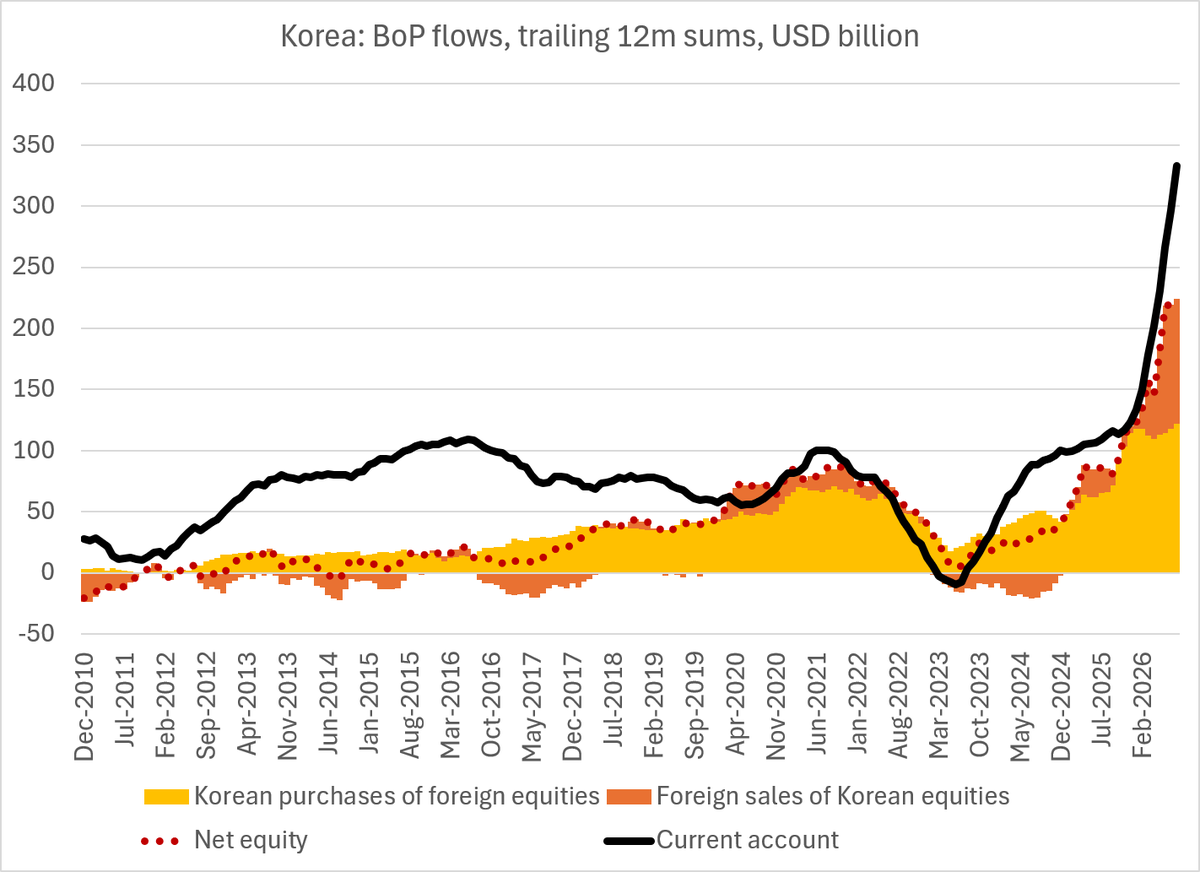
Korea is heading for a current account surplus of close to $500 billion this year --
That of course raises the question of how is the surplus being recycled. Korean purchases of US equities is definitely a big part of the answer, but no longer the entire answer
1/many
With math essentially being delegated to OpenAI, here's what I predict for economics and the social sciences more generally:
✅The top tier of research will just become better and it will be normal human-led research where AI is used for scale (e.g. conducting qualitative interviews with relevant populations, running behavioral interventions in the field, analyzing massive text data, etc.)
✅ Field experiments will rise in value and generally making "connections" with firms and being able to run stuff (potentially testing AI pipelines) will be in high demand
✅ Research with administrative data will become even more valuable, but the benefits might be concentrated among some prolific authors who are allowed by the government agencies to use local models to analyze the data at scale. PhD students can probably forget about it
✅Economic history will have a very exciting boom and there will be an enormous race and big rewards for digitizing archives as a source to both identify new research strategies and document new descriptive facts.
✅Review and verification systems will become massively improved with AI assistance and it will become standard practice to do a 360 review of the paper + code + data at the *submission* stage.
⚠️Research that in principle can already be almost completely outsourced to the AI (download and analyze public data, run simple survey experiments, write theory models) is in for a big shock. This would be very bad from the perspective of researchers who depend on this "bread and butter" research, but I think this type of work will just be outsourced to public agencies who can answer their own questions without the need for "peer-reviewed" research.
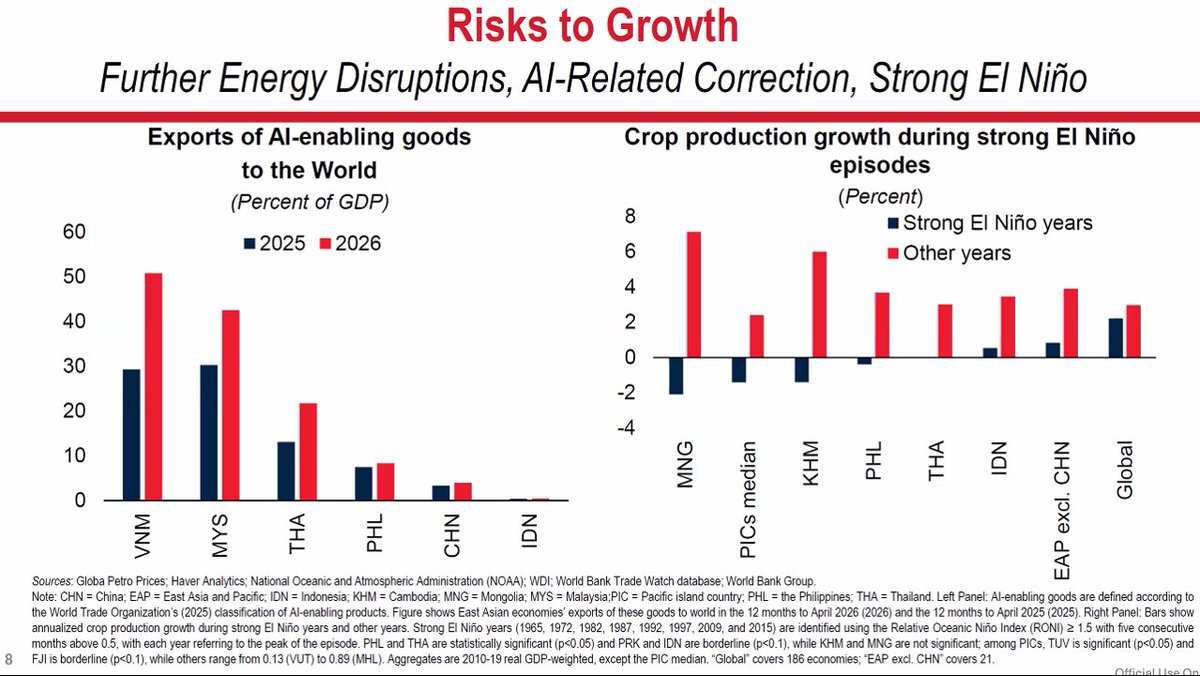
Indonesia doesn't seem riding the AI wave: Indonesia's exports of AI-enabling goods to the world is negligible, compared to Vietnam, Malaysia, or Thailand.
Read more: https://t.co/5YUFWzj8Yt