This sell-off has been driven by a perfect storm created by: 1) The Blue Tidal Wave win and fears about an anti-AI/anti-datacenter DC, 2) losing the global leader of the AI Revolution Jensen in his black eye moment, 3) China driven regulatory concerns across the rest of semis/memory stocks (e.g. AMD short report yesterday), 4) multiple market clearing events which have just led to more selling, 5)Anthropic IPO being a massive success but marginally reducing liquidity from other tech names, 6) significant fund P&L pain diminishing buying power, and 7) sticky inflation and hawkish Fed speak with concerns around more hikes and constricting financial conditions….The $4 trillion AI buildout is still happening and our tech thesis into 2027 remains.
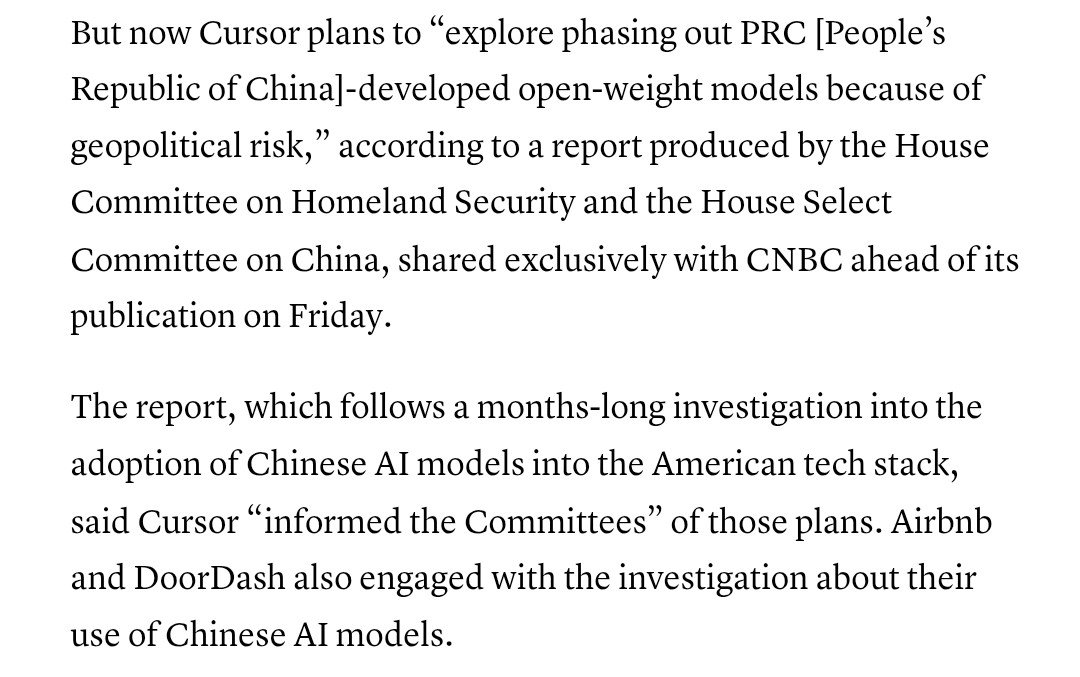
Cursor has told Homeland Security they are considering phasing out *all* China developed open-weight models because of the 'geopolitical risk.' The report will be published by multiple House committees later today. This is a huge indicator of future regulatory direction!
Anthropic’s IPO is a punctuation mark in the history of both humanity and computation. It’s also the largest bet in Bessemer’s history. While we all attempt to define just how large the impact of this company, and this day is, we'll put it this way: Anthropic is the most astonishing business we’ve ever seen.
This is an important day not only for Dario, Daniela and the entire team, but also for Bessemer as well.
Backstory →
Alibaba CEO: "the new compute export control rules will affect next year's products and services" but "our own progress in developing domestic computing power is in fact already ahead of our original expectations."
He said China will face a compute supply crunch in 2027 and 2028 before domestic production ramps up. https://t.co/TZJMcGAZCE
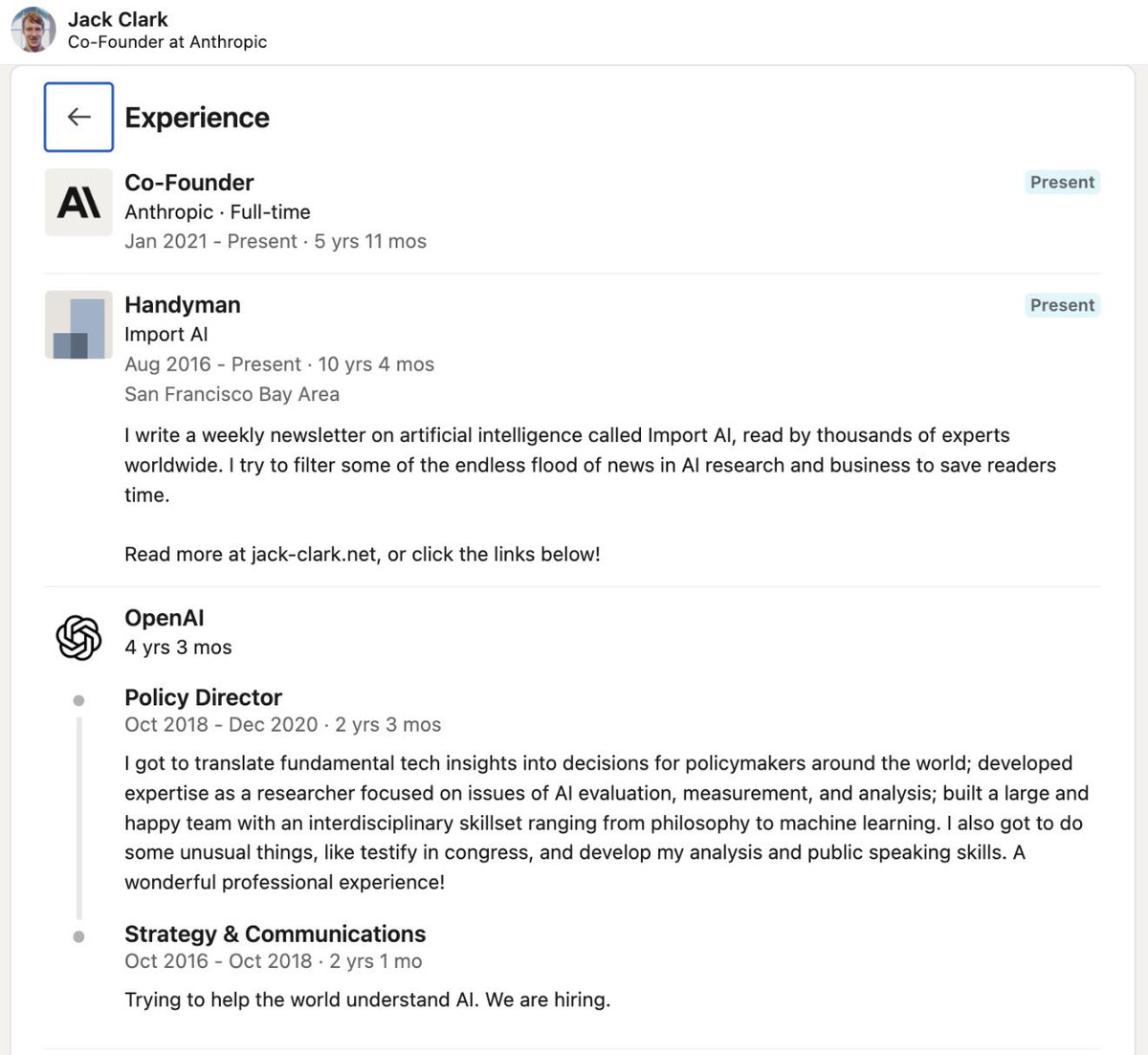
Each of Anthropic's 7 co-founders own ~1.4% of the AI startup. Those stake are worth $20B+ a person at top of IPO range.
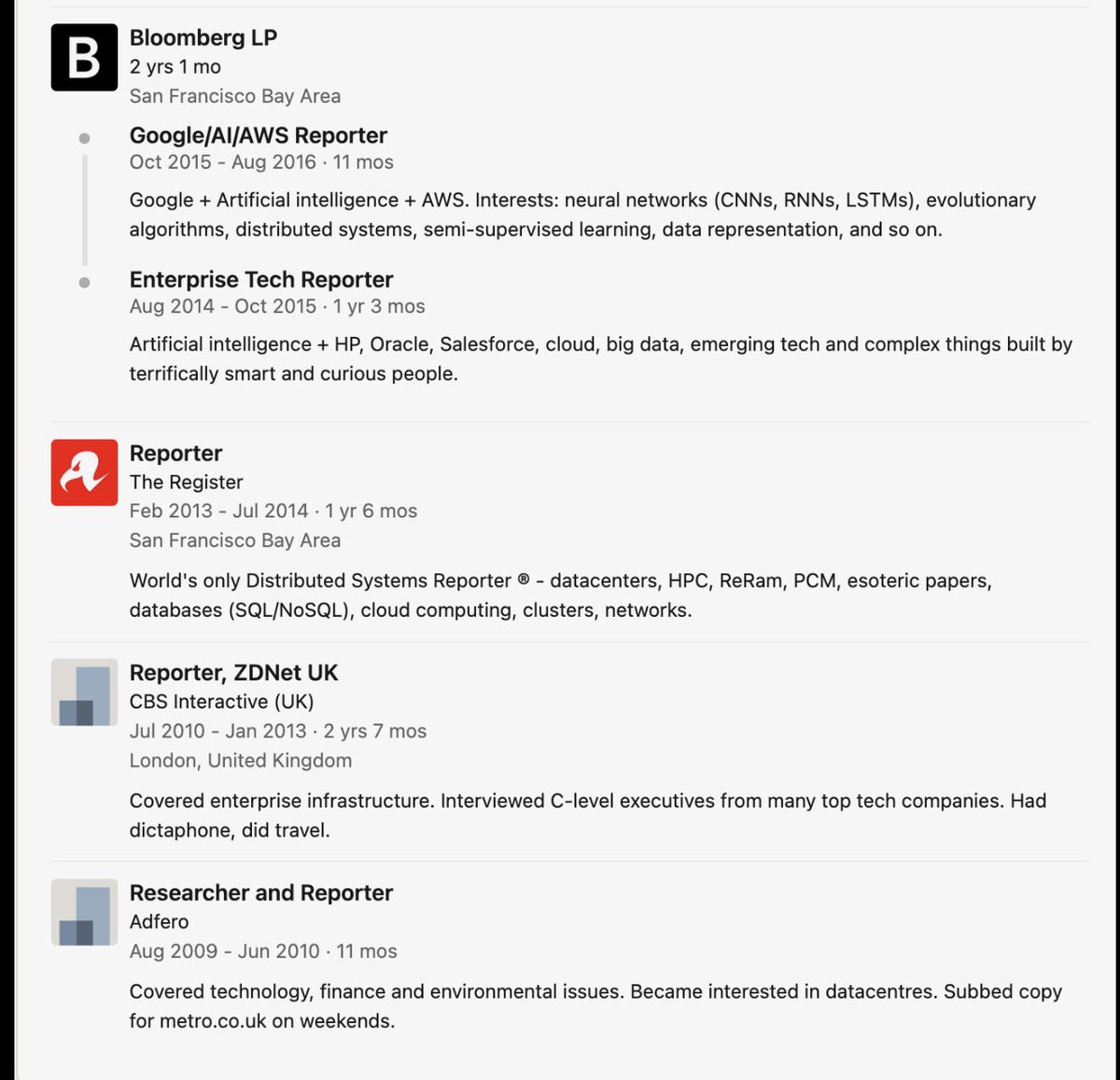
This makes co-founder Jack Clark the most financially successful beat reporter ever (including a stint as the “world’s only distributed systems reporter.”)
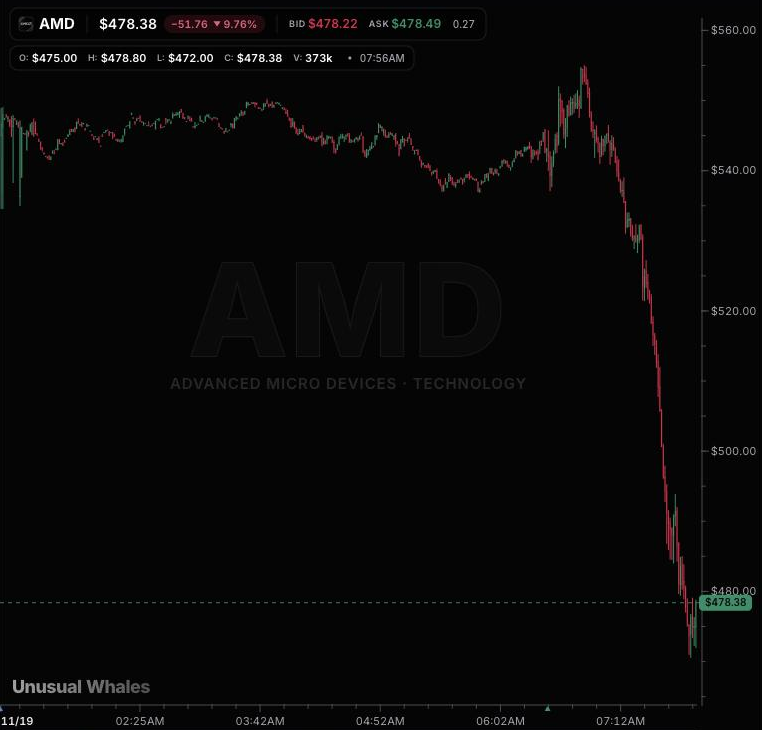
BREAKING: AMD stock, $AMD, crashes 15% in 30 minutes after Hunterbrook Media flags potential China export-control violations.
The report says blacklisted Chinese server maker IEIT kept shipping updates with newer AMD firmware after its 2025 blacklisting.
Hunterbrook Capital also disclosed a short position in AMD.
This is a direct consequence of Monday's export controls, and the first of many. China was undoubtedly exploiting this loophole to the tune of billions of dollars. We will soon start to see which companies' entire business models was built around providing AI compute to China.
It will also be interesting to see how these companies adapt to this new environment. Legitimate cloud companies that have no ties to China and have no Chinese hardware in their data centers, but were simply profiting from the remote access loophole, will almost certainly be able to rent all of their computing power to U.S. and allied companies, who will no doubt be more than happy to have it.
But cloud companies that were straight-up Chinese cutouts, such as Megaspeed, face a more difficult challenge. Many U.S. and allied companies will presumably not want to work with them, given they would likely just funnel all their data (and potentially even model weights) back to Beijing. So these companies could be stuck with a giant data center full of chips, but no customers to rent them to.
This leaves a few possibilities for these Chinese cutouts: (1) sell their existing chips in datacenters outside of China to a U.S. or allied buyer; (2) illegally smuggle their existing chips to China; or (3) illegally continue to rent access to their chips to China or to Chinese cutouts, and hope that Commerce doesn't enforce Monday's ban on this.
The U.S. government must monitor this space very closely. If we don't see Chinese shell companies like Megaspeed sell off their current stockpile of AI chips located outside China, it could mean that they are illegally smuggling them to China, or are illegally still renting access to them to China. This also shows why the efficacy of Monday's rule all hinges on whether the Department of Commerce will enforce it.
Renaissance Technologies sold almost all of its Nvidia stake before the stock’s recent plunge.
The quant fund founded by the late Jim Simons cut its Nvidia holdings by more than 99% in the third quarter, from about 7.09 million shares to just 23,170, per its latest 13F filing. That position was worth roughly $1.4 billion at the end of June. By Sept. 30 it was worth about $5.3 million.
Renaissance also nearly exited Meta, cutting its stake from about 2 million shares, worth more than $1.1 billion, to roughly 1,600 shares.
It moved the money elsewhere:
Micron: stake up 619% to 1.52 million shares, worth $1.62 billion
AMD: up 140% to about 2 million shares, worth $1.21 billion
SpaceX: a new $621 million position
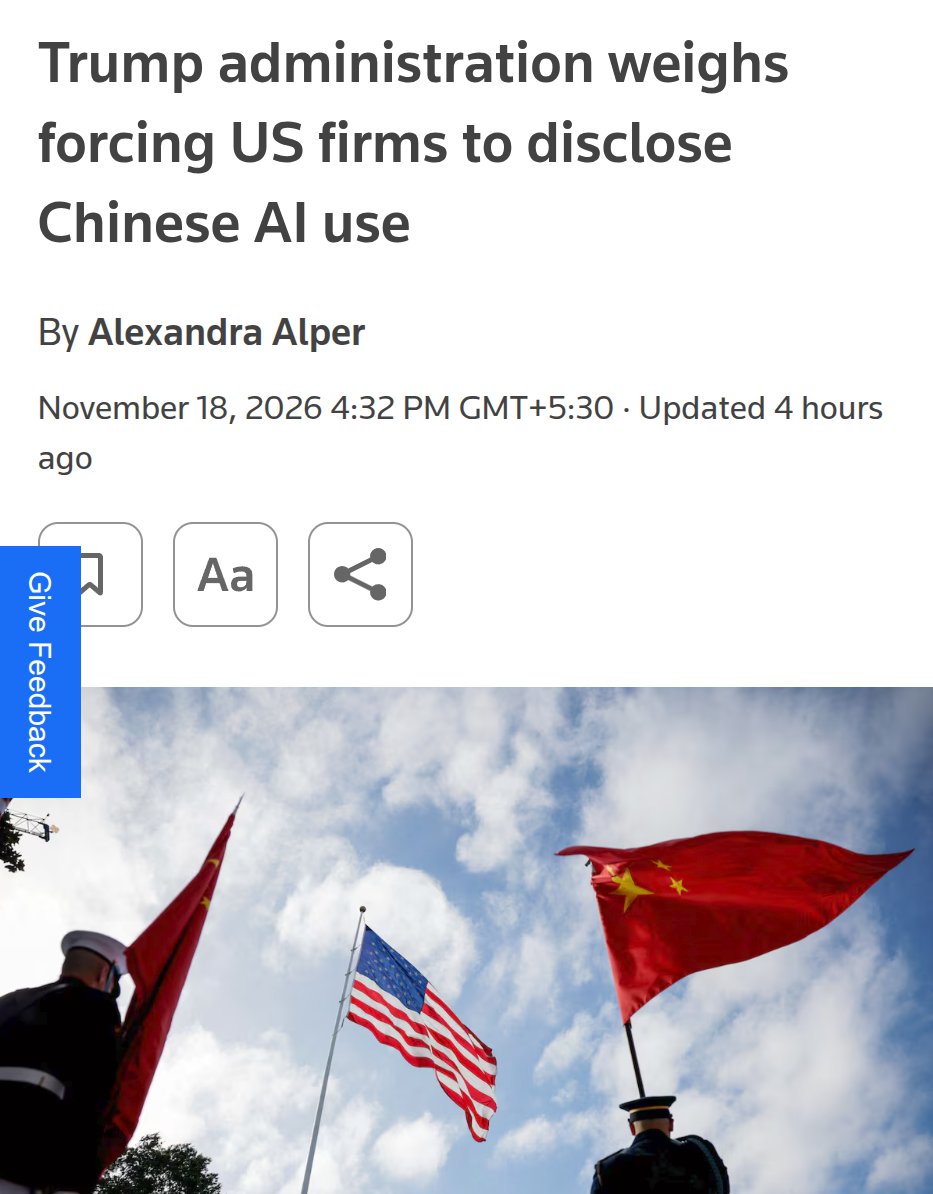
The Trump administration is considering making US companies post any use of Chinese AI models on their websites.
The aim is to discourage reliance through “name and shame” pressure, without new restrictions that could anger industry or Beijing.
Airbnb runs its customer service agent on Qwen, yet says its AI runs overwhelmingly on US models and routes Chinese ones only through approved US-based providers.
John Moolenaar (chair of the House select committee on China) welcomed the disclosure idea and argues risks remain even when Chinese models run on US companies’ own infrastructure, which undercuts that hosting defense.
House investigators have also sent letters to Anysphere, whose Composer 2 coding model was built on a version of Moonshot AI’s Kimi, and to DoorDash, which routes some internal tasks through Kimi.
Even a US government website deployed an Alibaba model to search proposed federal regulations, Reuters reported in September.
Jensen Huang will appear for a transcribed interview with the House Foreign Relations, Intel, and China committees on December 1st, and NVIDIA General Counsel Tim Teter on December 2nd, the committees announce.
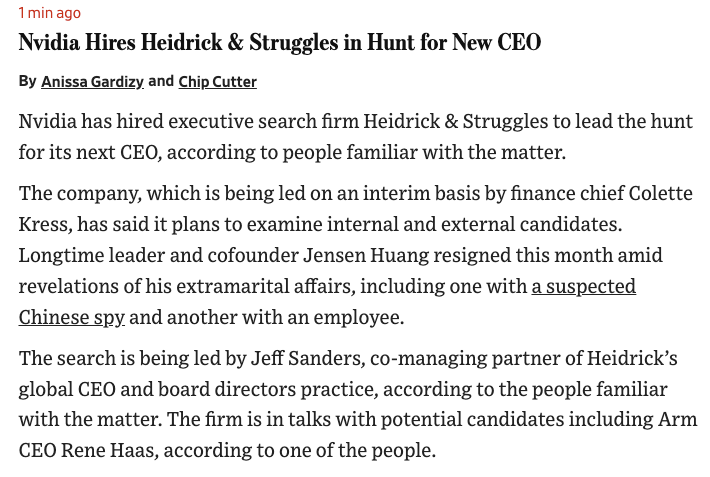
Nvidia has hired Heidrick & Struggles to lead its CEO search following Jensen Huang's resignation.
The search is led by Jeff Sanders, and the firm is in talks with potential candidates, including $ARM CEO Rene Haas.
Nvidia is considering both internal and external candidates.