A wantrepreneur. My goal is to become a decent scientist/entrepreneur, and use tech to bridge the gap between rich and poor. MRI scientist at @CUHKMedicine
Are u interested in disease prediction using statistical modelling on multiomics? If so, pls reach out to me and talk more.
Friends and colleagues, if u know someone who may be interested, pls let me know. Many thanks!
#diseaseprediction#multiomics#cuhkmedicine
Delighted to share the latest paper from our team in Cell Metabolism (https://t.co/OcX5XWP8q7), which has been selected as the cover article for the upcoming December 2025 issue.
In this study, we demonstrate that GLP-1R agonism (using the drug exenatide) confers body-wide multi-omic age-counteraction that rivals rapamycin, the mTOR inhibitor and benchmark anti-aging drug, in aging/aged male mice. Interestingly, we found that this is largely mediated through the hypothalamus in the brain.
Our journey began eight years ago: Upon extensive literature review and in part inspired by the 2017 EXENATIDE-PD trial paper in Lancet, we first hypothesized that GLP-1RAs might have age-counteracting properties. We provided the first experimental evidence connecting aging and GLP-1 agonism in 2020 [https://t.co/m16JMiX6C7], showing that exenatide treatment can potently counteract mouse brain vascular aging. We then demonstrated that such an effect extends to most gliovascular cell types in a companion paper in 2021 [https://t.co/5UexRIVo6C].
Now, building on our prior works, we are delighted to offer the most direct experimental support to date for the growing discussion that this drug class holds significant anti-aging potential inferred from the expanding list of clinical pleiotropic effects—a topic that was recently raised again by Dr. Lotte Bjerre Knudsen at ARDD 2025 and featured in Nature Biotechnology [https://t.co/lJ4oh6HjR7].
Currently, our clinical team and collaborators are focused on leveraging the anti-aging and anti-neuroinflammatory mechanisms to test GLP-1RAs as treatments for cerebrovascular disorders (https://t.co/o4RfihUtO2: NCT05920889 [will be published very soon], NCT06788626 [getting close to the finish line], and NCT05356104 [will take another two years]).
A huge thank you to our entire team and collaborators, editor and reviewers, and to Dr. Jennifer Ma for the cover art that perfectly captures the spirit of our work [stay tuned!], paying tribute to the scientists who made two remarkable discoveries: namely, the isolation of the first GLP-1RA exenatide from Gila monster venom, and rapamycin from Easter Island soil bacteria. Who would have thought that these two natural substances would converge on age-counteraction, at least in the aging mouse!
This is what happens when you try parallel imaging with multiple low field scanners: parallel imaging - low field style! With a Pilates class included.
We are excited to share this paper that just came out @ScienceAdvances. @GlialGuy et al. showed that chemogenetic activation of locus coeruleus noradrenergic neurons enhances frontal DMN neuronal activity and connectivity with concurrent vasoconstriction. https://t.co/tTCKRTm8kl
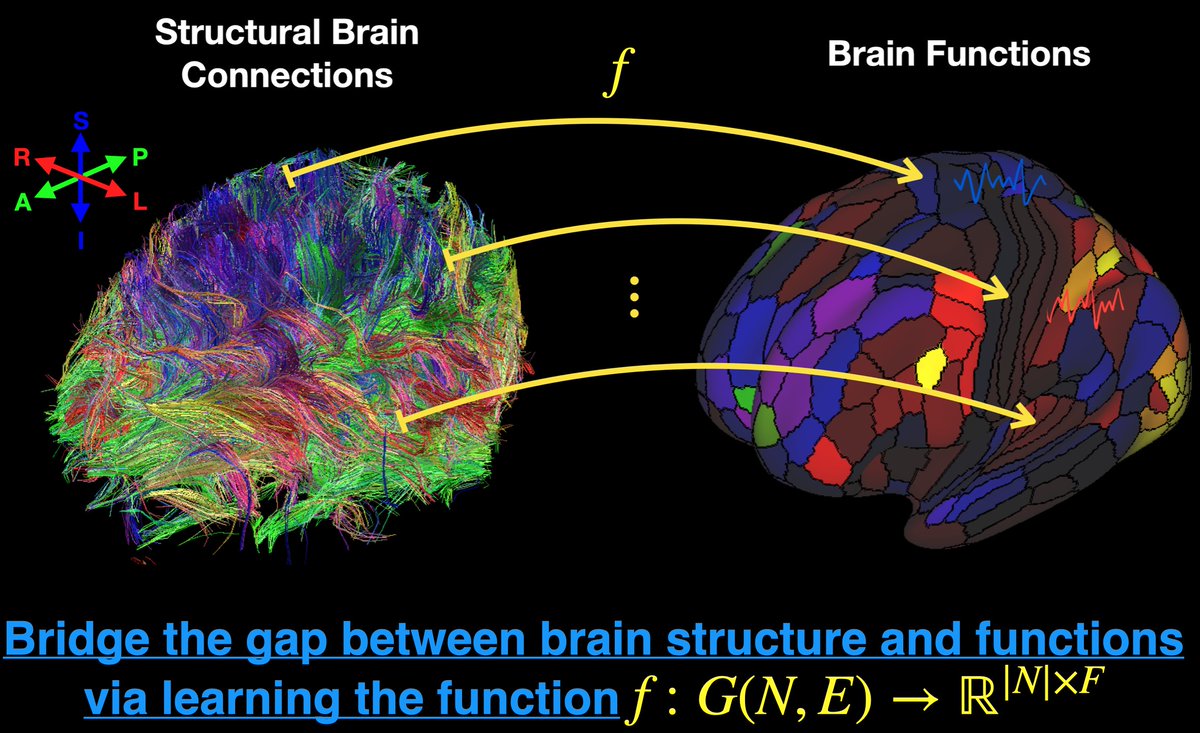
Just curious, would @DeepMind be interested in digging deeper into this problem of disentangling the relationship between brain structure and functions? #GNN#brain
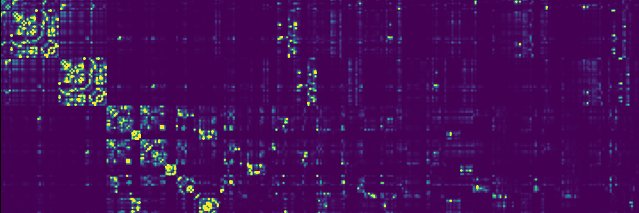
We have finally made it! Please have a look at how we used graph neural network to predict fMRI responses from structural connectome. All comments and suggestions are welcomed!





![shibadaddo's tweet photo. Delighted to share the latest paper from our team in Cell Metabolism (https://t.co/OcX5XWP8q7), which has been selected as the cover article for the upcoming December 2025 issue.
In this study, we demonstrate that GLP-1R agonism (using the drug exenatide) confers body-wide multi-omic age-counteraction that rivals rapamycin, the mTOR inhibitor and benchmark anti-aging drug, in aging/aged male mice. Interestingly, we found that this is largely mediated through the hypothalamus in the brain.
Our journey began eight years ago: Upon extensive literature review and in part inspired by the 2017 EXENATIDE-PD trial paper in Lancet, we first hypothesized that GLP-1RAs might have age-counteracting properties. We provided the first experimental evidence connecting aging and GLP-1 agonism in 2020 [https://t.co/m16JMiX6C7], showing that exenatide treatment can potently counteract mouse brain vascular aging. We then demonstrated that such an effect extends to most gliovascular cell types in a companion paper in 2021 [https://t.co/5UexRIVo6C].
Now, building on our prior works, we are delighted to offer the most direct experimental support to date for the growing discussion that this drug class holds significant anti-aging potential inferred from the expanding list of clinical pleiotropic effects—a topic that was recently raised again by Dr. Lotte Bjerre Knudsen at ARDD 2025 and featured in Nature Biotechnology [https://t.co/lJ4oh6HjR7].
Currently, our clinical team and collaborators are focused on leveraging the anti-aging and anti-neuroinflammatory mechanisms to test GLP-1RAs as treatments for cerebrovascular disorders (https://t.co/o4RfihUtO2: NCT05920889 [will be published very soon], NCT06788626 [getting close to the finish line], and NCT05356104 [will take another two years]).
A huge thank you to our entire team and collaborators, editor and reviewers, and to Dr. Jennifer Ma for the cover art that perfectly captures the spirit of our work [stay tuned!], paying tribute to the scientists who made two remarkable discoveries: namely, the isolation of the first GLP-1RA exenatide from Gila monster venom, and rapamycin from Easter Island soil bacteria. Who would have thought that these two natural substances would converge on age-counteraction, at least in the aging mouse!](https://pbs.twimg.com/media/G6IARRPaMAAQ0GM.jpg)