Architect, urbanist, free software & open data advocate. Math, reading, swimming, cycling & chess. Known to go months without seeing the inside of a car.
Ukrainian attack drones successfully struck a second Russian oil refinery tonight, with multiple fires and pillars of smoke seen rising from the Kuibyshev Refinery in Samara Oblast.
Disabled people can’t easily evacuate.
We often rely on medical equipment, caregivers & resources that make it difficult to leave our homes.
Telling them to evacuate less than 24 hours before detonating a lead bomb is inexcusable.
They’re being left to die.
🚨 GOOD NEWS: For the FIRST TIME ever, solar generated more of US electricity than coal. In May 2026, it supplied 12.8% of power to coal's 12.2%.
Solar is now the country's fastest-growing electricity source and its third-largest overall
Source:
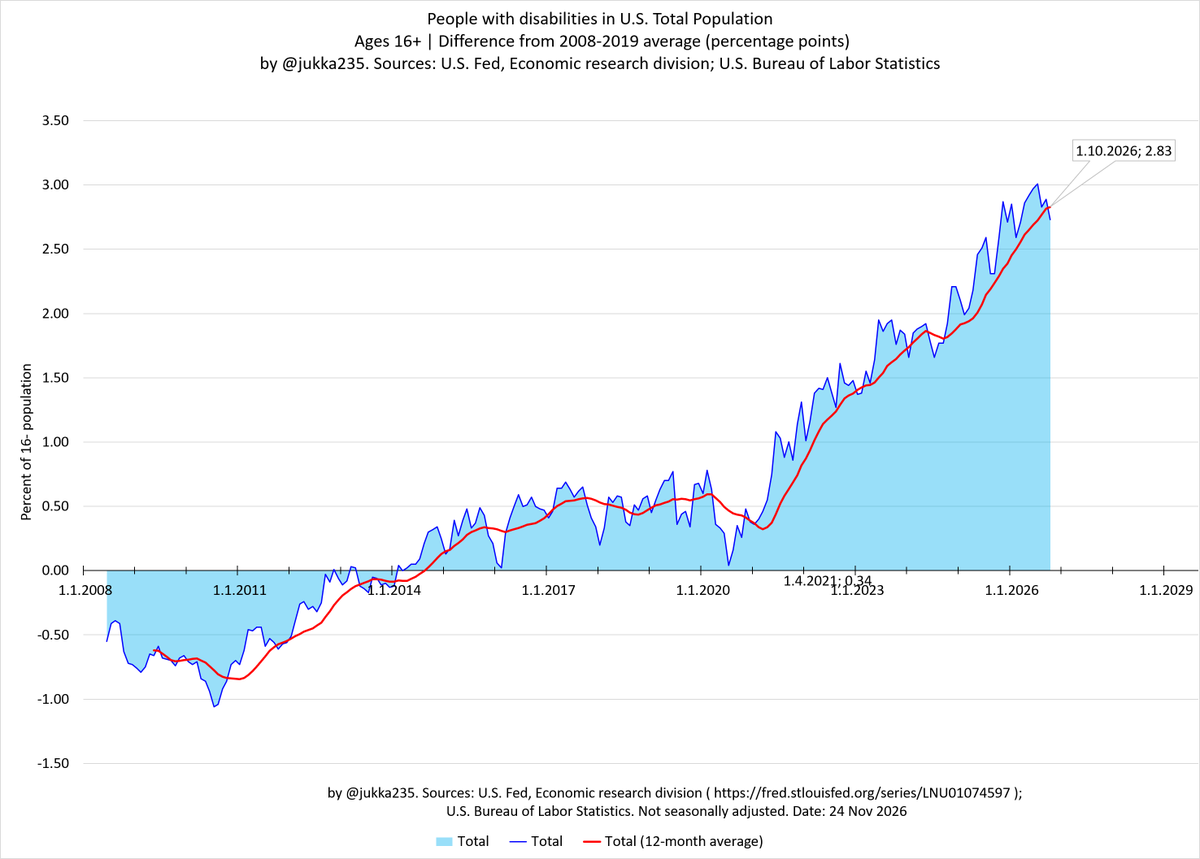
U.S. Bureau of Labor Statistics, Population - With a Disability, 16 Years and over [LNU00074597], retrieved from FRED, Federal Reserve Bank of St. Louis; https://t.co/szIg8xrZk7, November 24, 2026.
In the United States, the share of people with disabilities in the total population has risen to 2.83 percentage points above the 2008-2019 average, increasing at 0.54 percentage points per year.
1/x
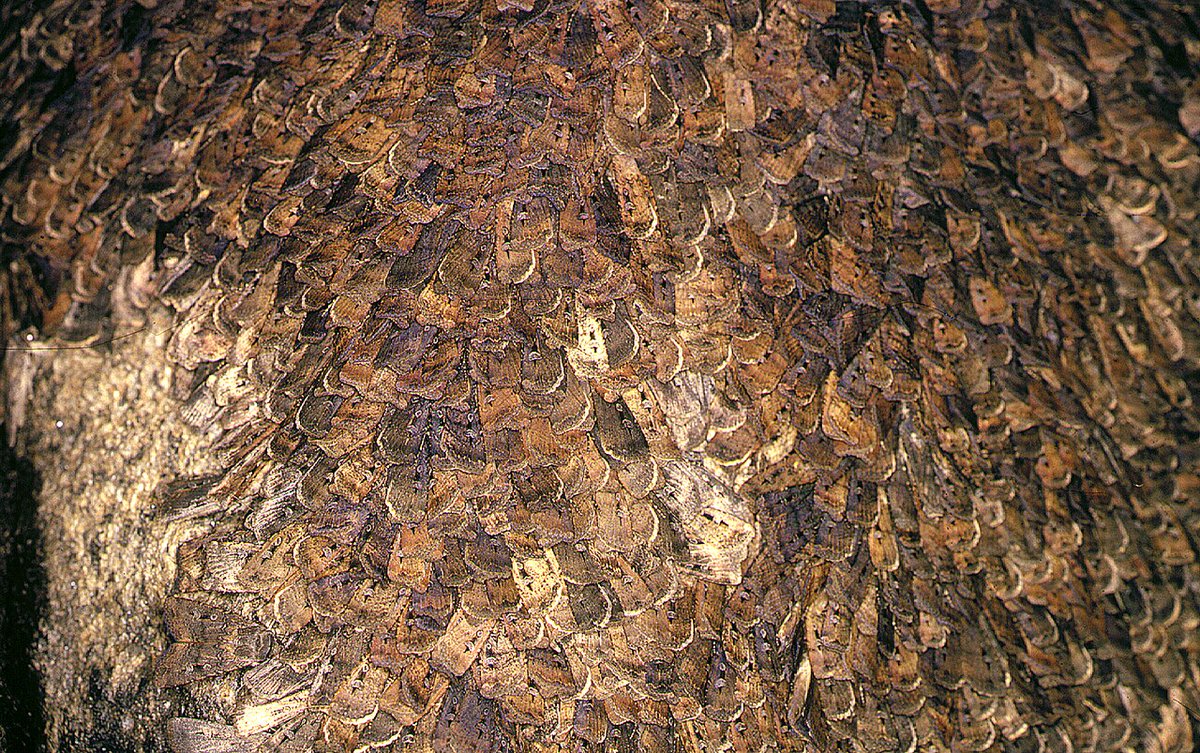
Just as astonishing is that under cloud they can fall back on the Earth's magnetic field. In autumn the same moths fly home to breed and die.
They're the first invertebrate known to use the stars to navigate long distances. How they evolved to do this is unknown.
3/3
They navigate using the stars.
Researchers put Bogong moths in a flight simulator under an artificial night sky, with Earth's magnetic field cancelled out. They still flew the right way. When the stars were scrambled the moths lost their bearings.
2/3
In 1988, Schumer was leading opposition to a DNC plank supporting Palestinian self-determination.
He provoked delegates supporting it — prompting so much booing he was warned to cool it.
Afterwards, Schumer bragged how much money he raised off the clash.https://t.co/MkpvL7z4Xe
Susan Pretti, the mother of Alex Pretti, shared a message ahead of Thanksgiving, revealing that her family is still being stonewalled by the Justice Department 304 days after her son’s murder.
As her family prepares to spend its first Thanksgiving without Alex, she is vowing to never give up in her fight for justice.
Read her full statement below:
“304 days ago, the Federal Government murdered my first born and only son Alex. It has been 32 days since our press conference when we begged the DOJ and Daniel Rosen in the U.S. Attorney’s office to do their jobs, we are still being stonewalled.
Alex will never again be at our Thanksgiving table. We will never hear his infectious laughter, nor his funny stories of camping, biking, time spent with his beloved friends, or even some of his most heart-breaking stories of his patients’ struggles.
As you, Daniel Rosen and the DOJ, gather as a family, remember Alex and what your actions have stolen from us and continue to take for us every single day since January 24, 2026!
We will never stop seeking justice for Alex.”
Éva Heyman (1931-1944) was a 13-year-old Jewish girl from Oradea (Nagyvárad), on the border of Romania and Hungary, who kept a diary during the Nazi occupation of Hungary in 1944. Often compared to Anne Frank, her writings chronicle her shift from a normal childhood to persecution, ghettoization, and deportation to Auschwitz...
Born to a Jewish couple who divorced when she was young, Éva lived mostly with her grandparents near their pharmacy and dreamed of becoming a news photographer. She began writing on February 13, 1944—her 13th birthday—initially recording everyday thoughts, friends, and family life before the German invasion of Hungary on March 19, 1944. Her entries detail anti-Jewish laws, lost freedoms, property confiscation, and the forced move into a ghetto in May 1944. Written on May 30, 1944, just before deportation, it describes cramped freight cars sealed with padlocks and her fear of what lay ahead.
Deported in early June 1944, Éva was murdered at Auschwitz-Birkenau on October 17, 1944, at age 13. Her grandparents were also killed. Her mother, Ágnes Zsolt, survived and recovered the diary in 1945. It was later published as The Diary of Éva Heyman. In 2019, creators adapted her diary into a viral Instagram project (Eva.Stories) imagining how she might have documented 1944 on social media, drawing both wide viewership and debate over modernizing Holocaust memory.
. . .
On her 13th birthday, Éva Heyman began keeping a diary. She dreamed of becoming a photographer, traveling the world, getting married and having a family. Within eight months, she would be murdered at Auschwitz.
Born on February 13, 1931, in Nagyvárad, now Oradea, Romania, Éva was a Jewish girl who lived primarily with her maternal grandparents following her parents' divorce. She was intelligent, observant and curious about the world around her.
Her diary began with the ordinary concerns of a teenage girl: friendships, family disagreements, birthday presents and her hopes for the future. But after Nazi Germany occupied Hungary in March 1944, the entries became a devastating record of how quickly an ordinary childhood could be dismantled.
Jewish families were stripped of their possessions, businesses and freedoms. When authorities confiscated Éva's beloved red bicycle, she was heartbroken. It was one of the small pleasures of childhood that had suddenly become forbidden to her.
In May 1944, Éva and her grandparents were forced into the Nagyvárad ghetto. Surrounded by suffering and uncertainty, she continued writing, desperately expressing her desire to survive.
“I don't want to die because I've hardly lived!”
On May 30, 1944, Éva wrote her final diary entry. Before her deportation, she entrusted her diary to Mariska, the family's former cook, who managed to preserve it.
Éva was deported to Auschwitz in June. Her grandparents were also murdered during the Holocaust. On October 17, 1944, Éva was killed in the gas chambers. She was just thirteen years old.
Her mother, Ágnes Zsolt, survived the Holocaust and recovered the diary after the war. It was first published in Hungarian in 1948, preserving the voice of a daughter she would never see again.
Éva is often called the Hungarian Anne Frank. Yet her diary deserves to be remembered in its own right. It documents the persecution of Hungarian Jews through the eyes of a child who understood that the world was becoming increasingly dangerous but still desperately wanted to be part of it.
She wanted to grow up. She wanted to take photographs. She wanted to fall in love and experience the ordinary joys of adulthood.
The most heartbreaking thing about Éva's dreams is how little she was asking for.
#archaeohistories
Bought and paid for by Europe, urgently needed by Ukraine, held up by Hegseth and Trump: "The outstanding allocation of PAC-3 interceptors, Ukraine’s most effective defence against Russian ballistic missiles, includes eight scheduled for delivery in September, 10 in October and 10 in November, with a further 12 due in December. None of the four shipments has yet been approved for delivery, according to the officials and a person familiar with the matter." https://t.co/nrPZtBdpEC