Wait, $MU quietly raised their buyback program by over $30 Billion and nobody’s talking about it!? “Subject to CHIPS act constraints” - it’s about to get real!
Screenshot is from a summary of 10-K filing provided by EarningsHub
(Thanks @KevinMelnuk for bringing it to my attention)
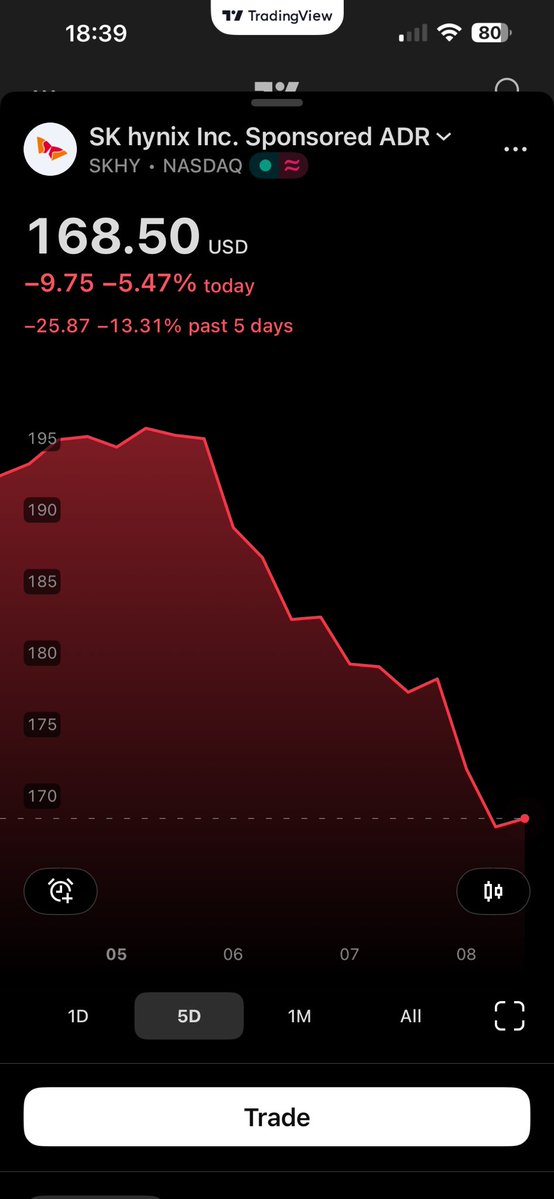
I have heard some folks compare $DRAM stocks such as $SKHY and $MU that they go up / flatten out around October and then drop/before this last ramp up of 100s of %. It’s hard to argue on charts as they are actuals. However, unlike any time in history, DRAM / HBM was never this crucial to LLMs + the amount of cash generated is more than most Mag7s. So, either we start seeing a 2027 drop off in dram prices or we see some major buybacks/or acquisitions to diversify from HBM. In either case, someone like Samsung generating >$300B in operating income should not be taken lightly at 4x PE. Or for that matter $MU. For when markets stop caring and when mang ramp buybacks -> you get an alpha move.
@MelvinInvests The stubborn, ignorant cyclic narrative is holding on. But share buybacks and the length of this market will change that. Also with the arrival of zHBM compute and memory will be in the same stack. Prices will have to converge.
$BTC perps are synthetic BTC printing, creating unlimited paper BTC without requiring spot BTC backing, weakening true scarcity and distorting price discovery. The US would never allow perpetual synthetic dollars without Treasury collateral. Bitcoin shouldn't be different
Some AI bubble.
Lumentum CEO in April: “basically sold out” through 2027.
Now: “almost sold out for 2029.”
Under-shipping demand by 30% on some products into 2028; ~70% on others in 2027.
Demand keeps outrunning the fabs.
Laser go pew pew. $LITE
It's a bit rich for @bankofengland governor Andrew Bailey to warn against a Budget that repeats the crisis after the Truss mini-Budget when part of that turmoil was caused by the BoE itself deciding to start unwinding QE at the same time that the mini-Budget was issued
It's also not the place of the BoE to seek to influence the Budget either through market interventions like selling gilts or by making speeches
I have low confidence in @JohnHealey_MP and @AndyBurnham getting this Budget right - I think they're addicted to public spending, addicted to big state and addicted to high taxes
I think they will struggle to devise a Budget that both the PLP - which seems to live in a fantasy world where "the rich" and businesses can be infinitely taxed - and the bond markets will wear
But the Budget is up to them and not the central bank
https://t.co/oKZTaJWiPq
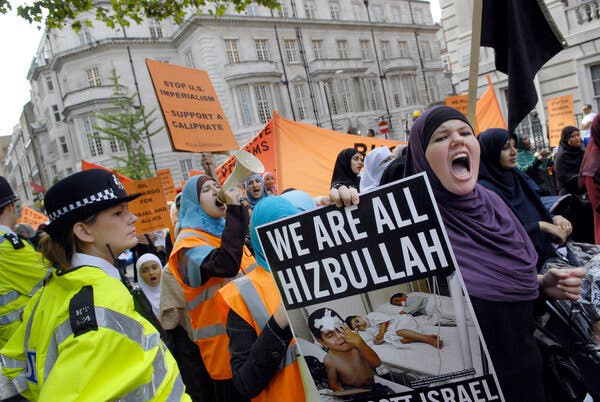
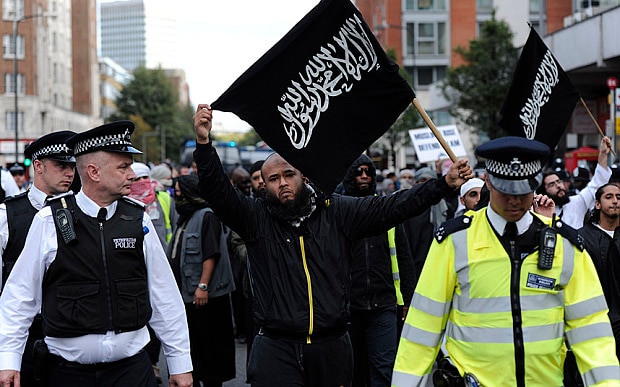
Britain Is Sleepwalking Into Lebanon.
Lebanon did not fall overnight. It was once the most cosmopolitan, pluralist state in the Arab world. Beirut was the Paris of the Middle East. A functioning democracy. A free press. A Christian majority that built a nation generous enough to welcome those who came. It believed that openness would be met with openness. That tolerance would be reciprocated. That good faith was a universal language. It wasn't. It never is.
The Palestinians arrived after 1948 and in their hundreds of thousands after 1970, expelled from Jordan with their militias intact. The Lebanese state, too timid to enforce its own sovereignty, allowed armed factions to operate as a state within a state. Then Iran exported its revolution westward and Hezbollah was born, funded from Tehran, running its own hospitals, schools, courts and welfare networks. It made the Lebanese state optional for an entire community. Every accommodation encouraged the next demand. Every retreat was read as weakness, because it was.
The civil war that followed lasted fifteen years and killed 150,000 people. But the war was merely the violent expression of something that had already happened. The state had lost its monopoly on violence. Communities had retreated into armed confessional blocs. The centre had hollowed out. Lebanon was already two countries sharing a flag but not a future.
The Christians didn't lose because they were cruel. They lost because they were naive. They believed demographic generosity could be squared with political stability. They believed armed factions could be absorbed into a civic order. Power follows population. Identity hardens under pressure. Every community with a coherent creed will eventually act on its interests. The moral high ground is not a defence. In Lebanon it became a grave marker.
Now look at Britain.
Since 2018, boats have arrived on the Kent coast carrying tens of thousands of men, the overwhelming majority unvetted and undocumented, from Iran, Pakistan, Afghanistan and Eritrea. They are housed and supported at public expense while the state performs the pantomime of processing them. Anyone who raises the subject is accused of racism before the sentence is finished. This is not immigration. It is the progressive dissolution of Britain's right to determine who enters its own territory.
The parallel institutions are already here. Sharia courts operating alongside civil law. Educational environments teaching loyalty to the Ummah rather than to Britain. Areas where policing is negotiation, investigations are quietly dropped, and the state modifies its own behaviour for fear of communal reaction. In Lebanon they called it accommodation. They kept calling it accommodation right up until the checkpoints went up.
The electoral bloc pressure is already here. Candidates selected on the basis of foreign conflicts. Representatives answering to communal leaderships rather than constituents. The institutional failure is already here. The Charity Commission investigated the Islamic Centre of England for three years. Little changed. Universities host vigils for mass murderers and hold nobody accountable. Prevent is applied selectively. Everyone knows it. Nobody says it.
Lebanon did not collapse because its enemies were strong. It collapsed because its institutions were weak. Because it confused tolerance with the abandonment of standards. Because it believed the centre would hold without anyone holding it. Britain is not Lebanon yet. But Lebanon wasn't Lebanon yet, once. It drifted. Demographics shifted. Parallel loyalties hardened. The state lost the nerve to enforce a single standard of law. Bit by bit the centre hollowed out.
We are drifting. The question is whether anyone in authority will admit it. Before the drift becomes a current too strong to swim against.
"Power follows population. Identity hardens under pressure. Every community with a coherent creed will eventually act on its interests."
@AlmaCap114204 Or $SKHY is winning as it co-designs with $NVDA and $TSMC or $MU is winning as the only US HBM producer…. The important thing is that all 3 are priced incorrectly by backward analysts looking backward instead of forwards. These are structural AI buildout stocks
@JonahLupton TBH every analyst that thinks $MU, $SKHY and solana:XHxQRvqGcr2YjZoSzTfXxkHBqCL9izthGrAAYRYpump should be priced as a cyclic commodity at peak is an idiot and there are hundred of them.
In the past 24 hours we got a monster monthly report from $TSMC and the most profitable quarter in corporate history from Samsung… yet… tech stocks dumped today because a handful of idiots in the media don’t know the difference between gross revenues and net revenues 🤣
According to Korean media, most $NVDA Vera Rubin chips will use 12 layer HBM4, not 8 layers like recent reports said.
Counterpoint Research called the fears of slowing HBM demand misinformation.
HBM uses more than 3x the wafer capacity of regular DRAM, so the memory shortage is not going away anytime soon.
Bullish for Samsung, SK hynix and $MU.
OK, let's do this. Anyone with half a brain can see that from today's FT article and FT's earlier reporting that they confused gross and net annualized revenue lines (ex-Microsoft rev share).
The problem is that the sensationalized, conflated headline leaves a large share of readers believing there was malfeasance when there was none.
Consider the opening sentence: "OpenAI’s annualised revenue is about $20bn less than the company had signalled"
Really? When exactly did the company signal that? The FT's September 29 story citing the $70B figure certainly doesn't say so (see screenshot below).
If there was wrongdoing, why was that September 29 piece not corrected?
The goal of journalism is to tell the truth, inform with nuance, and be accurate, not to blur facts and conflate for clicks.
Leaving most of your audience with a misleading impression from a sensational clickbait headline, on top of the FT homepage no less, does them a disservice.
Look at what people are posting online on X and Reddit with the false takeaway the FT has left them with. Nearly 95%+ are saying there was blatant wrongdoing and worse. That's not fair or accurate.
Shameful journalism.
If you’re an AI bear and using this as a “win” already…I’ve got a bridge to sell you!!
The $70 billion was a reported number OpenAI never confirmed, and the real figure is still a company approaching $50 billion annualized. At the end of last year that run rate was around $20 billion, so we're talking about roughly 2.5x growth in 9 months. That's not a miss by any metric…that's expectations running ahead of the fastest scaling company we've ever seen. Not to mention Anthropic is already at close to $100B ARR.
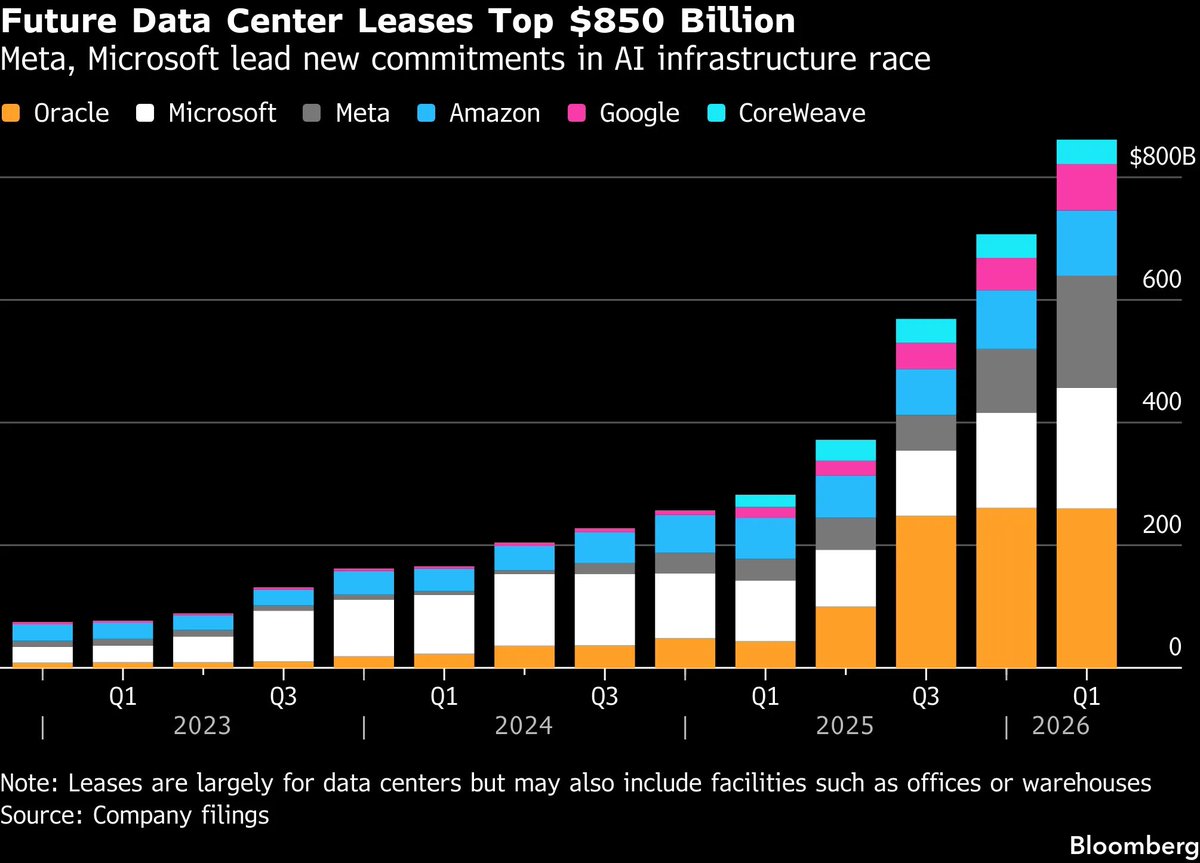
The AI trade was never built on OpenAI's revenue. It's built on $MSFT, $GOOGl, $AMZN and $META spending hundreds of billions out of their own cash flow, and every one of them has been saying demand outruns capacity.
So one private company's revenue mark doesn't cancel a datacenter order book. If it could, the thesis was never real to begin with…
What would actually break it is if capex guidance get cuts, GPU lead times collapsing, or enterprise adoption stalling. None of that happened today and not going to happen for the next 5 years.
The market repriced a rumor, and rumor driven selloffs are usually where patient money gets paid. Thesis intact…limit up!
@JohnTinsmanAOT I like the artwork behind you John, what is it? I think the thing about gauging value by P/E is that sometimes you need to factor in potential or “locked in” growth before it becomes useful.