This is not a photograph, and it's not an oil painting. It might be the most unbelievable watercolor ever made...
It's called Sommarnöje, which means something like Summer Delight, and Anders Zorn painted it in 1886. Look at the water, the gentle ripples, the reflections, the wet sheen of it, and then look at the two people, the fine detail of the wooden rowboat, the woman's white dress, the light on her face.
It has the near-photographic realism of an oil painting, and it was done in watercolor, a medium so unforgiving that a single wrong stroke ruins the entire piece.
Zorn painted this in the first summer of his marriage: the woman in white waiting on the pier is his new wife, Emma, whom he had married only months before. They had just come back from their honeymoon and were staying with her family at Dalarö near Stockholm, still looking for the home where they would spend their life. The man rowing toward her is their friend Carl Gustav Dahlström. It is a real moment from the happiest season of a young couple's life, caught and held forever.
In 2010 this single sheet of watercolor sold for twenty-six million Swedish kronor, over three million dollars, the highest price ever paid for a Swedish painting.
In his own lifetime, Zorn was celebrated above all for two things: his handling of light, and his ability to paint water. Sommarnöje is where you see exactly why...
Hats off to doctoral student and podcaster Zhong Shu in Beijing, China, who did this fascinating and smart interview with Christopher Nolan about THE ODYSSEY yesterday, originally posted to Bilibili.
A great listen/watch.
Worth also adding that only 13 countries even have satellite launch capabilities—however limited in capacity, including NASA—whereas there are two dozen countries with over 50,000 miles of high speed rail and more being added all the time.
Excellent article by Paul Voosen on the feared "tipping point" of a collapse of the Atlantic Meridional Overturning Circulation (AMOC)
https://t.co/xUNsm6CYDC
I see the idea of AI socialism is back in the news again today.
I’ll just reiterate what I’ve said here many times before: The idea of nationalizing AI – whether “hard” (complete govt ownership) or “soft” (equity stakes) nationalization – should be rejected in all its forms. It does not matter whether AI nationalization is being pitched by Bernie Sanders, national security hawks, or AI companies themselves – all flavors of AI socialism are poisonous and must be stopped.
Nationalizing AI, or even treating AI like a regulated monopoly or public utility, would have the same deleterious effects (and then some) that we have seen in countless other historical case studies. The entire history of nationalization and utility-style regulation is one of capture and cronyism, diminished innovation and consumer welfare, and censorial controls on speech in the case of information and communications technology (ICT) markets. Our nation would lose its competitive advantage in computation and algorithmic innovation if we took this disastrous path for AI. AI would become a Technology of Control instead of a Technology of Freedom.
Below you will find some journal articles and essays I’ve authored on the ugly history of soft nationalization and regulated utility economics and politics in the ICT policy world. We must not repeat this disastrous history with AI.
AI is facing the same policy choice that defined the internet era.
@AdamThierer, senior fellow at R Street Institute and a 30-year tech policy historian:
"When I was growing up in the '70s, it was a big deal when we got a telephone that was a different color and had a longer cord. That was innovation back in the '70s."
"Then the internet came along, we decided to have a firm firewall between that old era of regulated monopoly and the new world of digital technologies. We allowed them to be born free of government top-down control."
"And we saw this flowering of entrepreneurialism and creativity and culture because of that policy choice."
"Are we going to allow it to continue to be a technology of freedom? Or are we gonna bottle it all up and centralize?"
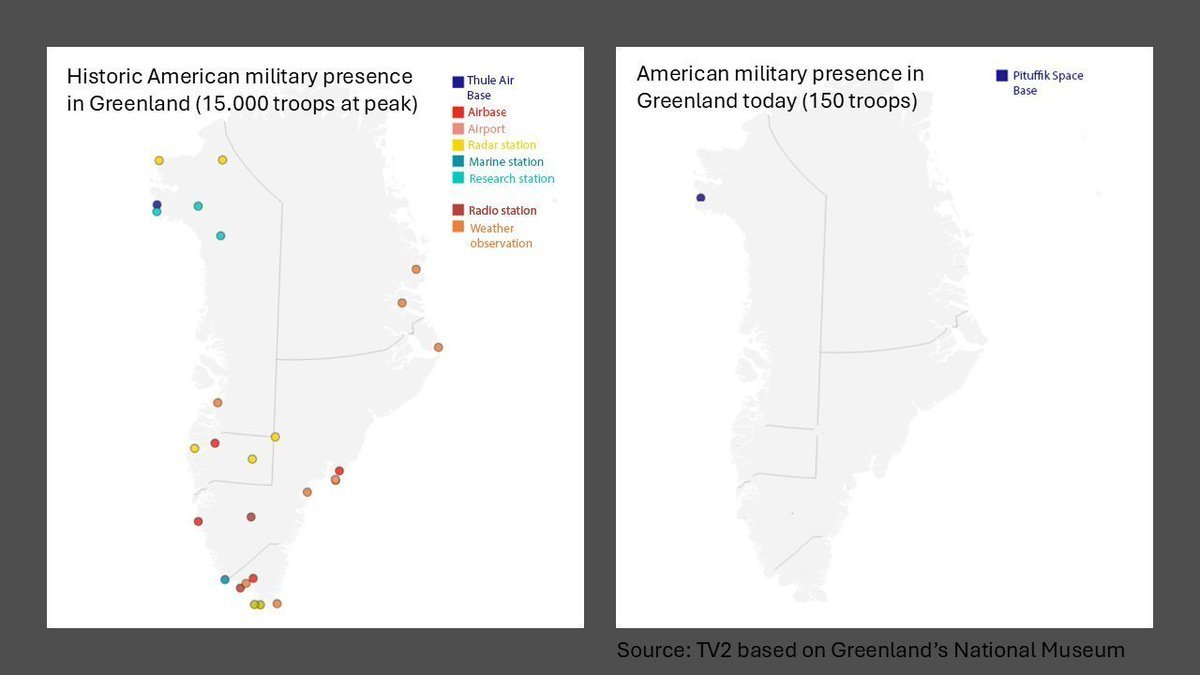
The USA already has a defence agreement with Denmark that gives them exclusive and full military access to Greenland. But they are not using it. They have downgraded their presence by 99%.
Now, apparently, they are telling their base that they need to invade and annex Greenland because they need to have a large military presence.
So after all these hours talking about AI, in these last five minutes I am going to talk about:
Horses.
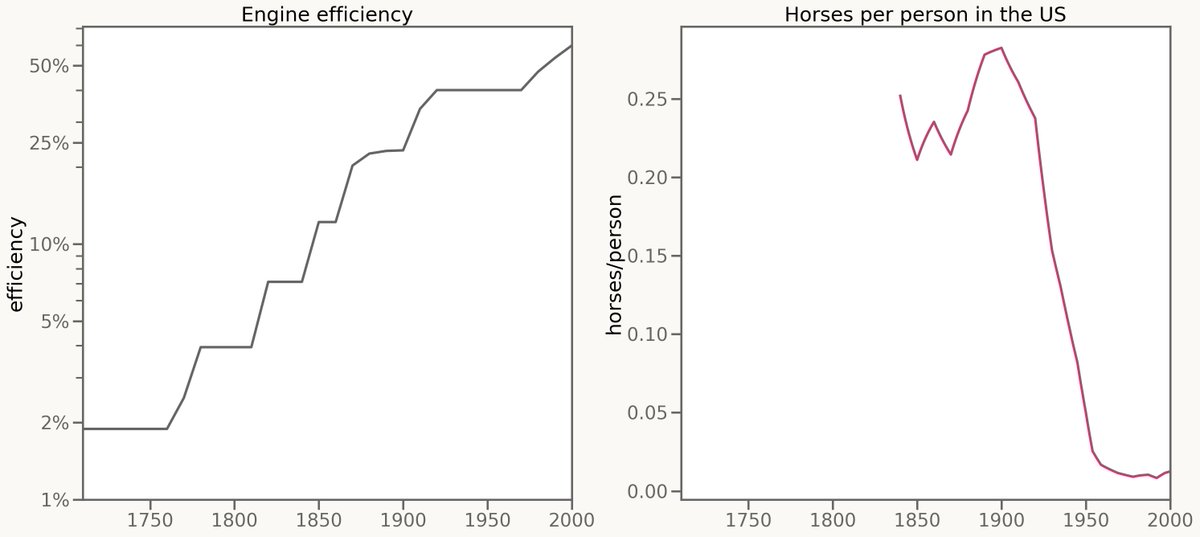
Engines, steam engines, were invented in 1700.
And what followed was 200 years of steady improvement, with engines getting 20% better a decade.
For the first 120 years of that steady improvement, horses didn't notice at all.
Then, between 1930 and 1950, 90% of the horses in the US disappeared.
Progress in engines was steady. Equivalence to horses was sudden.