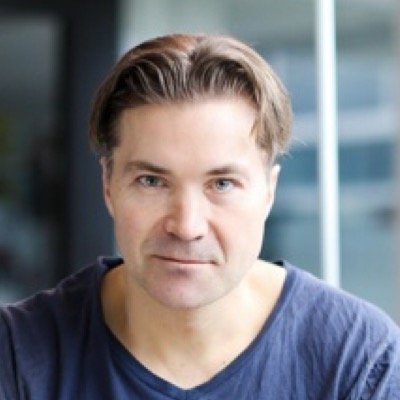
Co-founder of Wrapp, ex-Spotify CTO, ex-Stardoll. Technologist, advisor, angel. Values freedom. If you're wondering if a tweet was sarcastic, the answer is yes.
Not a day goes by that I don’t miss @Spotify’s "set current play context" feature.
We never found a name for it that made sense to 99% of casual users, so I understand why it was yanked. Still wish there were a way to describe it that immediately made sense to people.
@ktr4ce Whether it's my private driver, a cabbie or a friend picking me up, the natural thing to do is that you both help out getting the bags into the trunk. It would feel as weird to just stand there watching them do it as it feels when they just stand there watching you do it.
Sweden might be the only place where, when you get a cab at the airport, ~50% of the time (vibes-based metric), the driver has a "back problem" and won't help you put your bags in the trunk.
@FarisZacina Valid but also, if you're a cab driver and won't work out and learn how to properly lift bags into and out of your trunk, that's a skill issue. We're talking maybe ten times a day max, not hundreds of times. Plenty of more physically demanding jobs.
I respect that this may be a real issue for some, but a) it happens with a suspiciously high frequency, b) if you can't help with luggage, maybe don't pick people up at the airport?
I want to live indefinitely. Not 90 years, not 120. As long as I choose to.
People assume that makes me afraid of dying. It's closer to the opposite. Patients with terminal diseases have run out of time by a few years, sometimes a few months, before the treatment that might have saved them existed.
That gap is why I co-founded Tomorrow Bio.
What we do is simple to describe and hard to do well.
When a person dies, our team keeps the body oxygenated and starts cooling it within minutes. We replace the blood with a cryoprotectant so ice crystals don't form and destroy tissue, above all in the brain. The body is then brought to -196°C and stored in liquid nitrogen.
Our scans show that on average around 98% of the brain stays largely free of ice.
I won't pretend this is a sure thing. I tell every member the same sentence: there is no guarantee you will ever wake up. What cryopreservation offers is a chance greater than zero.
Burial and cremation offer none.
For me, that is the whole argument.
A few dozen are preserved with us today. More than 1,000 have signed up. They're young and old, scientists and skeptics, but they tend to share one trait: they would rather bet on the future than write it off in advance.
On July 3 I'm taking part in an Oxford-style debate at the Deutsches Museum in Munich on whether we should reach for longer life at all.
I'd genuinely like to hear where you stand before I get on that stage.
So here's the question I get asked more than any other: if the procedure were free and available tomorrow, would you do it? And what's the real reason behind your answer?