It's one year until we reach Mercury to stay! Follow this link to catch up with what we've been up to during our trip to this fascinating little planet! 🙂#bepicolombo
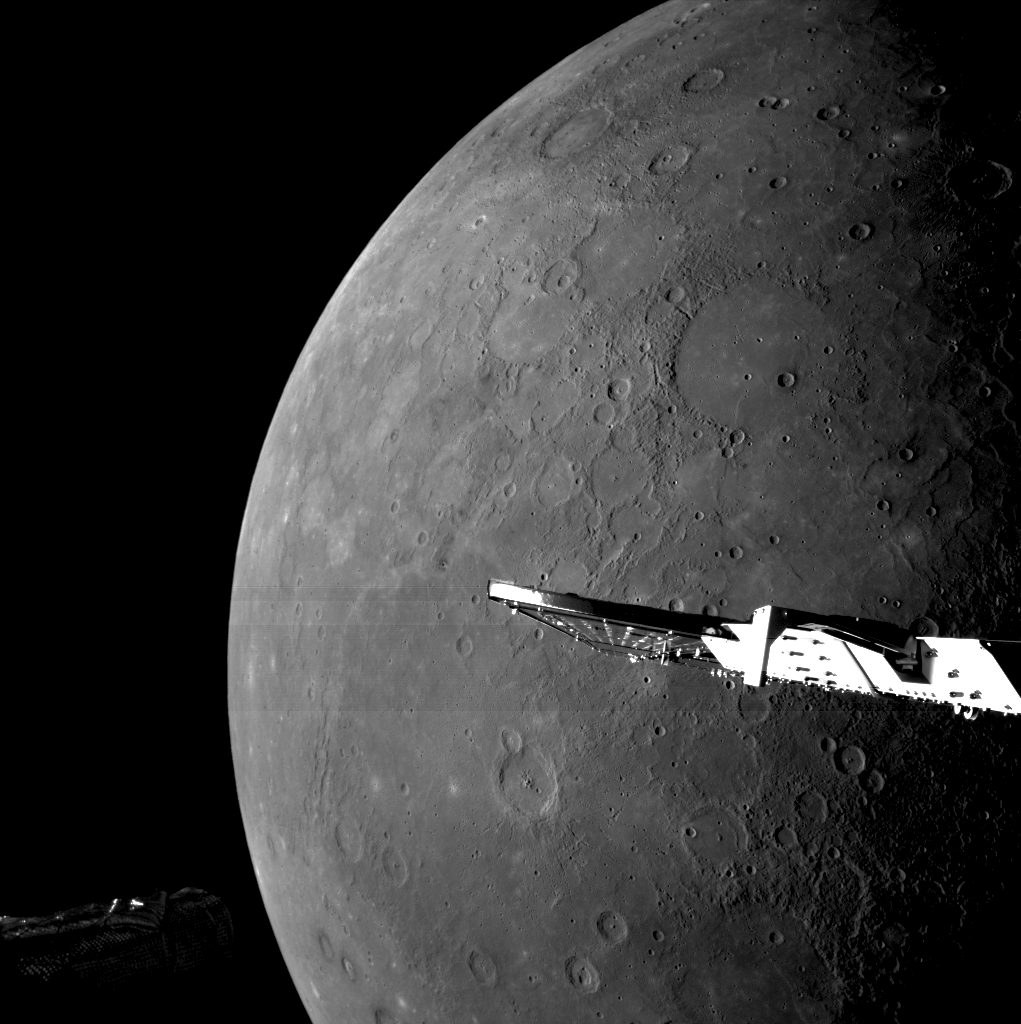
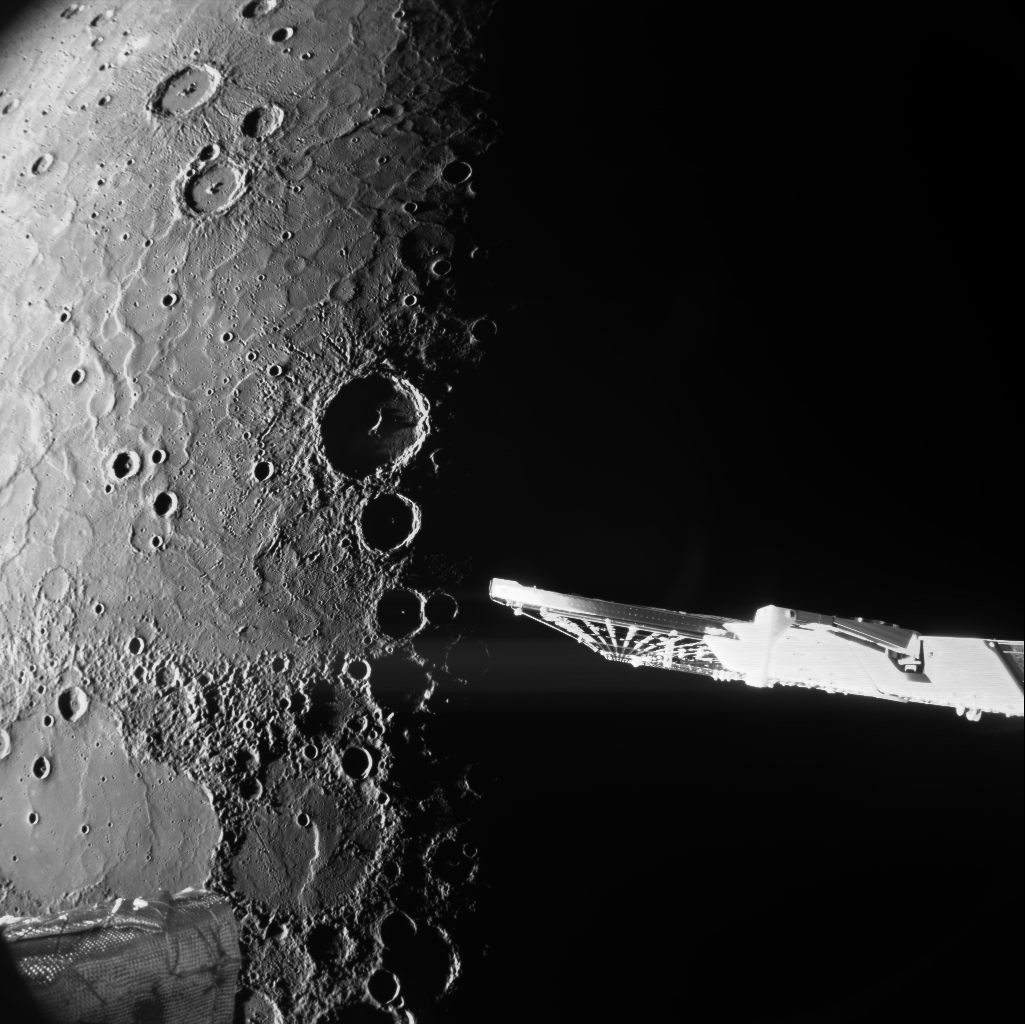
We had an exciting time at ESA ESOC yesterday watching these beautiful images come in. These already amazing views are from engineering monitoring cameras; the science cameras will give us far better images after we arrive in orbit in late 2026. #BepiColombo
Our top three images from the sixth Mercury flyby are here! 🌗
See what they reveal about the mysterious planet here 👉 https://t.co/9cLKYf5STe and in 🧵👇
🛰️🌑We're gearing up for BepiColombo's sixth Mercury flyby, coming up this Wednesday!
ℹ️Closest approach is 295 km at 06:59 CET
We'll investigate Mercury's cold night side, north pole craters, and the vast northern plains
👇https://t.co/ec7qs13G4E
Last week, @BepiColombo became the first spacecraft to image planet Mercury in mid-infrared light 🔥
Using @MERTISonBepi, the mission will uncover what Mercury's surface is made of 👇
https://t.co/XdbDSaZzXV
Mercury in motion... One of the #BepiColombo selfie-cameras captured Mercury today as the spacecraft rushed by the planet at almost 3 km per second. 🛰️💨
This time-lapse of unprocessed images was captured during 10:26-11:18 UTC today (11:26-12:18 CET), between 53700 and 48000 km from the planet's surface. 📸
A successful encounter! #BepiColombo passed Mercury today, gathering valuable science data. 🛰️🌖
As expected, as we were further from the planet than during previous encounters, the planet was quite small in the selfie-cam pictures.
Here's an image taken at 10:46 UTC (11:46 CET), when over 51 000km from the surface.
Right now, #BepiColombo is at its closest point to Mercury during its fifth encounter with the planet. The spacecraft is 37 360 km from the surface.
Data gathered by its instruments will be sent back to Earth during today and tomorrow. 📡⚡️🛰️
#BepiColombo will fly less than 40 000 km above Mercury's surface this Sunday, marking its fifth flyby of the planet.
🆕Its MERTIS instrument will observe the planet in mid-infrared light, making BepiColombo the first spacecraft ever to do so 😎
@feline_cannon Yes, trail grains from along the orbit would be spectacular as meteors. Some of the very smallest grains in the dust _tail_, further away from the Sun than the trail, will arrive at Earth. However, they're extremely small and not expected to be observable as meteors.
@colinleggphoto These colour images a great help, thanks. As blue not significantly more obvious than other colours, more evidence that this is probably dust. It may become sharper on the morning of the 15th in your timezone as it'll be much closer to when we crossed the comet's orbital plane.
@colinleggphoto@SungrazerComets Great images, thanks! I suspect by yesterday probably all dust. We'll be able to estimate the position of the ion tail based on measurements of the solar wind by ACE and other spacecraft. When this photo was taken, the ion tail had probably switched to the evening sky, TBC.
That straight line across the Sun's disk (arrowed) in @MissionSoho LASCO C2 images is part of #CometC2023A3 's dust tail, which is lying in a sheet in the comet's orbital plane. Earth will cross it at a different time to SOHO, as Sun-SOHO-Earth is not a perfectly straight line.
These teeny-tiny grains near Earth are literally being pushed out of the solar system by the pressure of sunlight!
All of the dust lying between us and the Sun will form a line running across the Sun's disk in a few hours, as we cross the "fan" of dust in the tail. #CometC2023A3
Earth, together with @MissionSoho & other spacecraft at Lagrange Points L1 & L2, will cross #Comet Tschuchinsan-ATLAS's dust tail today. The tiny particles reaching Earth left the comet around 2 weeks ago, & are affected >3 times more by sunlight than by Sun's gravitational pull.
Pretty cool to see the dust trail of Comet Tshuchinsan-ATLAS entering the upper-right corner of @MissionSoho LASCO C2!
The reason it's still so visible is because of that "forward scattering" effect we've been taking about, i.e. the dust is being "backlit" by sunlight