This is, on the one hand, very wise, yet on the other hand rather silly at the same time.
Yes, mitochondrial dysfunction is not one thing and the idea that there is one thing everyone should take for their mitochondria is crazy so Picard is right to stay clear from generalizations.
Mitochondrial dysfunction is in fact hundreds of things.
But most of those hundreds of things have nutritional implications.
Biotin is one of many nutrients important to mitochondria. There are rare mutations in biotin-dependent enzymes and supplementing with 5-20 milligrams of biotin can mitigate or even cure serious mitochondrial diseases in people who have them. One particular mutation that was thought inexorably lethal in infancy was proven not to be when one girl was kept alive at least until the age of 13 (I don’t know if she’s still alive) with 15 GRAMS of biotin a day, which is 500,000 times the officially recommended intake.
I estimate that one in thirty people are heterozygous for these mutations, which gives them 50% of the biochemical impact and explains why many people get a benefit of 5-10 milligrams of biotin for their hair, skin, nails, blood sugar, or to prevent chronic yeast infections.
I know one person who had been an endurance athlete, completely lost the ability to exercise, and was going on long runs within days of starting biotin supplementation.
Even something like CoQ10, it can cause good or harm and megadosing indiscriminantly is not wise but there are reams of randomized controlled trials showing the average person benefits from 100 mg per day for their blood sugar, insulin, and blood pressure, and trials also show benefits for sperm motility, getting pregnant, endothelial function, heart failure, and migraine.
It is true that oxidants play critical signaling roles and many ideas about antioxidants didn’t play out as hoped, but that’s because people naively conceived of oxidants as bad and antioxidants as good and thought antioxidant defense was about piling antioxidants as high as you could pile them, when in fact it is about supporting the function of the network with the proper balance of nutrients.
It is incredibly wise to respect the wisdom of your body and to nourish it carefully instead of pounding it with pills because they are trendy.
But your body applies its wisdom to what you eat, and you have to eat good food with enough nutrients.
The average person does not get enough of at least one nutrient.
93% of Americans for example report inadequate intakes of at least one vitamin or mineral.
Multivitamins have been shown in trials to help with high blood pressure, improve short-term memory, and reduce stress, anxiety, fatigue, and confusion. Older adults who take multivitamins spend 2.5 fewer weeks a year being sick than those who don’t.
Everyone should try to get their nutrients from food, but the fact is most people aren’t. They either need to try harder by eating different foods or they should consider supplementing.
Supplements are not better than food but they are a useful tool, and the fact that it is unwise to make blanket statements supporting indiscriminately popping the trendiest pills does not make it wise to make blanket statements against using them at all.
I applaud Martin for not getting sucked into hype and I’m sure his regimen is working well for him, but to say mitochondria don’t need supplements is far too broad of a dismissal.
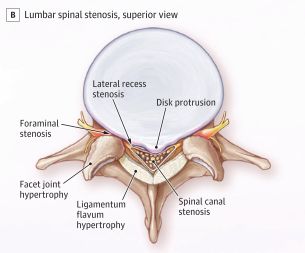
Spinal Stenosis Part 1: Anatomy of the problem 🧵
Spinal stenosis isn't one structure pressing on a nerve.
It's three tissues closing in on the same space, in sequence.
You might not think your retina will tear... but there's a solid non-zero chance that it will. How soon you react could make the difference between sight and blindness. Mine tore... the recovery process is just awful.
Read more if you like... if you're over 60, you definitely want to read this.
1/15
🤔Does end-stage renal disease (ESRD) make diabetes disappear?
No, but in some patients with ESRD, insulin needs fall. A1c drops. Diabetes medications can be stopped.
This has been called “burnt-out diabetes.”
Let's examine why.
Most exercise and aging studies can't answer a basic question: is muscle deterioration from aging itself, or just from decades of moving less? A new Nature Aging study solved this by recruiting older adults who moved as much as people in their twenties.
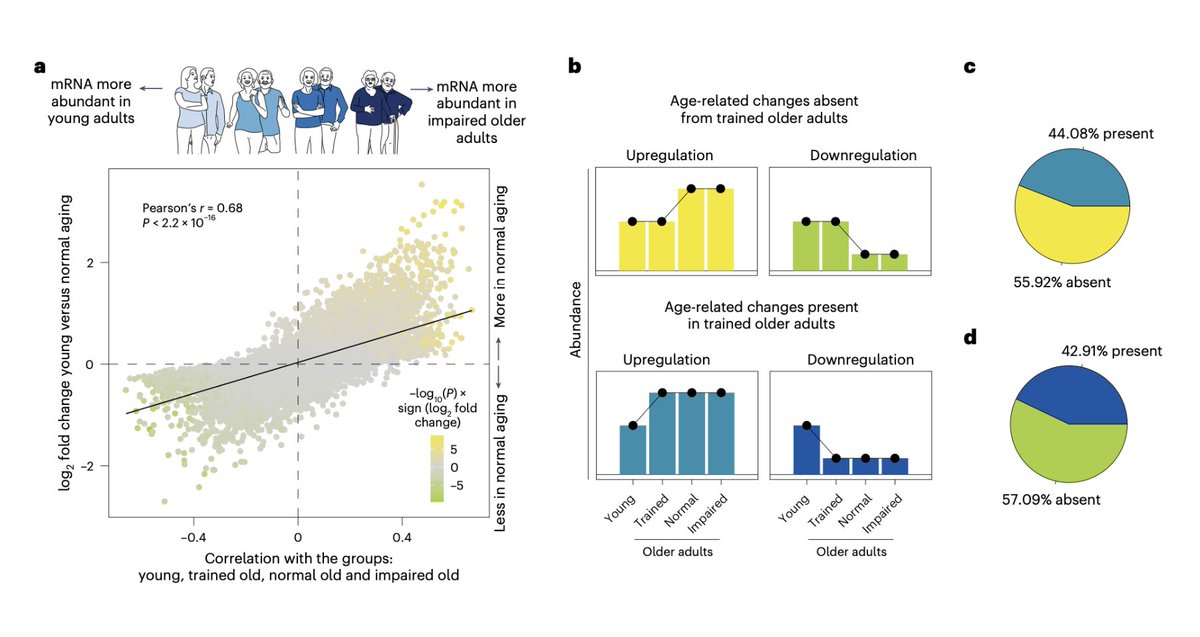
The researchers from Amsterdam UMC and Maastricht University recruited four distinct groups: young adults in their twenties, older adults whose daily step counts and high-intensity activity matched the young group, older adults who had trained consistently for years (three structured hour-long sessions per week for over a year), and older adults with early physical impairment.
They took muscle biopsies before and after a one-hour cycling session, then measured over 24,000 gene transcripts, 135 metabolites, and 1,383 lipid species.
By matching activity levels between young and older groups, any molecular differences couldn't be blamed on the older adults simply moving less. This isolated aging from inactivity for the first time at this molecular depth.
Key findings:
• The defining molecular signature of muscle aging is an energy crisis. Comparing young adults to activity-matched older adults, 1,106 genes were downregulated with age. These genes build the mitochondrial machinery that produces cellular energy: ATP synthase, cytochrome c oxidase, and NADH dehydrogenase subunits. Mitochondria are the power plants of cells, converting nutrients into ATP, the energy currency cells use to function. When these genes decline, cells lose their ability to generate energy efficiently.
• NAD+ levels declined and triglycerides accumulated inside aging muscle. NAD+ is a molecule required for energy production and cellular repair. Lower NAD+ means less capacity to convert fuel into usable energy. Triglycerides are stored fats, their accumulation inside muscle indicates unburned fuel piling up as the tissue loses its ability to process it.
• More than half the molecular signature of muscle aging was absent in trained older adults. Specifically, 57.1% of age-related gene downregulation and 55.9% of upregulation were missing in the trained group. Their muscle resembled young adults far more than their chronological age would predict.
• The changes training preserved were specifically the energy metabolism ones. Genes like NDUFS1 and COX5A, which were depleted in normally active and impaired older adults, sat at youthful levels in the trained group across all five mitochondrial respiratory complexes. The single most prominent feature of muscle aging turned out to be the single most preventable.
• Being generally active was not enough. Structured training was the difference. The normally active older adults walked as much as young adults, and their energy metabolism genes declined anyway. What preserved the youthful molecular profile was structured, sustained training. Filling a step counter and being genuinely trained are not equivalent at the molecular level.
• Roughly half of muscle aging persisted regardless of training. Changes in genes controlling synaptic transmission (how nerves communicate with muscle) and WNT signaling (a pathway regulating tissue maintenance and stem cell function) appeared in all older adults, trained or not. This unavoidable half is where drugs will have to work.
• The fittest muscle mounted the largest inflammatory response to exercise. All groups activated stress and immune genes after exercise, including IL6, IL1B, and TNF. But the magnitude scaled with fitness. Trained older adults most closely resembled young adults in their response, followed by normally active, with impaired older adults showing the most blunted response. The stress response to exercise appears to be the mechanism of adaptation, not damage to be minimized.
This raises a concern about anti-inflammatory longevity strategies. If the inflammatory stress response is how exercise produces its benefits, chronically suppressing inflammation may blunt the adaptation that exercise depends on. It doesn't mean inflammation is beneficial in general, but the timing and context matter.
A separate discovery: the proteasome appears to regulate NAD+. The proteasome is the cellular machinery that breaks down damaged proteins. When researchers inhibited it, NAD+ levels rose in both muscle and liver cells to a degree comparable to NAD+ precursor supplements. This opens a new route to understanding NAD+ decline that operates through protein turnover rather than just supplying more raw material.
The study draws a clear line between what lifestyle can address and what will require therapeutics. The energy metabolism decline, mitochondrial deterioration, and NAD+ depletion that define muscle aging are largely preventable through structured training. The synaptic and signaling changes that persist in all older adults represent the unavoidable half where drugs will need to work.
The decisions made about structured training in midlife determine which molecular trajectory muscle follows in later decades. Half of muscle aging is optional. The other half isn't. Knowing which changes belong to each category is knowing where behavior ends and biology takes over.
I teamed up with @Liz_Bayley_Physio to create this progressive rehab programme for Plantar Heel Pain.
We've called it 'LiTHE' (Liz and Tom's Heel Exercises) and it's aimed at active and sporty patients. It's not a recipe though so it's best to adapt it to suit individual needs.
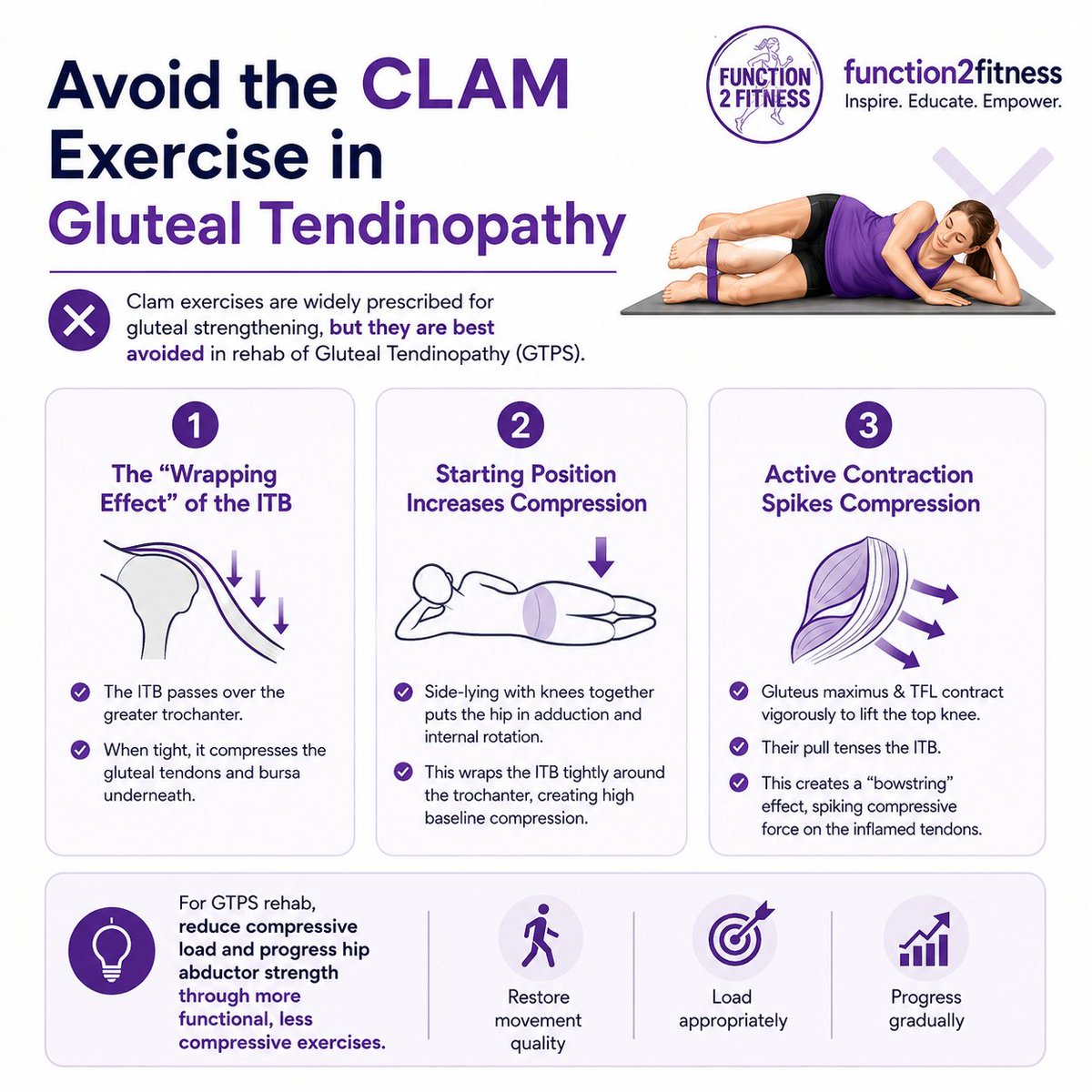
𝐀𝐯𝐨𝐢𝐝 𝐭𝐡𝐞 𝐂𝐋𝐀𝐌 𝐄𝐱𝐞𝐫𝐜𝐢𝐬𝐞 𝐢𝐧 𝐆𝐥𝐮𝐭𝐞𝐚𝐥 𝐓𝐞𝐧𝐝𝐢𝐧𝐨𝐩𝐚𝐭𝐡𝐲
Clam exercises are widely prescribed for gluteal strengthening, but they are best avoided in rehab of Gluteal Tendinopathy (GTPS). The primary reason is that the pathology of GTPS is driven largely by compressive overload rather than purely tensile failure, and the clamshell movement fundamentally amplifies this compressive force.
Here is the exact biomechanical breakdown of why this occurs:
1. The "Wrapping Effect" of the ITB
GTPS primarily involves insertional tendinopathy of the gluteus medius and minimus. These tendons insert onto the greater trochanter directly beneath the iliotibial band (ITB). When tension within the ITB increases, the band acts like a taut strap pulling down over the bony prominence of the greater trochanter, compressing the tendons and bursa underneath.
2. The Starting Position Increases Baseline Compression
The clam exercise is performed in a side-lying position. As the patient rests with their knees together, gravity pulls the top hip into a position of relative adduction and internal rotation. Adduction is the primary movement that causes the ITB to wrap tightly around the greater trochanter, establishing a high baseline of compressive force against the tendons before the active movement even begins.
3. Active Contraction Spikes Compressive Forces
During the active concentric phase of the clam, the hip is abducted and externally rotated against gravity (or a resistance band).
To execute this movement, both the gluteus maximus and the tensor fasciae latae (TFL) must contract vigorously.
Because the superficial fibres of the gluteus maximus and the TFL insert directly into the ITB, their contraction pulls the fascial band completely taut.
This tension creates a compressive "bowstring" effect. The active force translates into immense, localised pressure from the ITB directly against the inflamed gluteal insertions resting on the greater trochanter.
In tendinopathy rehabilitation, the goal is to apply controlled, progressive tensile load to the tendon to stimulate mechano-transduction and structural adaptation, whilst strictly minimising compressive irritation.
Clamshells do the exact opposite. By starting in adduction and then actively tensioning the overlying fascial structures, the exercise reproduces the precise pathomechanical driver that caused the tendinopathy in the first place.
📍 We'll be covering all things hip-related in far more depth on our upcoming Hip & Groin courses.
📍 UK: London (Oct) and Manchester (Sept) courses at:
https://t.co/8wmp9nylm0
I'm a cardiologist. Let me tell you about a woman I'll call Lisa. She was 50. She may be you.
Never smoked. Normal weight. Exercised regularly. Ate fish, vegetables, olive oil. No diabetes. No high blood pressure. Total cholesterol 221, HDL 68 — numbers that make a physician smile and say everything looks great.
Her 10-year risk calculator said 2.5%. Low risk. No statin recommended. See you next year.
Then she got a calcium scan.
Her score was 204.
Most women her age score zero. A score above 200 places her far above the 95th percentile — with roughly seven to eight times the event risk of a peer with the same "excellent" risk factors and a clean scan.
She had significant coronary artery disease at 50. The calculator had no idea. Her only conventional clue was buried in her family history: her mother had a heart attack and a stent at 62.
Here is what almost everyone gets wrong.
Cardiovascular disease kills more women than breast cancer, lung cancer, and chronic lung disease combined. It is the leading cause of death in women, and we screen relentlessly for the cancers while largely ignoring the thing most likely to kill us.
And the risk calculators systematically underperform in women. They were built around age, blood pressure, cholesterol, smoking, and diabetes — and they badly underweight the factors that actually drive risk in a female body.
Let me walk you through the ones nobody counts.
𝟭. PREGNANCY WAS YOUR FIRST CARDIAC STRESS TEST
This is the single most underused piece of information in women's cardiology, and if you take one thing from this post, take this.
Pregnancy places extraordinary demands on the cardiovascular system. Blood volume rises by 40-50%. Cardiac output climbs. The vascular system is pushed harder than at almost any other point in life.
Some women pass that test. Some don't. And the ones who don't are showing you something about their vasculature decades before anything else will.
Preeclampsia — the diagnosis is high blood pressure and organ stress in pregnancy, but the underlying biology is endothelial dysfunction, the exact process that begins atherosclerosis. Women who experience it carry roughly double to quadruple the lifetime cardiovascular risk. Their risk of chronic hypertension afterward is dramatically elevated, and events occur meaningfully earlier.
Gestational diabetes — this is insulin resistance revealing itself under metabolic load. Up to half of these women develop type 2 diabetes within a decade, and cardiovascular risk climbs with it. It was never "just a pregnancy thing that resolved."
Preterm delivery, placental abruption, and delivering a growth-restricted baby all carry independent cardiovascular risk signals — likely because they reflect abnormal placental vasculature, and the placenta is a vascular organ.
Here is the failure, and it is systemic: most women are discharged after a preeclamptic pregnancy with no cardiovascular follow-up plan whatsoever. Their blood pressure normalizes, everyone exhales, and nobody mentions it again for thirty years.
If you had any of these complications, your cardiac surveillance should begin in your thirties and forties — not at 65. Blood pressure monitored. ApoB, Lp(a), hs-CRP, and fasting insulin checked. That history belongs in your chart as a permanent risk factor, and you may have to be the one who puts it there.
𝟮. PERIMENOPAUSE IS A CARDIOVASCULAR EVENT, NOT JUST A HORMONAL ONE
We talk about menopause as hot flashes and mood. What we rarely explain is that it is one of the most consequential vascular transitions of your life.
Estrogen is not merely a reproductive hormone. It is vasculoprotective, and it does specific measurable things:
It promotes nitric oxide production, which keeps your arteries dilated and the endothelium healthy. It favorably shapes lipids — supporting HDL and helping clear LDL. It has anti-inflammatory effects on the vessel wall. It helps maintain insulin sensitivity and influences where your body stores fat.
Then it withdraws.
And the changes that follow are not gradual background aging — they cluster tightly around the menopausal transition itself:
LDL and ApoB rise. Triglycerides rise. HDL becomes less functional even when the number looks unchanged.
Body fat redistributes from hips and thighs to the abdomen — and visceral fat is metabolically active, inflammatory tissue, not passive storage.
Insulin resistance increases, sometimes markedly.
Blood pressure rises, and hypertension becomes more common in women than men after this transition.
Arterial stiffness increases measurably.
And here is the part I want every woman in her forties to understand: these shifts begin in perimenopause — potentially years before your last period, while your cycles are still occurring and everyone including your doctor still thinks of you as premenopausal.
That is precisely the window when this is most modifiable, and precisely when nobody is looking.
Two specific things worth knowing: women who go through premature or early menopause — before 40, or before 45 — carry meaningfully higher cardiovascular risk and warrant earlier, more aggressive evaluation. And emerging data suggests that frequent or severe hot flashes may themselves correlate with worse vascular measures, meaning the symptom may be a signal rather than merely an inconvenience.
On hormone therapy: in November 2025 the FDA began removing the black box warnings, and the FDA Commissioner called the original decision one of the greatest errors in modern medicine. Roughly 50 million women were frightened away from treatment based on a misread of the WHI — in whose estrogen-only arm breast cancer risk was actually lower. For most healthy women starting within 10 years of menopause or before 60, the risk-benefit calculation looks very different than we were told. It is not a cardiovascular preventive therapy, and it must be individualized — but it deserves a real conversation rather than a reflexive no.
𝟯. THE OTHER FACTORS THAT DON'T APPEAR ON ANY CALCULATOR
Autoimmune disease — lupus, rheumatoid arthritis, psoriasis. Far more common in women, and chronic inflammation accelerates atherosclerosis at any age. A woman with lupus deserves the vigilance we'd give a diabetic.
PCOS — insulin resistance, dyslipidemia, and elevated risk that starts in the twenties.
Migraine with aura, associated with higher stroke risk.
Breast cancer treatment — certain chemotherapies and chest radiation carry cardiac consequences that surface years later.
And elevated Lp(a) — the one to act on this week.
𝟰. Lp(a): TEST IT ONCE. THEN TELL YOUR FAMILY.
A genetically determined particle that drives plaque, clotting, and aortic valve calcification simultaneously. Set at birth. Essentially unchanged by diet, exercise, or weight loss. Roughly 1 in 5 people carry elevated levels.
The 2026 ACC/AHA guidelines now give a Class I recommendation to measure it once in every adult. Most people never have been.
Ask for it in nmol/L. Under 75 is lower risk. 125+ carries roughly 1.4x increased risk. 250+ doubles it.
And in women specifically: midlife levels above the 75th percentile predict higher event rates over the following thirty years. A blood draw at 45 forecasting your seventies.
If yours is elevated, get your parents, siblings, and children tested. It's inherited — your result is partly theirs.
𝟱. THE REST OF THE PANEL TO DEMAND
ApoB — counts every atherogenic particle rather than the cholesterol they carry. One analysis found 54% of patients had dangerous levels that standard LDL testing missed entirely.
hs-CRP — and here's a striking finding: in healthy women, a single midlife measurement of hs-CRP + LDL + Lp(a) together predicts 30-year risk more powerfully than any one alone.
Fasting insulin — under 5. It rises 10-15 years before glucose does, and almost nobody checks it. This is where perimenopausal metabolic change shows up first.
Plus HbA1c, kidney function, and urine albumin-to-creatinine ratio.
𝟲. THEN ACTUALLY LOOK AT YOUR ARTERIES
A calcium score is the usual first step — cheap, ten minutes, low radiation, highly predictive.
But here is the trap for younger women, and it is critical: calcium is a LATE finding. Soft, non-calcified plaque — the kind that ruptures — is invisible to a calcium scan. And women calcify later than men, which means a woman's disease is disproportionately the type a calcium score cannot see.
CT angiography solves that. It visualizes the entire coronary tree, quantifies soft plaque volume, and identifies high-risk features that predict events.
And the detail that matters most for us: women have events at lower absolute plaque burdens than men, partly because our coronary arteries are smaller. Less plaque, same danger.
The SCAPIS study found silent atherosclerosis in over 40% of middle-aged adults with no known disease.
One more thing every woman should know: a normal stress test is not a clean bill of arterial health. It detects flow-limiting narrowing over roughly 70% — and women more often have microvascular disease, plaque in vessels too small for standard imaging to see. A woman can be having a heart attack with "clean" coronary arteries on catheterization. If symptoms persist despite normal testing, push for cardiac MRI, PET, or coronary function testing.
AND THE NEWS THAT'S GENUINELY EXCITING
For forty years, Lp(a) was the risk factor we could measure and could not treat.
That's ending. Five drugs in advanced development achieve 70-95%+ reductions. Two Phase 3 outcome trials — pelacarsen with 8,323 patients and olpasiran with about 7,300 — are reading out in the second half of 2026.
If positive, they'll be the first proof that lowering Lp(a) prevents heart attacks. That changes everything for one in five people.
WHAT TO DO THIS MONTH
Write down your full pregnancy history — every complication, by name. Write down your family history — which relative, which event, what age.
Get Lp(a) tested once. Add ApoB, hs-CRP, and fasting insulin.
If you're in perimenopause, this is your window. Get the baseline now, while the changes are still early and still reversible.
If anything is elevated — or you had preeclampsia, gestational diabetes, early menopause, or a family history of premature disease — ask about imaging. And if your calcium score is zero but your risk factors aren't, ask specifically about CT angiography.
Lisa's numbers looked perfect at 50. Her arteries did not.
The difference between those two facts is the difference between finding out in a scanner and finding out in an ambulance.
Stop accepting "your numbers look fine."
Ask them to look.
We usually say 6-7 months, with our support:
- 1-2 months for document preparation in home country
- 3-4 weeks in Russia for the application (lots to do) with our support.
- 4 months waiting for the approval.
This is usually, the fastest timeline 🚀
In practice however, it usually takes about a year as it´s a very big project - to move from one country to another! 😎
INSTEAD OF WATCHING AN HOUR OF NETFLIX TONIGHT.
This 60-minute Cambridge lecture by Demis Hassabis will teach you more about the future of AI than most people will learn in the next 5 years.
Bookmark it and give it an hour, no matter what.
Creatine may supercharge immune cells that are key to fighting cancer
UCLA study finds creatine supplementation significantly slowed tumor growth in mice
https://t.co/FKYiffpP8H
Your NECK PAIN treatment is WRONG! Here's why...
Most neck pain isn't a NECK problem. Rather, the symptoms are stemming from an imbalance at your mid-back. Today's video explains how to figure out if that is YOUR problem and how to fix it!
My go to exercise for foot and ankle rehab! 🦶
Recent research shows that adding a forward lean or load to foot exercises increases intrinsic and extrinsic muscle activation.
This makes the forward lean calf raise a valuable exercise option with a host of benefits!
Reference:
Osborne JWA, Menz HB, Landorf KB, Whittaker GA, Cotchett M, Kelly LA. The influence of body posture and added mass on intrinsic and extrinsic foot muscle activation and force output during common foot strengthening exercises. J Sport Health Sci. 2025 Dec 16:101110. doi: 10.1016/j.jshs.2025.101110. Epub ahead of print. PMID: 41412495.
About 50 million Americans live with chronic tinnitus.
Most have been told there is no cure and nothing can be done.
The newest research disagrees on both counts.
Il est 3h du matin. Une douleur foudroyante vous arrache au sommeil : une crampe nocturne au mollet.
Ce n'est pas hasard. Votre corps vous envoie un signal de détresse bien précis qu'il faut absolument déchiffrer.
Quel est le vrai souci organique qui se cache derrière ? 🧵