Today is a huge win for creatives around the world, as Australia makes it clear it will not bow to pressure from AI companies to legalise the theft of creatives’ work.
From the Australian Prime Minister:
"No company should use Australian books, music, art or news to build or train AI without the artist’s control.
That includes the artist’s control of the price and value of their work.
Anything less, is theft."
Strong, principled words that should serve as a model for governments everywhere.
https://t.co/xjqnV16RCs
In a hearing where residents grilled officials on data centers, a resident of Tyrone Township, Michigan, asked a simple question: Have you signed an NDA with any party regarding developments that could affect the town?
The majority of the township's officials refused to answer.
@gerrylum2 Same here. I’ve got a HW3 M3 that @elonmusk and others have assured us they’d fix the lack of FULL FSD. I’d happily not hang around for an expensive retrofit (to @Tesla ) to my car if I could upgrade to the Y L w/FSD transferred.
@gerrylum2@foolforthought_ Yeah, if I could transfer both my FSD and lifetime Supercharging, I'd buy a new Tesla tomorrow. Otherwise, my HW3 does just fine for what I use it for. And if we actually get the HW3 - AI4 upgrade as promised ...
Neighbors have put mattresses and plexiglass up in their windows to block the noise from this data center in Virginia.
It's a high pitched whine from the natural gas turbines that power it.
The noise never stops 24/7.
There are readers of my posts who work at AI companies that train on people’s music without permission.
To those people - I hope you are seeing the level of anger in the music community today.
You tell yourself what you are doing is justified. I implore you: read people’s reactions today. Seek them out. Then ask yourself whether you really believe that.
It is not too late to tell your millionaire / billionaire CEOs that they should be paying musicians instead of exploiting them.
Lawsuits are important. But AI company employees are the people in the best position to effect change.
در روزهای اخیر هدف یک حملهی سایبریِ هدفمند و حسابشده قرار گرفتم؛ تلاشی برای ربودن حساب تلگرامم. این حمله دقیقاً در بحبوحهی پوشش گستردهی رویدادهای ایران، از جمله هشدار رسمی ایران اینترنشنال «درباره حملات سایبری و جعل هویت خبرنگاران» (https://t.co/Cs9vVxyGv2) این رسانه طراحی شده بود.
این تنها مورد نبود. در همین روزها چند پیام مشکوک دیگر هم گرفتم؛ از جمله فردی که خودش را از «فاکس نیوز» معرفی کرد و درخواست مصاحبه داشت. الگو روشن بود. استفاده از پوشش رسانهای معتبر برای جلب اعتماد و کشاندن هدف به مسیری از پیشچیدهشده.
سناریوی اصلی اینطور شروع شد. کسی با لحن محترمانه گفت میخواهد «خبری دربارهی کوی دانشگاه کار کند» و برای یک نشست خبری با «سردبیر، آقای رمضانپور» هماهنگ کند. یک معرّف که قرار بود مرا به «شخص اصلی» وصل کند. ساختار کلاسیک دو نفره برای کمکردن بدگمانی.
برای واقعی جلوهدادن ماجرا حتی دو فایل صوتی فرستادند که با هوش مصنوعی و به تقلید صدای «رمضانپور» ساخته شده بود. بعد هم شمارهای دیگر با نام او وارد شد و با لحنی صمیمی، طوری که انگار از قبل آشنا بودیم، اعتمادسازی کرد.
و تله، لینک یک «گروه خصوصی تلگرام». اما دامنه یک جعلِ بصری بود. حرف بزرک «i» بزرگ بهجای کوچک «L» در telegram، به این شکل: (telIgram) و گفتند «جوین کن، کد ورود به نشست به تلگرامت میآید.» آن «کد ورود به نشست»، در واقع کد ورود واقعی تلگرام خودم بود.
نکتهی فنی مهم این است که آنها تلاش کرده بودند خود و سرور اصلیشان را پشت Cloudflare پنهان کنند تا ردیابی نشوند. همان شگردی که پیشتر APT33، APT34، APT35/42، APT39 و شاخههایی مثل MuddyWater برای مخفیکردن نشانی واقعی سرور بهکار میبردند.
این نشانهها برایم آشنا بود. از این رو آگاهانه همراهیشان کردم تا وادارشان کنم زیرساخت و لینکشان را رو کنند. و در همان حال شروع کردم به استخراج ردپای فنیشان.
بخشی از آنچه بهدست آوردم (عمداً فقط بخشی را منتشر میکنم): دامنهی هوموگرافِ تازهثبتشده که فقط برای همین حمله ساخته شده بود، پنهان پشت Cloudflare. و یک ابزار سرقت حساب تلگرام بهصورت بلادرنگ که حتی رمز دومرحلهای (2FA) را هم هدف میگرفت. مابقی اطلاعات نزد من محفوظ است.
از تمام این مراحل ویدیو و مستندات کامل تهیه کردم و یک پروندهی فنی با شواهد کافی را در اختیار مراجع ذیصلاح قرار دادهام. هدف من از انتشار این رشته، نه شخص مهاجم، بلکه آگاهکردن دیگران از این الگوست.
مراقب این نشانهها باشید:
۱- دامنههای جعلیِ شبیه (مثل I بزرگ بهجای l)
۲- هر «کد نشست/ورود» که در واقع کد لاگین تلگرام شماست
۳- پیام صوتیِ ساختهشده با هوش مصنوعی به تقلید صدای افراد
۴- سناریوی «معرّف + شخص اصلی» و ترکیب فوریت، تعریف و تمجید و ادعای آشناییِ قبلی
و یک قاعدهی طلایی: کد ورود تلگرام هیچوقت «کد ورود به جلسه» نیست. آن را در هیچ صفحه یا سایتی وارد نکنید، فقط در اپلیکیشن رسمی. تأیید دومرحلهای را فعال کنید و هویت افراد را از یک کانال مستقل راستیآزمایی کنید.
این نوع عملیات، فعالان و روزنامهنگاران را هدف میگیرد. اگر پیام مشابهی گرفتید، کلیک نکنید، کدتان را ندهید، و موضوع را با دیگران در میان بگذارید. شناختنِ الگو، بهترین دفاع است. مراقب خودتان و حسابهایتان باشید.
* شمارههای واتساپی که در این عملیات استفاده شد +44 7868 168267 و +44 7576 076203 بودند
#هک
#حمله_سایبری
A mental model for working with coding agents is that they're blind squirrels running into a maze and bumping into walls. You must place the walls (verifiable constraints) strategically so that they end up in the general region you want them in.
Writing about Project Panama tonight. It is heartbreaking.
AI training pipeline that is turned psychotic in to a massive million dollar book burning.
It is a crime against humanity.
Train AI but don’t you dare burn books and expect us not to care.
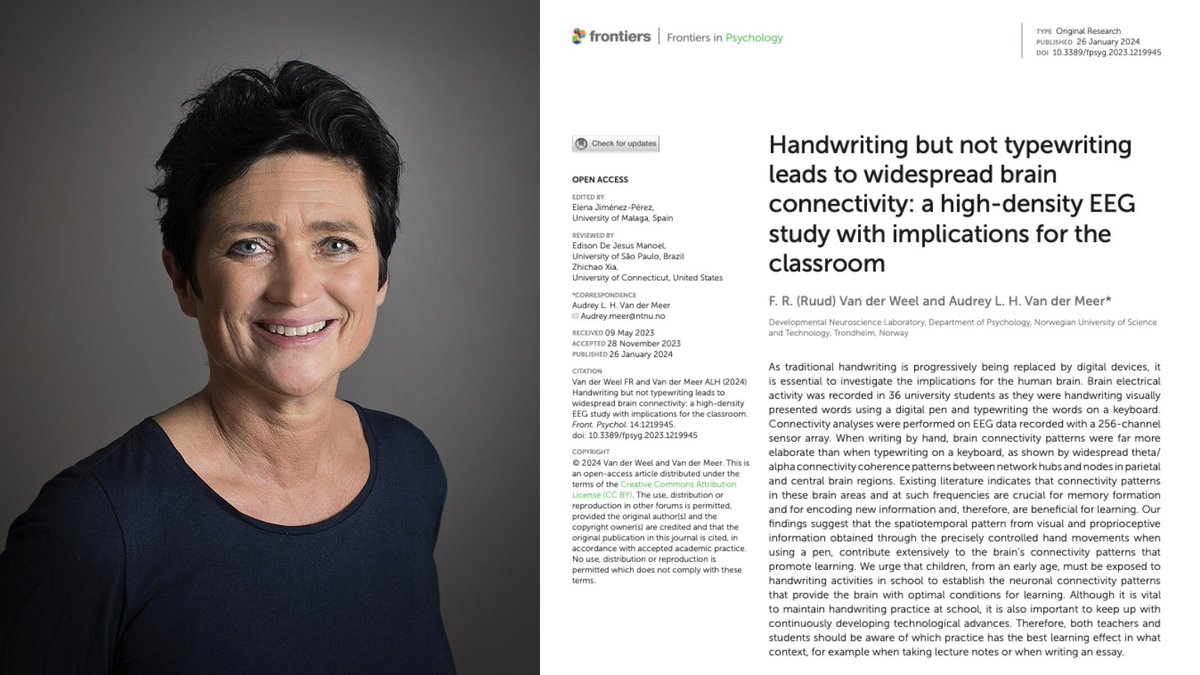
A Norwegian neuroscientist spent 20 years proving that the act of writing by hand changes the human brain in ways typing physically cannot, and almost nobody outside her field has read the paper.
Her name is Audrey van der Meer.
She runs a brain research lab in Trondheim, and the paper that closed the argument was published in 2024 in a journal called Frontiers in Psychology. The finding is brutal enough that it should have changed every classroom on Earth.
The experiment was simple. She recruited 36 university students and put each one in a cap with 256 sensors pressed against their scalp to record brain activity. Words flashed on a screen one at a time.
Sometimes the students wrote the word by hand on a touchscreen using a digital pen, and sometimes they typed the same word on a keyboard. Every neural response was recorded for the full five seconds the word stayed on screen.
Then her team looked at the part of the data most researchers had ignored for years, which is how different parts of the brain were communicating with each other during the task.
When the students wrote by hand, the brain lit up everywhere at once.
The regions responsible for memory, sensory integration, and the encoding of new information were all firing together in a coordinated pattern that spread across the entire cortex. The whole network was awake and connected.
When the same students typed the same word, that pattern collapsed almost completely.
Most of the brain went quiet, and the connections between regions that had been alive seconds earlier were nowhere to be found on the EEG.
Same word, same brain, same person, and two completely different neurological events.
The reason turned out to be something nobody had really paid attention to before her work. Writing by hand is not one motion but a sequence of thousands of tiny micro-movements coordinated with your eyes in real time, where each letter is a different shape that requires the brain to solve a slightly different spatial problem.
Your fingers, wrist, vision, and the parts of your brain that track position in space are all working together to produce one letter, then the next, then the next.
Typing throws all of that away. Every key on a keyboard requires the exact same finger motion regardless of which letter you are pressing, which means the brain has almost nothing to integrate and almost no problem to solve.
Van der Meer said it plainly in her interviews.
Pressing the same key with the same finger over and over does not stimulate the brain in any meaningful way, and she pointed out something that should scare every parent who handed their kid an iPad.
Children who learn to read and write on tablets often cannot tell letters like b and d apart, because they have never physically felt with their bodies what it takes to actually produce those letters on a page.
A decade before her, two researchers at Princeton ran the same fight using a completely different method and ended up at the same answer. Pam Mueller and Daniel Oppenheimer tested 327 students across three experiments, where half took notes on laptops with the internet disabled and half took notes by hand, before testing everyone on what they actually understood from the lectures they had watched.
The handwriting group won by a wide margin on every question that required real understanding rather than surface recall.
The reason was hiding in the transcripts of what the two groups had actually written down.
The laptop students typed almost word for word, capturing more total content but processing almost none of it as they went, while the handwriting students physically could not write fast enough to transcribe a lecture in real time, which forced them to listen carefully, decide what actually mattered, and put it in their own words on the page.
That single act of choosing what to keep was the learning itself, and the keyboard had quietly skipped the choosing and skipped the learning along with it.
Two studies. Two countries. Same answer.
Handwriting makes the brain work. Typing lets it coast.
Every note you have ever typed instead of written went into your brain through a thinner pipe. Every meeting, every book highlight, every idea you captured on your phone instead of on paper was processed at half depth.
You did not forget those things because your memory is bad. You forgot them because typing never woke the part of the brain that would have made them stick.
The fix is the thing your grandmother already knew.
Pick up a pen. Write the thing down. The slower road is the faster one.
Most who interact with an LLM such as @OpenAI or @claudeai treat their interaction as a conversation with an intelligent and friendly pseudo-human.
I do not.
Rather, I frame it as my guiding the exploration of a latent space.
Imagine that you stand at the door of a library. It's not only filled with books, it has waldos - remote manipulators - that you can use to command devices to go to and fro at command, even building things as so directed.
But I steadfastly know that while the lobby may be filled with the latest bright and shiny things, if I want to do anything but the most common and mundane, I must wander through the rooms and stacks of books. If I look closely, I'll will see many books out of place. Some will even have meaningless content as if written by a madman (and some of them probably were). There will also be huge gaps, for where I'd hoped to find information, I'd instead see cobwebs and the occasional dusty, torn scrap of paper.
Sometimes, there are hints as to where I should turn, but best knowing my context and needs, I'm the only one in place to know if those hints will lead me to something of value. If I'm not paying attention or am just plain lazy, they will lead me down paths that in the end are a complete waste of my time. The library does not care: it gets paid no matter what I do as long as I remain within its walls.
Mind you, I enjoy visiting that library: I often learn things and build things of value.
But I don't outsource my life there, for were I to do so, I know I'd become even more cognitively lazy.
⚡️The deeper signal is youth risk did not disappear.
It migrated inward.
Teen drinking fell because the old physical world of adolescence got dismantled. Alcohol belonged to a social ecosystem: unsupervised time, cars, parties, local jobs, malls, basements, boredom, flirting, older siblings, house gatherings, and the chaotic peer world where teenagers learned who they were by colliding with other people in real space.
That ecosystem was replaced by phones, surveillance, parental tracking, algorithmic entertainment, social anxiety, online status games, and a much thinner physical commons.
So the surface looks healthier. Fewer kids drinking. Fewer kids using weed. Fewer kids doing reckless things in public.
The hidden layer looks worse. The young are less reckless because they are less socially embodied. Less initiation. Less unsupervised friction. Less courage-building. Less embarrassment and recovery. Less real dating. Less independence. Less contact with the physical world before adulthood demands it.
The old teenage world produced damage, stupidity, alcohol abuse, pregnancy risk, fights, accidents, and bad decisions. No need to romanticize it. But it also produced social reps. It forced young people through discomfort. It made them practice attraction, rejection, conflict, reputation, risk, repair, and status in the open.
The new world suppresses visible risk while increasing invisible fragility.
That is the trade.
A teenager can avoid drinking, avoid parties, avoid sex, avoid driving, avoid real confrontation, avoid rejection, avoid shame, avoid danger, and still arrive at 23 emotionally underbuilt. Cleaner behavior does not automatically mean stronger formation.
This is why the marriage chart and the teen drinking chart are the same story at different stages. People are not suddenly failing to pair in adulthood. The whole pathway into embodied adulthood has been slowing for years before marriage even becomes the question.
The real truth: society solved part of the teen vice problem by shrinking the arena where teenagers become adults.
It took away the dangerous commons and replaced it with controlled isolation.
The result is safer kids with weaker initiation into real life.
New paper in Nature. The more a government controls its domestic media, the more it dominates AI training data, the more pro-regime outputs we get from AI. By scraping the open web, LLMs are unwittingly laundering state-coordinated narratives into seemingly objective answers.