@m_goes_distance great list. one I'd personally want to see is way better payment infrastructure. hospitals limit how many patients they treat or stop offering CAR-T entirely b/c they lose money on every case. for example, medicare reimburses ~$314k but the drug alone can cost ~$450k+
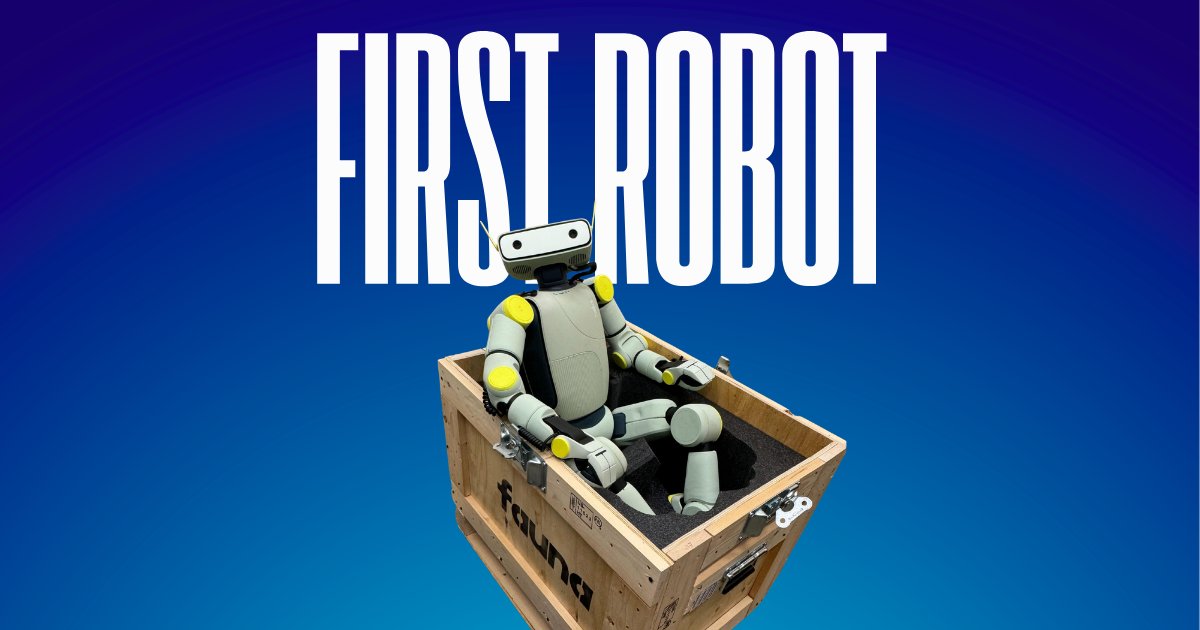
over the next decade, robotics companies will face this question repeatedly: how do you deploy robots into environments they've never operated before?
here is part 1 of the manual, told through @faunarobotics' Sprout walking into a children's hospital for the first time
https://t.co/QaMqnpr5RH
@JacklouisP great read! @oyhsu wrote an article exploring 6 and why it is so hard - "The gap between what’s demonstrated at ICRA and what’s deployed at industrial facilities has never been wider." highly recommend reading alongside this https://t.co/KOYlIjqtYr
Reading @ElliotHershberg's essay on @sytses' cancer journey was one of the best “holy sh*t” moments I’ve had in years.
since then, two questions wouldn't leave me alone:
1. how did we compress therapy design from decades to days?
2. what needs to exist for biology to be truly programmable?
here's what I found:
https://t.co/Md3tfULZDq
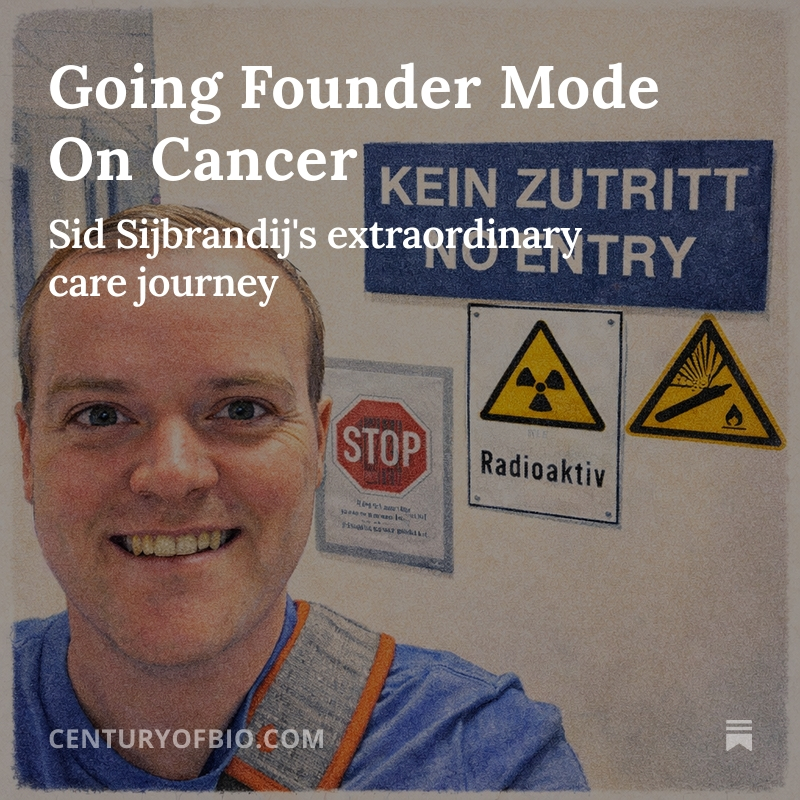
Going Founder Mode On Cancer
https://t.co/vAqXIV5zvE
Sid Sijbrandij is a generational founder. He founded and led GitLab, one of the largest remote companies in the world, from idea-stage startup to NASDAQ-listed software giant.
But in 2022, a six centimeter mass growing from his upper spine threatened to end all of that. He had cancer.
What happened next is nothing short of remarkable. Sid went founder mode on his care journey. In the years since, he's deployed cutting-edge genomics to profile his disease. Based on this data, he's developed a growing armamentarium of personalized therapies.
As a result, his disease is now undetectable.
A simplistic version of this story could be, “Wow! A brilliant billionaire seemingly cured his cancer. Good for him!”
But as I’ve gotten to know Sid, it’s become abundantly clear to me that there is more to the story than that.
In an in-depth profile for The Century of Biology, I explore Sid's journey and what this might mean for the future of cancer care.
A professor once told me, "Saying someone's name in communication is sugar". When you use their name in a sentence, you get more understanding and patience from who you are speaking with. Not quite convinced yet? Just think about how it feels to hear your name in a sentence!
You have to earn your right to BS. Flashy, fancy, overly technical words are used to smother stories or ideas that are not understood by the speaker. To avoid this, pretend you need your grandma to understand AND say it back to you. It will cut those fluffy words in half.
“Stop trying to be interesting, focus on being interested. Interested people are prone to giving their deep attention to something to learn more about it. They open up to the world—they ask great questions & observe. Being interested is how you become interesting”
@SahilBloom
I love (love love) @meetgranola because it makes this Dale Carnegie quote come to life.
“So if you aspire to be a good conversationalist, be an attentive listener. To be interesting, be interested. Ask questions that other persons will enjoy answering. Encourage them to talk about themselves and their accomplishments.”
Granola lets you focus 100% on the speaker because it removes the burden of note taking or trying to store facts as soon as they are said.
Be present in the conversation and see how impactful listening is.
@smithesq, that is no small feat, congrats. Did this growth on LinkedIn change your business model?
I hear you -- the moving goalpost is both a curse and a gift. It keeps us striving, but it also robs us of joy (if we’re not careful). Maybe the key is to chase growth, not numbers? Or said differently, to measure progress in impact, not just reach. I mean 100k people chose to follow your ideas. That’s worth a pause.
Your brain remembers the story of Cinderella but it can't remember the quadratic formula. There is a reason.
The human brain is wired to remember stories. When we hear or read a story, especially one with relatable characters or actions, our mirror neurons fire as though we are experiencing the events ourselves. This creates a sense of immersion and personal relevance.
Here is the NIH study that researched exactly this: https://t.co/uNkYTIosJm
' “Reading Stories Activates Neural Representations of Visual and Motor Experiences”: This study used fMRI to demonstrate that reading narratives activates brain regions associated with motor functions. For example, when participants read about characters performing actions, motor-related brain areas were engaged, supporting the idea that readers simulate the events described in the story. This aligns with the concept of mental simulation, where the brain mirrors actions described in narratives as if they were being performed or observed in real life.'
⭐️TLDR: If you want your customer, investor, mom, or partner to remember, weave it into a story. Their mirror neurons will thank you.
🚨Startup founders: You're missing the most powerful slide in your deck.
After your problem slide, show the "Cost of Inaction." Example: Healthcare AI founder shows "By 2030: 52% radiologist shortage = 1 in 3 cancer cases delayed. Every year we wait = 30,000 deaths."
Because when investors feel the consequences emotionally, they act.
A simple nugget of truth one should never forget:
"Learning to tell a story is critically important because that's how the money works. The money flows as a function of the stories."
- Don Valentine, founder @sequoia
Video Source: @StanfordGSB
https://t.co/YSZuPOupeb
It’s just a conversation.
This is the best way to think about presentations or public speaking of any kind. Think of your audience at a singular human level - even if it’s 100 people.
This allows your real self to shine, and the audience to feel and hear your authenticity.
Managers - if you have the awesome opportunity to manage an introvert, try pairing them with a trusted colleague for presentations or discussions. This partnership provides them a comfort zone and a live support system as they find their unique voice.
A challenge for you:
The next time you are in a conversation, never say a statement, only ask questions. I am willing to bet you learn more about this person than you’ve ever known.
@Eric_Partaker for the win 🏆 If you are a manager looking to quickly elevate how you show up as a leader, I highly recommend testing these prompts out. 🚀
"Start RIGHT before you get eaten by the bear. 🐻
Most people assume backstory is necessary for high-impact communication. This is wrong and wastes everyone’s time. Here’s a framework for higher ROI communication." - @wes_kao
https://t.co/HOd1mRrjYE
Presenting to a huge group of people you've never met?
Create a room of one.
Make the room smaller by talking to one person at a time. Make eye contact with an audience member, say 1-2 sentences, find a new person slightly to the right, repeat.
Source: Scot Chisholm