🔬 Could radioligand therapy move into an earlier role in oligometastatic prostate cancer—and help some patients delay ADT?
Article 📰
https://t.co/31bYAoxpDJ
Lutetium-177-PSMA-617 in Oligo-metastatic Hormone-sensitive Prostate Cancer (BULLSEYE 🎯 ): A Trial Update
The BULLSEYE trial explores lutetium-177-PSMA-617 as a potential treatment for patients with oligometastatic hormone-sensitive #ProstateCancer who are not candidates for surgery or metastasis-directed radiotherapy ☢️ .
➡️ The approach could offer another way to control PSMA-positive metastatic disease while potentially delaying androgen deprivation therapy and its associated toxicities.
✅ This trial update highlights the evolving role of radioligand therapy earlier in the prostate cancer treatment pathway.
@SMuselaers , @NivenMehra@OncoAlert 🚨 #LPCCC27
@Silke_Gillessen@AOmlin@ProfKHerrmann@weoncologists
mCSPC: SYNCHRONOUS AND METACHRONOUS ARE NOT THE SAME
What the ESMO 2026 Guideline says 👇
Synchronous
Low volume → ADT + ARPI [I,A]
Triplet only in selected, docetaxel-fit patients [III,C]
High volume + fit → THINK TRIPLET [II,A]
Metachronous
Low volume → ADT + ARPI [II,A]
Docetaxel not recommended [II,E]
High volume → ADT + ARPI [II,A]
Triplet can also be recommended if fit [II,B]
Take-home:
👉 The strongest home for triplet is synchronous + high-volume + docetaxel-fit mCSPC.
Ref: Fizazi K, et al. ESMO Clinical Practice Guideline: Advanced and metastatic prostate cancer. Ann Oncol. 2026.
ESMO 2026 METASTATIC BREAST CANCER GUIDELINE: WHERE DOES INAVOLISIB FIT?
ESMO 2026 gives INAVO120 a clear place — but how often do we meet the exact INAVO120 patient today?
Why the fit is shrinking:
• INAVO120 was essentially CDK4/6-naïve — 98.8% had no prior CDK4/6i exposure.
• Nearly half had received adjuvant tamoxifen alone; today, AI exposure is common.
• Relapse increasingly opens biomarker-driven paths — PIK3CA/AKT/PTEN and ESR1 can shape sequencing.
• INAVO120 used palbociclib; the contemporary CDK4/6 landscape has evolved.
INAVO120 remains important. The evidence-matched patient is simply becoming harder to find.
References:
de Azambuja E, et al. ESMO Clinical Practice Guideline: Metastatic Breast Cancer. Ann Oncol. 2026;37:1203–1219.
Turner NC, et al. N Engl J Med. 2024;391:1584–1596.
#BreastCancer #Inavolisib #PIK3CA #ESMO2026 #MVOnco
Prostate RT in de novo mCSPC: the endpoint depends on volume.
🟢 Low volume → think SURVIVAL
STAMPEDE: OS HR 0.68 → prostate RT [II,A]
🟠 High volume → think GU PROTECTION
PEACE-1: delays serious GU events + improves CRPC-free survival → prostate RT can be recommended [II,B]
No proven OS benefit.
On triplet? Finish docetaxel → then prostate RT [III,A].
Same RT. Different reason. Volume matters.
📖 Fizazi K, et al. Ann Oncol. 2026;37:590–604.
ESMO Clinical Practice Guideline.
In NSCLC with 𝘌𝘎𝘍𝘙 exon 20 insertions, first-line sunvozertinib led to longer progression-free survival than chemotherapy. The most common adverse events of grade 3 or higher were elevated creatine kinase, diarrhea, and anemia. Full phase 3 WU-KONG28 trial results and Research Summary: https://t.co/a2rEpZHUq6
SUPER-SIMPLE 1L mTNBC ALGORITHM | ESMO 2026
How I approach first-line metastatic TNBC when all options are accessible:
PD-L1 → DFI → gBRCA → early relapse → treatment.
The big 2026 shift: ADCs have moved right into the first-line conversation — including pembrolizumab + sacituzumab govitecan for CPS ≥10 with DFI ≥6 months, and Dato-DXd/SG for PD-L1-negative, gBRCA-WT disease.
Simple algorithm. Important caveats. ESMO 2026.
Reference: de Azambuja E, et al. Ann Oncol. 2026;37:1203–1217.
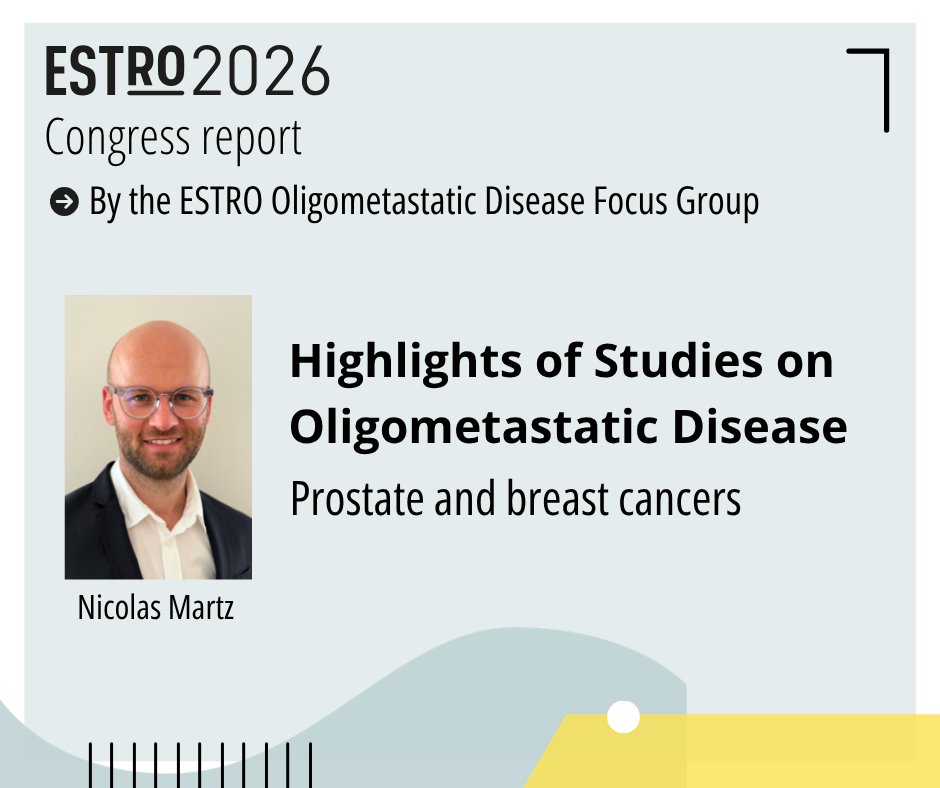
#ESTRO26#Oligometastatic Highlights
✅ #Breast (OLIGOMA): #SBRT + systemic therapy significantly extended median PFS to 35.8 vs 20.4 months (QoL preserved).
✅ #Prostate (DART): Darolutamide only delayed cancer progression during active use.
👉 https://t.co/afhREKCrNS
#RadOnc
📌 Sonda nasogástrica: indicaciones, colocación y manejo
Nasogastric Tubes—Indications, Placement, and Management: A Review — JAMA Surgery, 2026
La SNG sigue siendo fundamental en cirugía, pero el mensaje del artículo es claro: no debe colocarse ni mantenerse “por rutina”.
🔹 Obstrucción intestinal: es su principal indicación. En obstrucción adhesiva sin isquemia, estrangulación ni peritonitis, la descompresión con SNG forma parte del manejo conservador, que resuelve aproximadamente 75% de los casos. Habitualmente se observa respuesta durante 48–72 h.
🔹 Contraste hidrosoluble: tras 2–6 h de descompresión puede administrarse por la SNG, pinzarla unas 2 h y realizar radiografía a las 12–24 h. Que el contraste llegue al colon ayuda a predecir resolución; su beneficio terapéutico, en cambio, sigue siendo discutido.
🔹 Después de cirugía abdominal: aquí está uno de los mensajes más importantes. La SNG profiláctica rutinaria debe evitarse. En cirugía colorrectal, gástrica, pancreática, hepatobiliar y ginecológica no disminuye la fuga anastomótica y puede retrasar alimentación, movilidad y recuperación. ERAS favorece retirarla precozmente o usarla solo de forma selectiva.
🔹 Colocación segura: paciente sentado 60–90°, avanzar suavemente por el piso nasal y nunca forzar ante resistencia. Si se utilizará para alimentación o administrar sustancias, debe confirmarse radiológicamente; la auscultación tras insuflar aire no es un método fiable.
🔹 Manejo: la succión suele mantenerse en 40–80 mmHg. Las pruebas de pinzamiento o gravedad no deberían hacerse rutinariamente; si se utilizan, deben ser cortas (2–4 h) y con cabecera ≥30°.
⚠️ Vigilar diariamente aspiración, lesiones nasales, migración, pérdidas de volumen, hipopotasemia y alcalosis metabólica. Si la nutrición enteral será necesaria por más de 4–6 semanas, debe considerarse una gastrostomía.
💡 Para recordar: la mejor SNG no es la que permanece “por si acaso”, sino la que tiene una indicación clara, se coloca correctamente y se retira tan pronto deja de ser necesaria.
Original Article: Perioperative Apalutamide in High-Risk Localized Prostate Cancer (phase 3 PROTEUS trial) https://t.co/dJMlGVWc04
Editorial: A Watershed Moment in the Perioperative Treatment of Prostate Cancer https://t.co/YEfC0j9pC6
#Oncology#Urology
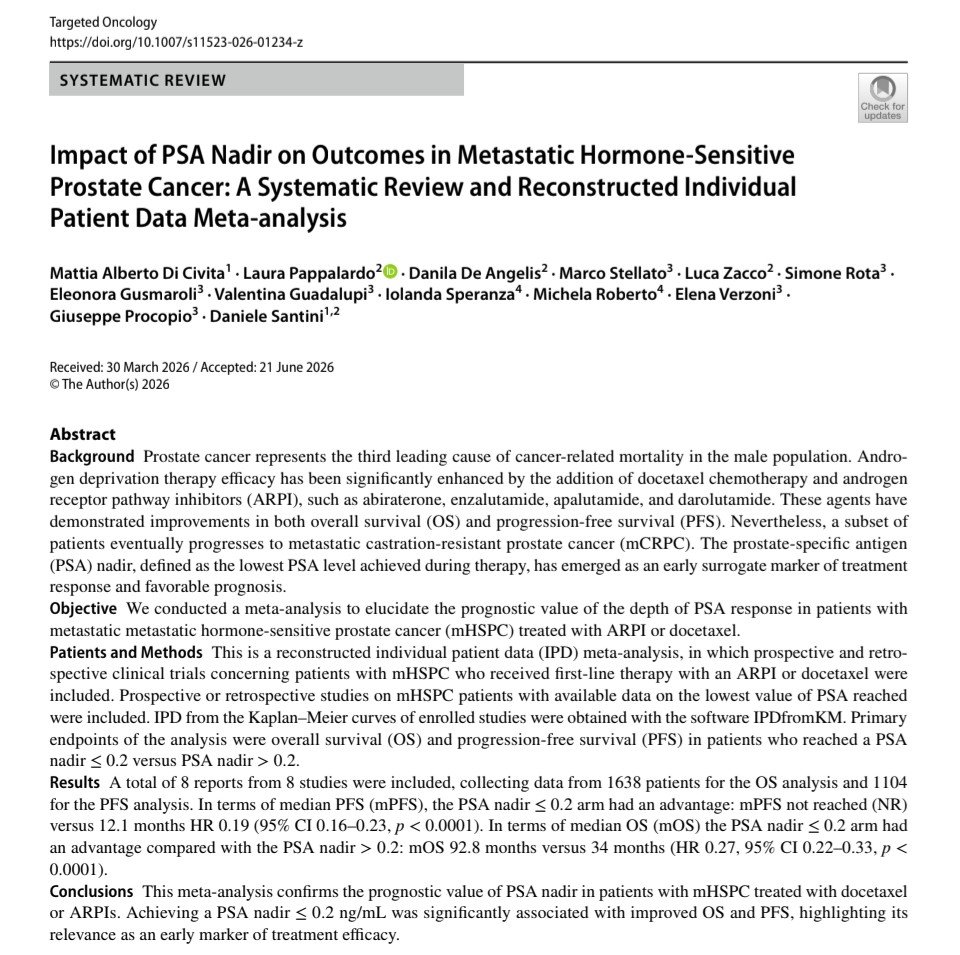
🔬 New evidence in #mHSPC
PSA nadir ≤0.2 ng/mL was strongly associated with better outcomes:
📈 OS: 92.8 vs 34 mo (HR 0.27)
📈 PFS: NR vs 12.1 mo (HR 0.19) Supporting PSA nadir as an early prognostic marker. #ProstateCancer#GUOncology
Full Article: https://t.co/3KgAAaukPr
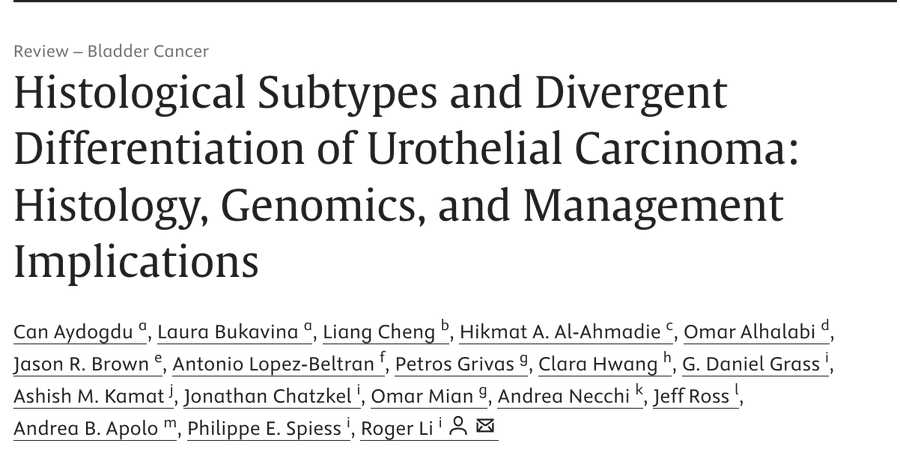
⚡️ Histological subtypes of urothelial carcinoma — micropapillary, plasmacytoid, sarcomatoid, squamous — represent biologically distinct phenotypes that do not conform to a one-size-fits-all approach.
Frequently understaged on TURBT, with variable response to standard systemic therapy.
@EuropeanUrology #BladderCancer
https://t.co/NnF32TmzJn
Are we doing enough to manage one of the most common—and often overlooked—side effects of androgen deprivation therapy?
https://t.co/ede7VqEZsX
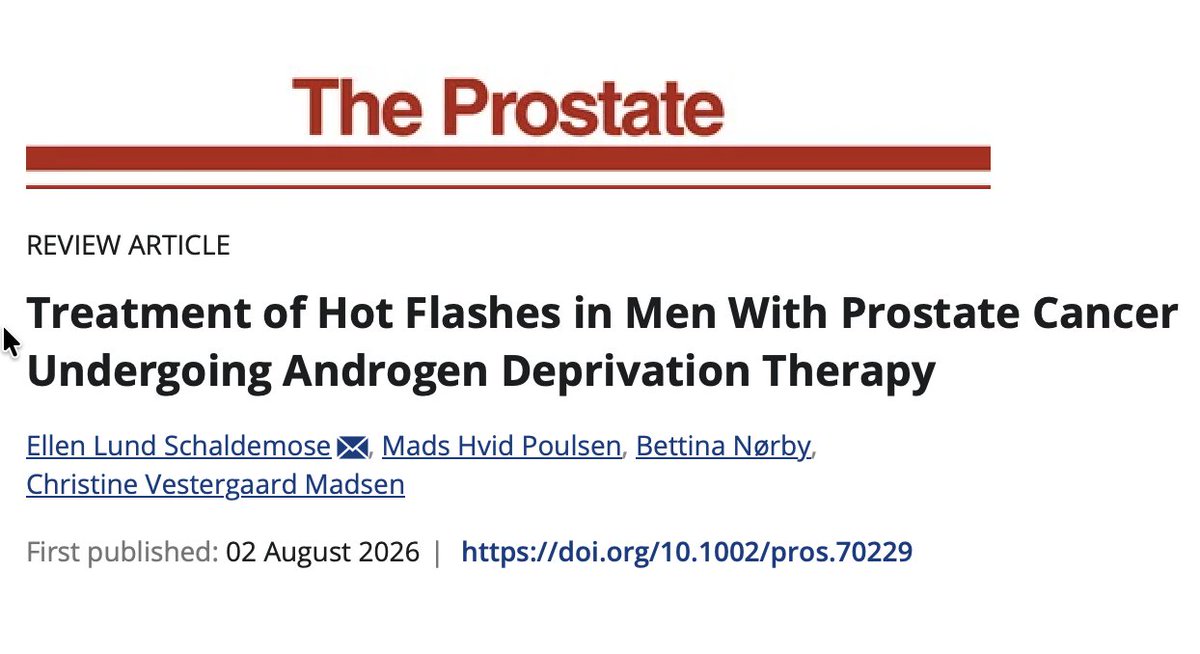
Treatment of Hot Flashes in Men With Prostate Cancer Undergoing Androgen Deprivation Therapy
Hot 🔥flashes remain a major quality-of-life challenge for men receiving ADT, yet the evidence supporting available treatments is surprisingly limited.
This systematic review of 35 studies found that hormonal therapies💊, including cyproterone acetate and estrogen, achieved the greatest reductions in hot flashes but at the expense of increased side effects. Non-hormonal options such as SSRIs and gabapentin produced variable results, while acupuncture and cognitive behavioural therapy offered modest benefits. Dietary supplements showed little evidence of effectiveness.
As newer agents such as fezolinetant emerge, improving supportive care may become just as important as optimising cancer control. #ProstateCancer
@OncoAlert 🚨 #LPCCC27
@Silke_Gillessen@AOmlin@ProfKHerrmann@weoncologists
⚡️ First clinical validation of the EAU definitions of BCG failure in NMIBC (n=776).
BCG-refractory disease showed the highest progression rates — up to 46% at 5 years. Early BCG-unresponsive recurrences conveyed similar progression risk to BCG-refractory disease, supporting their inclusion in this category.
Prognostically informative definitions that can support clinical decision-making.
https://t.co/WPCzhGziY3
#BladderCancer @EurUrolOncol
🔥ENFERMEDADES TUBULOINTERSTICIALES🔥
🚨 ¡DEJA DE LLAMARLO "NEFRITIS INTERSTICIAL" SIN MÁS!
La era de la medicina personalizada obliga a identificar la causa específica de enfermedad tubulointersticial
No todas las TIN son por fármacos. Tratarlas igual puede ser un error
👇🧵
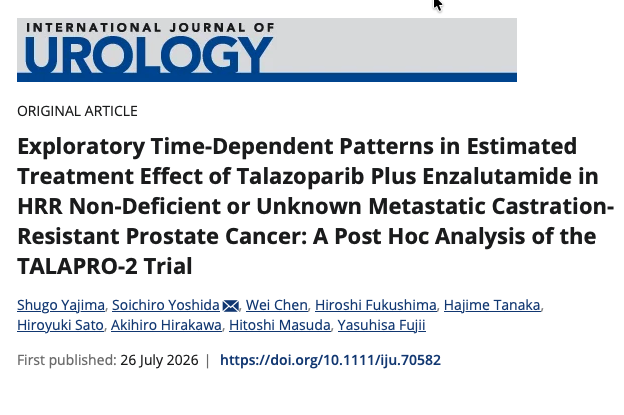
Exploratory Time-Dependent Patterns in Estimated Treatment Effect of Could the benefit of talazoparib + enzalutamide in advanced prostate cancer be changing over time?
Talazoparib Plus Enzalutamide in HRR Non-Deficient or Unknown Metastatic Castration-Resistant #ProstateCancer : A Post Hoc Analysis of the TALAPRO-2 Trial
A post hoc analysis of TALAPRO-2 explored whether talazoparib plus enzalutamide 💊 had time-dependent effects in patients without confirmed HRR deficiency.
👉Reconstructed data showed no 🚫 statistically significant evidence of changing treatment effects over time for overall or radiographic progression-free survival.
Exploratory interval analyses suggested possible variations in hazard ratios, but findings remain descriptive and hypothesis-generating, with caution needed when interpreting results in molecularly confirmed HRR-proficient disease.
👉 Link to article on first comment
@OncoAlert 🚨
@Silke_Gillessen@AOmlin@ProfKHerrmann@weoncologists
New in @EurUrolOncol: Secondary analysis of data from the TROG 08.03 RAVES trial shows that while post-prostatectomy RT is associated with bowel & urinary QOL impacts, the timing of RT (adjuvant vs early salvage) does not affect long-term quality of life. https://t.co/JKjuAAhQQO
⚡️ In MIBC, radical cystectomy remains the standard — but not every patient chooses it.
In the ICI/ADC era, trimodality therapy is gaining ground as an individualized alternative. How do we integrate it alongside perioperative EV + pembrolizumab?
https://t.co/e1dB56UDf5
#BladderCancer @EurUrolOncol
EAU-EANM-ESTRO-ESUR-ISUP-SIOG Guidelines on Prostate Cancer-2026 Update. Part I
https://t.co/M2JsBqwAU7
EAU-EANM-ESTRO-ESUR-ISUP-SIOG Guidelines on Prostate Cancer. Part II-2026 Update
https://t.co/JNfephHD5E







![ChandrakanthMv's tweet photo. mCSPC: SYNCHRONOUS AND METACHRONOUS ARE NOT THE SAME
What the ESMO 2026 Guideline says 👇
Synchronous
Low volume → ADT + ARPI [I,A]
Triplet only in selected, docetaxel-fit patients [III,C]
High volume + fit → THINK TRIPLET [II,A]
Metachronous
Low volume → ADT + ARPI [II,A]
Docetaxel not recommended [II,E]
High volume → ADT + ARPI [II,A]
Triplet can also be recommended if fit [II,B]
Take-home:
👉 The strongest home for triplet is synchronous + high-volume + docetaxel-fit mCSPC.
Ref: Fizazi K, et al. ESMO Clinical Practice Guideline: Advanced and metastatic prostate cancer. Ann Oncol. 2026.](https://pbs.twimg.com/media/HQ6OJc0aoAAX7Fp.jpg)

![ChandrakanthMv's tweet photo. Prostate RT in de novo mCSPC: the endpoint depends on volume.
🟢 Low volume → think SURVIVAL
STAMPEDE: OS HR 0.68 → prostate RT [II,A]
🟠 High volume → think GU PROTECTION
PEACE-1: delays serious GU events + improves CRPC-free survival → prostate RT can be recommended [II,B]
No proven OS benefit.
On triplet? Finish docetaxel → then prostate RT [III,A].
Same RT. Different reason. Volume matters.
📖 Fizazi K, et al. Ann Oncol. 2026;37:590–604.
ESMO Clinical Practice Guideline.](https://pbs.twimg.com/media/HQ6i7GMaYAA6G5W.jpg)