👇
Supporting military families should be more than saying ‘thank you’; here are some tangible ways to do it | Op-Ed https://t.co/zCZOwxYp9k via @ROINJNews@BlueStarFamily
Starting with some energy, and my inability to write brief updates, I am just extremely proud of the NASA crew, our industry, and our international partners. We are getting into a rhythm here at NASA. Earlier this year, setbacks put the Artemis II rocket back in the VAB for repairs, and we determined it was necessary to add another mission, Artemis III in 2027. Since then, we have unveiled the Ignition plans to build a Moon Base and nuclear-powered spaceships, launched a highly successful mission around the Moon, brought the crew home safely, and now watched the torch pass to Artemis III. There will be no shortage of major milestones to celebrate in the months ahead as we build the Moon Base and launch the Nancy Grace Roman telescope. I am beyond proud of the team and all the momentum and excitement around the space program.
I do want to take this moment to address two of the questions I have been seeing since the crew announcement.
Why are there no women assigned to Artemis III?
I have seen reactions ranging from disappointment to outrage. I have personally been to space twice with 50% female crews. My closest advisors and some of the smartest engineers I know are women. In our latest NASA leadership organization, nearly 50% of the Center Directors and Mission Directorate leadership are women. The last astronaut candidate class selected under this Administration was majority female because they were the best of the best, including one astronaut I previously went to space with.
In a world with so much controversy, I hope this can be a moment where we celebrate the astronauts selected, respect the integrity of the process, and recognize the extraordinary depth of talent across the entire corps. The crew selection does not involve any political appointees. The Astronaut Office assigns the crew that gives the mission the best chance of meeting its objectives, taking into account many factors, including the background and expertise of the astronauts, such as test pilot experience, development work on specific programs, and availability. For example, those raising this concern may not be aware of the pipeline of crews already preparing to launch to the Space Station, or those who have been undergoing lunar-specific training that would be a better fit for a future surface mission.
The Artemis III astronauts are experienced, qualified, and deserve to be celebrated for the mission they have been assigned, just as the crews that follow will be celebrated when their time comes. We have an extraordinary astronaut corps, and every mission and every crew is part of a larger campaign to get America back to the Moon and to build the future we all dreamed about as children.
What are the objectives for Artemis III if both landers will not be fully ready?
Coming off a highly successful lunar mission like Artemis II, it is not surprising that the bar is set high for Artemis III. I think it is important to understand how difficult and dangerous it is to land astronauts on the Moon. We have not done it in a very long time, and we want to draw from a past playbook for success. That means getting into a cadence of launching, learning, and rolling improvements into the next mission.
First and foremost, it is imperative for SLS to be flying with some frequency for operational currency and, honestly, safety. Earlier this year, it was very clear across NASA leadership that an additional mission was necessary in 2027. It is also imperative to gain interoperability data from rendezvous and docking with landers in Earth orbit. We do not need those landers that are still in development to be fully capable and certified for landing on the Moon on Artemis III, but we do need to test certain systems and controllability. Not to mention, we are moving quickly into a future where we do not require a single rocket to bring everything necessary for a mission to space, and as such, gaining experience with multi-launch campaigns and on-orbit assembly is directionally correct.
The Blue Origin test lander for Artemis III will incorporate many of the most important systems and subsystems that have not previously been operated by the provider, including ECLSS in a crew cabin, and other avionics. With SpaceX, they have demonstrated many of those capabilities continuously on Crew Dragon, but other controllability tests are important based on the negative-X axis acceleration that will be necessary when Starship undertakes the TLI burn to the Moon with a docked Orion.
After Artemis III, we will learn a lot and roll in further improvements, be that hardware, software, or procedural updates, as both providers undertake end-to-end uncrewed demonstrations to the surface in 2028, in advance of Artemis IV, where NASA astronauts will finally complete the grand return to the Moon.
As I said in my remarks yesterday, when Gene Cernan left the lunar surface on Apollo 17, he said, “We leave as we came, and, God willing, we shall return, with peace and hope for all mankind.” We are returning, and we are doing so with the fire carried forward from Apollo, the lessons learned from Artemis II, the crew of Artemis III, and all those who will follow. NASA will send the very best crews for the right missions. If the composition of our astronaut corps and our latest class of candidates says anything, it is that we have exactly the talent required to get the job done.
Godspeed Artemis III, and all those who will follow.
🚨 FIVE UFO's in one photo from the NASA Apollo 12 Moon Mission 👀🛸👽
UFO DISCLOSURE IS HERE
This archival photograph depicts the lunar surface as viewed from the landing site of Apollo 12. This image features five highlighted areas of interest, labeled “Area 1” through “Area 5,” above the horizon, in which unidentified phenomena are visible.
Living in a nursing home shouldn’t mean giving up everyday freedoms.
I just signed a bill allowing seniors living in nursing homes to consume alcohol - so that everyone can enjoy happy hour!
Congressman McKinley embodied the spirit of West Virginia through his deep love for our state and commitment to public service.
A dedicated husband, father, and grandfather, he leaves behind a lasting legacy and will be deeply missed.
West Virginia lost a great man today with the passing of David McKinley.
I was around David a lot when I was Governor, and I’ll say just this — he was a great man that cared a whole lot about our state.
Cathy and I are heartbroken and praying hard for his family, his friends, and all of West Virginia tonight.
We’ve lost a good one.
My heart is heavy after hearing about the passing of David McKinley. He was a fighter. Not only did David fight for his principles and the causes he believed in, but he also fought hardest for his cherished West Virginia. As a proud eighth generation West Virginian, he espoused the values that are so embedded in our state. His dedication and commitment to our coal miners was second to none, and as the only licensed engineer in Congress during his time in the House of Representatives, he brought thorough analysis to the legislative process. He was also a dedicated WVU football fan—never missing a chance to cheer them on. My heart goes out to his devoted wife Mary and his family in sympathy for their loss and in gratitude for his decades of public service and friendship.
I’m flying back home today but was just informed that former Congressman David McKinley has passed away. Even after his primary defeat in 2022, McKinley would call me to talk WV politics. He laid the groundwork for the modern WVGOP as a former party chairman. Godspeed, sir.
David McKinley dedicated his life to the people of West Virginia. He built a well-respected West Virginia company, served with distinction in the State Legislature, led the West Virginia Republican Party, and represented our state well in the United States Congress. With his passing, David McKinley leaves behind a towering legacy and a grateful state.
Please join Mina and me in praying for the repose of his soul and for the comfort of his family, especially his wife, Mary, and their children.
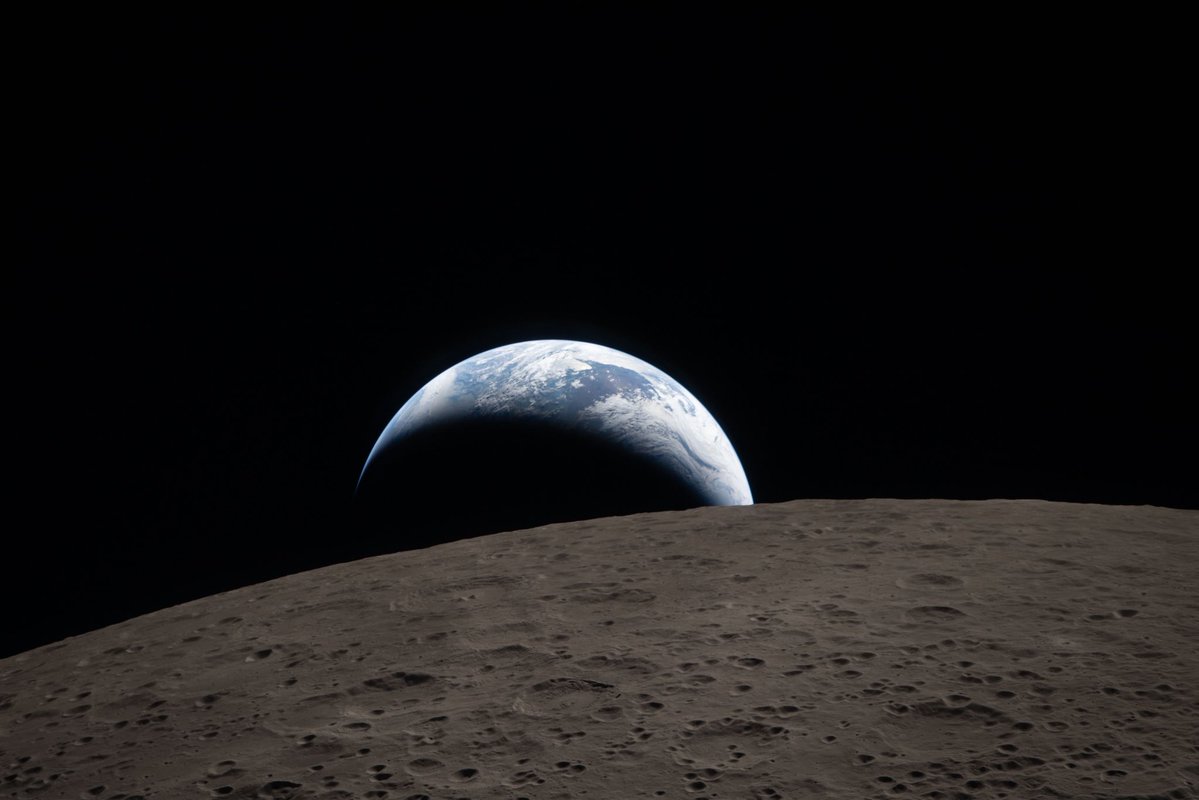
EARTHSET.
April 6, 2026.
Humanity, from the other side. First photo from the far side of the Moon. Captured from Orion as Earth dips beyond the lunar horizon. Photo: NASA
"Welcome to my old neighborhood." Our @NASAArtemis II astronauts woke up on the sixth day of their mission to a special message recorded in 2025 by astronaut Jim Lovell, the pilot of Apollo 8.
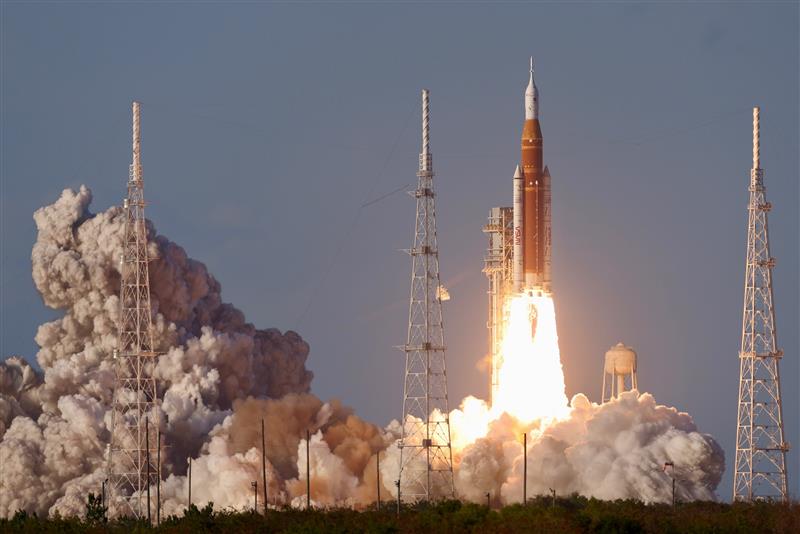
For the first time in over 50 years, humans are Moonbound.
At 6:35 p.m. EDT (2235 UTC) NASA’s Space Launch System rocket and the Orion spacecraft lifted off from the agency’s Kennedy Space Center in Florida, sending four astronauts on a planned test flight around the Moon and back. https://t.co/0Q9ZB4IWVI
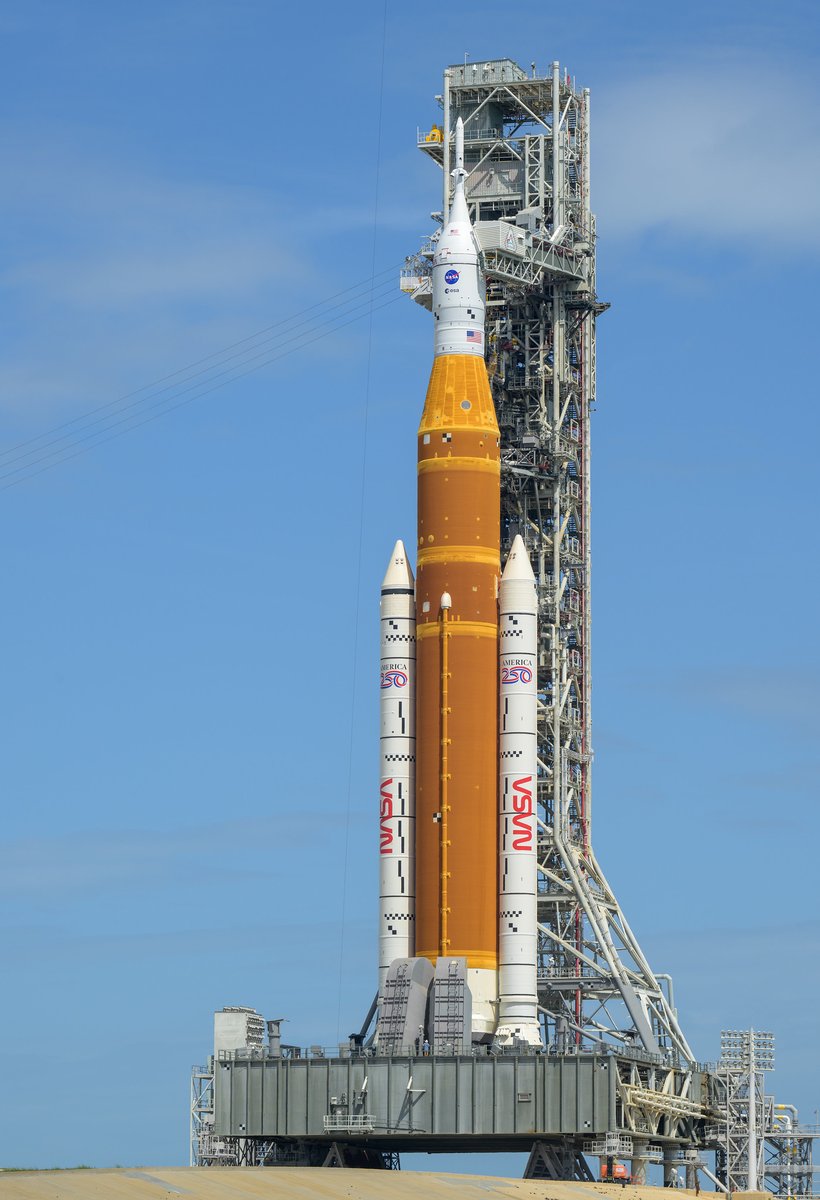
The countdown begins.
Teams at @NASAKennedy have arrived to their stations at the Launch Control Center. We are about 48 hours from the launch of the Artemis II mission around the Moon. https://t.co/PqaR8eyxu4