"I went to take the calculus book out, and the teacher, sorry, the librarian said, ‘Child, you can’t take this book out. Why are you taking this book out?’ I said, ‘It’s for my father.’ And so I took it home, and I tried to learn a little bit. My father looked at the first few paragraphs and couldn’t understand it, and this was rather a shock to me a little bit of a shock, I remember. It was the first time I realized that I could understand what he couldn’t understand.''
— Richard P. Feynman (Interview with Charles Weiner, March 4, 1966)
[Niels Bohr Library & Archives, American Institute of Physics (Center for the History of Physics)]
Someone sent me a short video of @drmarkhyman talking about the best & worst breakfasts
Oats vs Eggs
I thought it was worth breaking down because it contains some interesting lessons
Interested in your thoughts @drmarkhyman
thread🔽🔽🔽
Numbers to Leave Numbers.
The chess prodigy and martial artist Josh Waitzkin describes this process in his book The Art of Learning.
He refers to it as Numbers to Leave Numbers, where technical information is integrated into what feels like natural intelligence.
Waitzkin uses the example of a novice chess player's first lesson.
Initially, the player will count the values of each chess piece in their heads or on their fingers before making their move.
In time, they will stop counting, Waitzkin explains.
The pieces will achieve a more flowing and integrated value system.
What was once seen mathematically is now felt intuitively.
I believe that internalizing the principles in this book and mastering the movements recommended will provide results not only for the few weeks you follow the program but for a lifetime.
This is why reading books is more effective for learning than reading short articles.
The case studies, lessons, and multiple angles of explanation in a well-written book allow for a thorough understanding of the topic.
Short pithy blog articles may give you the same advice but the impact isn't the same.
It's why professional athletes break down movements of their sport into the most basic components, mastering them one at a time.
If at any point during this book you've asked yourself why such a granular level of detail is described, it's because I believe a deep understanding of the component parts is necessary to see the whole picture.
This deep understanding is also needed to graduate to a more intuitive, sustainable way of moving through life.
You've made it through a lot of dense reading material, so you've earned the right to take a break from journal articles and meta studies.
Avoid the trap of information overload where you are frozen in place by the infinite variety of opinions on the best ways to improve fitness.
For the next four to eight weeks, focus on applying the principles on these pages.
There's much more to fitness and longevity than can be captured in one book.
But for right now, focus on action.
Jump in with both feet and start rebuilding.
Go to https://t.co/mj9fYe3r10 to hear more.
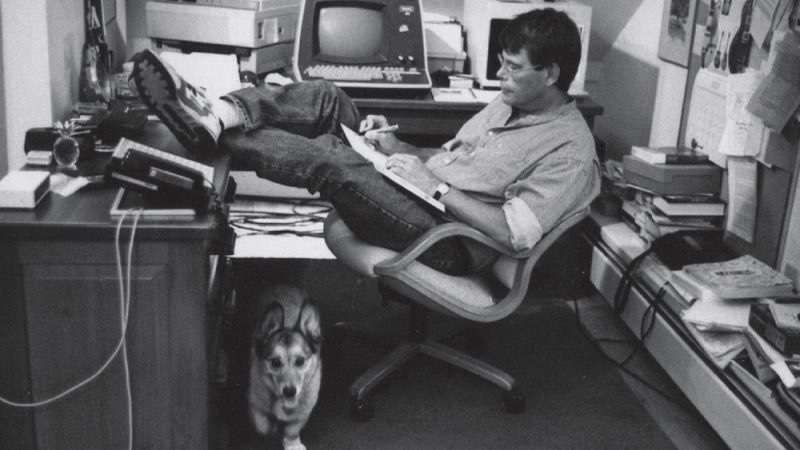
"Books are the perfect entertainment: no commercials, no batteries, hours of enjoyment for each dollar spent. What I wonder is why everybody doesn't carry a book around for those inevitable dead spots in life."
–Stephen King
I started the Huberman Lab podcast 5 years ago w/@R_Mohr & was told by a lot of people “there are a lot of podcasts, why would you start one now?” We never listened & things what I call “hard WORKed out”. If you’re thinking of starting something new this year, DO IT. Good luck!
Let's talk about imposter syndrome for a second.
This is a bit of a buzzword, but it's also a real thing.
I deal with this regularly and I think I have some insight that might help you.
First, this took me a long time to realize: imposter syndrome or feeling like you're not good enough to put yourself out there is really selfish if you think about it.
What you're saying is my feelings are more important than my purpose.
So you need to set your feelings aside sometimes and push through it if you're being called to a higher purpose.
But the fact remains, it can be scary to put yourself out there.
So if there's something you want to do or share, but you've held back, this is what I've learned.
First, you don't have to be a world class expert to provide value.
You can be a curator of ideas and the world needs more curators of quality ideas.
There's not a lack of information with the internet and YouTube.
But people still struggle because there's a lack of coherent curators who put together systems for people to follow.
So if you have interests and passions that align across different categories, it's a great opportunity for you to be a curator and help share ideas from other experts.
Once I stopped worrying about being the world class expert, it finally gave me the courage to step out and build a business and start sharing what I believed would help people.
The second thing is, you don't have to have some massive audience.
All you have to have is one person in your universe that you can help.
If you worry about how big of a following somebody has or how saturated your market is, you're thinking about the wrong things.
Think geographically instead of hierarchically.
Look in your local environment and community.
Are there people you could help?
I had a fledgling business with a small newsletter and I knew I could help those people even though it was a handful.
So that's what I focused on—helping those people, not becoming famous or being at the top of some imaginary food chain.
So if you're stuck in some kind of doubt feedback loop and there's something you want to do, take it from me.
You don't have to be an expert.
You can be a curator of ideas and you don't have to have some massive following.
You just need a few people that you can help and then you have to have the courage to step out and actually help them.
Imposter syndrome is a real feeling, but remember, your feelings are not necessarily always more important than your purpose.
Before you address the psychological factors causing stress, you MUST address the biochemical ones first.
Otherwise you're just spinning your wheels.
Sleep, caffeine intake, nutrition, movement, and sunlight exposure matter more than you think.
If there's one thing I'm absolutely sure about
It's that if someone has a belief that they have invested part of their identity in, there is absolutely no amount of evidence you can provide to change their mind
You can roll out study after study and they will stick their heads in the sand, plug their ears, and try to convince you that the sky is purple
And this honestly is probably a large majority of the population. It is from our need to be tribal that is a survival mechanism & need for identity and belonging
And it's going to fucking kill us all one day
Simple way to prevent injuries and pain:
Schedule a consult with a local physical therapist once every three months.
Pay $100-$150 out of pocket if you have to.
Ask for a full body movement screen and a list of weekly exercises for your weak points.
Mouth taping to improve sleep is one of the few crazy-looking biohacks that's actually worth it.
You don't need any special tape. Just get surgical tape for $1-2/roll.
Put a 1 inch wide square over your mouth (like a Charlie Chaplin mustache moved down to your lips).





![Science_TechTV's tweet photo. "I went to take the calculus book out, and the teacher, sorry, the librarian said, ‘Child, you can’t take this book out. Why are you taking this book out?’ I said, ‘It’s for my father.’ And so I took it home, and I tried to learn a little bit. My father looked at the first few paragraphs and couldn’t understand it, and this was rather a shock to me a little bit of a shock, I remember. It was the first time I realized that I could understand what he couldn’t understand.''
— Richard P. Feynman (Interview with Charles Weiner, March 4, 1966)
[Niels Bohr Library & Archives, American Institute of Physics (Center for the History of Physics)]](https://pbs.twimg.com/media/HMnU88aXsAAQuLW.jpg)