الإنشغال نعمه ، و الوقت المزدحم بالمهام و ترتيب المهام نعمه ، فكره انه يكون عندك أهداف يوميه بسيطه نعمة ، لأن برأيي الفراغ اكبر نقمة يمكن تواجه الإنسان و أكثر شي يمكن يفسد الإنسان .
" العمل لا يقتل مهما كان شاقا و قاسيا و لكن الفراغ يقتل حتى أنبل مافي الإنسان " غازي القصيبي
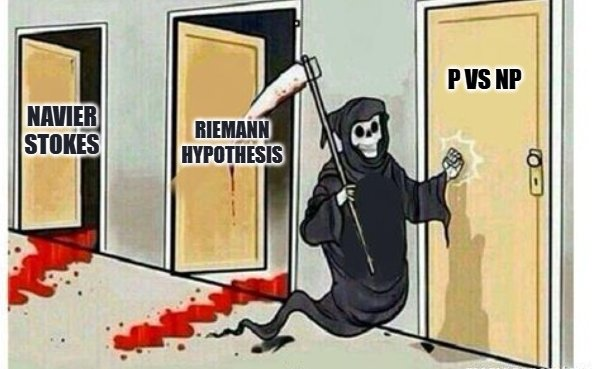
In 1859, a German mathematician named Bernhard Riemann posed a question so profound, so mysterious, that it would haunt mathematics for the next 167 years.
He was studying prime numbers.
Two, three, five, seven...
The building blocks of mathematics. Scattered across the number line like stars across an endless sky.
No obvious pattern. No predictable rhythm.
Just chaos.
Or so it seemed.
Because Riemann heard something hidden beneath that chaos.
A kind of music.
He uncovered a remarkable connection between prime numbers and a mysterious mathematical function, the Riemann zeta function.
And at the heart of that mystery lay a single, invisible line.
The critical line.
A line where, Riemann believed, every nontrivial zero of his function must lie.
One line. One hypothesis. One of the greatest mysteries in mathematics.
For generations, the world's greatest mathematical minds searched for a proof.
Decades passed. Centuries turned.
A million-dollar prize awaited whoever could solve it.
But this was never really about the money.
It was about something far more beautiful.
Finding order within chaos.
Discovering that beneath the seemingly unpredictable world of prime numbers lies a deeper mathematical harmony.
And then...
November 20, 2026.
Something extraordinary happened.
Levent Alpöge, a mathematician at Anthropic, announced that he believed he had finally proved the Riemann Hypothesis, working alongside the company's artificial intelligence system, Claude.
A mystery that had challenged humanity for 167 years might finally have an answer.
But the mathematical world must still verify the proof.
And so, the question remains...
Has artificial intelligence finally uncovered the hidden music of prime numbers?
The world is watching.
And mathematics is waiting.
من سوء الأدب مع الله ومن صور الجحود، أن يفرج الله كرب إنسان ويزيل همه ويكشف غمه ثم يقول
«طلع الأمر سهل وأنا شايل همّه، وأعطيت الموضوع أكبر من حجمه»
قال عبدالله المزني رحمه الله:
ينزل بالعبد الأمر فيدعو الله، فيصرفه عنه فيأتيه الشي��ان فيضعف شكره،فيقول:إن الأمر أيسر مما تذهب إليه