@cremieuxrecueil is there any research on what happens to class/derivative drug prices when the main drug becomes generic? ie retatrutide in Canada where semiglutide is off patent
A big pivot from Ken Griffin on AI:
“Number one is, in the last few months, there has been a step change in the productivity of the AI toolkit. It is profoundly more powerful than it was just nine months ago.
And for us at Citadel, that has allowed us to unleash a much broader array of use cases for AI. And it has been really interesting to watch, to be blunt, work that we would usually do with people with masters and PhDs in finance over the course of weeks or months being done by AI agents over the course of hours or days.
These are not these are not mid-tier white collar jobs. These are like extraordinarily high skilled jobs being, I'm going to pick a word, automated by agentic AI. And I gotta tell you, I went home one Friday actually fairly depressed by this because you could just see how this was going to have such a dramatic impact on society.
When you witness it in your own four walls, when you see work that used to be man years of work being done in days or weeks, it's like, wow, like that's the first time I've seen real impact in our four walls.”
This echoes my own experience with agents and the conversations I am having with students, friends & clients. The toolkit has dramatically transformed and it feels like in finance, for the first time, AI is real.
Judging by my tl there is a growing gap in understanding of AI capability.
The first issue I think is around recency and tier of use. I think a lot of people tried the free tier of ChatGPT somewhere last year and allowed it to inform their views on AI a little too much. This is a group of reactions laughing at various quirks of the models, hallucinations, etc. Yes I also saw the viral videos of OpenAI's Advanced Voice mode fumbling simple queries like "should I drive or walk to the carwash". The thing is that these free and old/deprecated models don't reflect the capability in the latest round of state of the art agentic models of this year, especially OpenAI Codex and Claude Code.
But that brings me to the second issue. Even if people paid $200/month to use the state of the art models, a lot of the capabilities are relatively "peaky" in highly technical areas. Typical queries around search, writing, advice, etc. are *not* the domain that has made the most noticeable and dramatic strides in capability. Partly, this is due to the technical details of reinforcement learning and its use of verifiable rewards. But partly, it's also because these use cases are not sufficiently prioritized by the companies in their hillclimbing because they don't lead to as much $$$ value. The goldmines are elsewhere, and the focus comes along.
So that brings me to the second group of people, who *both* 1) pay for and use the state of the art frontier agentic models (OpenAI Codex / Claude Code) and 2) do so professionally in technical domains like programming, math and research. This group of people is subject to the highest amount of "AI Psychosis" because the recent improvements in these domains as of this year have been nothing short of staggering. When you hand a computer terminal to one of these models, you can now watch them melt programming problems that you'd normally expect to take days/weeks of work. It's this second group of people that assigns a much greater gravity to the capabilities, their slope, and various cyber-related repercussions.
TLDR the people in these two groups are speaking past each other. It really is simultaneously the case that OpenAI's free and I think slightly orphaned (?) "Advanced Voice Mode" will fumble the dumbest questions in your Instagram's reels and *at the same time*, OpenAI's highest-tier and paid Codex model will go off for 1 hour to coherently restructure an entire code base, or find and exploit vulnerabilities in computer systems. This part really works and has made dramatic strides because 2 properties: 1) these domains offer explicit reward functions that are verifiable meaning they are easily amenable to reinforcement learning training (e.g. unit tests passed yes or no, in contrast to writing, which is much harder to explicitly judge), but also 2) they are a lot more valuable in b2b settings, meaning that the biggest fraction of the team is focused on improving them. So here we are.
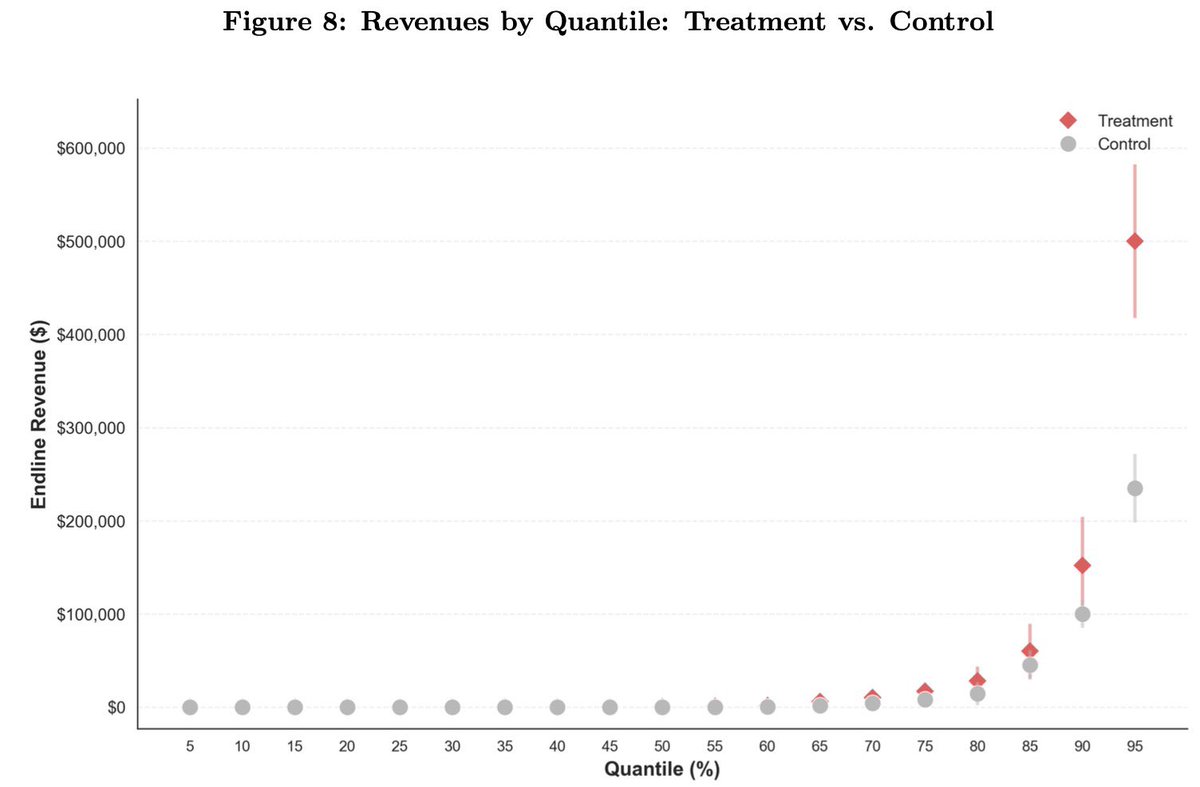
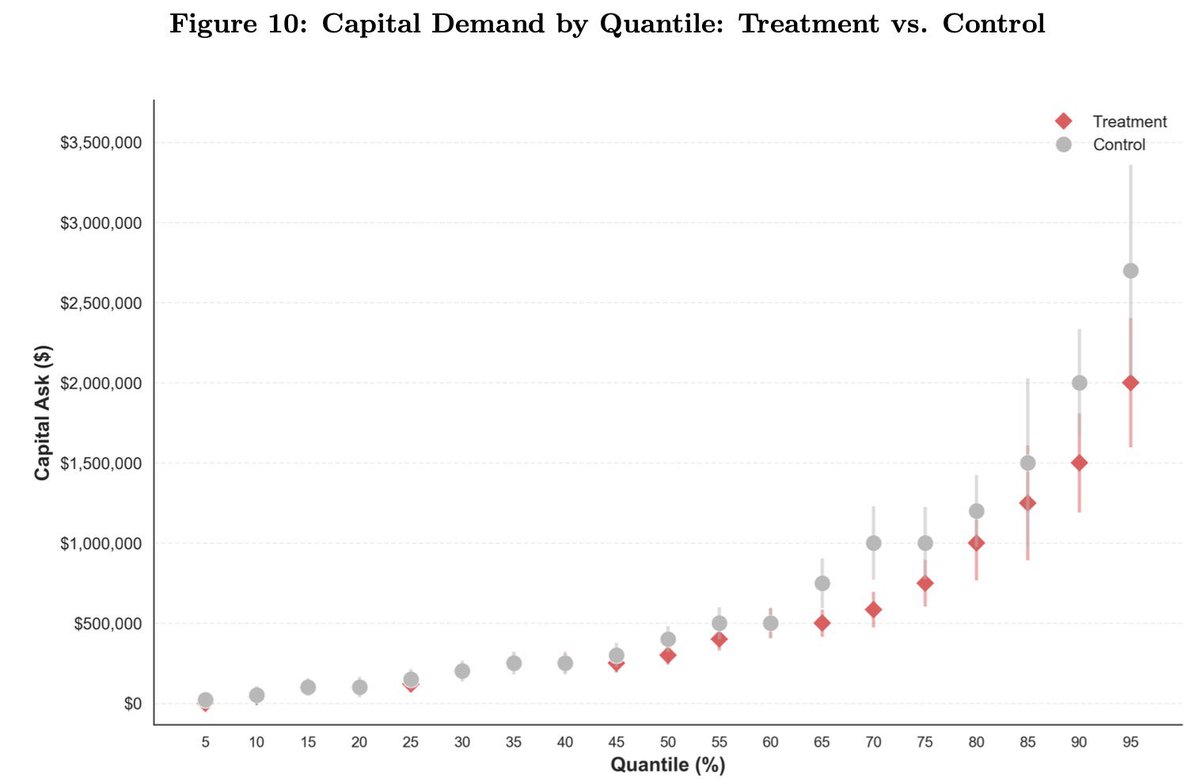
Big deal paper here: field experiment on 515 startups, half shown case studies of how startups are successfully using AI.
Those firms used AI 44% more, had 1.9x higher revenue, needed 39% less capital:
1) AI accelerates businesses
2) The challenge is understanding how to use it
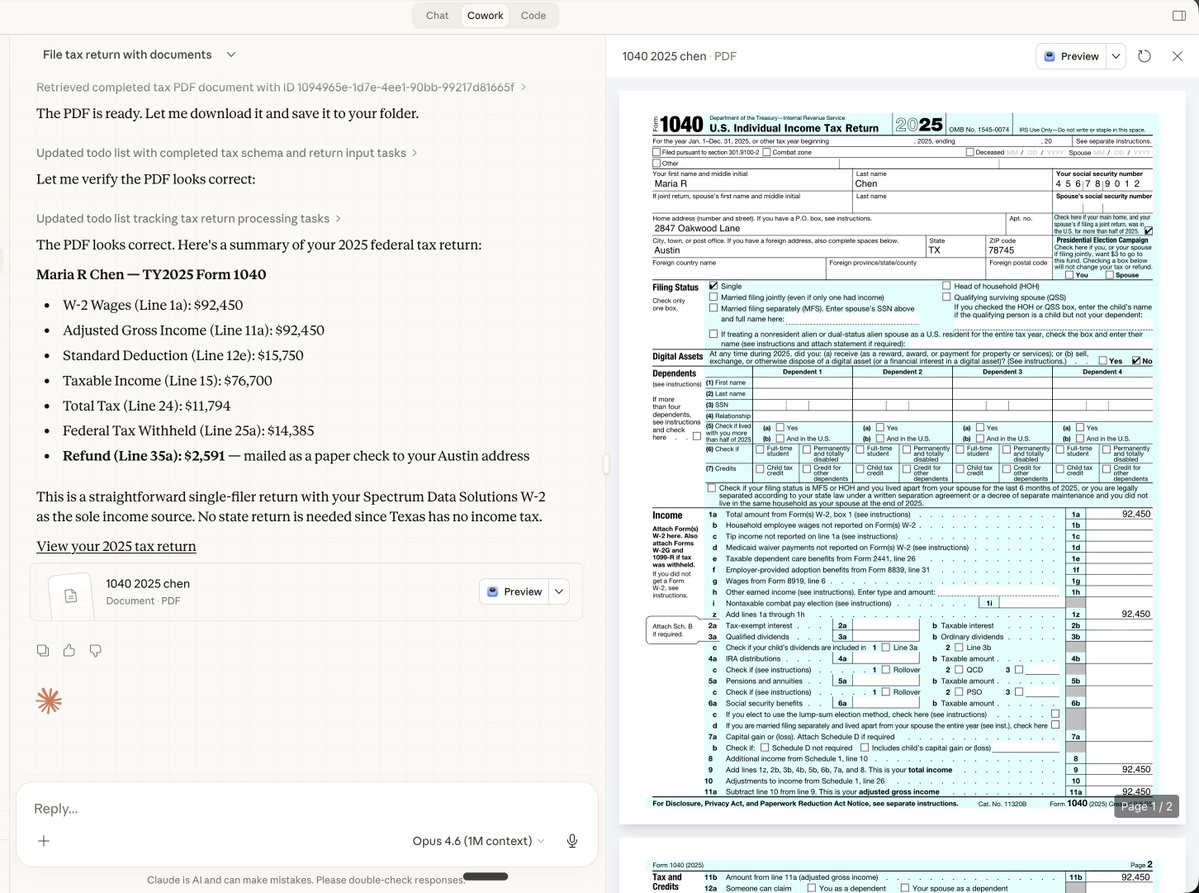
I've been working on tax software for the past 5 years. This is the last year anyone will have to pay for TurboTax.
You can try it yourself today:
- add the Aiwyn Tax connector inside of Claude (link below)
- give it access to your tax documents (W-2s, etc.)
- ask Claude to prepare your tax return
...and that's it!
We are witnessing the rise of an entirely new echelon of productivity porn fueled by AI
What we had before was modest and reasonable in comparison – maybe you’d waste an afternoon or two reorganizing your files or polishing your dashboard
Now you deploy vast swarms of intelligent beings to construct civilization-scale monuments to your procrastination
I really thought AI would offer an escape from the psychological traps that people get stuck in seeking to do meaningful, productive work
Now I see it’s making those traps a thousand miles deep, tunneling straight into the infinite depths of productivity hell
You can now throw industrial quantities of compute, power, energy, and attention at a problem rather than having to make even the simplest decision
You can explore hundreds of parallel pathways instead of ever taking the risk of stepping down one. You can simulate worlds within worlds so you never have to pay attention to this one
The potential for wasting time has multiplied so exponentially, it can now far exceed what was always the ceiling: the amount of time you personally have available
Now you can waste the time of unlimited swarms of agents, all pouring their best effort into the most mundane aspect of your existence, trading bits of info back and forth in endless loops that you can convince yourself are adding value
Welcome to the productivity singularity
"AI doubling its capacity to do long knowledge-work tasks every ~6 months, while everybody else annually decimates the ability to pay attention to anything for more than a few seconds"
is the sort of scenario that one can probably catastrophize unhelpfully, but I can't see how this scenario *doesn't* produce some weird and probably unfortunate outcomes
Kaja Kallas:
Let me be clear: we want strong trans-Atlantic ties. The U.S. will remain Europe’s partner and ally. But Europe need to adapt to the new realities. Europe is no longer Washington’s primary center of gravity.
Canada’s Prime Minister Mark Carney hit the nail on its head in his own speech in Davos. It’s time also for Europe to take down its sign. To acknowledge that this tectonic shift is here to stay. And act with urgency.
When I was a schoolgirl in Estonia, before anyone had a mobile phone in their pocket, many schools used a bell system to tell you the time. The first bell was the signal to go to the class. The second bell was a warning. And the third bell meant you were late and there would be consequences. We are now dangerously close to the third bell.