I’m leaving stripe to run Open Standard full time.
at bridge, we made stablecoins more accessible. but our impact was constrained by issuers' economics and incentives.
The world needs better money. we hope to remove these constraints.
New favourite use case for opus 5.5:
Give them the whole repo and ask:
“Tell me what we should actually refactor.”
• an orchestrator maps the architecture and conventions
• it sends fresh read-only agents through every subsystem
• it validates, dedupes, and ranks the findings
The result: real code smells, dead code, duplication, and architecture issues instead of unnecessary AI nitpicks.
Prompt 👇
You can use Claude after hitting rate limits
Anthropic secretly dropped this option alongside Opus 5.5 for some users
In Claude Code, run "/low-priority"
This will let you use Claude after hitting limits, but it'll be slower & only work if theres capacity at that time
Enjoy!
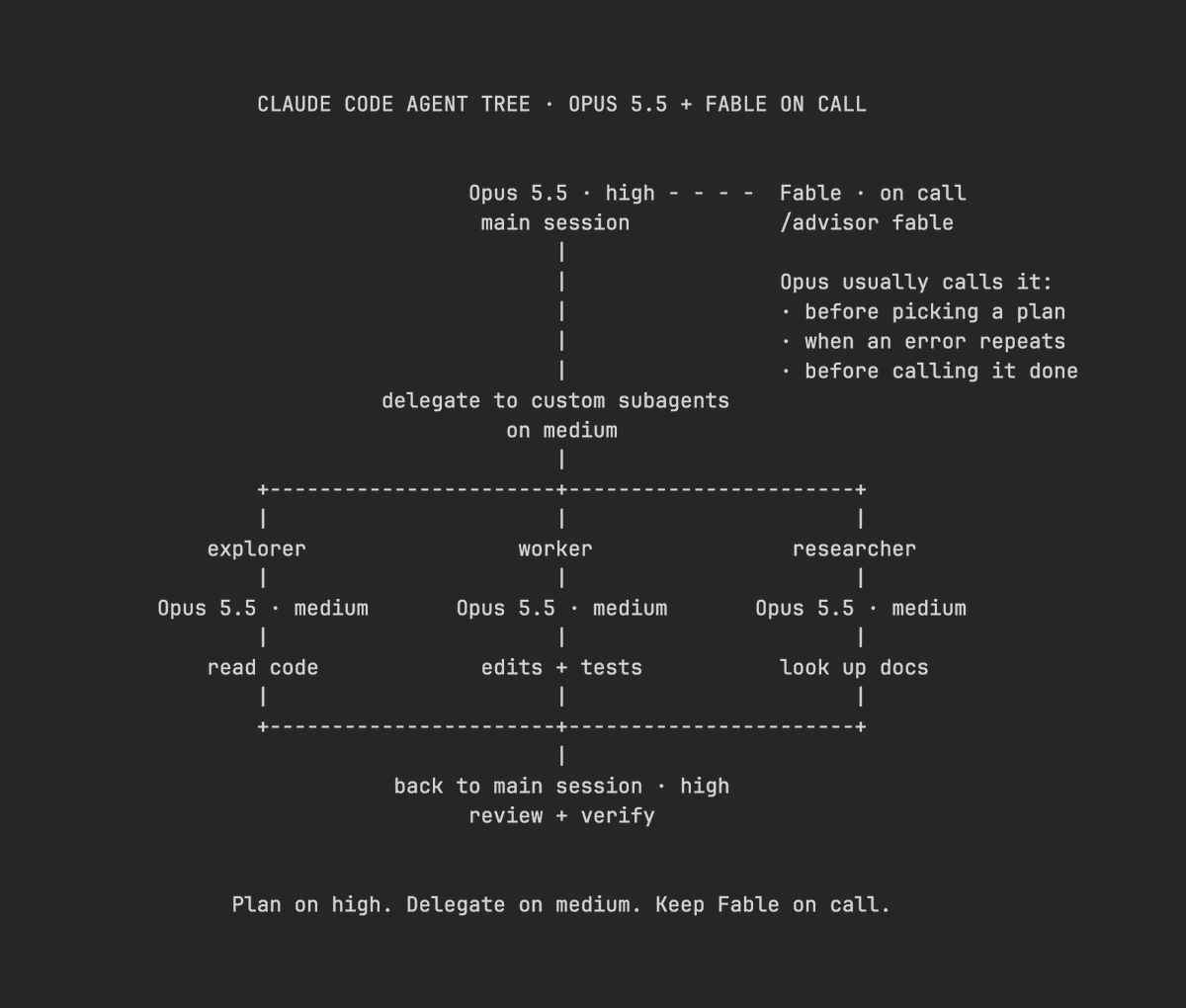
𝗖𝗹𝗮𝘂𝗱𝗲 𝗖𝗼𝗱𝗲 𝘁𝗶𝗽: once Opus 5.5 is your main model, don't let your Fable quota sit idle. Put Fable on call with /advisor.
Run /advisor fable and Claude Code gets 𝗮𝗻 𝗮𝗱𝘃𝗶𝘀𝗼𝗿 𝗼𝗻 𝘁𝗵𝗲 𝘀𝗶𝗱𝗲𝗹𝗶𝗻𝗲𝘀. Opus 5.5 keeps doing the work and usually calls Fable in at three moments:
→ Before committing to a plan: is it right?
→ When the same error keeps coming back: am I heading the wrong way?
→ Before saying "done": did I miss anything?
Fable reads the whole session and gives advice. Opus still writes the code.
The tree is the full setup. Opus 5.5 on high runs the main session. Three subagents on medium split the rest: one reads code, one edits and runs tests, one looks up docs. Fable waits on the sidelines. Hand the tree and this prompt to Claude Code to set it up 👇
"Set up my Claude Code to match this tree:
1. For the three subagents, reuse fitting ones from ~/.claude/agents and .claude/agents, and propose new ones only for missing roles. Set each to model: opus and effort: medium. Leave any subagent that already sets a different model alone, and list it.
2. Set the main session's default effort to high with effortLevel in ~/.claude/settings.json.
3. Check for environment variables that turn the advisor off (CLAUDE_CODE_DISABLE_ADVISOR_TOOL, or DISABLE_TELEMETRY and anything else that stops flag fetching) and for CLAUDE_CODE_EFFORT_LEVEL, which overrides every subagent's effort. Report them; don't change them.
4. Add one rule to ~/.claude/CLAUDE.md: ask the advisor before committing to a big plan, when the same error shows up a second time, and before calling a long task done.
Show me the changes first. Don't edit any files yet."
https://t.co/FaFivbb9Pj
More than 400 million cards have been created with Stripe Issuing.
Find out how to build and scale your corporate and consumer card program, backed by both traditional currencies and stablecoins.
Get started: https://t.co/DflAnmm1NQ
useful tip for Opus 5.5:
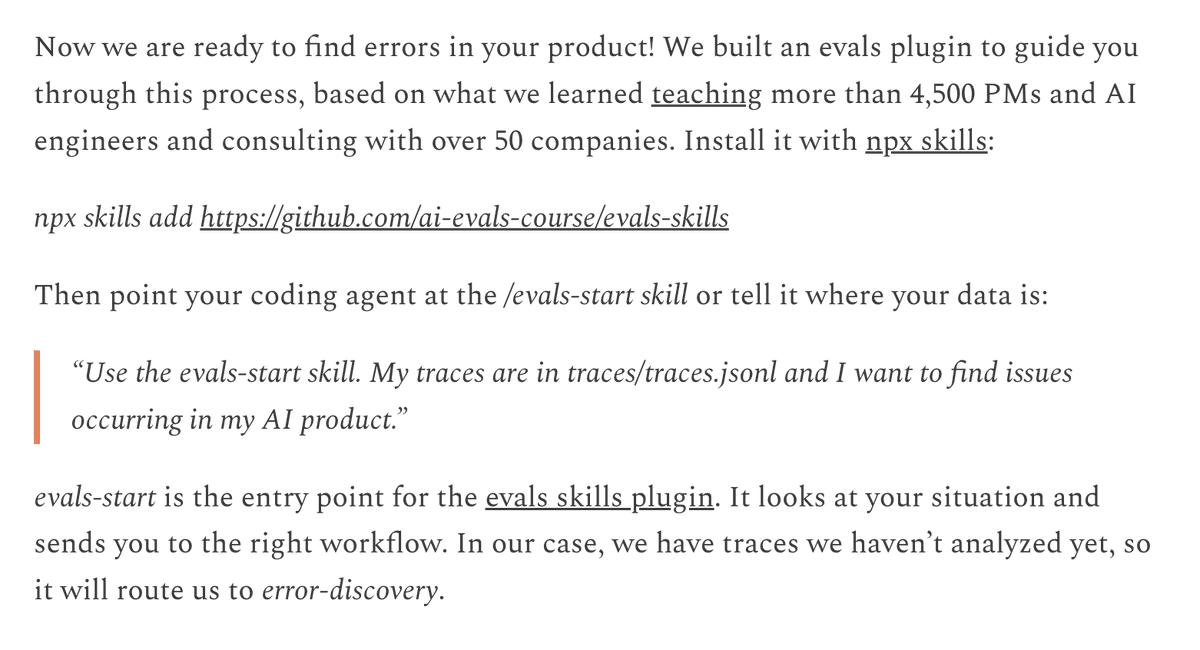
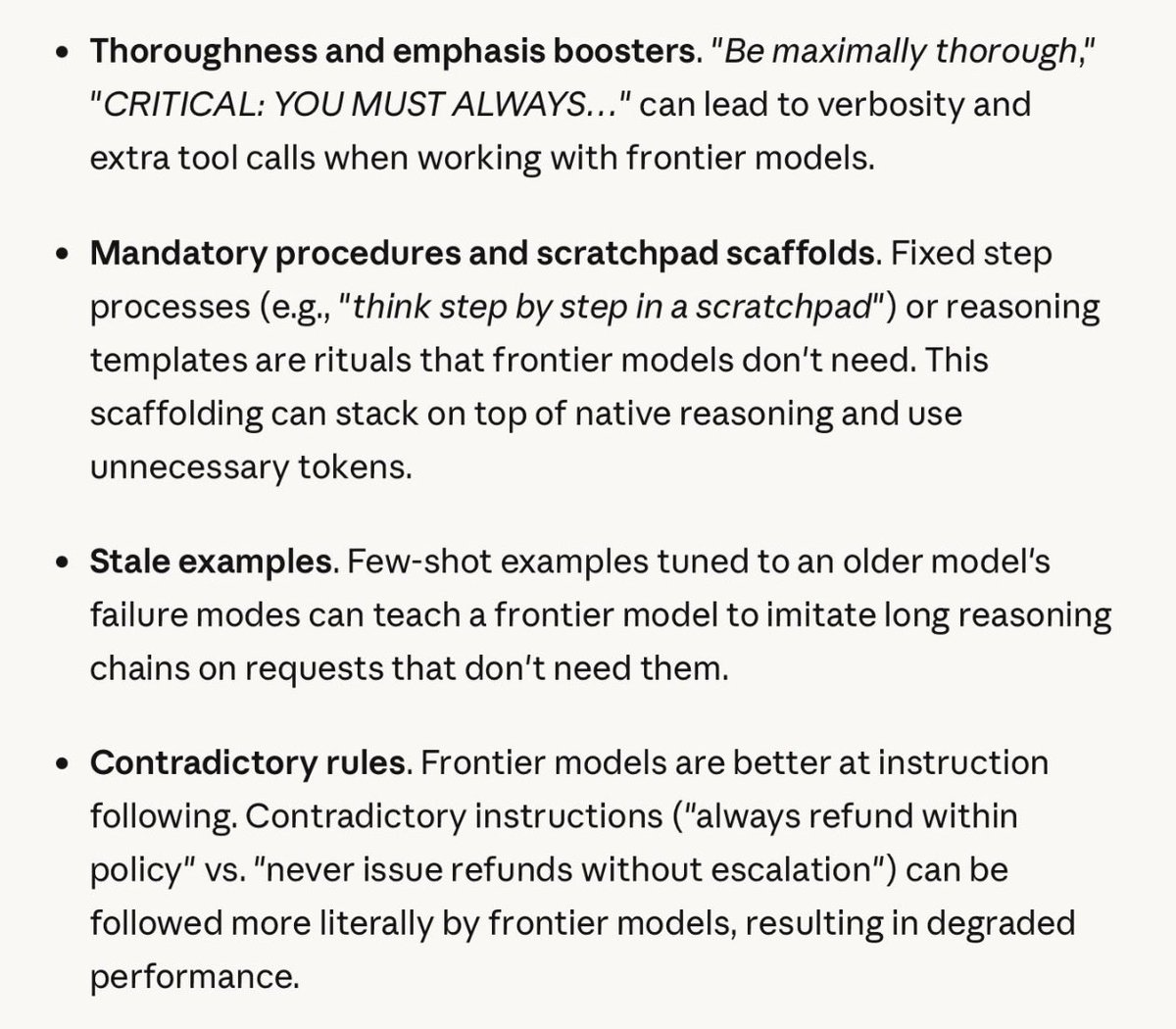
run “/claude-api prompt-audit” in Claude Code. this checks you skills, agent.md, Claude.md, prompts and removes anti-patterns that hobble frontier models.
i updated the skill w/ the latest Opus 5.5 guidance.
Rain finally did it: your card now pulls from your wallet at the second you pay
@raincards calls it real-time funding. You connect a wallet, approve once how much the card can spend, and every purchase is authorized straight against that wallet. Before this you had to push money into the card first and top it up whenever it ran low
The good and the bad:
- No dead balance in a card app, your money sits where you keep it until the checkout
- One approval, revocable anytime, so you set the ceiling of what the card can ever pull
- It is still a collateral model. At authorization your money moves into a collateral contract, only now that happens at the moment of the purchase
- Every purchase becomes an onchain transaction out of your wallet, so your spending history ends up sitting next to your main address
- Move your funds elsewhere and there is nothing for the card to pull at the checkout
- Beta for now, on programs where Rain runs the authorization, so @KASTxyz, @ether_fi, @Plasma and @useTria do not all get it at once. Starts on USDC on @base and @arbitrum and USDT0 on Plasma
Rain runs the cards for Western Union and MoneyGram. What it ships stops being one card's feature and becomes the bar everyone else has to match
So what took so long?
btw Claude Code lets you configure your own output style!
drop instructions in ~/.claude/output-styles, then run /config → Output style
this is the one I like to use after a long day lol. honestly helps so much
祖克柏當然希望 AI 開源
因為 Meta 在 AI 競爭中明顯落後,而且公司的商業模式是廣告與社群平台。AI 模型越便宜、普及,Meta 導入 AI 的成本就越低
如果 AI 模型最終成為低價、普及的基礎設施,市場價值就會重新回到 Meta 最有優勢的戰場:使用者、內容、產品分發與廣告通路。所以祖克柏表面上談的是 AI 民主化,實際上更可能是商業策略。既然 Meta 無法做出最強的模型,那就來提倡一個沒人能靠模型本身獨占市場的新世界
This is genuinely cool.
Acorns has one the best physical card onboarding I’ve experienced thanks to their AR activation sequence. It’s actually delightful.
No stablecoin card is doing anything close yet. This is the bar.
this is f*cking gold
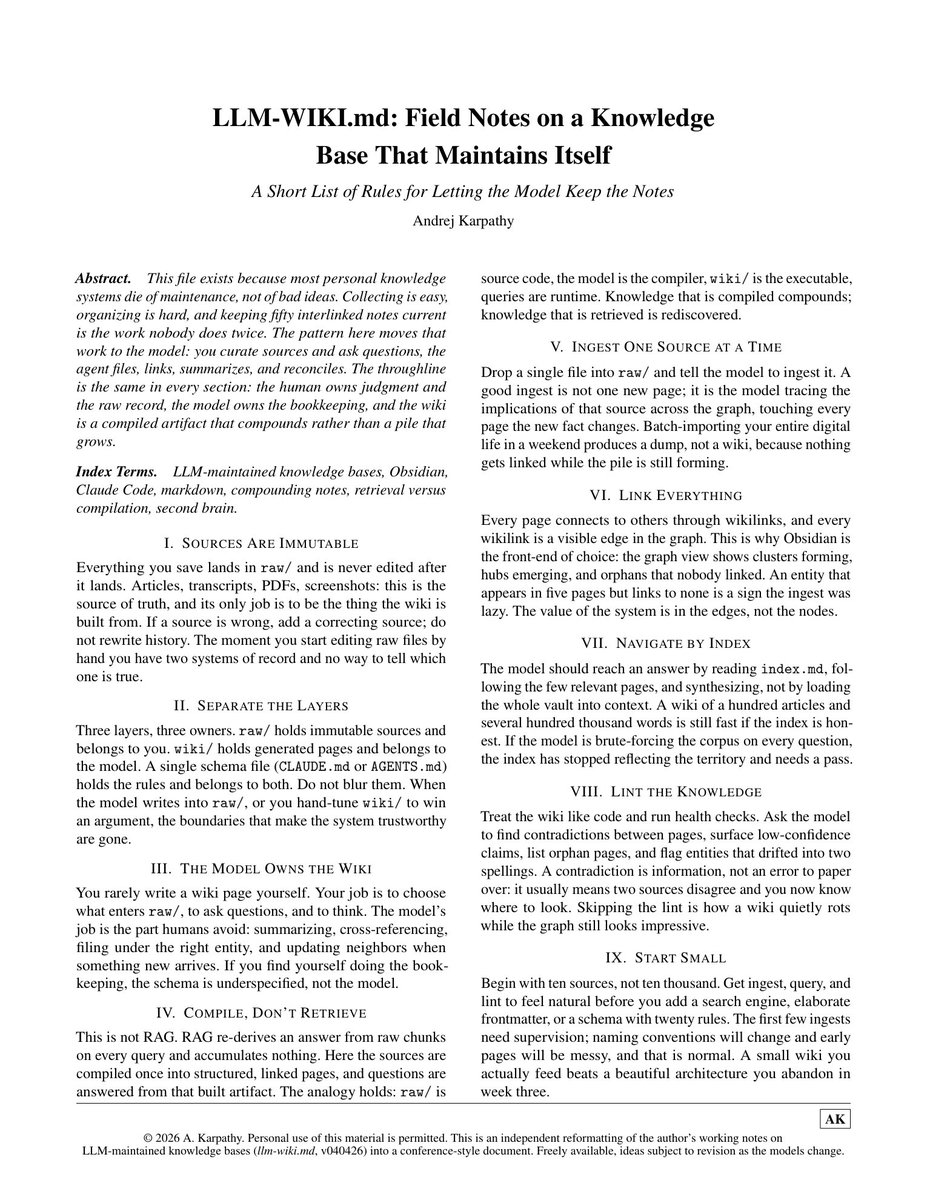
Andrej Karpathy joined Anthropic five weeks ago.
A friend on his team just showed me 25 Claude features that most users have never touched.
I configured all of them. The very first message was different.
Not slightly different. A completely different tool.
Claude stopped guessing what I wanted and started delivering exactly what I needed. Every single time.
Bookmark this before it gets buried in your feed.
Read it now, then check the article below.