What if you could characterise brain tumours in hours, rather than weeks? And in doing so allow neurosurgeons to adjust their surgical strategies on the spot.
Here, researchers showed that they were able to do just that by leveraging nanopore technology: https://t.co/gicIpZPm7G
Come and work with us! It's an amazing team and an incredible opportunity to develop computation tools that will have real world impact in a wide range of areas as well as being part of pushing the boundaries of what is possible with DNA and RNA sequencing.
Two more openings in our applications development team. Come help us build new computational methods and software to fully leverage the tremendous recent improvements in @nanopore sequencing!
https://t.co/0KJellFccY
✂️Splice splice baby!✂️
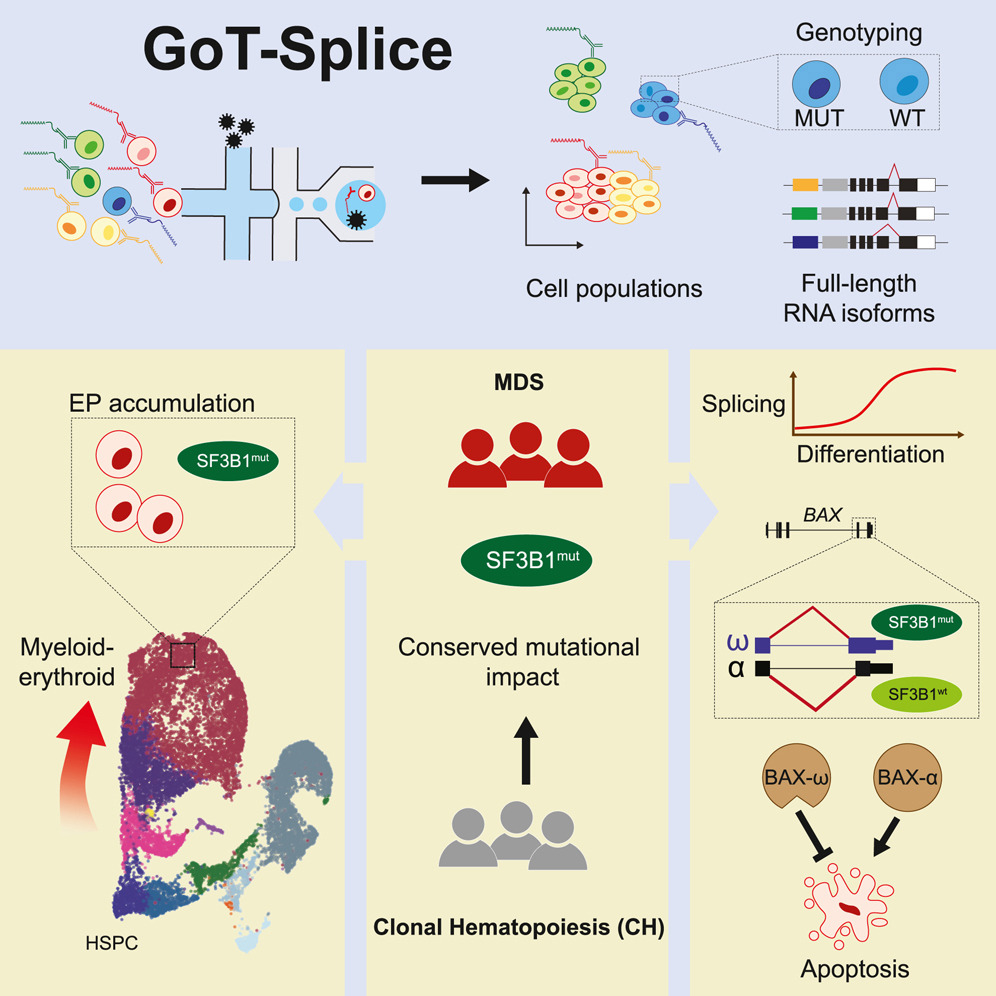
New paper just out in @CellStemCell integrating @nanopore long read single-cell isoform mapping into our broader genotype-phenotype vision for clonal mosaicism !
https://t.co/2VmlsWiOGG
Here @BanfieldLab used #nanopore sequencing to study 'the nature and existence of enigmatic genetic elements' (Borgs) in soil. They assembled 7 new curated Borg genomes, revealing extensive DNA methylation that differentiates them from their host archaea, Methanoperedens. 🧵1/2
Another LOADED update from the @nanopore EPI2ME team with wf-metagenomics and wf-somatic-variation getting new functionality & our desktop app getting easier for Windows users & displaying workflow progress. All this and more here: https://t.co/hY75WcHOxH
We’re also hiring…
Come talk 🦠💻🧬 with me at #ASMicrobe! I'll be:
1. At my poster: adaptive sampling, MAGs, and host methylome from human microbiomes (Sat, HMB06)
2. Intro-ing metagenomics pipelines for Nanopore data (Sat/Sun, Data for Breakfast, 10:05-10:20 @ booth 2207)
3. At the Nanopore booth
#ASMicrobe folks: come see @christine_y_he at her poster to learn how @nanopore sequencing of human microbiome samples can simultaneously:
- Deplete host DNA to get more microbial reads
- Generate genome-resolved assemblies
- Provide host DNA methylation from the proximal tissue
New addition to the Oxford Nanopore Open Datasets: Genome in a Bottle Ashkenazi Trio, accessible via @AWSCloud.
Sequencing was performed using #PromethION Flow Cells, (~200Gb yield each), Kit V14 chemistry & analysis driven by @nextflowio.
Read here: https://t.co/qw7Sg4OIqR
Minimap2 #Rust bindings update to v0.1.11.
HTS lib support (SAM/BAM writing) and mm2-fast support via feature flag.
Huge thanks to @eoghh for the HTS lib support!
Check out the full announcement:
https://t.co/l1vI9xPSvQ
#bioinformatics#nanopore#genomics
Blog post - 20 years of open science or how we haven't radically changed the way we do science online. Thoughts on how we don't seem to be using the internet to its fullest potential in scientific collaborations https://t.co/aICVu5NjS4
Excited to share our paper, out today in @Nature, where we characterize transcriptome variation in human tissues by long-read sequencing. Huge thanks to @g_dafni@beryl_bbc Garrett Garborcauskas @dgmacarthur and other collaborators. 🧵
https://t.co/NbQuy0cJWF
Really happy to see RRMS out! I'm sure will enable a bunch of new applications in epigenetics 🧬 Check out all the advantages of this adaptive sampling method for cost-effective methylation calling using #nanopore technology !
Spoiler: lots!
Looking for a motivated person to join my #Algorithms and #MachineLearning team to further improve our industry leading @nanopore modified base detection capabilities!