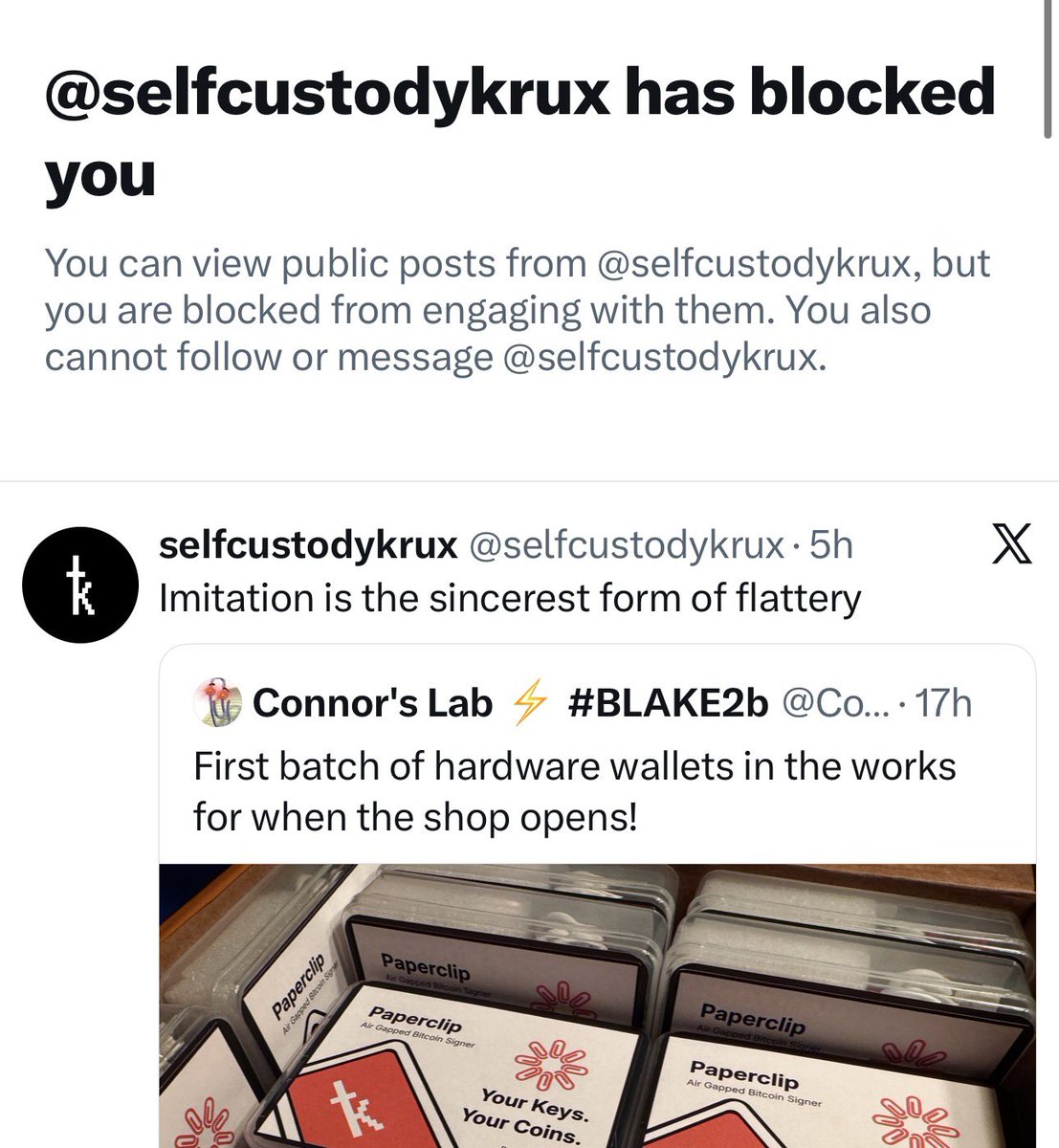
⚠️ Class actions are nice but only reach assets a court can seize. @nvk drained everything into Bitcoin, making a civil judgment impossible to collect.
Only criminal proceedings bring asset forfeiture and prison. Arrest Rodolfo Novak and his accomplices!
Security called me at 6:12 AM today.
"Patch every PHP server immediately."
I asked what happened.
"Two critical vulnerabilities. Remote code execution. No authentication required."
Cool.
How many PHP servers do we have?
According to inventory: 12
According to reality:
Nobody knows.
We found one running WordPress.
Three running old internal tools.
One under someone's desk.
Two inside vendor appliances.
A forgotten employee directory from 2016.
And a server named:
PHP-OLD-DO-NOT-TOUCH
Naturally, that one runs payroll exports.
Then we found a PHP 5.6 box.
I asked who owned it.
The documentation said:
BRIAN.
Brian left in 2019.
We called Brian.
He said:
"Oh wow, that's still running?"
Excellent.
By 8 AM, leadership joined the incident call.
CEO:
"Can hackers actually get in?"
Security:
"Potentially yes."
CEO:
"Without a password?"
Security:
"Yes."
CEO:
"Then why do WE need passwords?"
Not the lesson.
Finance asked if we could wait until the weekend to patch because downtime affects revenue.
Security explained that the alternative was letting strangers execute code on our servers.
Finance asked for a cost comparison.
At 9:17, someone suggested temporarily taking the vulnerable websites offline.
Marketing refused.
"Our campaign is live."
So for the next hour, the company officially decided maintaining a landing page for 20% off webinar registration was more important than preventing remote server takeover.
We finally patched everything we could find.
Then our scanner discovered another PHP server.
Hostname:
TEMP-PHP-2014
Uptime:
4,512 days.
Nobody knows what it does.
Nobody owns it.
Nobody can shut it down.
But every time we block network access, the warehouse stops printing shipping labels.
Security has classified it as critical infrastructure.
It is running PHP 5.4.
The vulnerability has existed longer than half our employees.
The emergency patch took four hours.
Finding out what PHP actually runs took eleven.
The internet isn't held together with code.
It's held together with servers everyone is afraid to turn off.
i own a relatively new (2025) samsung tv.
i kept getting weirdly targeted ads.
i tried reversing the firmware but it was aes encrypted and no keys unless tear it apart and do uart/jtag magic.
zero days it is. root shell on new samsung TVs!
discovered PRIVACY HORROR. write up?
@ViciTax@chrisco@GrassFedBitcoin If you like @GrassFedBitcoin’s proposal, at this point the best way to have your voice heard is to visit the PR on GitHub and “concept ACK” the proposal or add a reaction to the submission. You can find it, and several other proposals here
https://t.co/2IHhoGj4rp
I’ve decided to support @GrassFedBitcoin’s proposal for a 6-month rolling coinbase maturity extension (CBME) until RDTS expiry, despite my preference for 1 year fixed. I want to explain why, because I don’t think this is nearly the concession it might appear to be.
The objective has always been to discourage short-term, profit-driven hashrate from exploiting the network. The question is how best to accomplish that, and I think the rolling design matters more than people are giving it credit for.
The original 1-year proposal had a fixed expiration tied to RDTS. That creates a significant weakness: a block mined the day before RDTS expires could mature the following day. As we approach expiration, the deterrent progressively weakens.
With 6 months rolling, every block mined while the rule is active carries the full 6-month maturity requirement, including those mined immediately before expiration. This creates a substantial overhang of immature rewards extending six months beyond RDTS, for an effective period of up to 18 months. It’s a shorter lockup per block, but a more consistent deterrent throughout the entire period.
Now consider the consensus problem.
There’s broad support for 1 year, but there’s a meaningful difference between ~55% support and 75% support. We can continue arguing over whether the additional six months of maturity would produce materially better outcomes, but the reality is that nobody has concrete evidence to settle that question.
Meanwhile, we risk deadlocking the 6-month and 1-year camps until the existing 45-day fixed extension expires, or 45-day rolling takes effect. That would be a substantially worse outcome than either proposal.
Six months rolling gives the 1-year camp much of what it wants while requiring the 45-day camp to accept a significant increase in maturity. And let’s be clear, six months is still brutal for short-term miners. It doesn’t gradually acclimate the leeches to the network by easing restrictions as expiration approaches. It maintains the deterrent right up to the end, effectively easing them out rather than easing them in.
I understand the hardliner position because I largely share it. But there’s a difference between compromising on the objective and compromising on the means of achieving it.
I’d rather secure a strong deterrent with broad consensus than risk losing the entire effort over a marginal difference in expected outcomes that nobody can reliably quantify.
We have other serious problems demanding our attention, particularly the growing amount of spam making its way into mined blocks. I’d like us to resolve this and get back to fighting those battles.
The global debt crisis has never been worse.
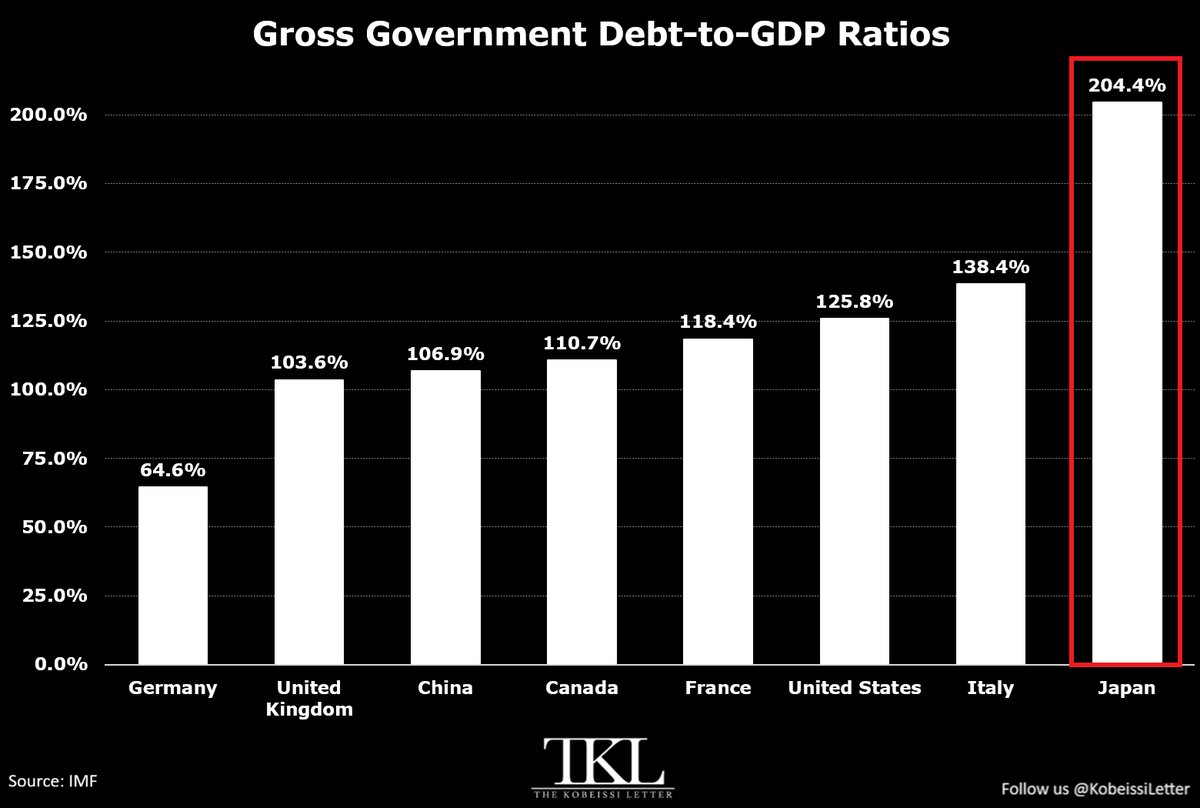
Japan now has a gross government Debt-to-GDP ratio of 204.4%, the highest among any major world economy.
Italy follows at 138.4%, while the United States stands at 125.8%, which is only below the ~132.0% record set during the 2020 pandemic.
At the same time, France’s gross government Debt-to-GDP ratio is 118.4%, while Canada’s, China’s, and the UK’s are 110.7%, 106.9%, and 103.6%, respectively.
By comparison, Germany is the only major economy below 100.0%, at 64.6%.
The current average among advanced economies is 108.2%.
The world economy is drowning in debt.
@cguida6@realityblob@realbtcjesus@balkanhodl Scamcoins ARE automatically hostile to Bitcoin. They cheat people, and make Bitcoin look bad by association and affinity fraud. Anyone dealing in scamcoins is not a friend to Bitcoin.
What is there Bitcoin consensus on? (Future proposals like rolling 45-day aside)
THIS IS NOT YOUR OPINION, just what you observe the community at large supporting.
Is this actually true? When it comes to trying to exit L-BTC, users can swap:
1) Blockstream wallet: 0 sats
2) Aqua Wallet: 250,000 sats
3) BullBitcoin Wallet: 25 million sats
Looks like Blockstream users are SOL? Am I missing something? Maybe BullBitcoin is footing the bill for users? Maybe Andy and Scamson don't have enough sats to do so?
@_BitcoinCapital We're not shitcoiners and I can prove it.
If we were shitcoiners, David Bailey would be inviting us to his conferences with a whale pass and looking to invest in our projects