The speed of light limit is not an article of faith among physicists, it is an extraordinarily well-tested feature of nature. Of course, one can speculate about a deeper theory in which Lorentz invariance breaks down or emerges only approximately. But we have searched for signs of that breakdown in many, many ways, and the current limits on Lorentz violation are astonishingly tight
It is also not true that quantum mechanics has relativity baked in. Nonrelativistic quantum mechanics is called that for a reason. It isn't easy to make QM respect relativity. Particle creation and annihilation become unavoidable, and antiparticles are required to preserve causality. These and other predictions of relativistic QM have been confirmed to extraordinary precision, making it arguably the most successful theory in the history of science
Still, you can and should challenge it! But not all challenges are equal. Einstein did not develop relativity merely because he disliked the old picture, he developed it because there were inconsistencies in the existing theoretical framework. Historically, mathematical inconsistencies and experimental discrepancies have been the clearest signs that a theory needs to be replaced, or at least embedded in a deeper one. Philosophical discomfort, by itself, is not. “ the planets must orbit the Earth because humans should be at the centre of the Universe” is not a serious physical argument. Nor is “there is probably a preferred foliation of spacetime because I want superdeterminism to be true”. That is not deriving a theory from evidence or inconsistency, it is choosing the conclusion first and adding whatever structure is needed to make it seem viable. That is wishful thinking, not physics
Prof Brian Cox often discusses the miracle of human consciousness. In this short, he reflects on the sheer improbability of our existence and how that makes our brief time in the universe deeply precious.
Explore quantum algorithms, circuits, cryptography and more—all built with the Wolfram Quantum Framework.
See how users are pushing the limits of quantum computation on Wolfram Community:
https://t.co/CuMYlmN04y
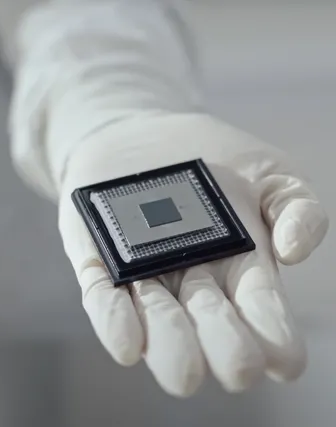
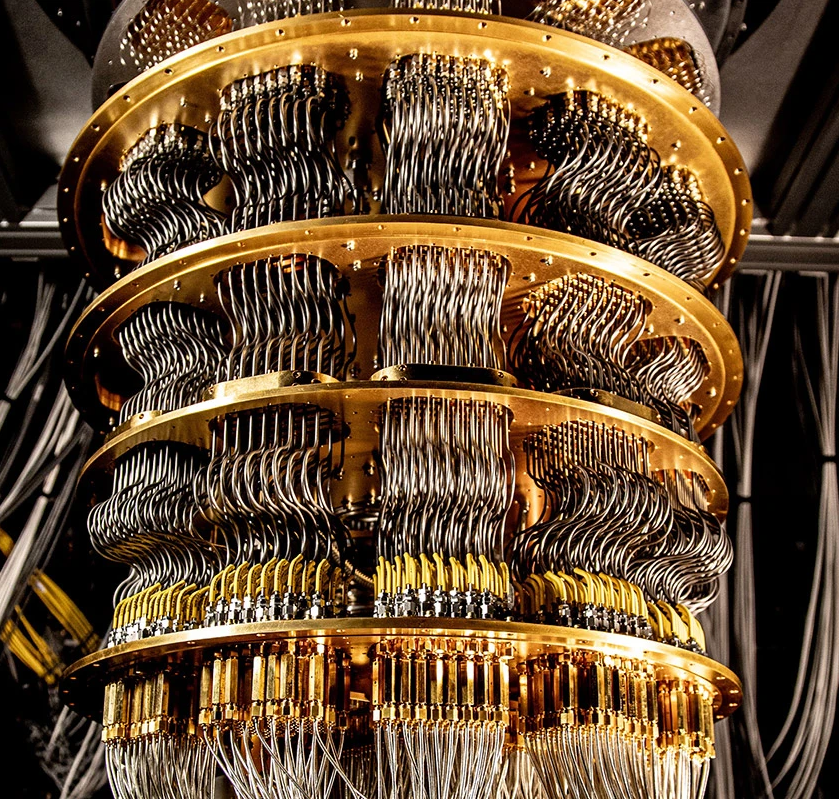
While everyone watches AI, Google broke time itself.
Their quantum chip just solved a problem that would outlast the universe — in 5 minutes.
And this is just the start...
What you need to know about Willow — and how it'll transform humanity in 2030+: 🧵
I am retiring from teaching GR. Here is the final course material (lecture notes including all problem sets and exams). Hope some students might find it useful in their studies. https://t.co/odIAqDlrc1
[Thanks to @gimmytomas for his amazing help in making the exam questions.]
Our review paper on anomaly detection in particle physics is published in Reviews in Physics! Had fun trying to summarize the many moving pieces of a swiftly moving field, with the excellent @ETH_physics PhD students Patrick Odagiu and Vasilis Belis!
https://t.co/JG8YNvmiiO
How to become tenured faculty in particle physics: a helpful guide for those entering the field!
1) Get your bachelors degree
2) Complete a PhD
3) Do a postdoc
4) Do a postdoc
5) Do a postdoc
6) Do a postdoc
7) Do a postdoc
8) Do a postdoc
9) Do a postdoc
10) Do a postd
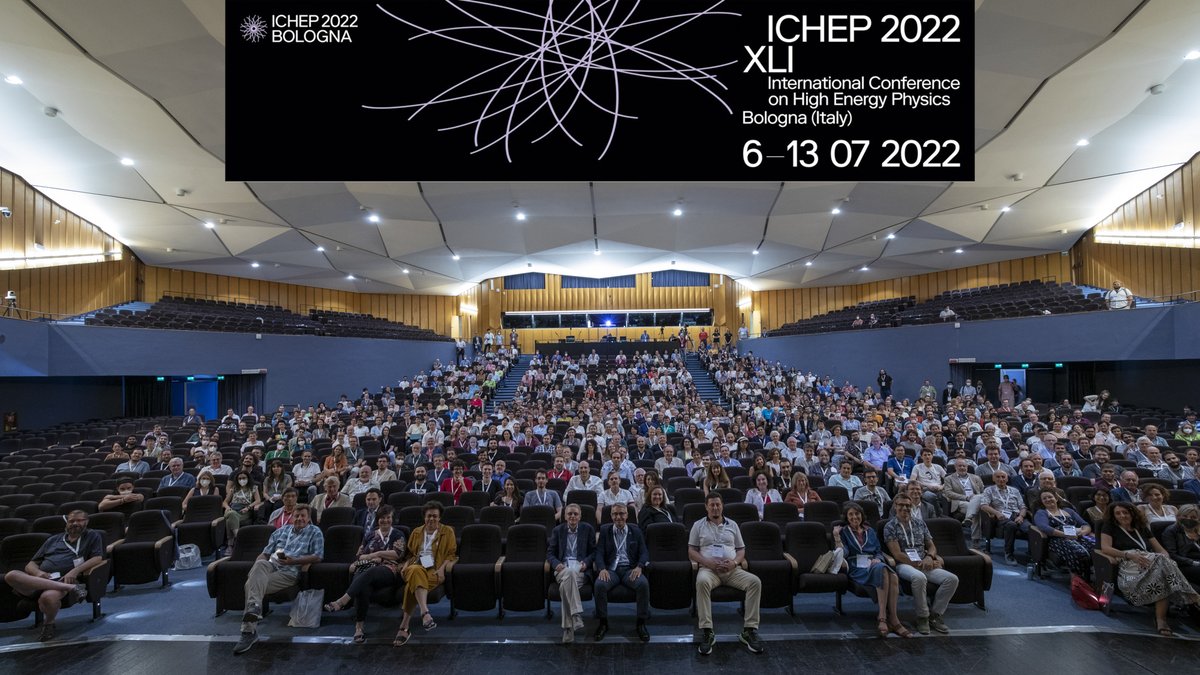
More than 1000 in-person researchers all together in Bologna for the most important conference in High Energy Physics. After two years of online conferences, this has been the most awaited opportunity for sharing and discussing new ideas and the latest results!
#ichep2022




![DD_Baumann's tweet photo. I am retiring from teaching GR. Here is the final course material (lecture notes including all problem sets and exams). Hope some students might find it useful in their studies. https://t.co/odIAqDlrc1
[Thanks to @gimmytomas for his amazing help in making the exam questions.] https://t.co/7hbsyYqm9q](https://pbs.twimg.com/media/GdXaJ33W8AAOyYO.jpg)