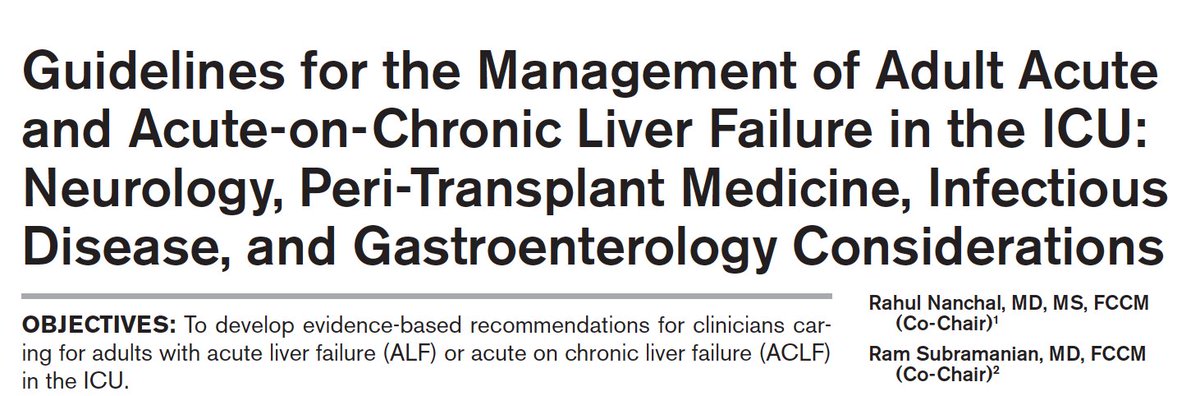
New SCCM guidelines for the management of adult acute and acute-on-chronic liver failure in the ICU. They are focusing on infectious disease, peri-transplant, gastrointestinal, and neurologic issues
“Standing on the edge of death now, I feel compelled,” writes Amy Silverstein (@ajsilverstein16), “to use my experience in the transplant trenches to illuminate and challenge the status quo.” https://t.co/QX6M8EoAfz
Proton pump inhibitors in older adults:
Potentially inappropriate use of PPI, new PPI prescriptions and PPI deprescribing were frequent among older adults with multimorbidity and polypharmacy in the OPERAM trial ➡️ https://t.co/AMwXku9ZlY
Key point to highlight: rapid reduction in PaCO2 is associated with increased stroke risk. This is a major *modifiable* risk factor, and one that everyone who is involved in ECMO needs to be aware of.
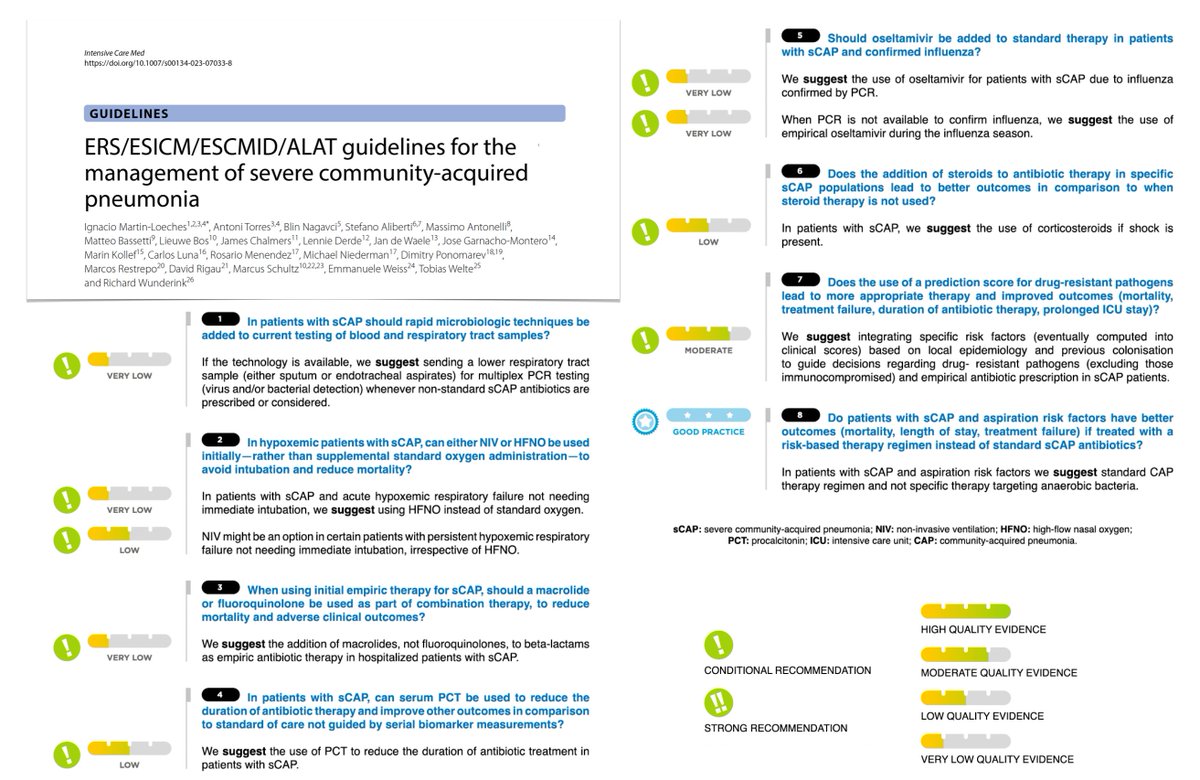
Management of severe community-acquired pneumonia: @EuroRespSoc@ESICM@ESCMID@ALATorax international guidelines
➡️ evidence-based recommendations for diagnosis, empirical treatment, ABTs
➡️ current knowledge gaps
➡️ recommendations for future research
🖇️ https://t.co/qhe1wlgN9t
@ajlavoie4hearts@hinz_tamara Ignoring Covid for a minute, there may be other possible benefits such as reducing spread of nosocomial influenza or resp viruses to immunosuppressed or sick patients. 🤷🏻♂️. It also puts some patients in awkward positions, do they have a right to request their unmasked HCP to mask?
In my 10+ years of co-survivorship, doing life with @DGlaucomflecken through 2 separate cancers, 1 SCA and fighting off his death with 10 mins of #CPR, only ONE (1) of the medical professionals we interacted with has ever asked how I was doing. Meet Roger. https://t.co/NR4F2mkcZC
What are the outcomes after critical illness?
Great review by Dr. Herridge and @ElieAzoulay5 published on @NEJM
Provide a patient and caregiver perspective, during and after ICU
Everyone caring for critically ill patients should read this
🔗 https://t.co/0rNdx0E3js #FOAMcc
When it’s time to discharge a patient from the ICU, is it ever safe to send them straight home? @ericjuliansy & researchers Sehar Parvez & Dr. Ryan Donnelly say yes, it can be. Hear why, on Researchers Under the Scope https://t.co/MybHBp18bi @usask_OVDR @USaskEM @CritCareMed
When it’s time to discharge a patient from the ICU, is it ever safe to send them straight home? @ericjuliansy & researchers Sehar Parvez & Dr. Ryan Donnelly say yes, it can be. Hear why, on Researchers Under the Scope https://t.co/MybHBp18bi @usask_OVDR @USaskEM @CritCareMed
1️⃣ This practice may be done safely in select patients without differences in safety outcomes (30-day ED visits, 30-day hospital readmissions, 90-day mortality)
2️⃣ further research still needed in determining high- vs low-risk direct discharge patients
Our latest paper on directly discharging patients home from the ICU is now available on @CritCareMed@Pharmastache@_SHRF_ @USaskMedDean https://t.co/WiVgbgWFfr
We conducted a systematic review and meta-analysis on this ever increasing practice (up to 16% of ICU/HAU admissions in some jurisdictions may be directly discharged) and found:
@Wdmkennedy @CAEP_Docs @olifriesen Refractory VF is not something we see much in the ICU setting but probably more commonly encountered in the pre-hospital and ED setting. Exciting that there is ongoing resuscitation research to improve our outcomes and certainly VC or double sequential is likely practice changing
1/2 Great talk @m_jefkins!
Key points:
-prognostication after TBI is hard
-don't use prognostic calculators (eg CRASH, Impact) for individual prognosis
-most recovery occurs between 3-6 months, but some patients can go from "dependent" to "independent from 6-18 months
In this trial of IV vitamin C in adult patients with sepsis, those who received a vitamin C infusion had a higher risk of death or persistent organ dysfunction at 28 days than those who received placebo. #CCR22 https://t.co/8tpW7Yud6a