Unlocking #DiasporaInvestment for Africa's growth! IOM has convened Govts, diaspora orgs, & partners in Mombasa 🇰🇪 to explore boosting corridors for investment, entrepreneurship, & jobs. Together, we're driving trade, resilience & development!
@AfDB_Group@AUC_CIDO@COMESA_HQ
The complex dynamic of xenophobia in South Africa, where xenophobic violence frequently targets fellow African immigrants rather than white citizens who still hold disproportionate wealth, is driven by a combination of spatial segregation, immediate economic competition, structural barriers, and political scapegoating.
📍 Spatial Proximity and "Enclave" Wealth
Physical Isolation: Wealthy white populations predominantly reside in secure, gated suburbs or highly policed enclaves.
Informal Contact: Impoverished Black South Africans rarely interact with white wealth on an equal, daily basis in local neighborhoods.
Shared Spaces: Black South Africans and foreign African migrants live side-by-side in densely populated townships and informal settlements.
Friction Points: High physical proximity naturally concentrates daily frustrations, crime, and social friction within these shared, under-resourced spaces.
💰 Direct Economic Competition
Survivalist Economy: Competition for survival happens at the lowest economic rungs, not at the top corporate level.
Micro-businesses: Local residents often compete directly with immigrants over informal trade, tuckshops (spaza shops), and low-skilled informal jobs.
Labor Exploitation: Some employers prefer undocumented migrants to bypass minimum wage laws, fueling resentment among locals who feel priced out.
Zero-Sum Perception: In areas with massive unemployment, scarce resources like housing, healthcare, and basic services are viewed as a zero-sum game.
📢 Political Scapegoating and Populism
Deflecting Blame: Political figures and local leaders sometimes use anti-immigrant rhetoric to divert attention from state failures in service delivery, corruption, and job creation.
Easy Targets: African migrants lack voting power, institutional protection, and political representation, making them highly vulnerable scapegoats.
The "Law and Order" Narrative: Social ills like drug trafficking and violent crime are frequently blamed entirely on foreign nationals, simplifying complex systemic issues.
🏛️ The Structure of the Legal and Security State
State Power: The white minority, while no longer holding political rule, is heavily protected by private security infrastructure and formal legal frameworks.
High-Risk Targets: Directing mass violent campaigns against affluent suburbs carries an immediate, heavy state security response.
Law Enforcement Gaps: Informal settlements suffer from policing vacuums, allowing vigilantism against foreign nationals to occur with lower risks of immediate state intervention or legal consequences.
🧠 Psychological and Ideological Factors
Frustrated Expectations: Post-1994 expectations of immediate economic liberation have faded, leaving deep-seated trauma and structural inequality unaddressed.
Horizontal Violence: Sociological studies show that deeply oppressed or marginalized groups often direct internalised frustration horizontally toward other marginalized outsiders rather than vertically at entrenched structures.
On #AfricaDay, we join the @_AfricanUnion & its Member States in celebrating unity, integration & shared progress. Together, we're advancing safe, orderly & dignified migration in line with AU's Migration Policy Framework, unlocking migration’s potential to drive dvpt in Africa
Bobbio, Habermas y Popper sobre los derechos humanos
Los tres pensadores coinciden en defender la democracia liberal, el pluralismo, el Estado de derecho y los derechos individuales como barrera contra el totalitarismo. Sin embargo, difieren en la fundamentación y el enfoque.
Norberto Bobbio (pragmatismo jurídico)
- Los derechos son conquistas históricas, no verdades eternas ni naturales.
- Rechaza la necesidad de una fundamentación metafísica: lo importante es su reconocimiento y efectividad positiva.
- Enfatiza su función de límites al poder y su expansión en la “era de los derechos”.
- Visión minimalista y realista: prioridad en libertades clásicas, rule of law y protección de minorías.
Jürgen Habermas (enfoque discursivo y procedimental)
- Derechos y democracia son co-originarios: se presuponen mutuamente (autonomía privada y pública).
- Fundamentación a través de la ética del discurso: los derechos surgen de condiciones ideales de argumentación simétrica y no coercitiva.
- Visión más ambiciosa: sistema amplio de derechos (libertades, participación, sociales) legitimado por deliberación pública.
- Universalismo procedimental sensible al contexto.
Karl Popper (racionalismo crítico y sociedad abierta)
- Rechazo a los “derechos naturales” esencialistas. Los derechos son instrumentos institucionales para proteger la libertad individual y la crítica.
- Prioridad a la libertad sobre la igualdad forzada. Democracia como método para eliminar gobernantes sin violencia.
- Énfasis en tolerancia (salvo con los intolerantes), ingeniería social gradual y evitación del sufrimiento evitable.
- Enfoque antifundacionalista y antiutópico: los derechos sirven a la sociedad abierta y a la corrección de errores.
Puntos comunes
- Secularismo y racionalismo.
- Defensa de la democracia liberal frente a autoritarismos.
- Derechos como herramientas para la convivencia pacífica en sociedades plurales.
Diferencias clave
- Bobbio: más jurídico y pragmático (¿qué derechos tenemos y cómo protegerlos?).
- Habermas: más filosófico y deliberativo (¿cómo legitimarlos racionalmente?).
- Popper: más epistemológico y cauteloso (¿cómo proteger la libertad y la crítica?).
Bobbio celebra la expansión histórica de los derechos, Habermas los vincula inseparablemente al proceso democrático deliberativo, y Popper los defiende como condición de una sociedad abierta y autocorrectiva. Juntos ofrecen una visión robusta, no dogmática y fuertemente antifundacionalista de los derechos en el mundo contemporáneo.
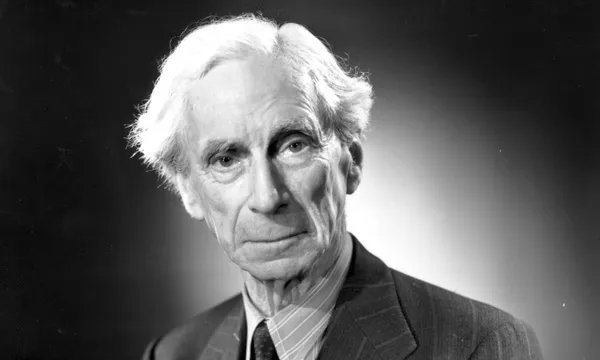
“All who are not lunatics are agreed about certain things. That it is better to be alive than dead, better to be adequately fed than starved, better to be free than a slave. Many people desire those things only for themselves and their friends; they are quite content that their enemies should suffer. These people can only be refuted by science: Humankind has become so much one family that we cannot ensure our own prosperity except by ensuring that of everyone else. If you wish to be happy yourself, you must resign yourself to seeing others also happy.”
— Bertrand Russell, The Science to Save Us from Science
Steve Jobs famously said his kids didn’t use iPads.
Brené Brown highlighted this on Steven Bartlett’s Diary of a CEO. She’s been in rooms with tech billionaires and platform founders. When they’re asked what kids should study today, the answer is coding and physics. But when the same people reflect on their own success? They credit deep reading of philosophy, the Stoics, history, and the liberal arts.
Her concern: a quiet divide is forming — one group protecting deep thinking for their own children while the rest of us are encouraged to just keep scrolling.
In the age of AI, experts across the board are saying critical thinking, philosophical reasoning, and liberal arts skills are becoming even more essential — not less. AI can generate answers, but it can’t replace the human ability to ask the right questions, understand context, ethics, and meaning.
The people building our digital future seem to understand this deeply for their own families, yet design systems that often pull everyone else in the opposite direction.
Do you think we’re creating a two-tier system — deep thinkers at the top and scrollers below?
Don't start with whole books.
Start with marked passages.
Ancient Greek writers asked what
makes a life good.
Here are five places to begin:
1. Homer, Odyssey, Book 24
A good life needs peace.
2. Hesiod, Works and Days, lines 295-380
A farmer’s lesson on work and discipline.
3. Aeschylus, Prometheus Bound, lines 436–506
The cost of giving humanity the tools to live well.
4. Plato, Apology
A life worth living must be examined.
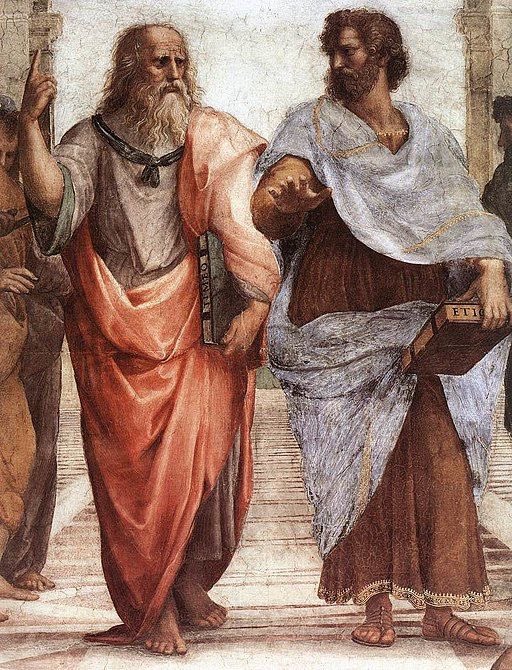
5. Aristotle, Nicomachean Ethics I.1–7
The good life is the life aimed at the highest good.
tolle lege
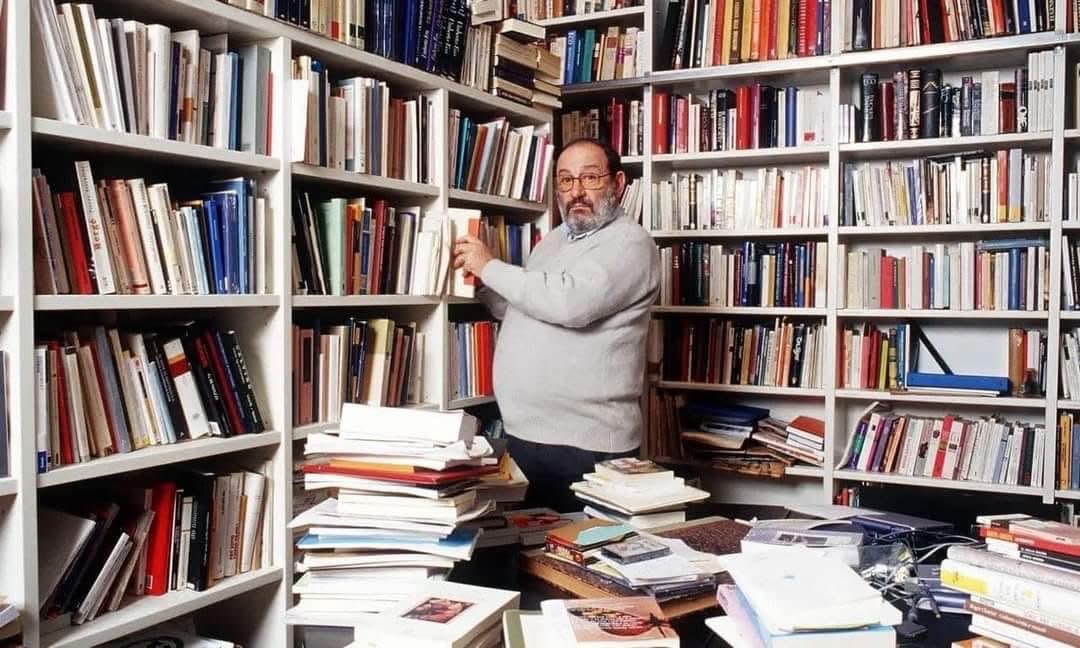
Umberto Eco, who owned 50,000 books, had this to say about home libraries:
“It is foolish to think that you have to read all the books you buy, as it is foolish to criticize those who buy more books than they will ever be able to read. It would be like saying that you should use all the cutlery or glasses or screwdrivers or drill bits you bought before buying new ones.
“There are things in life that we need to always have plenty of supplies, even if we will only use a small portion.
“If, for example, we consider books as medicine, we understand that it is good to have many at home rather than a few: when you want to feel better, then you go to the ‘medicine closet’ and choose a book. Not a random one, but the right book for that moment. That’s why you should always have a nutrition choice!
“Those who buy only one book, read only that one and then get rid of it. They simply apply the consumer mentality to books, that is, they consider them a consumer product, a good. Those who love books know that a book is anything but a commodity.”
Many readers yesterday asked for more concrete examples of what I have in mind regarding the distinctions between features inherent to modernity and those inherent to “capitalism.”
Imagine we have a functioning socialist commonwealth. For simplicity, I will call it the SC.
Imagine also that this SC aims to provide state-of-the-art medical care to its citizens. This is not about superfluous consumption. It is about the desire to provide good preventive care, adequate treatment, palliative care, and so on.
Soon, you realize that you need the scientific-technological complex that develops advanced mRNA vaccines and, even more importantly, the industrial capacity to produce tens of millions of doses at short notice when a new virus arrives or an old one mutates. These are sophisticated processes that involve coordinating millions of individuals with diverse knowledge, skills, and personalities.
But it does not stop there. You will need to produce thousands of MRIs, scanners, FLASH radiotherapy machines, and all the bewildering array of equipment you find in a top hospital.
And I insist: wanting to be treated with the latest oncological equipment if you get cancer is not frivolity. It is a deep human desire that a good society (any society, really) should attempt to provide.
How are you going to accomplish all this? An SC does not want to use private property, so it relies on some form of public property. But public ownership is not the main issue. The real issue is that the SC would need to organize large bureaucratic organizations. Without them, it cannot develop and deploy vaccines, MRIs, scanners, and the rest. The need to scale is the key mechanism at play, not who owns the property.
And, because of their scale, these large bureaucratic organizations will suffer the type of problems that critics of “capitalism” attribute to “capitalism.” The organization will be impersonal and alienating, and inefficient due to career concerns, asymmetric information, conformity effects, and internal politics.
Moreover, because resource constraints hold in every human endeavor, some claims for medical treatment will be denied. The SC will not have enough resources to satisfy every medical demand (and medical demands are, for all practical purposes, unlimited), every demand for education, every demand for the environment, and every demand for this or that worthwhile cause. Sorry, yes, scarcity will always be with us, with or without AI.
Patients whose requests for medical treatment are denied will be particularly annoyed because the SC is built on the idea that such events cannot happen. At least in a “capitalist” society there is someone to blame (the “capitalist”).
Those who deny the need for large bureaucratic organizations are living in a fantasy world. I am pretty sure the day they are told they have prostate cancer, they will run to their closest large bureaucratic organization for treatment.
Those who deny the problems of large bureaucratic organizations, and how deeply irresoluble those problems are, have not seen how not-for-profits work. I have never seen more acrimonious fights than within not-for-profit organizations, where some shared sense of the common good unites members. The fights are fierce precisely because profits play no role.
I have been reading about these issues for nearly 40 years, and I have seen plenty of proposals to address the problems of large bureaucratic organizations. A favorite among many is “participation” or “more democracy” within the organization. No, sorry, more “participation” or “more democracy” only makes things worse. Yugoslavia taught us that you cannot run a large bureaucratic organization based on democratic participation (well, you only need to know some basic economics; Arrow’s impossibility theorem, anyone?).
Large bureaucratic organizations are essential to modern life, and they are full of problems, with or without “capitalism.”
This is what Weber understood and what Marx, who had an incredibly naïve view of the future, never grasped. Weber saw that bureaucracy is not a feature of “capitalism” but the institutional form modern society uses to coordinate large-scale tasks under rational, impersonal rules. Hospitals, ministries, armies, universities, and, yes, corporations all converge on the same form because it works at scale. The iron cage is not capitalist. It is modernity.
Lançamento muito interessante. Pretendo ler.
"Hegel’s philosophy is often presented as a reconciliation between thought and the world, and thus logic and metaphysics. But what is the basis of this reconciliation? In this book, Clark Wolf argues that the key to Hegel’s transformation of philosophy lies in his recognition of the special logical basis of the humanly made world. Human artifacts and institutions are not merely represented by concepts; concepts are necessary for their very existence. For this reason, Hegel sees the human world, the world of spirit or Geist, as more central in philosophy than the mind-independent world of nature. Hegel’s philosophy is thus a humanism. Wolf argues that this humanistic conception of philosophy is justified in Hegel’s Science of Logic, since its logical basis is his theory of concepts. Through a detailed interpretation of the Doctrine of the Concept, this book sheds new light on Hegelian idealism"
"The limits of my language mean the limits of my world."
At the end of the nineteenth century, in a Vienna suspended between cultural brilliance and psychological tension, Ludwig Wittgenstein is born into a family where wealth is secondary to intensity, where music is not decoration but structure, and where expectation functions less as encouragement and more as quiet pressure, shaped by a father whose authority is nearly architectural in its rigidity and a mother whose refinement deepens the emotional atmosphere, so that within this household, where genius is assumed and fragility is concealed, several of his brothers collapse under that weight, leaving behind a silence that will accompany Wittgenstein’s thinking not as drama, but as condition.
He does not begin as a philosopher, but as an engineer, as if attempting to remain within the stability of the measurable, yet this proves temporary, because precision opens into questions about thought itself, bringing him to Bertrand Russell in Cambridge, where their encounter exceeds the academic, since Russell recognizes not merely talent but an intensity that resists assimilation, while Wittgenstein does not seek guidance so much as clarity, creating a relationship marked by admiration, tension, and eventual distance, where influence is undeniable but authority never fully accepted.
"If people never did silly things nothing intelligent would ever get done."
Wittgenstein’s writing is sparse and controlled, because for him philosophy is not accumulation but clarification of language, a project that reaches its most concentrated form in "Tractatus Logico-Philosophicus", a text whose brevity conceals its ambition, structured in numbered propositions that suggest reduction rather than expansion, where the claim that "The world is all that is the case" redefines reality as a totality of facts, and language becomes a logical picture of them, such that what can be said must be said clearly, while what cannot must be left aside, culminating in the severe conclusion: "Whereof one cannot speak, thereof one must be silent."
And yet this is not final, because Wittgenstein later turns against this rigidity, developing in "Philosophical Investigations" a more fluid understanding of language as use, as practice, as a multiplicity of "language-games" that resist reduction to a single form, transforming his philosophy from system into movement.
His relationship with Russell remains revealing, for although Russell introduces him to philosophy and attempts to interpret him, Wittgenstein resists such mediation, at times dismissing Russell’s readings, creating a dynamic in which respect coexists with refusal to be contained, and it is precisely this tension that makes their exchange foundational.
"The problems are solved, not by giving new information, but by arranging what we have always known."
In his personal life, Wittgenstein maintains a distance that mirrors his discipline, forming connections, including with women, marked by intensity and respect but rarely by conventional emotional structure, as he neither pursues nor sustains traditional relationships, remaining oriented toward inward coherence, creating a contrast between the immediacy of his presence and the restraint of his intimacy.
If his legacy is to be understood without exaggeration, it lies in his refusal to provide answers where clarity is impossible, and in his insistence that philosophy does not expand the world but clarifies its limits, leaving not a system, but a discipline, one that sharpens our sense of where thought succeeds, where it fails, and where silence becomes the more accurate response.
Night
South Africa has withdrawn its first draft national AI policy after revelations that it contained fictitious sources in its reference list which appeared to have been AI-generated. https://t.co/KGdln6WrSw
"There is only one element of rationality in our attempts to know the world: it is the critical examination of our theories. These theories themselves are guesswork. We do not know, we only guess. If you ask me, 'How do you know?' my reply would be, 'I don't; I only propose a guess. If you are interested in my problem, I shall be most happy if you criticize my guess, and if you offer counter-proposals, I in turn will try to criticize them.'"
—Karl Popper, Conjectures and Refutations, Ch. 5, p. 151 (1962)
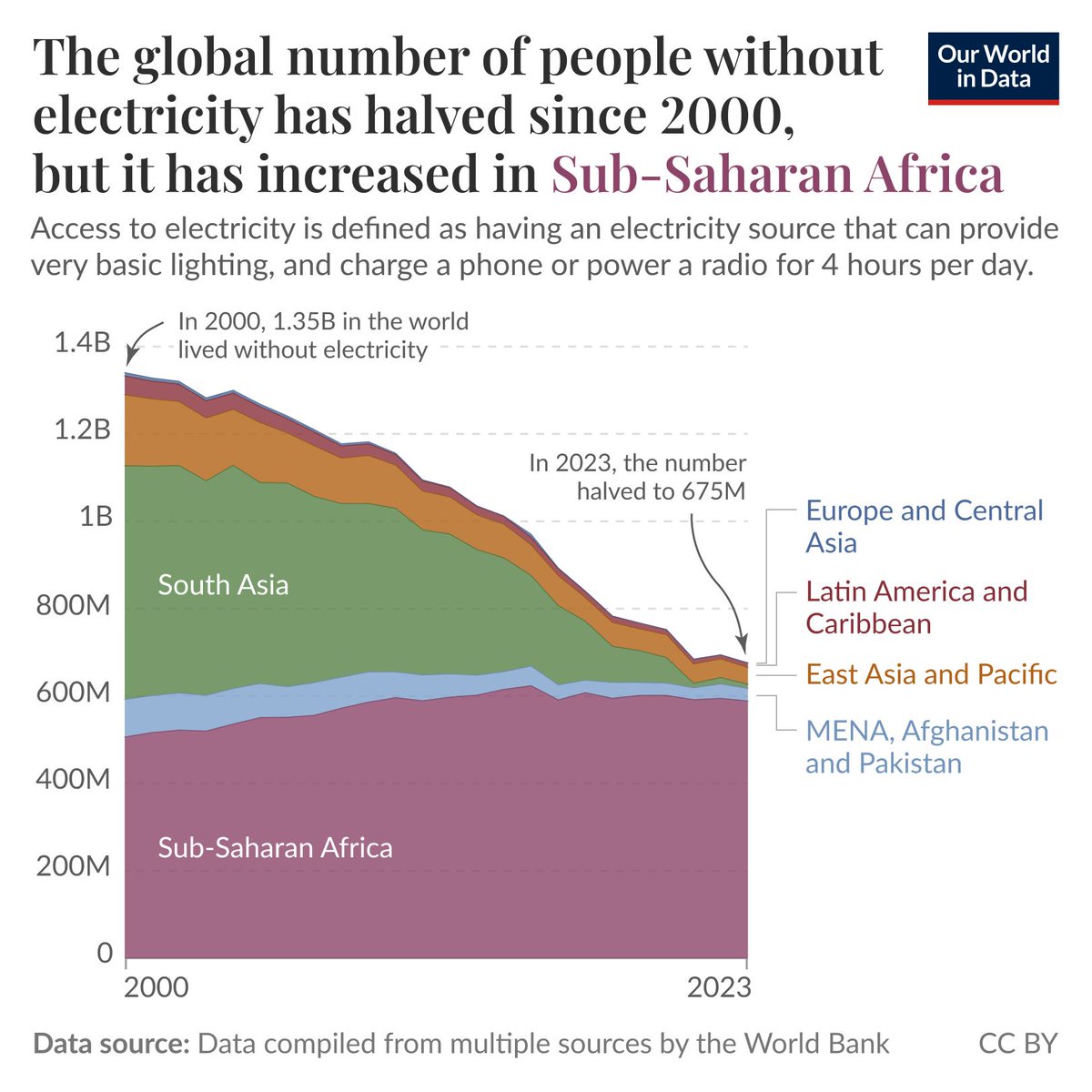
The global number of people without electricity has halved since 2000, but it has increased in Sub-Saharan Africa—
Most people in the world would think very little before flicking on the lights, charging a mobile phone or turning on a laptop to read this.
But that’s a very different reality from the almost 700 million people in the world who have no access to electricity. While this number is large, it has halved this century, falling from 1.35 billion to 675 million. You can see this in the chart.
However, this progress has been far from even. The number has fallen across all regions except Sub-Saharan Africa, where it has increased.
That doesn’t mean no progress has been made: the share of people in Sub-Saharan Africa with electricity has doubled, rising from 26% to 53%. But population growth has outpaced this expansion, meaning the number of people without electricity has still risen.
(This Data Insight was written by @_HannahRitchie.)
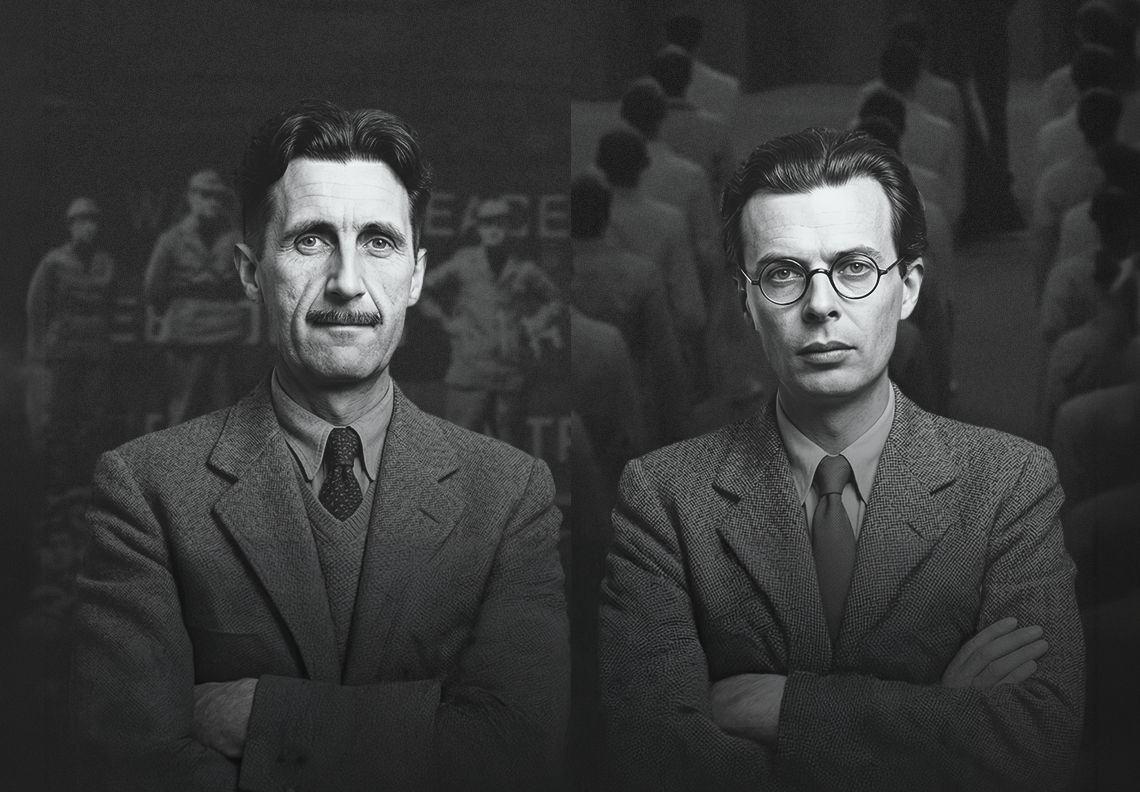
Four months after George Orwell published 1984, his former teacher sent him a letter.
Aldous Huxley had one message: you described the wrong dystopia. 🧵
Para Marx, as categorias econômicas são expressões de formas-de-ser-aí (Daseinsformen), isto é, determinações-de-existência (Existenzbestimmungenen) de um sujeito.
As categorias enquanto determinações-de-existência são necessariamente atreladas ao sujeito e seu caráter fático; assim não faz sentido falar do salário enquanto tal como algo essente, pois isto seria uma abstração, mas do salário historicamente considerado, como expressão de um sujeito porque ele é ser-aí deste. Com efeito, o salário no capitalismo tem uma forma muito mais concreta e universal que o salário na Roma antiga, que se restringia a alguns setores particulares da sociedade (especialmente o militar).
A concepção de marxiana das categorias como determinações-de-existência é uma reconstrução não idealista do modelo hegeliano de categorias como determinações-de-pensamento (Denkbestimmungen). Marx fixa uma prioridade maior no momento da efetividade e no fático/exterior, para contrastar com o pensamento em Hegel como o interior das coisas. Diferente de Hegel, as categorias não possuem uma autossubistência, isto é, existem como um reino das sombras ou reino das essencialidades puras. De modo similar a Hegel, Marx mantém o modelo sujeito-substância hegeliano em relação às categorias, onde o sujeito não é mais o pensar enquanto ser pensante, mas o efetivo ou objetivo que se constitui numa relação categorialmente ordenada com seus modos-de-ser-aí. O modelo de sujeito-substância de Hegel é um modelo onde as determinações do sujeito não inerem externamente (como um predicado num juízo categórico), mas são expressões deste sujeito enquanto são o ser-posto da substância deste mesmo sujeito. Isso permite que o sujeito acompanhe todas as suas particularizações de modo que por mais bizarra que seja a figura na qual ele se encontre, ainda é referente a ele. Então, não importa se o pensamento de produz como não-pensamento ou natureza (Hegel) ou se o juros não é regulado pela lei do valor (Marx), ambos ainda são, respectivamente, pensamento e capitalismo e, além disso, ambos são rastreáveis até a forma mais germinal: o ser (Hegel) e a mercadoria (Marx).
Essa estrutura categorial é essencialmente histórica, por isso é impossível considerar, por exemplo, o capital enquanto capital. E de que isso importa? Importa porque não é possível uma metafísica sob essa perspectiva, isto é, uma consideração do ente enquanto ente, mas sempre do ente enquanto modos-de-ser-aí do sujeito ou o ente numa particularidade. Nesse sentido, como Marx exemplifica, a terra, mais especificamente a propriedade fundiária da terra, é o fundamento do capital no feudalismo (pelo menos aquele que não é totalmente dinheiro). Mais do que isso, o próprio capital se manifesta de modo mais abstrato, geralmente como capital comercial. Se fossemos fazer uma investigação dialética da sociedade feudal, a forma elementar ou o imediato mais abstrato seria a terra. Progrediríamos categorialmente até às formas mais desenvolvidas e complexos de determinações mais concretos da sociedade feudal, é em algum momento explicaríamos o capital. Todavia, no capitalismo a ordem é diferente: o capital é logicamente anterior a terra. O capital no capitalismo toma uma centralidade e uma posição distinta. Cada sociedade tem sua estrutura categorial que cria uma ordenação muito particular dela.
Nesse sentido, combinamos duas teses importantes de Marx: (i) toda sociedade possui suas leis específicas e (ii) as leis destas sociedades não estão para além do fenômeno/aparecimento delas.
Michel Foucault was one of the most influential social theorists of the twentieth century. He studied mental health, prison and penal reform, sexuality, and epistemology, and his work enjoys widespread influence. Was he sympathetic to the classical liberal tradition?
According to Mark Pennington, a political economy scholar who recently published "Foucault and Liberal Political Economy" (2025), Foucault believed we should always question our assumptions—so our understanding of ourselves and the world never becomes fixed or unquestioned.
“He thinks that, in that fluidity of understanding, that’s how freedom is excercised. Whereas freedom is threatened when people think they have a fixed and full understanding of the world, and their place within it” Pennington says.
Pennington discusses Foucault with https://t.co/vebnztEq1z Director Jonathan Fortier in the most recent episode of "The Liberty Exchange" podcast.