Interesting part of $VZ transcript this morning talking about $SPCX plans for terrestrial network:
"First of all, I appreciate the question and the concern. I'll just start off by saying my operating philosophy in general is to be very thoughtful, the analytic and to never take anything for granted. I always have my eyes wide open. Clearly, the tech and the wireless landscape is rapidly evolving, and we need to rapidly evolve along with that.
That's why I've been so demanding from everyone at Verizon. I mean I just don't want us to get incrementally better. I want us to leapfrog, I want us to think about not improving by 10%, which is great, but that we improve by 10x. How do we do that in months, not years? And I'm pushing hard on everyone.
So that we can shape the market and not react to it. And I want to be sure that we're always in a position to play to win.
I also operate under the assumption that everything SpaceX says they will do, they will do, and that they will execute flawlessly. That's my operating assumption on it.
I think assume anything else makes no sense from my perspective. And everything that we've seen so far, all of their announcements, everything we're hearing in the market, and I'll talk about that in just a second, is, so far, the path that we've basically predicted that they would do. We always knew that they needed a terrestrial network to have any chance at providing a competitive service. I don't really need to rereview the satellite beam physics, but just suffice it to say that without a terrestrial network, their addressable market for broadband services is relatively small. It's in very rural areas. And their service just can't compete with the terrestrial network. In suburban and urban areas where like 98% of our revenues are, we're somewhere between 100 to 1,000 times more efficient than they are. And when you think about wireless, it's even more difficult with them to compete on a satellite basis.
So I think that SpaceX realizes this, and they're exploring a potential path to creating a terrestrial network. It's not surprising. They said it on their call.
So I think we should take it quite seriously. And from what we see and what we hear in the market, because there are no secrets in the market, we know exactly what they're going to do. We know what their RFIs are. We know who they're talking to on towers. We know who they're talking to put terrestrial equipment in place. Like inside the industry, we know exactly what they're thinking about doing it.
And if they build a terrestrial network, it will basically look and feel like every other network, right? There's no magic wand. There's no secret sauce. There's no shortcut. There's no radically lower structural cost advantage. If they build one, they're going to look at 65,000 to 80,000 macro sites. They're going to need backhaul, some combination of fiber and maybe some satellite. They're going to need RAN. They're going to need a tremendous amount of spectrum. And assuming that's the case and assuming they try to go do that, it's going to take a minimum of 4 to 6 years to fully build that out. It's going to cost hundreds and hundreds of billions of dollars, I assume somewhere between $300 billion and $0.5 trillion over the next, like, 7 or 8 years. And then they need to build retail, customer service, back-office systems, et cetera. And all of that gets them basically the same network and saving capabilities and same cost structure as what we have today.
And then sometime over the next 4 to 6 years, they have the possibility of becoming the sixth, not the fourth, the sixth competitor in the market. And frankly, at that point, welcome the opportunity to compete against them. It's very hard to throw a punch against something that doesn't exist. But once they come into the market, we will be ferociously competitive.
We already have America's best network in terms of coverage, performance and reliability. We already compete against 3. I mean 2 of our competitors out there offer free wireless service, and we are not only competing extremely well, but we're now holding share and beginning to gain share. And you can sure, over these next 3 to 5 years or 6 years, we're not going to be standing still.
I mean 4 to 5 years from now, we will be 2 to 3 generations better than where we are today. We'll have high-speed broadband, gig-plus coverage across the country with our millimeter wave, which has now become this tremendous advantage for us with 1,700 megahertz of millimeter wave, 2x that of any of our competitors. We'll put that and deploy that we are ahead of most people and already experimenting with what 6G applications will look like.
We are going to have a host of AI-enabled new value propositions using our data, our information, our AI tech stack to create new products, new services to be able to play into edge computing and all of the applications around that, whether it be robotics or agents.
In 3 to 5 years, most of our base will be fully bundled and we will be massively more efficient and massively more optimized in terms of our cost structure. And of course, AI Connect is going to be a major business for us.
So we are more than ready to compete on our network, on our value prop on our service and much more. And there's no reason to think that with the same network, same cost structure, that we won't be very successful by continuing to grow our business and compete strongly.
I do think there is a role for satellite, for sure. In remote areas, it's a great service for those customers. And I do think there are ways that we can work together, either directly or through our JV, with satellite providers, to provide a complementary service and a differentiated value proposition.
I will say, and I'll repeat it again, that there are no back doors to any of our MVNO agreements. And I see absolutely no benefit whatsoever to extending an MVNO deal to any satellite provider. I don't buy into the idea of this prisoner's dilemma. That's ridiculous. There is no benefit to Verizon extending an MVNO deal. And we look forward to being able in 4 to 6 years to finally punch back, and we'll punch back hard when that happens."
Congratulations, @Citibank; you win the award for the worst estate / probate services. Previously, it was the local utility that turned off electricity to a still-occupied home and then charged me a several-thousand-dollar deposit to turn it back on.
One of our engineers pronounced GIF with a "j" sound today, so now I'm looking to hire a mid-career electrical engineer with a strong background in RF.
@anuatluru Yes. My inelegant shorthand has been "they're in the group chat." A touch of the parasocial relationship with a dash of IYKYK, and talk show energy... but for business.
Per a note to Boston Globe staff today, the lesbian bar story generated 1,000 subscriptions to the paper yesterday. The Globe’s managing editor said it was “by far our best performing story of the year,” and appears to be “on pace to shatter all sorts of Globe records.”
@macbohannon First, lol. Second, yes she’s a French woman, wears a red lip, has access to better sunscreens than us and a weird but deep skepticism of GMOs.
The Space & Defense Update is LIVE from @NASA@itsmoislam and @JackKuhr are joined today by:
– @GoesslerAlyssa, VP at AE Industrial Partners
– @tybernstein, Co-founder & CEO of @zeno_power
– Carlos Garcia-Galan, Moon Base Program Manager at NASA
– AJ Gemer, Co-founder & CTO of @LunarOutpostInc
– @endeffector, Founder & CEO of @Astrolab_Space
– @TaylorCSargent, Partner at @IndustriousVC
We’re digging into:
* Building NASA’s Moon base
* Nuclear power for surviving the lunar night
* The race to put rovers on the Moon
* Autonomous exploration & the lunar economy
* The investors backing the next generation of space companies
Comment if you love space (help us share the show!) 👇
https://t.co/XpPpxHu769
Excited to announce two big hires at Varda today!!
Steve Layne, CRO: 35 years at Lockheed, most recently running Space & Hypersonic Strike.
Aaron Huber, CFO: automotive background + #2 at Ginkgo through IPO.
Making space drug factories into a real operation over here!!
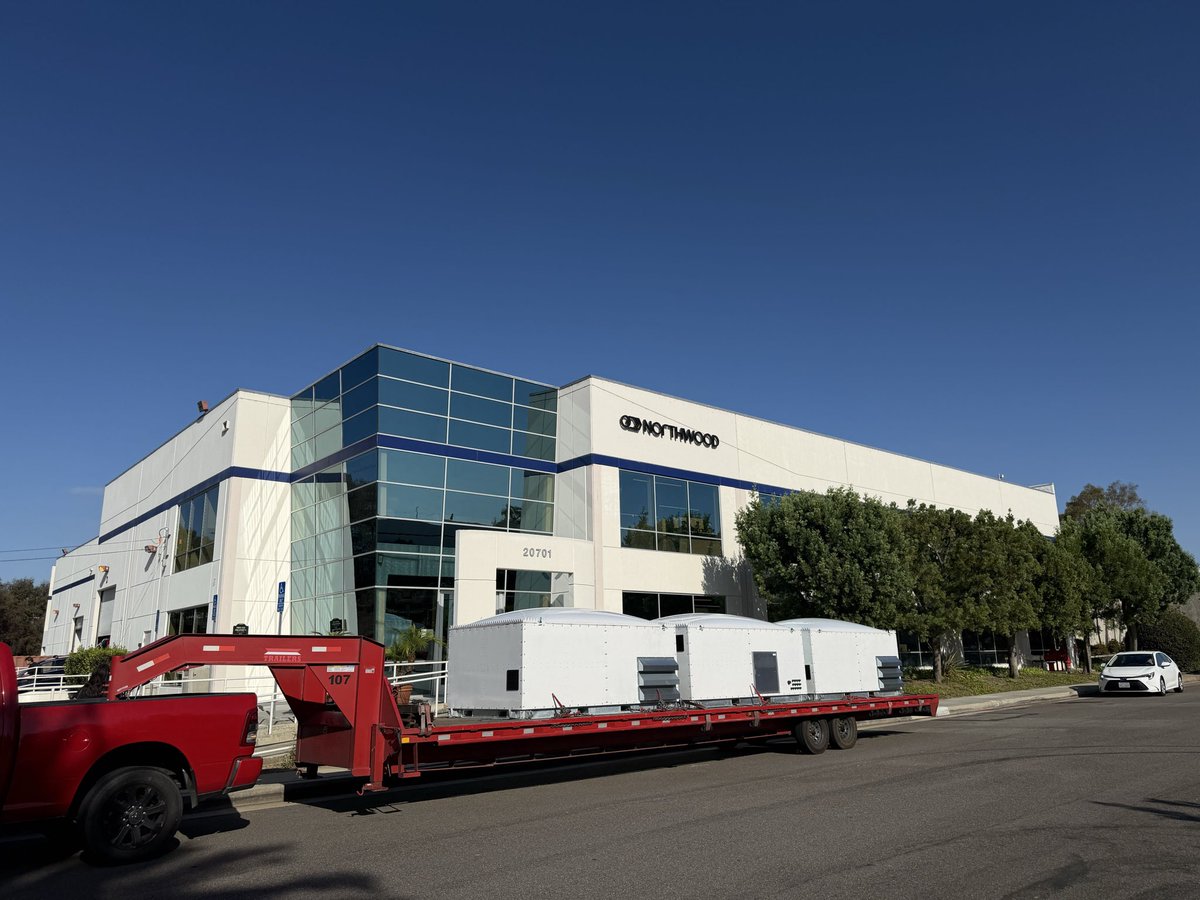
A ground station can take years to deploy — spectrum, siting, backhaul, permits. The hardware should not be part of the problem.
These Portals left the facility Friday and took passes yesterday. Smaller, mass-manufacturable antennas, quick to deploy and still highly performant.
Newton and @kevinroose have licensed their show to NPR. @dee_bosa has licensed hers to Yahoo Finance. I’ve licensed mine to NBC News. This is the future of journalism: own your work, build independently, distribute and partner with others.
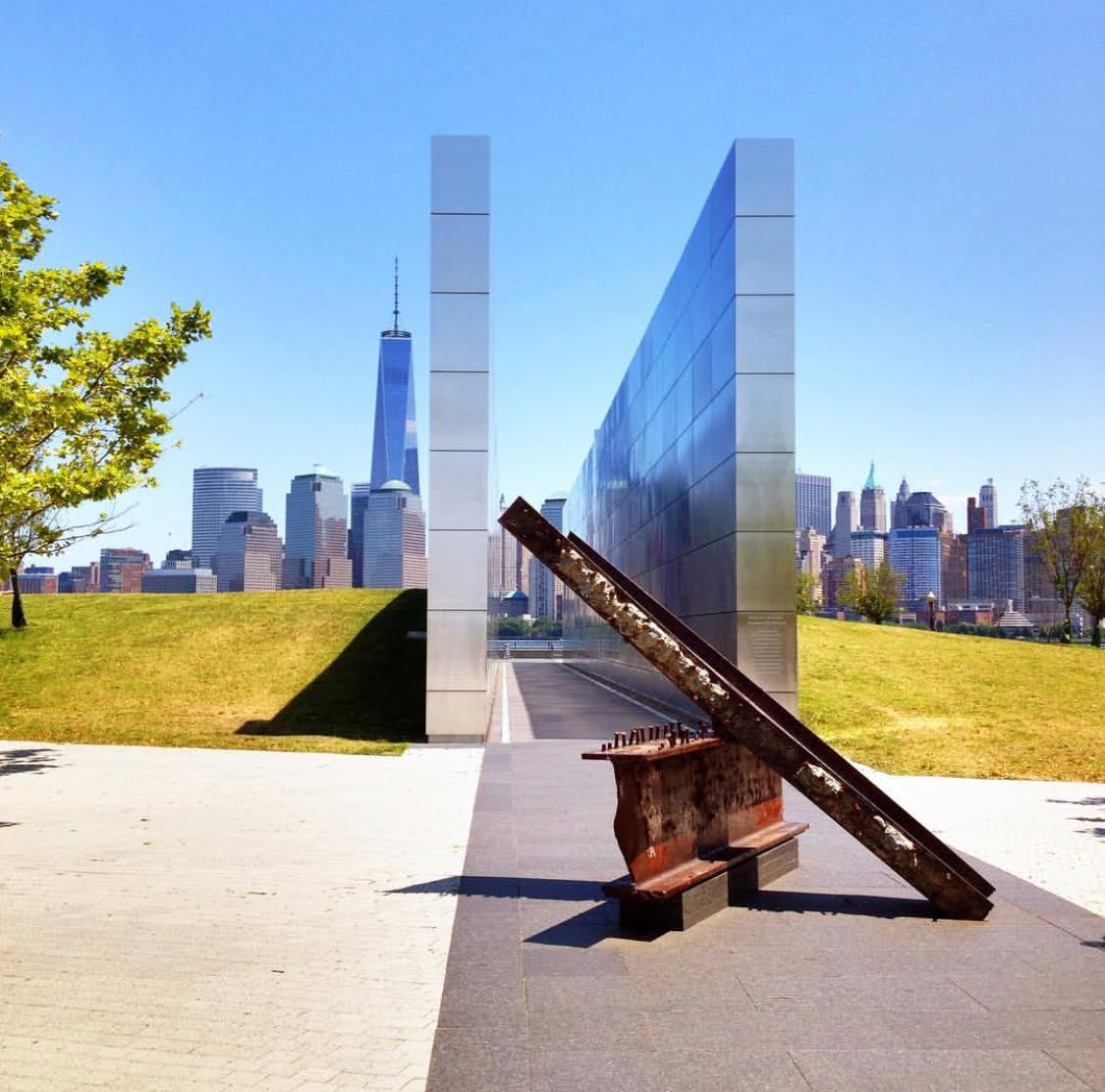
Twenty-five years later, we remember the lives taken, the people who ran toward danger, and those still carrying the weight of that day.
Some of the most meaningful lessons I've learned have come from people who risked their lives for others that day, then had to fight for support themselves.
Remembering them means remembering what we still owe them. So much has changed. But the American spirit endures: the courage to show up for one another, the belief that tomorrow is worth building.
I hope we carry a little of that spirit into our work at Northwood.
May we never forget, in words or in deeds.