@deedydas@indianfrontier Leaving aside the incompetence of cbse which is well established, Which tool would you say will pass the parameter of seriousness and will be ethically right ? I mean would a PPT created on a windows laptop help🥹
The words make sense and looks politically correct as well. Is there a reason why this is not the first choice for our country? @deepakshenoy if you can see both sides, are you aware of any cons of your suggested approach?
One of the key influences to reduce dollar spends is on gold imports. India's demand has been high, and was $51 billion in FY25. It is likely to be about $92bn in FY26. Remember, net imports of crude - a larger import - was about $102bn in FY26.
Given that we export other things, our current account deficit should be around $80bn in FY26 (up from $50bn in FY25) Basically, cutting crude oil imports and gold by 25% each will bring the deficit down substantially.
So cutting gold is useful, to some extent. There's demand from retail buying of coins. From ETFs. From the jewellery sector. And now from other digital gold products.
We imported around 780 tonnes of gold last year.
RBI has a lot of gold. It bought gold, and has brought back gold it stored abroad. It doesn't need this much gold - it has over 800 tonnes. And it has a bloated balance sheet - way too high for a central bank that isn't doing any QE. More than 85 lakh crores sits in the central bank bal sheet - and more than 12 lakh crores is in gold alone.
The RBI can slowly bring back more gold reserves back to india - it's doing about 100-200 tonnes per year anyhow. It can then sell 200 tonnes of gold locally, to serve the jewellery market this year (this will satisfy about half the demand)
That would mean there is no dollars going out for importing gold. Not too much - only $30 bn or so, but that's enough to offset the current account deficit substantially.
There is no major pressing need then for domestic consumers to stop consuming gold. The consumption will slow if prices fall; and if the rupee improves, and India's gold imports slow, prices should be under control.
Anyhow, telling people to not buy gold has the opposite effect. We don't trust our government, inherently. So if they tell us to not buy, we will buy more. It's a bit of a problem to express this desire. Buy Indian is fine. Don't buy gold isn't going to help, I think.
Now there's an impact - if the RBI sells 200 tonnes of gold, it will hurt rupee liquidity (any rupee paid to the RBI for its gold = rupee out of circulation). that's about 300,000 cr. rupees. But there is a huge surplus right now, and we can ease out 300,000 cr. through some temporary moves (VRR) or durable ones (RBI buying government bonds). This will reduce some forex reserves but just $30 bn which is a very small number compared to over $500 bn we own and which isn't that necessary.
It will also help stabilize the rupee, allowing future inflows to be planned by foreign investors. It will also help in reducing any supply imbalances.
This will help for one year, by which time, the government can create more room for foreign investment through regulatory red tape reduction, level playing field on taxes for FPIs, single window clearances etc.
In short: RBI should sell about 15 tonnes of gold per month to the domestic market and that's enough to reduce a lot of the imports, reduce the current account deficit and allow the rupee to stabilize.
@WisprFlow Something happened with you lately. I was talking to claude and I am pretty sure this is not what I said "Aapko utpaad karne ke baare mein kiya hai ki aap mere vyakti yuddh ko mundana chahte hain aur yeh main hua hai, jismein karne ki samay ki zarurat hai, to hum kisi samay ki zarurat hai? Kyonki hum aage samay sammanit hain." QQ: Why have you started translating me in Hindi, albeit wrong but why sudden change in language?
The real story here is OpenClaw triggered a full-blown platform war in China within a single week.
ByteDance shipped ArkClaw (cloud SaaS). Tencent shipped WorkBuddy. Alibaba opened QoderWork. Zhipu shipped AutoClaw (local installer). Four trillion-dollar-class companies, same week, all racing to own the distribution layer on top of a single open-source project with 310,000 GitHub stars.
OpenClaw is free. The code is open. The framework costs nothing. And four companies are spending real engineering resources to wrap it in their own packaging.
Zhipu's bet is the most aggressive. No API key required. Model runs on the machine. 50 pre-built skills ship inside the installer. Browser automation included. The pitch is "fully local, your data never leaves." The play is: whoever owns the default install experience owns the skill ecosystem, the model upgrade path, and the browser automation layer that makes agents actually useful.
Zhipu's Hong Kong stock jumped 13% on the announcement. The market priced in exactly what this means: distribution is the only moat in open-source AI.
This is the browser wars rewritten for AI agents. Netscape was free. Internet Explorer was free. The money was never in the browser. It was in controlling what loaded when you opened it.
Shenzhen is already publishing government subsidies for OpenClaw developers. They call them the "Lobster Ten Policies." Cities are funding open-source agent ecosystems with up to 2 million yuan per contributor.
China just compressed what took the American tech industry a decade of platform wars into a single week.
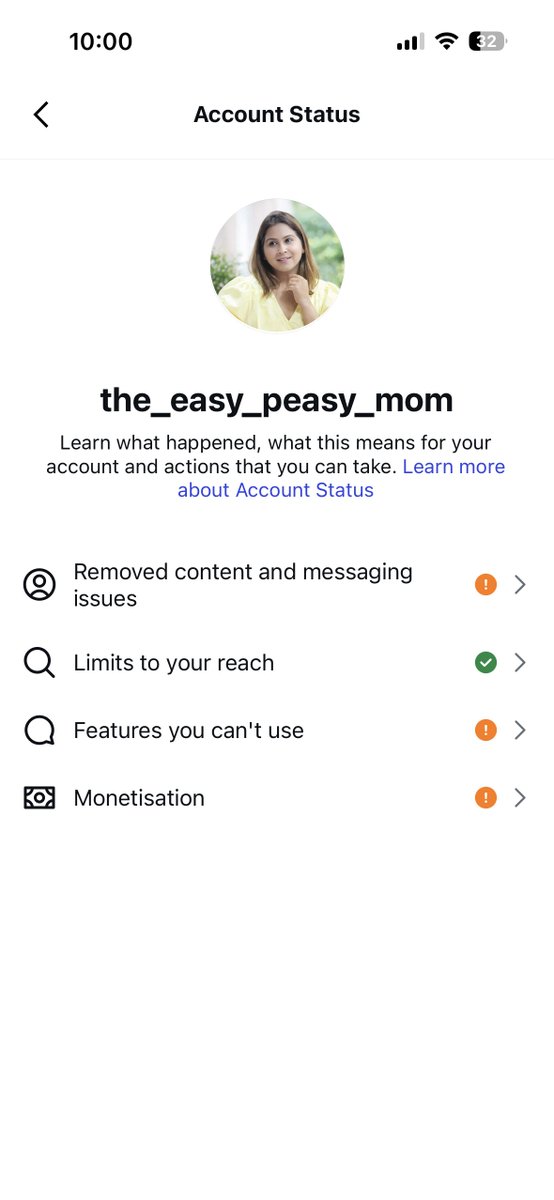
@Instagram@Meta, I’m following up on my earlier request. My @the_easy_peasy_mom, a parenting acc, has been wrongly restricted under child safety policies. This has disabled imp features like LIVE. This is seriously impacting my work. Requesting an urgent manual review. @mosseri
Hi @InstagramComms@instagram@Meta my parenting account @the_easy_peasy_mom has been incorrectly flagged for child safety content on Instagram. The page shares only family & mom-related content. Kindly help with a review and restore my account features. Thank you.
Amazing to see Indian founders and investors taking short sighted and mostly camera hungry politicians to the cleaners. We always played safe. Not anymore.
What @raghav_chadha has failed to mention is that the platform companies have been in conversation with the Central Govt and various state govts (across party lines) for the past several years for enacting fair rules for gig worker welfare. I have personally spoken to govt officials and ministers and given inputs. Some states have already passed laws around this. Eternal has been supportive and our inputs have been received by well intentioned governments that want growth and gig worker welfare both.
This has been an ongoing effort for five years now.
Mr. Chadha has come late to the party and without trying to understand the situation and without adding anything constructive to the conversation has merely tried to cause disruption and seek attention for himself on social media. He is trying to jump on the bandwagon and claim credit.
We support the Central Govt and are thankful for their leadership in this matter we are also supportive and appreciative of all the state governments that have taken initiatives around this. We have worked with all of them.
We are and always will follow the law. In fact for us the law is merely the minimum to be adhered to
It’s amazing how we always find ways to demonise people who are solving real problems. @deepigoyal is fighting the system and staying profitable. Kudos
Last one on this topic, and I have been holding this in myself for a while.
For centuries, class divides kept the labor of the poor invisible to the rich. Factory workers toiled behind walls, farmers in distant fields, domestic help in backrooms. The wealthy consumed the fruits of that labor without ever seeing the faces or the fatigue behind it. No direct encounter, no personal guilt.
The gig economy shattered that invisibility, at unprecedented scale.
Suddenly, the poor aren't hidden away. They're at your doorstep: the delivery partner handing over your ₹1000+ biryani, late-night groceries, or quick-commerce essentials. You see them in the rain, heat, traffic, often on borrowed bikes, working 8–10 hours for earnings that give them sustenance. You see their exhaustion, their polite smile masking frustration with life in general.
This is the first time in history at this scale that the working class and consuming class interact face-to-face, transaction after transaction. And that discomfort with our own selves is why we are uncomfortable about the gig economy. We want these people to look our part, so that the guilt we feel while taking orders from them feels less.
We aren't just debating economics. We are confronting guilt. That ₹800 order might equal their entire day's earnings after fuel, bike rent, and app cuts. We tip awkwardly, or avoid eye contact, because the inequality is no longer abstract. It's personal.
Pre-gig era, the rich could enjoy luxury without moral discomfort. Labor was out of sight. Now, every doorbell ring is a reminder of systemic inequality. That's why debates explode. It's not just policy. It's emotional reckoning. Some defend the system (“they choose it”), others demand change (“this isn't progress, its exploitation”).
And here’s the uncomfortable twist: the unsaid ask of clumsy ‘solutions’ isn’t dignity. It is about returning to invisibility.
Ban gig work and you don’t solve inequality. You remove livelihoods. These jobs don’t magically reappear as formal, protected employment the next day. They disappear, or they get pushed back into the informal economy where there are even fewer protections and even less accountability. Over-regulate it until the model breaks, and you achieve the same outcome through paperwork instead of slogans: the work evaporates, prices rise, demand collapses, and the people we claim to protect are the first to lose income.
And then what happens?
The rich get their old comfort back. Convenience returns without faces. Guilt dissolves. We go back to clean abstractions and moral posturing from a distance. The poor don’t become safer, they become invisible again: back in cash economies, back in backrooms, back in shadows where regulation rarely reaches and dignity isn’t even debated.
The gig economy just exposed the reality of inequality to the people who previously had the luxury of not seeing it. The doorbell is not the problem. The question is what we do after opening the door.
Visibility is the price of progress. We can either use this discomfort to build something better (which we keep doing continuously as delivery partners are our backbone), or we can ban and over-regulate our way back into ignorance. One of those choices improves lives. The other simply helps the consuming class feel virtuous in the dark.
How did I come across this?
I’ve spent years optimizing my health and performance. I’ve tracked my blood. I’ve fasted, trained, meditated, submerged myself in ice, sat in hyperbaric chambers, and taken countless supplements. Staying healthy is hard. It takes too much time.
One day, I wondered if there was a leverage point that humanity had missed altogether. But how could that be? Humanity has been obsessed with longevity for millennia. If a straightforward answer existed, would we not have found it by now?
But usually, the answers to the most complex problems are surprisingly simple. I thought that the only way humanity could have missed a big leverage point, was if the answer was so obvious, that all of humanity looked right past it.
I racked my brain, searching for what that overlooked factor could be. What is constant across all organisms, inescapable by mutation or adaptation, obvious yet invisible? And then, a word surfaced in my mind.
Gravity.
I ran away from home when I was 15. Moved in with my high school girlfriend. She had one of these.
I built my entire career with this thing and a pirated copy of Photoshop, working til wee hours on digital art with no clear idea as to why. Just because I felt compelled to create stuff. I customized it to make it look and feel like a Mac. I started making little icons and bits of UI in Photoshop.
Four years later and after having gotten my first MacBook I got an email from Apple asking if I wanted to interview to join the design team to work on a new thing they just released called the iPhone. Forever grateful for this silly plastic machine.