🧵5 Top Free Alternatives to BioRender for Scientific Illustrations!
These five websites offer free scientific illustrations for biologists. Great for presentations, research papers and other research communication needs.
Save and share the post!
🧵 Should you integrate single-cell RNA-seq datasets or not?
You've got PBMCs from multiple donors. Merge them—or keep them separate? Let's break it down.
🧵 The Myth of Push-Button Bioinformatics
1/ Some think bioinformatics is just pressing a button:
🔘 RNA-seq Analysis
🔘 Make Fancy Figures
🔘 Submit to GenBank
If only it were that easy... but reality is very different.
⚡️🔬📣 Excited to share our new @Nature article building and evaluating PathChat, a multimodal generative AI copilot and chatbot for human pathology. Article: https://t.co/OAIG31ofWJ Open Access Link:
https://t.co/tvw6W6qmT9
We leverage our previous success in building foundation models for computational pathology such as UNI / CONCH and combine it with the advancements of large vision language models and generative AI to enable PathChat to answer diverse pathology-related queries. We assessed PathChat using both multiple choice diagnostic questions and open-ended questions.
Congratulations to @MYLu97@chenbowen118 @DFKW_MD @richardjchen and everyone else who contributed to this work.
Also see blog post from @MYLu97 about this work: https://t.co/exjpKMnrQp , also teasing the development and preview of PathChat 2, a successor to PathChat 1 bringing new capabilities and substantially improved performance to the state-of-the-art.
An atlas of kidney single-cell gene expression changes in 18 mouse kidney disease models shows limited overlap between models as well as between a diabetic kidney disease (DKD) mouse model vs human DKD, but also reveals consistent pathway-level changes https://t.co/OA7LePUoor
Day 1 of #CKDNetwork#CSNAGM is almost done, but before closing, Dr. Dan Muruve launches the PI Summit. The topic, the importance of #biobanking in the field of #nephrology.
Check out the preprint of our new method to determine individual proteinuria of all glomeruli in a whole murine kidney, which is based on a navigation software-like approach https://t.co/u0myoIyta7 @IMMEI_Bonn@UniklinikBonn@UniBonn @HCM_Bonn
Want to hear about the latest updates/new techniques in single cell and spatial genomics? Check out my lab's eighth annual Single Cell Genomics Day on March 29. Keynotes from @IdoAmitLab@JD_Buenrostro and Xiaowei Zhuang. Please RT/spread the word! https://t.co/zG98gkckMU
Researchers have developed a strategy to deliver #mRNA directly into bone marrow stem cells where it can edit genetic defects and help repopulate the bone marrow with healthy blood cells.
Learn more ⬇️
📄: https://t.co/EHhKer6AJz
#SciencePerspective: https://t.co/Fz3XhLpAHp
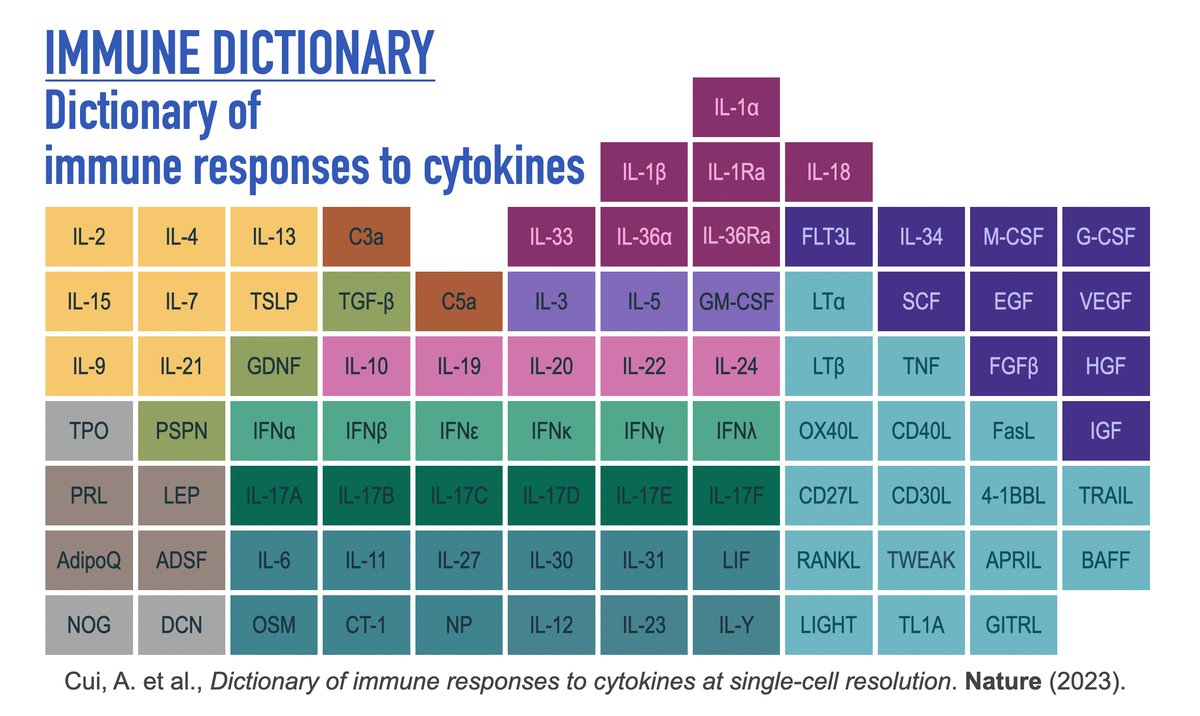
✨#ImmuneDictionary✨is out today in @Nature!
Paper https://t.co/XY47lyphjU
Software https://t.co/duoWWcBmTj
We created scRNA-seq dictionary of 17+ immune cell types responding to 86 cytokines in vivo, discovered the immune system is far more complex than previously known 1/
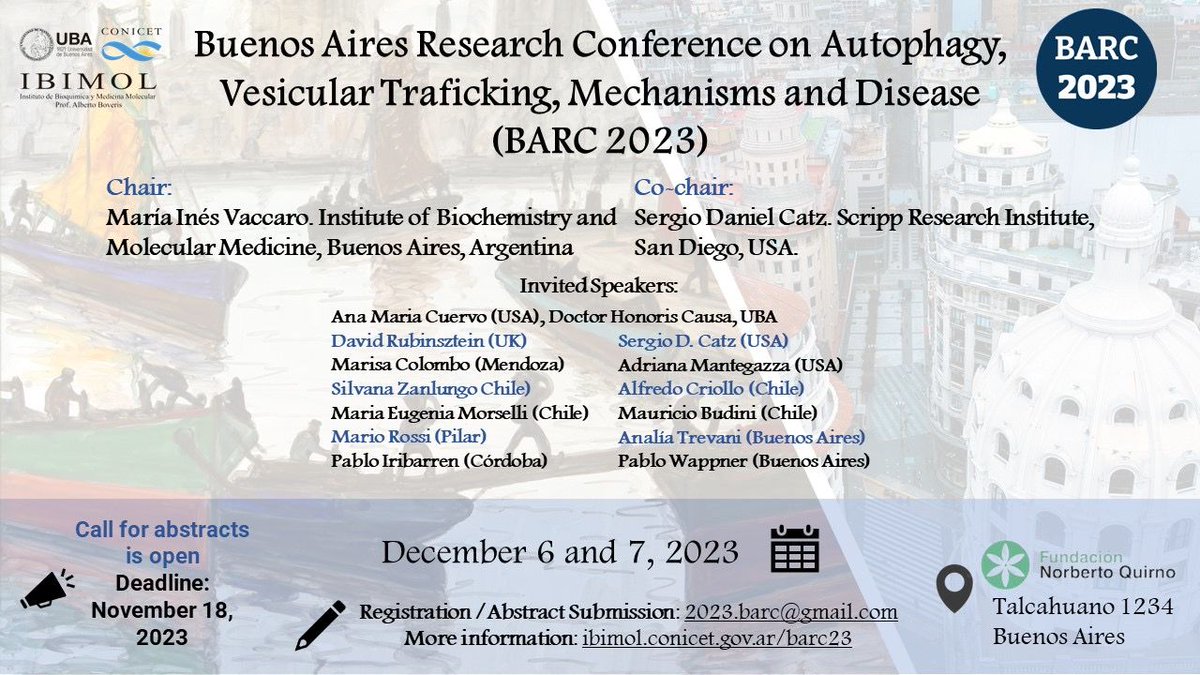
Compartimos información sobre el Buenos Aires Research Conference on Autophagy, Vesicular Trafficking, Mechanisms and Disease (BARC 2023)
🗓️6 y 7 diciembre
📩Llamado a presentación de resúmenes hasta el 27 de noviembre
📍Fundación Norberto Quirno, Buenos Aires
🔻Más información
1/5 Integration of scRNA-seq data is key for cross-dataset comparison. Yet, substantial batch effects can't be sufficiently removed without losing too much biological information. We show how to improve the integration of substantial batch effects https://t.co/LQLbD9U3av