🙌Check our latest #Review 👀 📚 We dissect the nature of DC-targeting lentivectors and their induced immune responses to help identify the knowledge gaps of one of the most promising and powerful tools for immunotherapy 👇💥💉
Discovery of a new type of T cells that add to the impact of aging on the immune system (beyond dysfunction and exhaustion). From work in the experimental model @SciImmunology
https://t.co/OycuL5Z5iY
We're unable to measure our immune system status in the clinic. But that is about to change.
Our @nature piece today, w/ @HugoAerts@nbirkbak@TsangLab
https://t.co/PlISIhCToH
#ScienceSaturday
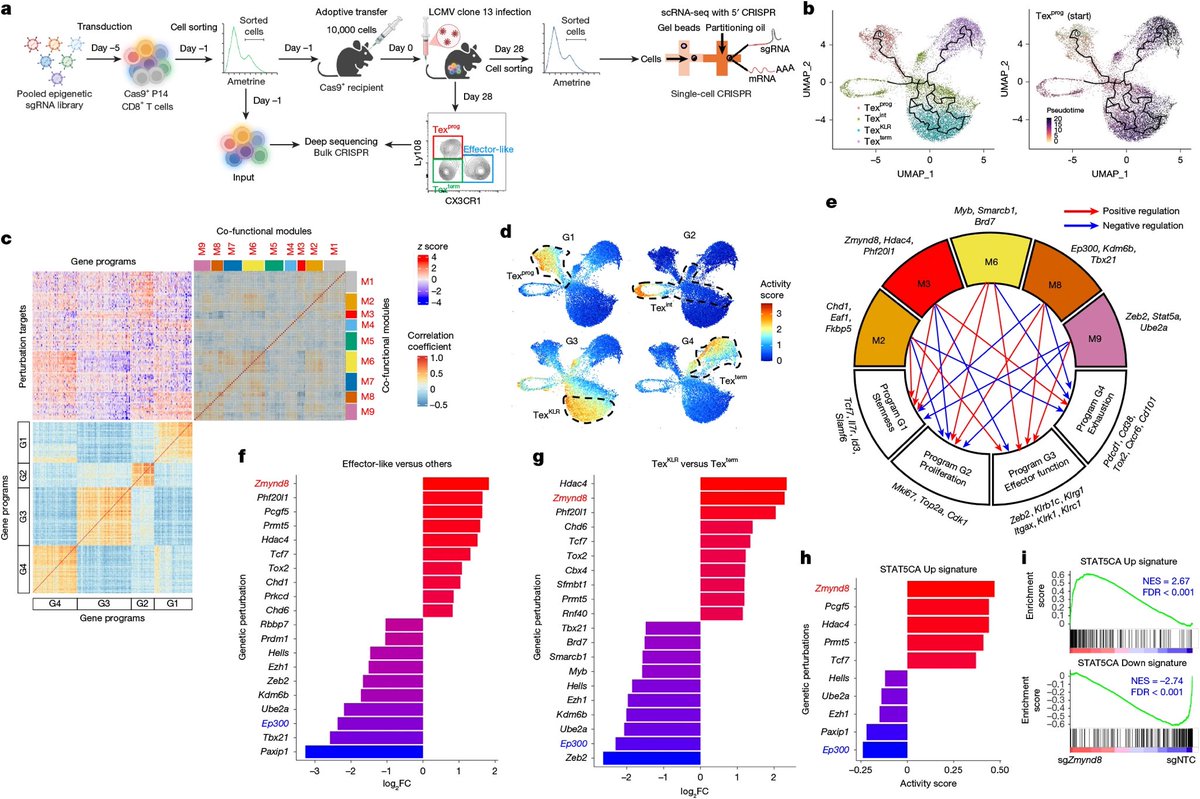
🧬 What if we could help the immune system’s cancer-fighting T cells regain their ability to attack tumors, even after they become exhausted?
🔬 New research published in Nature identifies a potential way to do just that. Scientists found that targeting a protein called ZMYND8 can restore signaling pathways that help CD8+ T cells maintain their cancer-killing abilities, rather than progressing toward a more dysfunctional state.
🛡️ Why does this matter? T-cell exhaustion is a major challenge in cancer #immunotherapy. When T cells are exposed to persistent signals from cancer cells, they can gradually lose their ability to mount an effective attack. Researchers found that removing ZMYND8’s inhibitory influence strengthened IL-2 signaling, which helps support T-cell activity and function.
💡 The findings are especially promising because targeting ZMYND8 enhanced antitumor activity in preclinical models, particularly when combined with IL-2 therapy or immune checkpoint blockade. The researchers also observed improvements in human T cells in laboratory studies, offering insight into the potential relevance of this approach.
🚀 Although more research is needed before this strategy can be translated into patient care, the study offers a new avenue for investigating how we might strengthen the immune system’s response to #cancer.
📖 Read the full study in Nature:
https://t.co/tB2nK8KIrN
@hongbo_chi@StJudeResearch@StJude
The personalized neonantigen vaccines to treat cancer, already shown to work in malignant melanoma, and in trials of pancreatic cancer, glioblastoma, renal cell cancer, and triple-negative breast cancer.....now ovarian cancer. Results from a Phase 1 trial
https://t.co/P3REAVpYTL
1. CRISPR came from basic research on bacteria.
2. Optogenetics started with a discovery in algae.
3. The GFP protein comes from jellyfish.
The biggest breakthroughs all trace to scientists follow their curiosity. This is one huge reason why we must keep funding basic research!
A remarkable study of 12 million single-cells (RNAseq) from 8 cohorts plus proteomics to determine the immune cells linked to healthy aging. Major findings included:
—thymic involution is central (decline in naive T cells and thymic emigrants)
—elevated immune system activation, inflammaging
—CD8+ memory cells (GZMB+) high frequency
—CMV seropositivity and chronic disease
@ImmunityCP by @maxim_artyomov and colleagues
https://t.co/aQNQiapfPV
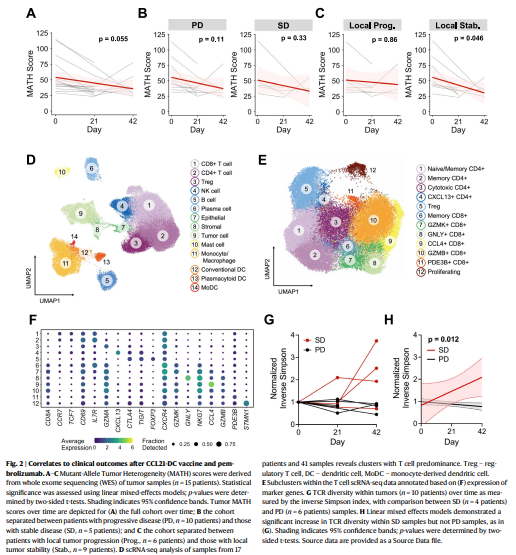
🦉The vaccine got T cells in — but mostly not the ones that mattered.
CCL21-engineered dendritic cells did what they were designed to do: they pulled new T-cell clones into resistant NSCLC tumors. Yet among 19 evaluable patients there were no objective responses.
The more revealing result came later. Many recruited clones disappeared by day 42, while the minority that persisted were more likely to show tumor-reactive signatures and expanded more strongly in patients with stable disease. Meanwhile, suppressive IL1B⁺/SPP1⁺ macrophage signaling remained.
That shifts the bottleneck. In a “cold” tumor, getting more T cells through the door may not be enough. Which clones arrive, whether they recognize tumor, and whether the microenvironment lets them survive may matter more than infiltration itself.
Small, uncontrolled phase I data, and tumor specificity was inferred rather than directly proven—but the biology is a useful warning against treating T-cell density as a surrogate for effective immunity.
#immunotherapy #T_cell #dendritic_cell
👉https://t.co/i9LigUTeU7
Completely insane.... leukemia cells can damage the nerves in the bone marrow, and that nerve damage then helps the cancer grow !
https://t.co/lHzqd5WirN
Gràcies a #CastellsenXarxa per agraïr la feinada de les colles internacionals. És una feina ingent, un esforç enorme que projecta la nostra cultura arreu.
Avui mirant el concurs des d’Oxford amb @cvg_cat al cor💙
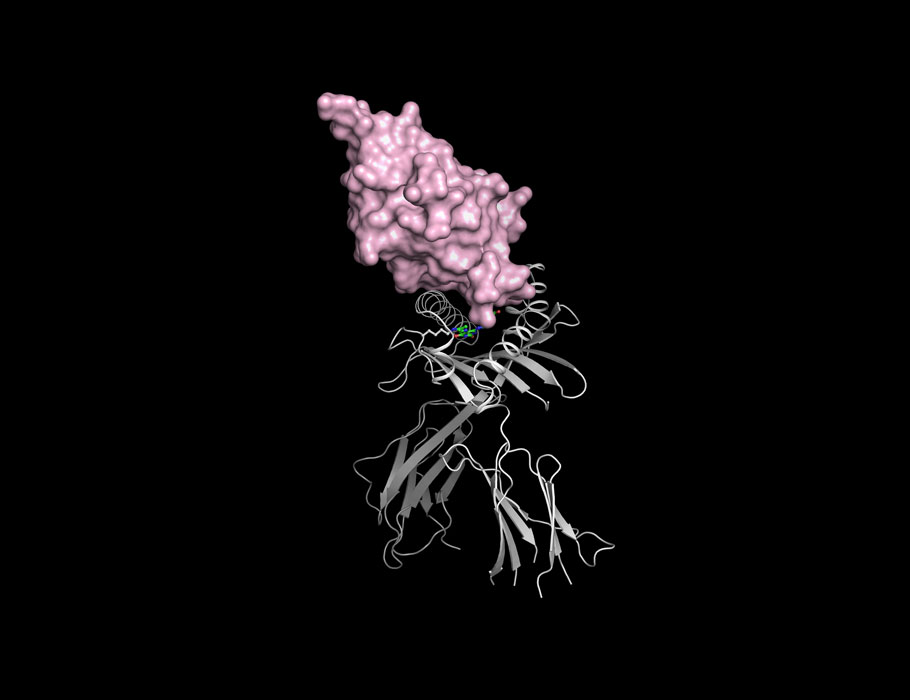
A new, engineered #nanobody can target complexes comprising the MHC-I-related protein MR1 and antigens, inhibiting MAIT cell responses to bacteria or driving #antitumor T cell activity.
Learn more in Science #Immunology: https://t.co/gnh6ir56UL
Personalized neoantigen vaccines have already been shown to improve outcomes for refractory malignant melanoma and in pilot studies of pancreatic cancer, glioblastoma, renal cell carcinoma and triple negative breast cancer. But they require a tumor biopsy to identify the antigens. A new study shows it's possible to get this from a blood sample.
https://t.co/v2cupJHwZA
New @ScienceMagazine, a feature
The obscure, unsung CD1 branch of our immune system, and how it could be exploited in the future
https://t.co/55sDDlgsYb
The brain learns from gut infections, another dimension of the gut-brain axis
GI infections prime CD4+ T cells in the dura mater of the brain meninges, with long-lived memory
@NatureNeuro
https://t.co/XZjG7k7sdI
@Sciezgin lab is on fire! another brilliant collab for us showing that plasma membrane order explains variation among human immune cells that is orthogonal to lineage/differentiation markers: https://t.co/9y6nJgG210