🔥 The 2025 @TheLancet Commission recommends that BMI should no longer be used as the sole criterion for diagnosing obesity.
🗣️Instead, BMI should be combined with measures of excess body fat and evidence of obesity-related health impairment.
@gingo_stephen
Greetings!
Please don’t scroll without reposting 🫂
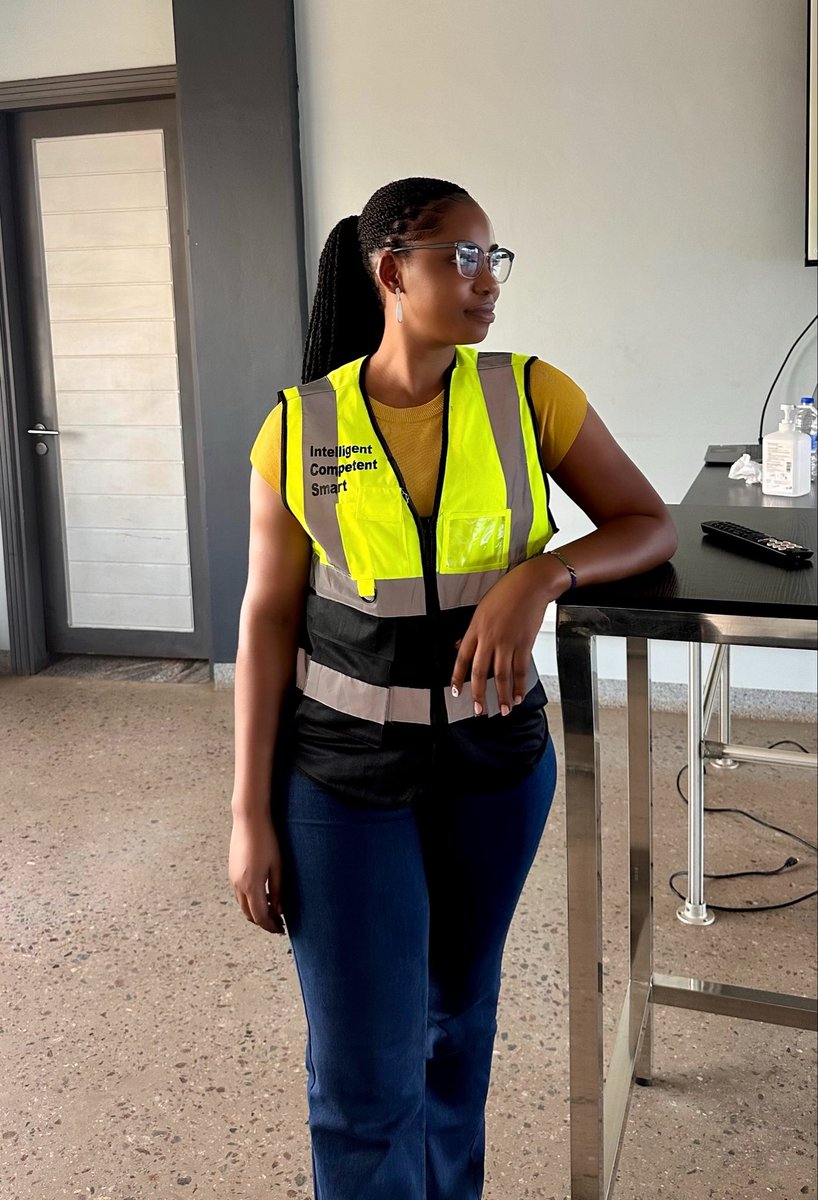
My name is Ruth Niwahereza, a QHSEC professional with expertise in ISO Management Systems, including:
• ISO 9001 – Quality Management Systems (QMS)
• ISO 14001 – Environmental Management Systems (EMS)
• ISO 45001 – Occupational Health & Safety Management Systems (OHSMS)
• ISO 37301 – Compliance Management Systems (CMS)
• And other ISO standards.
I am passionate about understanding, implementing, and improving management systems.
I am always open to networking, sharing knowledge, and connecting with like-minded professionals.
Let’s connect.💯
Male H. Mabirizi K. Kiwanuka v Chris Obore and Others (Miscellaneous Appeal 9 of 2024) [2024] UGHCACD 11 (3 December 2024)
Court allowed the appeal in part, holding that the magistrate erred by dismissing the private prosecution without conducting the mandatory enquiries, and remitted the matter for those enquiries and determination on the merits
👉:https://t.co/xnCXwlcs3D
your phone number is personal and sometimes you want to connect without handing it over. that's why we're introducing usernames for WhatsApp.
starting this week, you can reserve a username to use later this year when we launch the feature. It takes just a few seconds, make sure you have the latest version of WhatsApp and then go to Settings > Account > Username.
The @nemaug (NEMA) has commenced the demarcation of boundaries within the Kajjansi wetland system as part of efforts to identify degraded areas and establish the correct wetland boundaries.
Link: https://t.co/KfSbtOISOi
#UBCNews | #UBCUpdates
NTV has produced a feature chronicling Gen Muhoozi Kainerugaba's transgressions over the years, especially human rights violations.
This is heavy. Pray for the Nation Media Group. Watch.
When the Building Control (Amendment) Act (2026) was publicised in April this year, my WhatsApp inbox was flooded. Friends were panicked, asking: “I’ve lived in my self-built house for ten years without an occupation permit—am I going to jail?” As is my habit, I stayed quiet while emotions were high. When people are worried, they often miss the facts.
Now that the dust has settled, it is time to look at what this law actually says. It turns out that while some parts are stricter, other parts of the amendment are actually great news for law abiding citizens. The biggest surprise for many of you will be that the bit you were all worried about – the requirement to have an Occupation Permit (a document proving your house is safe to live in) is not new. It wasn't brought upon us by these recent amendments in 2026, not even in the original Act of 2013. This has been a legal requirement in Uganda since 1935 under the Public Health (Building) Rules. So, why are people suddenly worried? Mostly because, for decades, the law was rarely enforced. Many Ugandans build their own homes slowly, moving in as soon as the roof is on and the windows are in, often forgetting the final paperwork. I hear many of you asking, so what happens in the case of us who never got these permits? My quick answer is that you should start on the process to get one, no one will penalise you for having not had one for all those years, but it may help you deal with future headaches.
As for the amendments, or the new law, there were many good things that got lost in the commotion about occupation permits. For the first time, the law addresses the "red tape" that frustrates professionals and developers. In the past, you could submit your building plans to a local Building Committee and wait months—or even years—for a response. Under the 2026 Amendment, there is now a ticking clock for local government officials. If you apply for a permit to start construction, the authorities must give you an answer in a prescribed time. If they sit on your application, you can complain to the Chief Administrative Officer (CAO) in the district or the Town Clerk in a town/city. These officials are now legally required to ensure a decision is made within 30 days. If it is your completed structure that you want to move in, and the good members of the Building Committee decide to take their sweet time, you can complain to the CAO or Town Clerk and get a decision within 14 days. This is a huge win for us. It removes the pressure from the developer/professional to these public servants to do their jobs efficiently.
Secondly under Section 18 of the new law, following the National Building Code is no longer just a "suggestion" as it has been perceived by many developers (and professionals) —it is a mandatory duty. This is especially important for those building apartments, shopping malls, or hotels. The Code sets the rules for what a concrete mix should be, how electrical wiring should be done, and how fire exits should be designed. By making this a statutory duty, the law aims to compel those involved in construction not merely to be bound by professional practice but have a legal obligation to comply with the codes. Hopefully this will address the heartbreaking trend of buildings collapsing and killing innocent workers every now and then. What this amendment has done, is to make it easier to hold people accountable when things go wrong. Previously, if a building collapsed, the legal process to prove who was "negligent" was long and complicated. Now, the standard for liability is much stricter. If an accident occurs on a construction site resulting in injury, death, or property damage, the law focuses on the fact that the accident happened. You can no longer easily hide behind the excuse of "I didn't mean for it to happen". This puts the responsibility squarely on the shoulders of the developer and the professionals they hire. In effect, the 2026 amendments introduce a much stricter enforcement regime. To protect yourself, do two things: 1) Only use architects and engineers who are officially registered. "Quacks" might be cheaper, but they will leave you legally exposed if the building fails. 2) Don't start construction without a building permit or get a building occupied without an occupation permit.
The new law is a step in the right direction, but its success will depend on two major factors: honesty and awareness. We have had building laws since 1935 that were ignored because of corruption and/or lack of knowledge. For this new law to work, local authority officers must stop looking at building permits as an opportunity for them to make quick money and start seeing them as a tool for public safety and better built environment for all of us and those to come after us. As professionals and developers, we must play our part by following the laws in place. Using political influence (developers) and stamping drawings (professionals) that we have not personally prepared or supervised should stop. I doubt that the goal of these amendments was to stop you from occupying your house or from building one of your dream; they were mainly introduced so that we are all safe and healthy, in a built environment that we are all proud of.










![Uganda_LII's tweet photo. Male H. Mabirizi K. Kiwanuka v Chris Obore and Others (Miscellaneous Appeal 9 of 2024) [2024] UGHCACD 11 (3 December 2024)
Court allowed the appeal in part, holding that the magistrate erred by dismissing the private prosecution without conducting the mandatory enquiries, and remitted the matter for those enquiries and determination on the merits
👉:https://t.co/xnCXwlcs3D](https://pbs.twimg.com/media/HMOWfyeW8AATFyW.jpg)