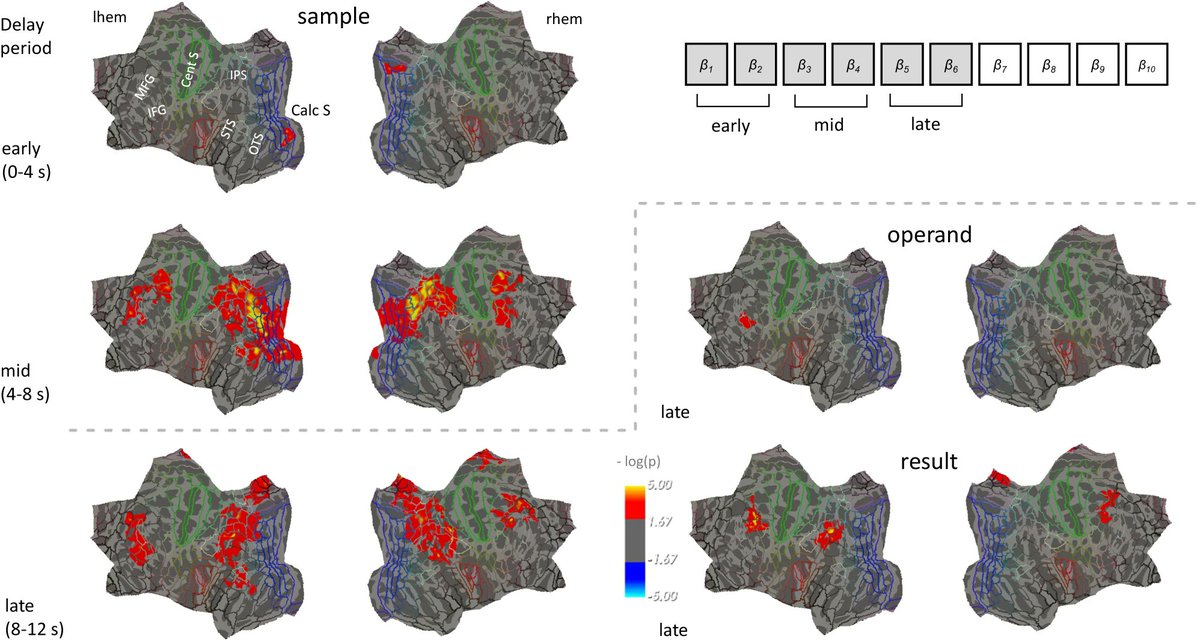
How does the human brain represent quantities generated internally during mental calculation? Check out our latest work conducted at @NeuroSpin_91 published in @NatureComms: https://t.co/oGPmJzJeya
C-Brains offers competitive funding opportunities for a PhD to foreign students. Keen to participate in some of the first human fMRI on 11.7T Iseult? Consider applying for my project on ultra-high-field imaging of subcortical visual regions: https://t.co/1rutSYkS2d
🎥 Missed it live? Watch the recording of Peter Bandettini @fMRI_today’s talk, ‘Towards Increased Precision, Interpretability, and Impact: The Future of fMRI’, from the #CIBMSymposium2024 & 20th Anniversary!
📺 Watch now: https://t.co/hZiGATnz6C
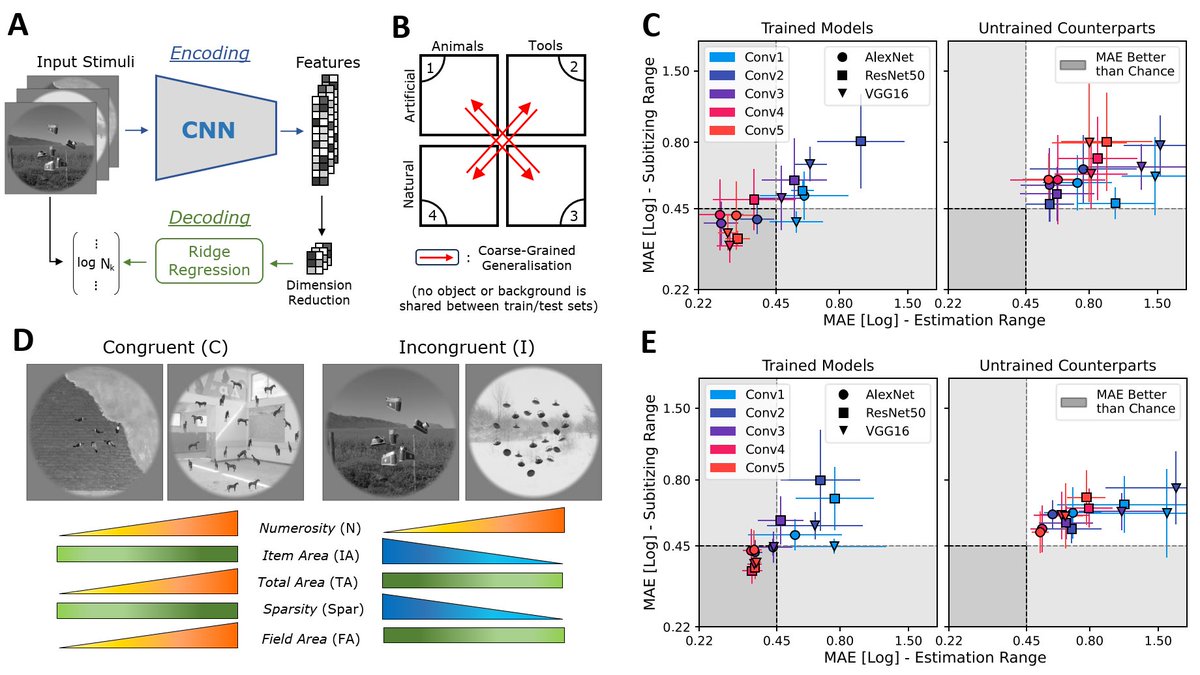
Would you have thought that object recognition CNNs can encode information on object number across changes in identity and context? New preprint, with Thomas Chapalain and @BertrandThirion, on visual #number_sense: https://t.co/RU5pT5PhE6
What do you see in this image?
Deep learning has closed the gap with human vision on many benchmarks. But does it mean that deep nets are *as robust* as humans in rare scenarii, such as when objects are shown in unusual poses?
We explore this question: https://t.co/u0rPmslDbG
🧵
For folks who aren't able to attend in-person, we are excited to be able to stream all talks this year on our youtube channel:
https://t.co/UwIHP3wmzE
Papers can be found here:
https://t.co/nr5sGg8UEU
Please share!
Interesting modeling work on the idea that a number sense could arise from manipulation that hasn't received too much attention: https://t.co/jnI0Vbkpf2
What do you see in these images?
These are called hybrid images, originally proposed by Aude Oliva et al. They change appearance depending on size or viewing distance, and are just one kind of perceptual illusion that our method, Factorized Diffusion, can make.
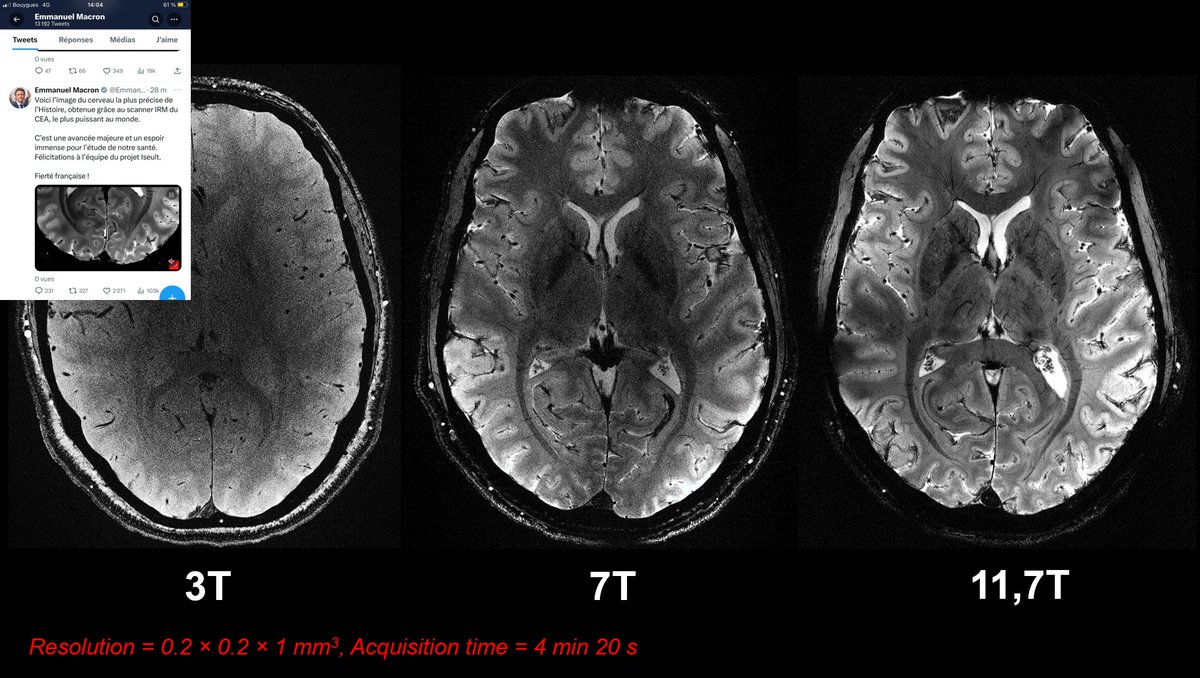
Press conference with the French minister of research @sretailleau to reveal first in vivo images of the human brain acquired at 11.7T. Shown here at the same protocol acquisitions at 0.2x0.2x1.0mm3 resolutionsin 4' 20" at 3, 7 and 11.7T illustrating the gain in image quality. Exciting!
https://t.co/yZkoEsygwA
Voici une première mondiale.
Ces images de cerveau humain ont été produites au @CEAParisSaclay par #Iseult, l’IRM le plus puissant au monde.
Plus de 20 ans de recherche, une immense fierté et une révolution technologique qui ouvre des perspectives inouïes pour notre santé.
How many scene-selective areas are within the human brain? Here we showed evidence for a new scene-selective area within the posterior intraparietal gyrus that we named PIGS. 🐷
https://t.co/l8nxcoJ7T2 @eLife
I am hiring a post doc to investigate visual numerosity and time perception in humans, combining psychophysics and pupillometry. Where: Uni of Florence; Start: 01/05/2024; Duration: 1 year; Application deadline: 02/04/2024. Apply here: https://t.co/9pVEdC4YUN
New study out in @ScienceAdvances: We show that the degree to which information is integrated across natural images (both in DNNs and in the human brain) can predict how beautiful they appear to us! With @sanjeev_nara@jlugiessen https://t.co/wPNWydQ9yl
Proud of having been part of this group of teachers, clinicians, & cognitive scientists working towards a comprehensive battery to assess mathematical abilities: https://t.co/Whzd3yTKfj Check out the heterogeneity of strengths & weakness we found in a cohort of dyslexic kids: