Collecting here a 🧵 of CS papers that:
- Describe a system & *include source code*, ideally complete implementations, of...
- Important or influential contributions to a field that..
- Are ~<30 pages...
- & not too heavy on mathematical notation
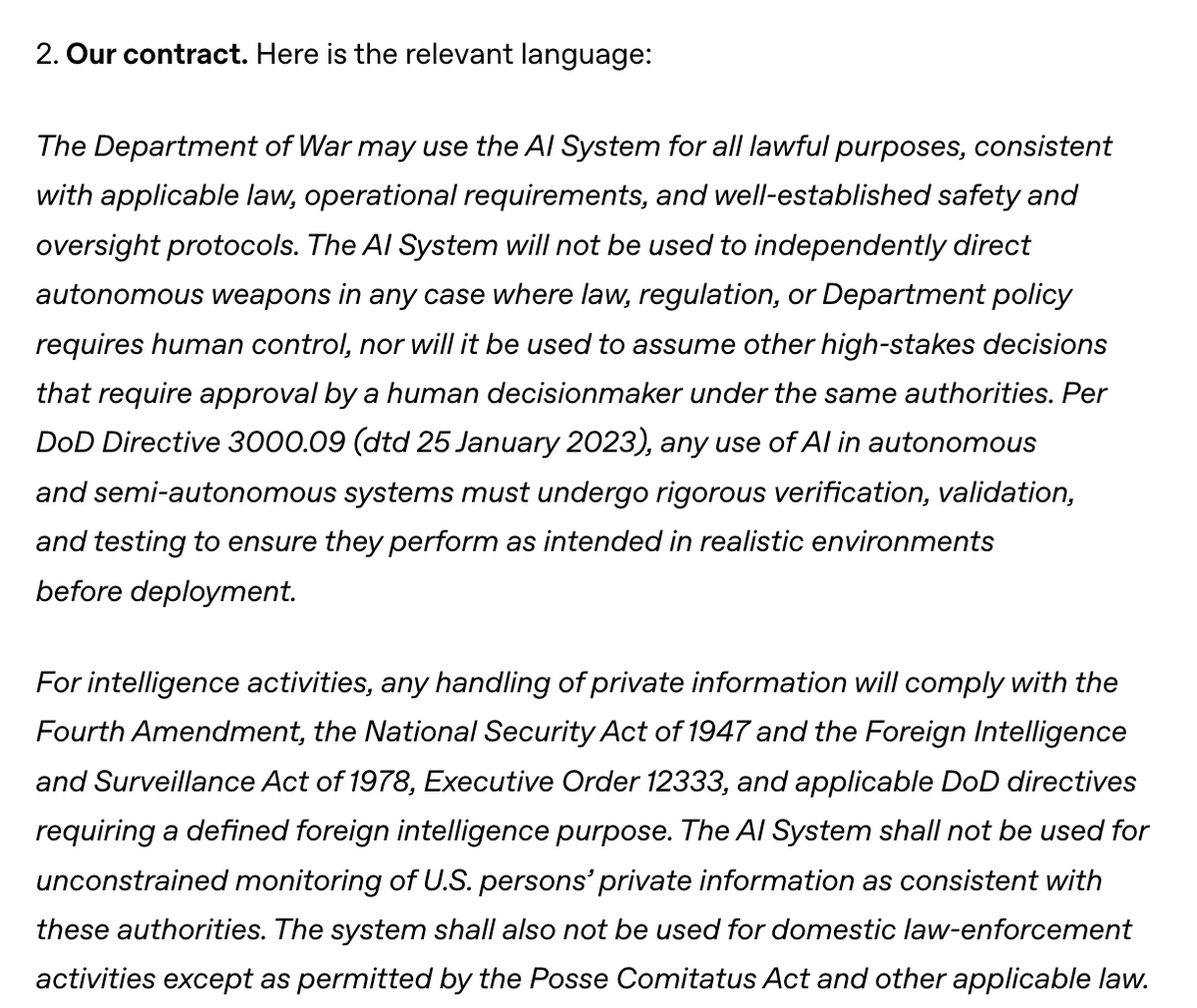
OpenAI has released the language in their contract with the DoW, and it's exactly as Anthropic was claiming: "legalese that would allow those safeguards to be disregarded at will".
Note: the first paragraph doesn't say "no autonomous weapons"! It says "AI can't control autonomous weapons as long as existing law (that doesn't exist) or the DoD says so."
Similarly, the mass surveillance use cases will "comply with existing law", but many forms of data collection that we'd consider "mass surveillance" are things that the NSA has consistently argued are legal under current law.
ECMAScript excitement 😉
🚨🚨🚨 IT'S ABOUT TIME! 🚨🚨🚨
Congrats to @ManishEarth on shipping the Temporal API in Chrome 144 Stable today 🎉
https://t.co/qDQIQvB0TW
Temporal is the replacement for the Date API.
🚨 NEW: The DOJ wants to break up Chrome from Google — the consequences could be catastrophic for the web.
📖 Read our article: Break Google's search monopoly without breaking the web.
👇Link below
/1
Racket(and Rhombus) like JSON and XML has a 'bicameral syntax'
Thank you to Shriram Krishnamurthi for coining the term https://t.co/eMjMSiq7ry
and @[email protected] for the diagram https://t.co/N30BSXenlj
The @PerfNowConf conference begins tomorrow in Amsterdam. It is going to be great 👍
For the first time @pcwilliams & @Jason_williams will share the story of how the Bloomberg Terminal uses web tech & what this means for the wider web ecosystem 🎉
If you see us, come say hi 👋
Just finished up an intense but wonderful few days at @localfirstconf.
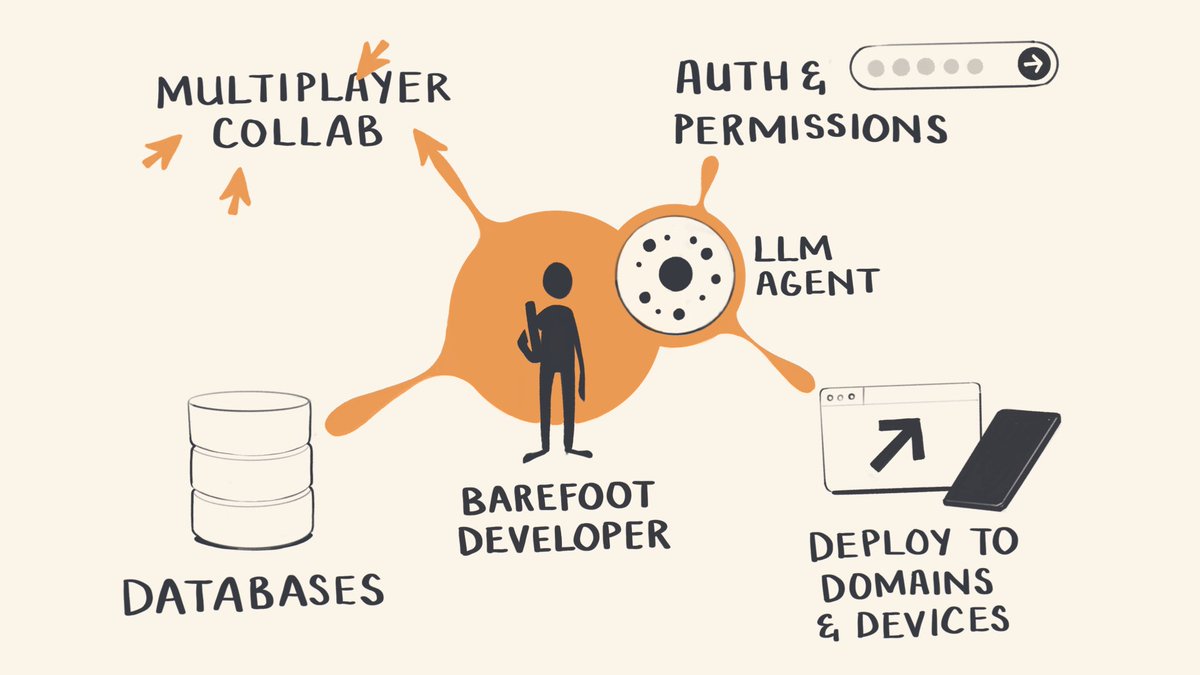
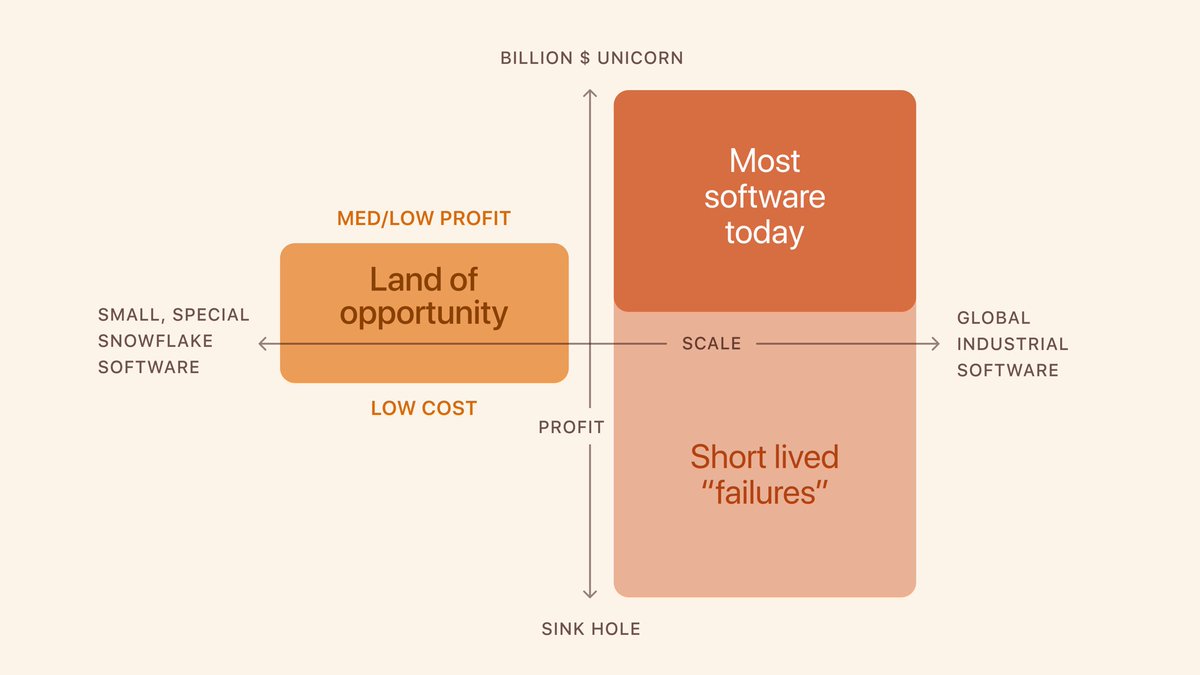
Did a new talk on why language models making software development faster, easier, and cheaper will create a golden age of home-cooked software & barefoot developers.
Slides and transcript below👇
Wow, just wow. @localfirstconf was a big success—I'm still reeling from the experience.
A few takeaways:
We had several demos of super-fast UIs. Each one was strangely shocking: we’re used to “fast” in non-game software meaning <200ms. @overtone_app, https://t.co/wU5FNijHBj, and of course @linear do paints on the next frame (at 60fps that’s <16ms). I can’t wait for a future where we can expect this from more software.
Seeing so many frameworks ( @jazz_tools, @dxos_org, @powersync_, ...) and end-user apps ( @AnytypeLabs, @GoodnotesApp, ...) describe their technical architectures made it clear there’s a lot of convergence on core patterns. In his opening talk, @martinkl suggested we might be ready for an IETF protocol standard for local-first sync in the next few years. I was skeptical at first but after seeing these similarities it feels within reach!
One of our goals for the conf was to bring together people who come to local-first from many different directions: technical, design, business, academic, and more. Some are focused on developer experience or saving money on their out-of-control cloud provider bills. Others care about privacy or long-term philosophical goals. But despite this variety, the community feels harmonious in shared values.
My favorite thing was talking to the "local-first curious" attendees, many of whom had only heard of the term recently. One of these compared the energy of this community to React circa 2013, which seems like a good signal.
Still plenty of unsolved problems including identity/auth, partial sync, data migrations, and economic model. But also seeing that lots of people in the community are making great progress in these areas. It’s a wide-open frontier!
Grateful for everyone who helped make this happen ❤️
Are you interested in a conference/festival hybrid that tries to combine the vibes of @strangeloop_stl and @resonate_io? Then you'll be pleased to learn that I'm helping organize exactly that for the first Berlin edition of @causalislands this October!
https://t.co/P2jJcyNwUw
I’d like to start an AI Interface Innovation Lab to explore and discover how to create a new kind of virtual operating system.
My goal is to build an OS that runs smoothly in a web browser or as a local app, allowing you to create and consume media in whatever way feels most natural. This isn’t just about creating a workspace; it’s about rethinking the internet and how we interact with it.
AI is flipping the creative process on its head. Instead of starting from individual pixels or words, you can now think about high-level concepts and only refine the details if necessary.
Using a computer should feel like magic. Picture editing audio as if it were a document, like in Descript, or using drawing software like tldraw to create real software.
Imagine being able to re-light a scene by converting it into a 3D environment or changing its composition by moving around high-level concepts.
This OS will let you transform any media into another form—extracting its essence and remixing it effortlessly. You could take data from a spreadsheet and blend it with unstructured audio or visual data. The system will help you combine these seamlessly, making it easier to create rich, complex projects.
My mission is to rethink and research the fundamentals of AI interfaces, making them more intuitive, adaptive, and collaborative. By focusing on seamless multi-modal interactions and flexible systems, I aim to create an environment where creating and consuming media feels natural and integrated.
I believe we can reinvent what a computer is. We moved from hyper-specific hardware and interfaces to adaptive ones, and now it’s time for software to evolve in the same way. An operating system designed from the ground up for seamless collaboration, not just with other humans but with AI as well, will make working with different types of media feel intuitive and natural.
I want to redefine what a file means. A file should be a multi-modal representation of a concept, not just a static piece of data. File types should be seen as representations at a point in time, capturing the essence of an idea in various forms—text, audio, video, or 3D.
I’m exploring how to make interactions feel natural. Think voice commands, gestures, and direct manipulation that make tech feel like an extension of your mind. The goal is to make the technology fade into the background so you can focus on your work.
I want to rethink version control to make it lightweight and intuitive. Imagine a system where files are represented as blocks or widgets, blending the idea of file and app. Each file’s history of changes is captured, and you can see previews before merging. This system will lean into familiar folk patterns like duplicating files to make changes and then merging them back. Semantic merging will ensure that changes are meaningful and coherent, whether you’re working with text, audio, visuals, or 3D content.
I’m building for messy, creative workflows. The system should adapt to fit your needs. You can mold your workspace to fit whatever project you’re working on.
A couple of promising technologies are data detectors and reverse embeddings. These will enable higher-level thinking when it comes to working with media and allow for remixing features across different modalities.
If you share this vision and want to get involved, let’s connect. Whether you’re an individual or part of a company, there are many ways to contribute. Support by helping with research, sharing this vision, or spreading the word. Together, we can create an OS that enhances creativity and bridges the gap between consuming and creating.
What if a graph view and text editor were just two ends of a continuous spectrum? You get consistent semantics, intermediate views, and some other benefits by blending structurally-compatible representations.
Here's a 'semantic zoom' in @tldraw
"My most productive single act as an IBM manager had nothing to do with product development. It was sending a promising engineer to go as a full-time IBM employee in mid-career to the University of Michigan to get a PhD. This action … had a payoff for IBM beyond my wildest dreams." -- Fred Brooks
That engineer was E. F. Codd, father of relational databases.
I'm not one for cheerleading, but DBOS is a big deal. Eliminates multiple layers of the tech stack, including Unix 🪦. More practical to build up from DB than down from PL as in durable computing. Deterministic traceable execution is a game changer.
https://t.co/7pfhsjlehH
@pchiusano Every "declarative" language eventually becomes a (terrible) programming language, just without the aid of actual language design. We learned this with XML 20y ago; it astounds me that people seem to think the lesson of that age was that we used the wrong shape brackets.