@GautiEggertsson I'm surprised the discussion treats all uses as equivalent. Using AI for feedback is very different from having AI generate a draft. Having it copy-edit a paper from a non-native speaker is no different from what an author might reasonably pay someone to do as a service.
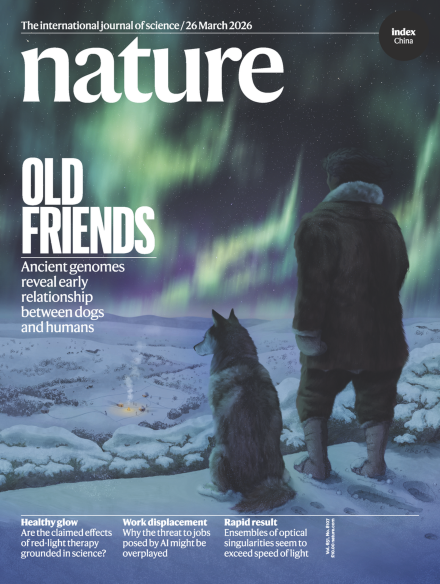
A genetically homogeneous dog population was already widely distributed across Europe and Anatolia during the Late Upper Palaeolithic (by at least 14,300 years ago), exchanged among genetically and culturally distinct western Eurasian human populations https://t.co/WRY5gU5lr1
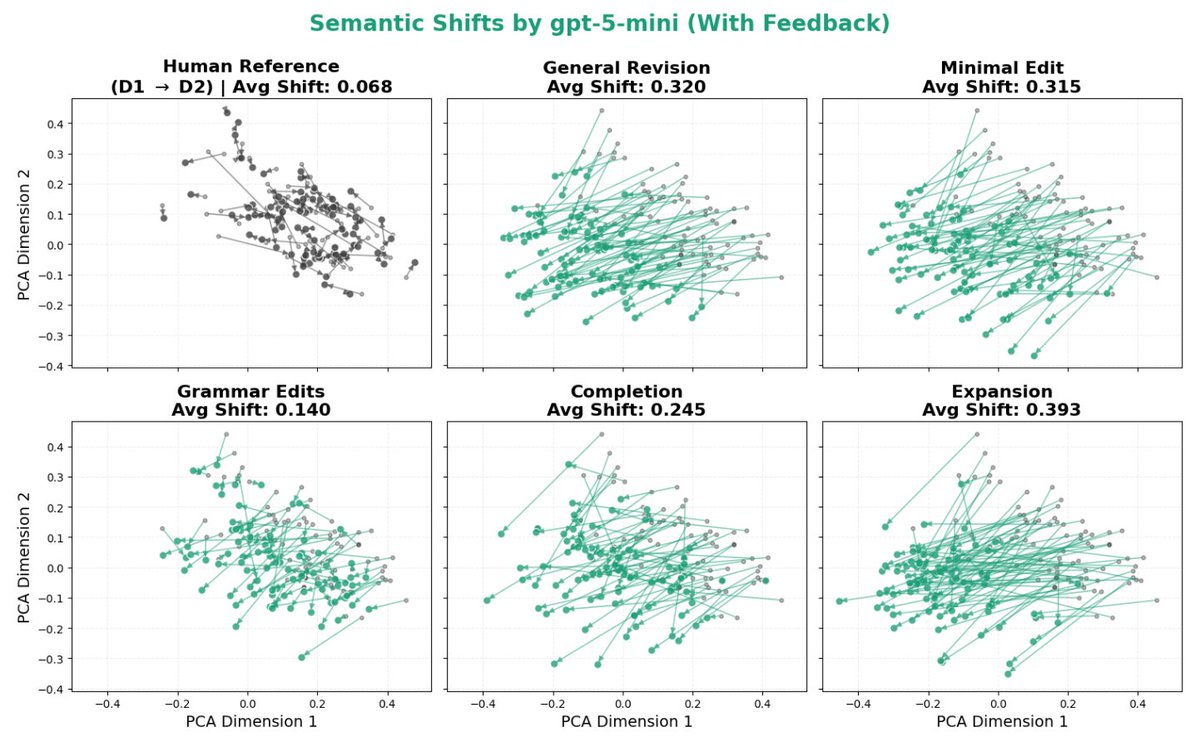
The paper I’ve been most obsessed with lately is finally out: https://t.co/KgdWKknCJK! Check out this beautiful plot: it shows how much LLMs distort human writing when making edits, compared to how humans would revise the same content.
We take a dataset of human-written essays from 2021, before the release of ChatGPT. We compare how people revise draft v1 -> v2 given expert feedback, with how an LLM revises the same v1 given the same feedback. This enables a counterfactual comparison: how much does the LLM alter the essay compared to what the human was originally intending to write? We find LLMs consistently induce massive distortions, even changing the actual meaning and conclusions argued for.
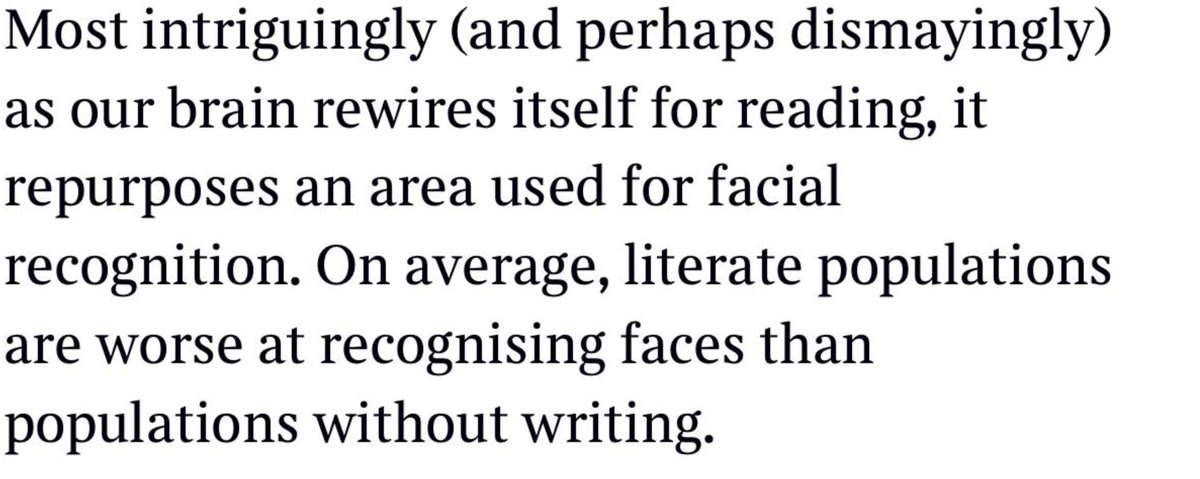
My life explained by @thetimes. Speed reading causes face blindness. I read insanely fast. But recognise almost no one (usual apologies to everyone). Similar research from 2010 here. https://t.co/mgS8WK6gew
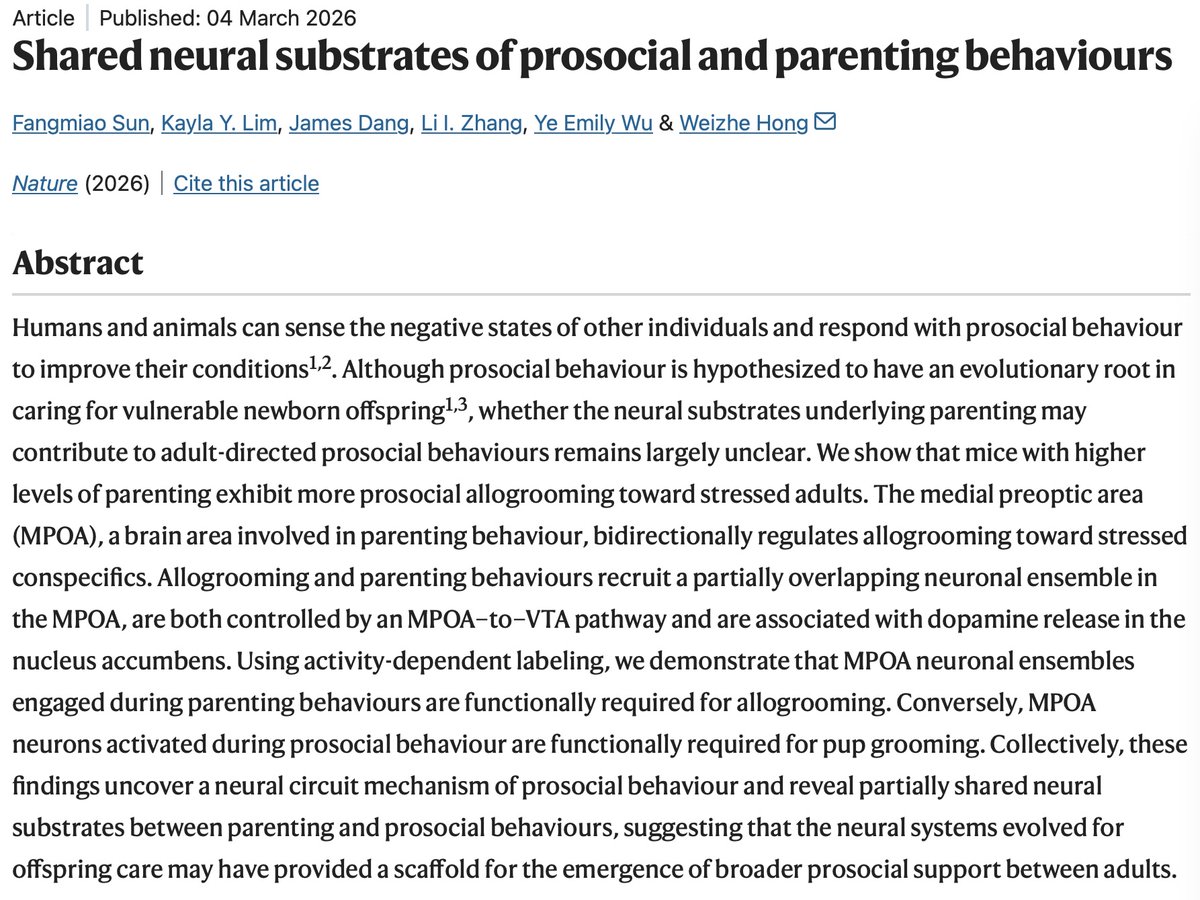
Excited to share our latest work in @Nature showing shared neural substrates for parenting and prosocial helping behavior - fantastic work by @Fangmiao4, @KaylaYingYan, and Emily Wu. Full text available here: https://t.co/1MdwgGaLIz
A horse’s whinny begins as a piercing, high-pitched screech that’s soon joined by a lower, guttural rumble. But the two components of the call don’t differ just in tone—they’re made in entirely different ways, researchers report.
The lower tone emerges when the horse vibrates its vocal folds, much as a human does to speak. To make the high note, the horse whistles.
The observation provides the first experimental evidence that a mammal can produce a whistle and a vocal-fold vibration at the same time.
Learn more: https://t.co/7XQSjo1UuQ @NewsfromScience
Evo 2 is out in Nature today, showing that genome language models can predict and design across the full complexity of life, from phages to eukaryotes.
A few surprises from the project, including how ignoring trillions of nucleotides was key to getting a good model. 🧵
Very excited to post our paper led by @dennis_a_burke https://t.co/77C2NTAWj9 where we uncover a simple mathematical rule underlying how brains learn that a cue predicts a reward. 1/26
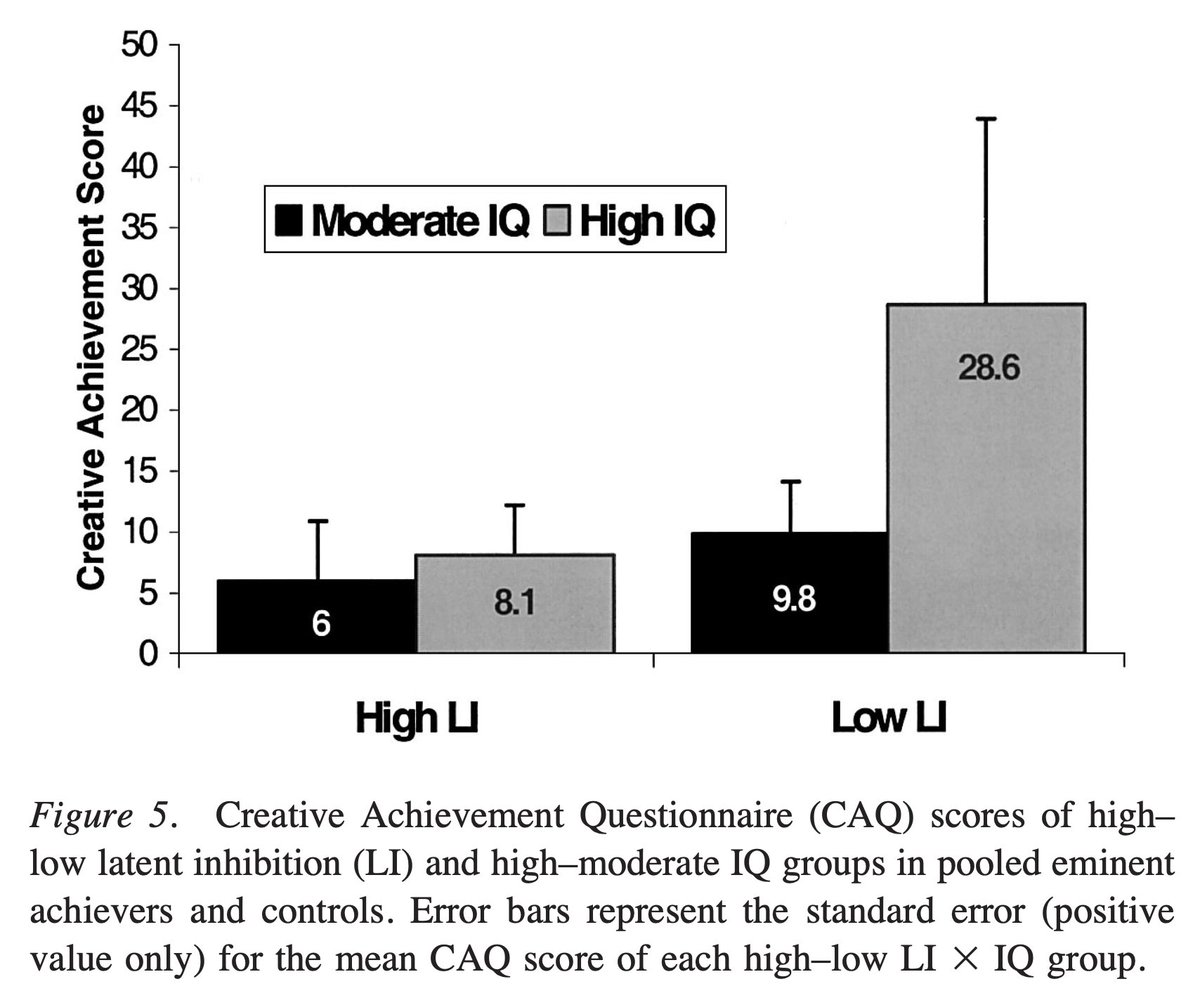
Creative geniuses may be the right amount of crazy. Reduced latent inhibition—difficulty filtering irrelevant stimuli, linked to psychosis—predicted higher creative achievement when paired with high IQ. IQ appears to transform a cognitive deficit into a creative advantage
A new article in Nature Medicine found that social connections were a surprisingly powerful predictor of a long life.
Living with a partner was roughly as beneficial as exercise. Regular visits with family or having someone to confide in also appeared to be associated with lower mortality. Loneliness also affects mental wellbeing—another factor in longevity.
Happy Valentine's Day!
https://t.co/MlEKbB8V2d