Good review. Aging is primarily a cybernetic phenomenon: a complex systems communication and control problem.
Homeostasis degradation is a useful framing.
Most aging theories focus on specific mechanisms—mitochondrial dysfunction, telomere attrition, chronic inflammation. But a new paper in npj Aging proposes that these aren't independent processes. They're downstream consequences of a single upstream imbalance.
The autonomic nervous system has two opposing branches: the sympathetic nervous system (SNS), which drives the fight-or-flight response, and the parasympathetic nervous system (PNS), which activates rest-and-repair mechanisms.
In a balanced state, these systems regulate each other. The SNS responds to stressors that disrupt homeostasis. The PNS restores homeostasis. Acute SNS activation followed by PNS recovery maintains physiological stability.
But with aging, this balance breaks down. The SNS becomes hyperreactive. The PNS becomes underactive. Chronic SNS activation without PNS recovery drives the system into persistent divergence from homeostatic balance.
This isn't just a biomarker change. It's a shift in the regulatory architecture that controls nearly every hallmark of aging.
Chronic SNS activation increases catecholamine metabolism, which generates free radicals that damage mitochondrial DNA. mtDNA damage triggers Toll-like receptor 9 and STING inflammatory pathways. Catecholamines also elevate mitochondrial calcium levels, disrupting outer membrane permeability and deregulating apoptotic signaling.
The result is mitochondrial dysfunction—not as an isolated aging mechanism, but as a consequence of sustained sympathetic overactivation.
PNS activation does the opposite. It activates mitochondrial α7 nicotinic acetylcholine receptors, reducing calcium permeability and mtDNA release. It suppresses inflammatory TLR9 and STING signaling. It enhances PGC-1α activity, promoting mitochondrial biogenesis, fusion, fission, and mitophagy.
PNS-mediated repair mechanisms restore mitochondrial function—but only when PNS signaling is sufficient to counterbalance SNS-driven damage.
The same pattern applies to inflammation. Chronic catecholamine release causes receptor desensitization and dysregulation, which enhances NF-κB-driven inflammasome activity and creates the low-grade chronic inflammation known as inflammaging.
PNS activation reverses this through cholinergic anti-inflammatory pathways. Acetylcholine binds to α7 nicotinic receptors on immune cells, inhibiting NF-κB and activating JAK2/STAT3 pathways that reduce pro-inflammatory cytokine transcription.
Reduced vagal function—diminished PNS activity—causes immunosenescence in both innate and adaptive immunity, increasing loads of reactive macrophages and promoting age-related disease.
The framework extends to nutrient sensing, epigenetic regulation, and proteostasis. Each hallmark of aging can be traced back to SNS:PNS imbalance operating through specific molecular pathways.
This isn't a rejection of previous aging theories. It's a unifying model that positions autonomic nervous system deregulation as the upstream driver that produces the downstream mechanisms those theories describe.
Raymond Pearl's Rate of Living theory proposed that metabolic rate inversely correlates with lifespan. The SNS:PNS deregulation model offers a mechanistic explanation—chronic SNS activation increases metabolic rate and energy expenditure without corresponding PNS-mediated recovery.
The free radical theory of aging identifies oxidative damage as a central mechanism. The SNS:PNS model explains why free radical generation increases with age—persistent catecholamine metabolism and NADPH oxidase activation driven by SNS hyperactivity.
Inflammaging has been recognized as a critical risk factor for age-related diseases. The model shows how SNS:PNS imbalance creates the conditions for chronic inflammation by disrupting cholinergic anti-inflammatory pathways.
What makes this framework therapeutically relevant is that autonomic balance is modifiable. Vagal nerve stimulation, cholinergic agonists, and interventions that enhance PNS activity represent potential strategies to restore homeostatic balance.
The decisions made in the fourth and fifth decades about behaviors that affect autonomic tone—chronic stress exposure, physical activity patterns, sleep quality—may determine whether SNS:PNS balance is maintained or whether the system shifts toward chronic sympathetic dominance.
Aging may not be an inevitable accumulation of random damage. It may be the predictable consequence of a regulatory system that, over decades, loses its ability to return to baseline after stress.
The question isn't whether mitochondrial dysfunction or chronic inflammation occur with aging. The question is whether those processes reflect irreversible cellular decline or sustained autonomic imbalance that can be corrected by restoring parasympathetic function.
Rather than strength, the most interesting ability of microtubule (MT) mitotic spindles is their information processing capacity. How do the MT spindles, MT-based centrioles etc know which chromosome to attach to, how to separate them into identical paired sets, form daughter cells and performs a vast array of purposeful biological behaviors. MTs are the nervous system within eukaryotic and plant cells, can encode memory and are proposed to mediate consciousness. Indeed the Orch OR theory of consciousness based on microtubules is the only theory of consciousness with any actual experimental support. https://t.co/BLRNhgrsjL
Is Orch OR suppressed by neuro-influencers and media funded by AI ?
How do cells combine cell-intrinsic & tissue-level cues create stable patterns during intestinal regeneration? 🤔
Our paper w/ @CSchwayer@Silvia_Bar01@EdouardHannezo@priscaliberali is out! 🥳
A thread on the theory part 🧵⬇️
https://t.co/u2FkHNkuwU
This multiscale circuit generates fate bistability and preserves a memory, thereby maintaining spatial patterning after injury.
Many more useful multiscale circuits will be discovered in the future.
It is finally out 😍Check it out!! Multiscale integration of tissue and chromatin context converts cell heterogeneity into stable intestinal patterning: Cell https://t.co/22Y0gMrzqv @CSchwayer@Silvia_Bar01@d_brueckner@EdouardHannezo
@RedElixier@UMNews@KateAdamala Fun frame. The oscillator model's a stretch for a cell, but the instinct holds. Aging systems fall out of sync before the parts break.
@StuartHameroff Agreed with all three.
However, I think Orch-OR only contradicts purely classical computational theories. In fact it points toward better ones like polycomputing.
Could they even be unified?
@mikeeisenberg נכון! ופתרון טוב יותר הוא להעביר את החינוך ישירות לבתי הספר דרך וואוצ’רים להורים, יחד עם האחריות המלאה. (כ~3,000 ₪ לתלמיד בחודש).
הרשויות המקומיות קצת פחות בעייתיות מהמדינה, אבל עדיין כמעט ללא שום יתרון של שוק חופשי - הרבה יותר קשה לעבור עיר מאשר להחליף בית ספר.
@StuartHameroff Yes. The holonomic brain theory is excellent, but single-celled organisms show clear learning and memory without neurons or brain waves, requiring a fundamental subcellular oscillatory mechanism.
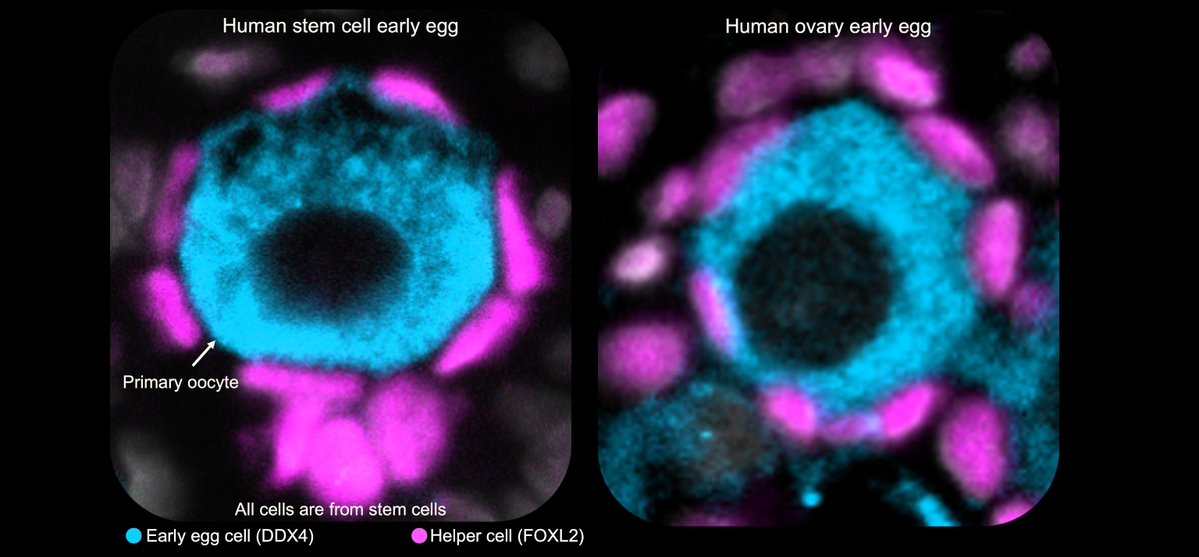
I’m so excited to share this update on @Conception –
We’ve generated the first early human eggs derived from stem cells.
This is a big deal -- the potential to redefine fertility is real.
Passive reading = forgetting by tomorrow. 🧠 Active interaction = long-term retention. If you're a Prof looking to boost actual comprehension in your upcoming course, it’s time to switch to a dynamic digital text.
https://t.co/pjpc0YJhOL
#biology#science#3D#animation#Edtech #HigherEd #CognitiveScience #Teaching
Democracy gives interventionists a structural advantage by using taxation or debt to deliver concentrated benefits to organized groups.
This exploits voters’ rational ignorance: costs are diffuse and hard to trace, while benefits are visible and targeted.