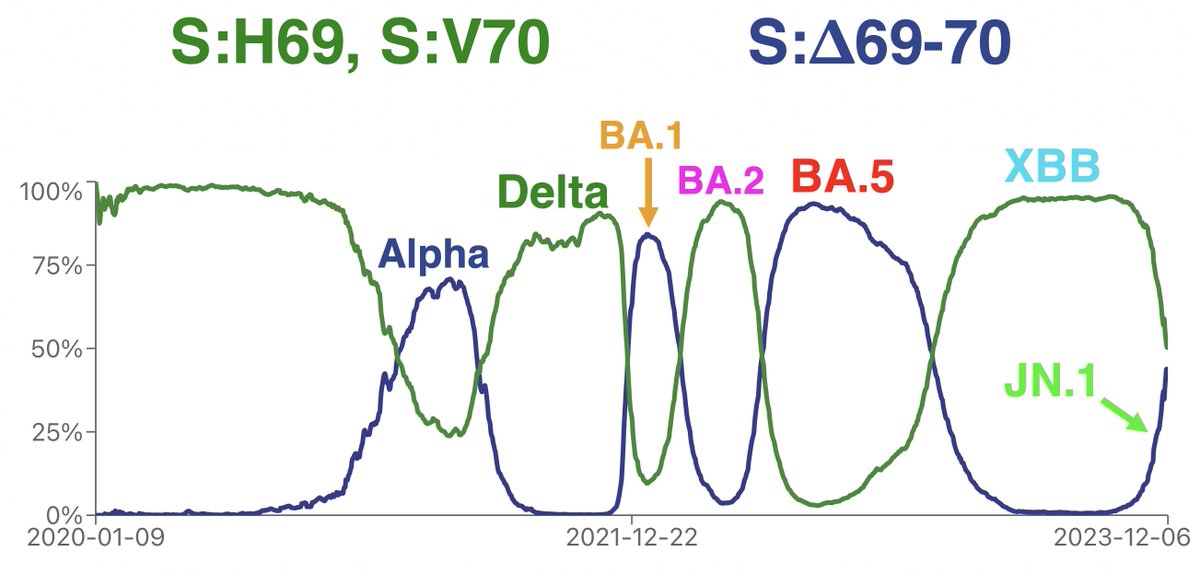
The ∆69-70 pendulum is in the midst of yet another swing.
What makes the alternation from ∆69-70 to S:H69+ S:V70 even more remarkable is that deletions are one-way mutations. They essentially cannot be reversed. There has never been an insertion at S:69-70 in SARS-CoV-2. 1/5
Il est prescrit pour les règles douloureuses et les maux de ventre. Né en France, le Spasfon est aujourd'hui l'un des médicaments les plus vendus dans notre pays. Mais pour Juliette Ferry-Danini, les données scientifiques manquent pour défendre son efficacité. Elle a enquêté.
Very happy to see this work published and happy to have helped a little along the way. Hopefully, this will soon be followed by more interesting work on the evolutionary consequences of chiasma interference from @kapperud
One of my favorite papers in recent years included this diagram. It shows the impact of controlling for three different types of variables: confounders, colliders, and mediators.
With confounders, control is good. With the others, you ruin your result by controlling.
C’était la dernière étude faite pour prouver que Didier Raoult avait raison sur l'hydroxychloroquine. Elle est finalement dépubliée par ses auteurs. https://t.co/lPUhvIFN5i
@lonnibesancon@stkirsch He said «prospective» study, this one is a retrospective study. Not sure such a study exists, although I am pretty confident there would be no differences in autism rates.
Using mRNA tailored to each patient’s tumor, an experimental vaccine may have staved off the return of one of the deadliest forms of cancer in half of those who received it. https://t.co/kURLXKylf2
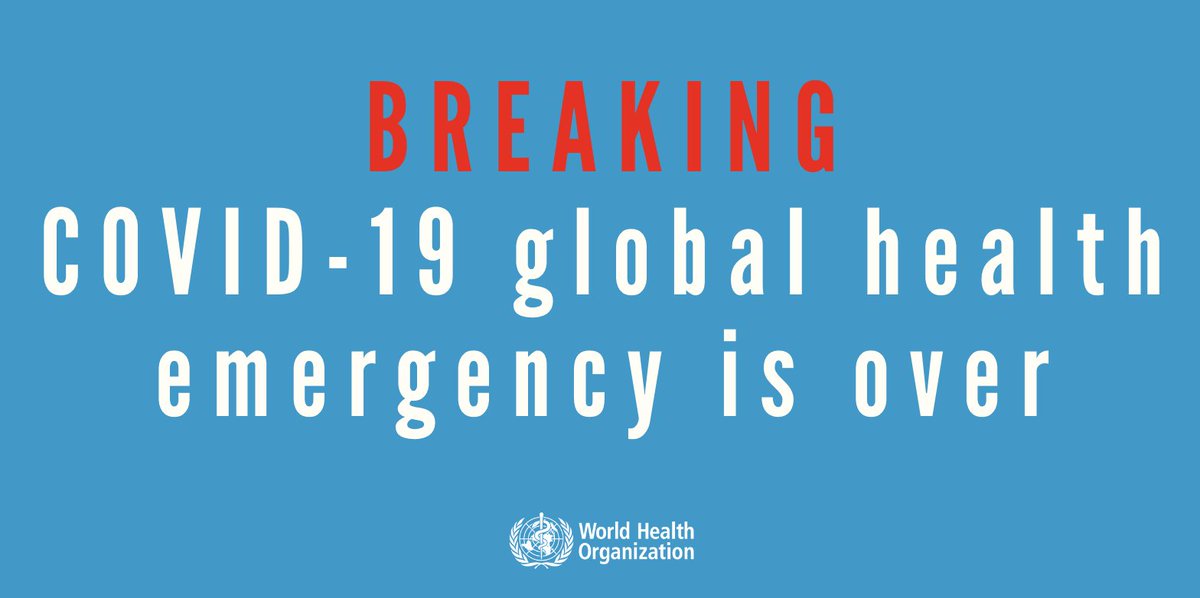
@DrTedros 🚨 BREAKING 🚨
"Yesterday, the Emergency Committee met for the 15th time and recommended to me that I declare an end to the public health emergency of international concern. I have accepted that advice"-@DrTedros#COVID19
Genetic variation can constrain adaptation, and correlations between trait variability and divergence are ultimate testaments of that. But how do we interpret such correlations when they last over many millions of years? New paper with @rohner_patrick
https://t.co/HemzZ5zTDa
A 🧵 on some of my intuitions/priors about the genetics of complex and molecular traits in humans (i.e. what I think of as typical), largely motivated by GWAS/QTL studies over the past decade [citing papers with nice figures where possible]
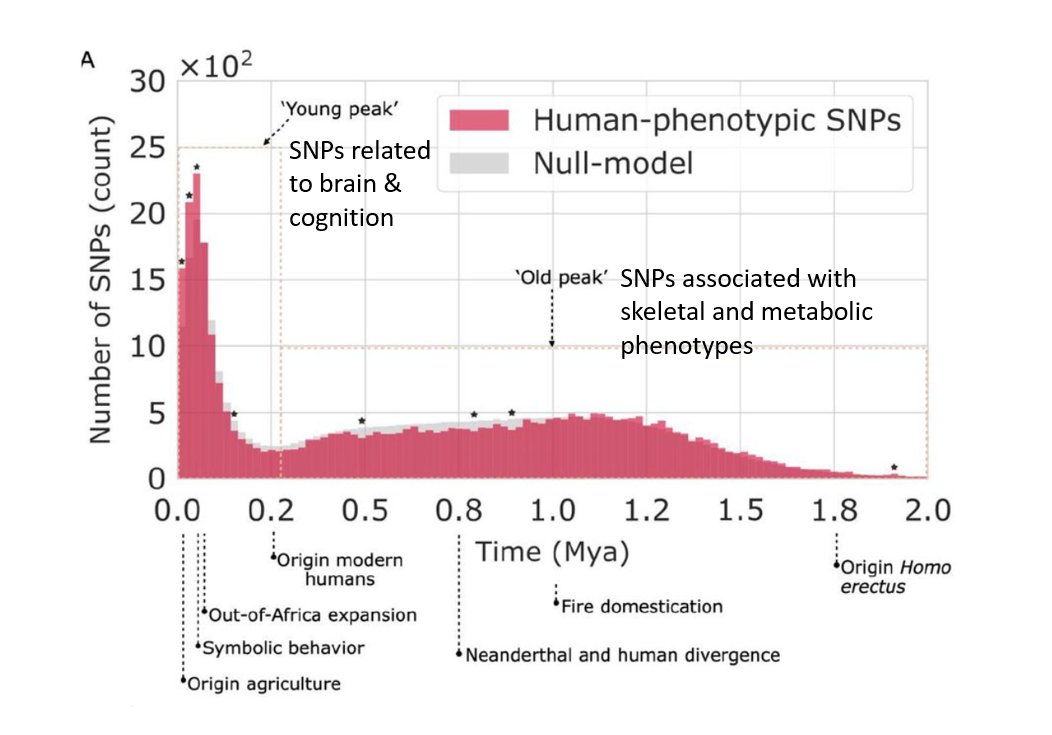
New paper attempts a genetic timeline of humans.
Two key eras: "old peak" (around the time of fire) + "new peak".
(Stephen Jay Gould: "There’s been no biological change in humans in 40,000 or 50,000 years" is false.)