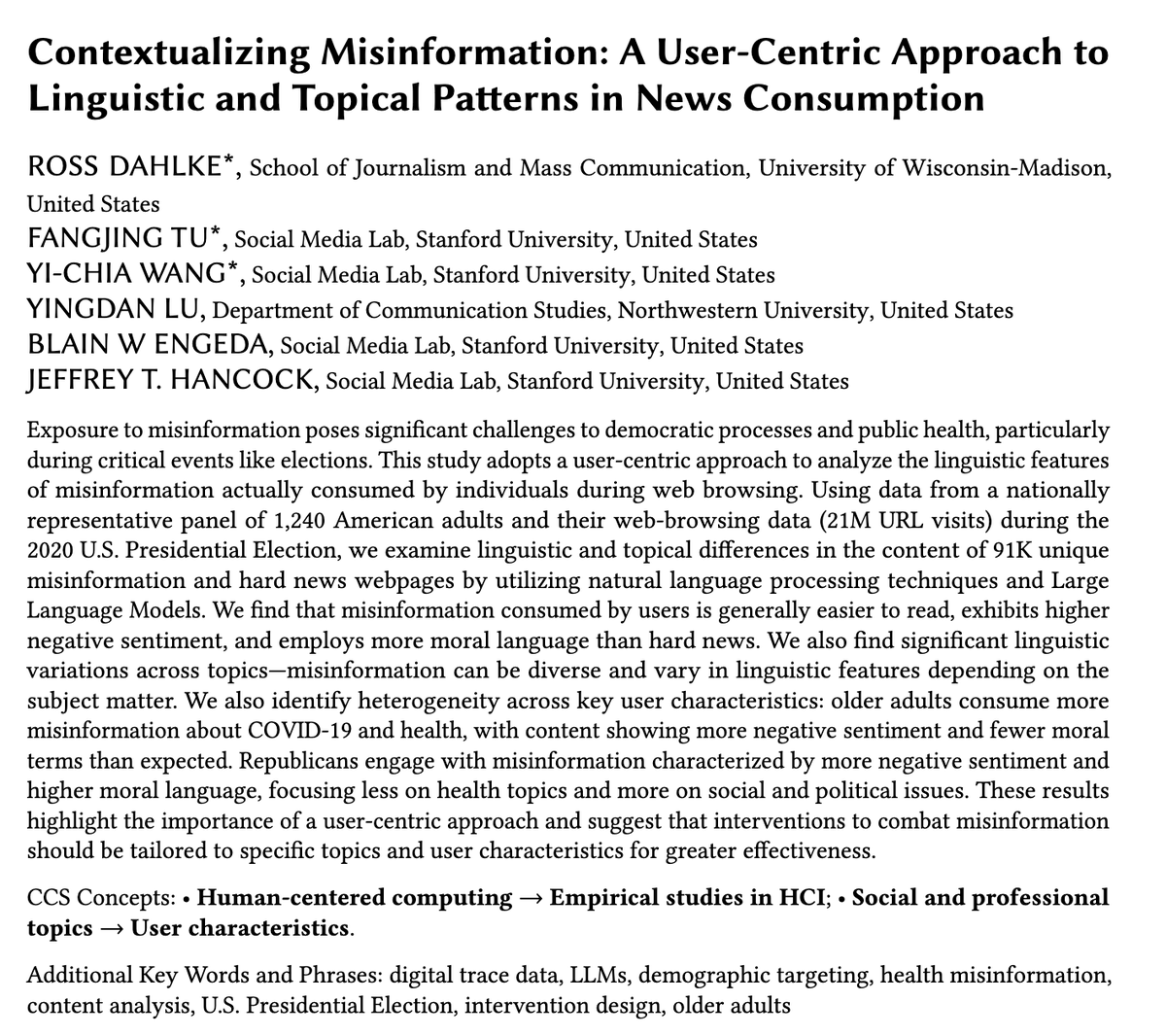
Most web browsing studies analyzing news and misinformation operate at the domain level. Work by me, @fangjingtu, @YingdanL_kk et al. scrapes the content from web visits to go beyond the source to the content level, finding significant topical and linguistic variations
🚨 New Preprint! 🚨
“Detecting Synthetic, Doubting Authentic: AI Attribution Bias for Political Imagery”
📍 Link: https://t.co/KHPsvrWq1C
🧵 During the 2024 U.S. presidential election, many #GenAI political images appeared. But did voters mistake them for authentic? (1/)
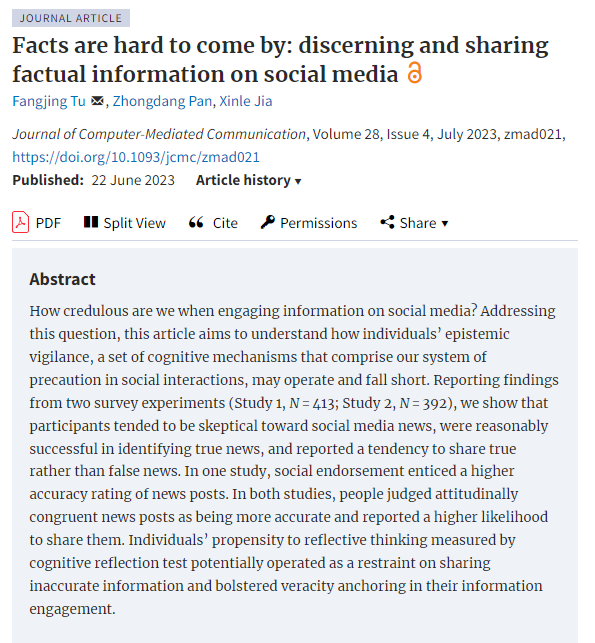
Our new paper is📢Out in JCMC!📢
→Fact matters, people do not default trust social media news
→Risk factors like "likes" and attitudinal congruity undermine veracity judgment and sharing
→ Reflective thinking mitigates these risks
Collaborating with Zhongdang Pan & @Xinle_jia
We’re excited to introduce the newest #jcmc publication "Facts are hard to come by: discerning and sharing factual information on social media" by @fangjingtu, Zhongdang Pan, and Xinle Jia! Read it here: https://t.co/snyXpE6xp6
New study of multiple countries in U.S. and Europe suggests Politicians Polarize views about COVID policies but experts may have a depolarizing effect: https://t.co/Ynu50LdjyH
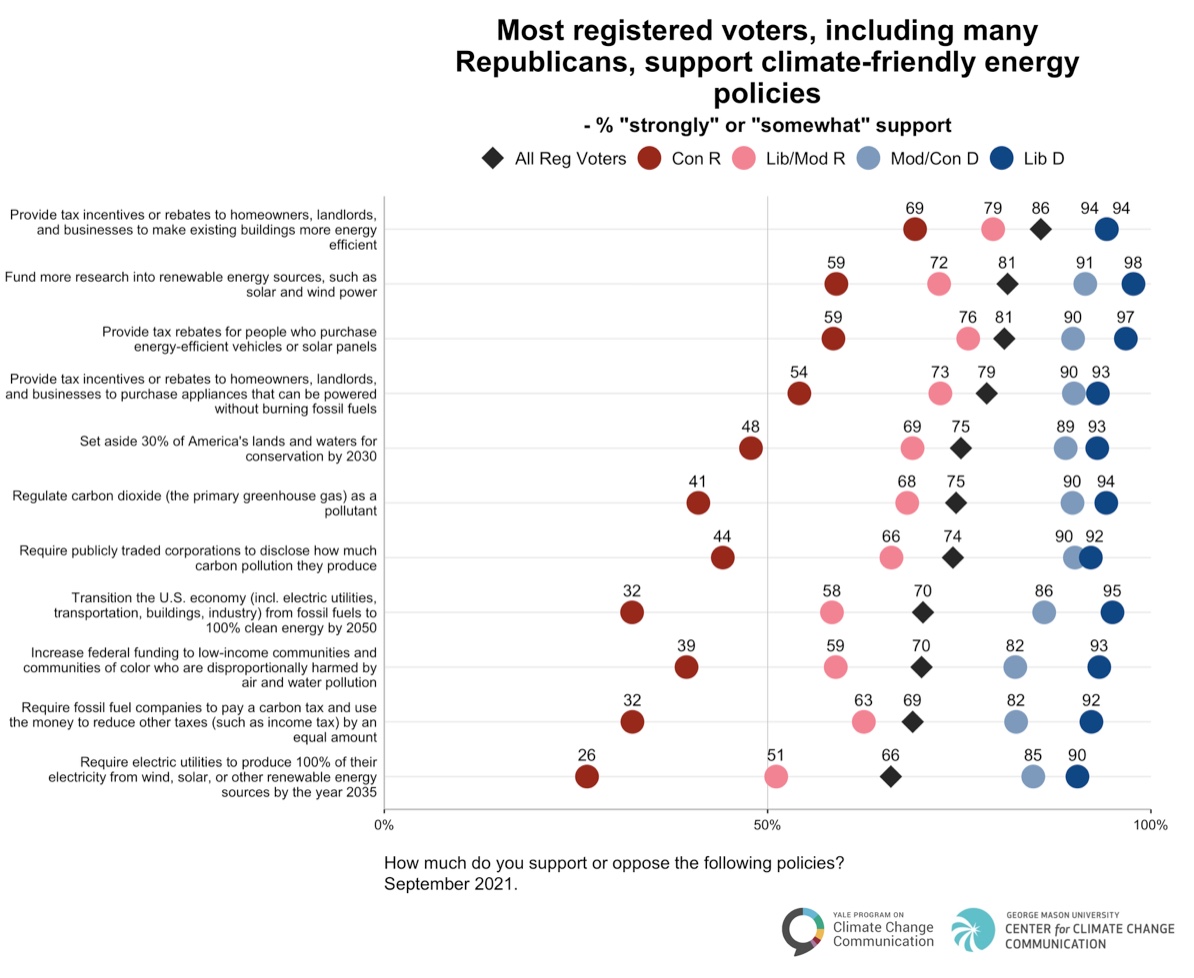
The majority of US voters - yes, ALL US voters - support climate action. New public opinion results from @YaleClimateComm Source: https://t.co/UeYxxgWvnY
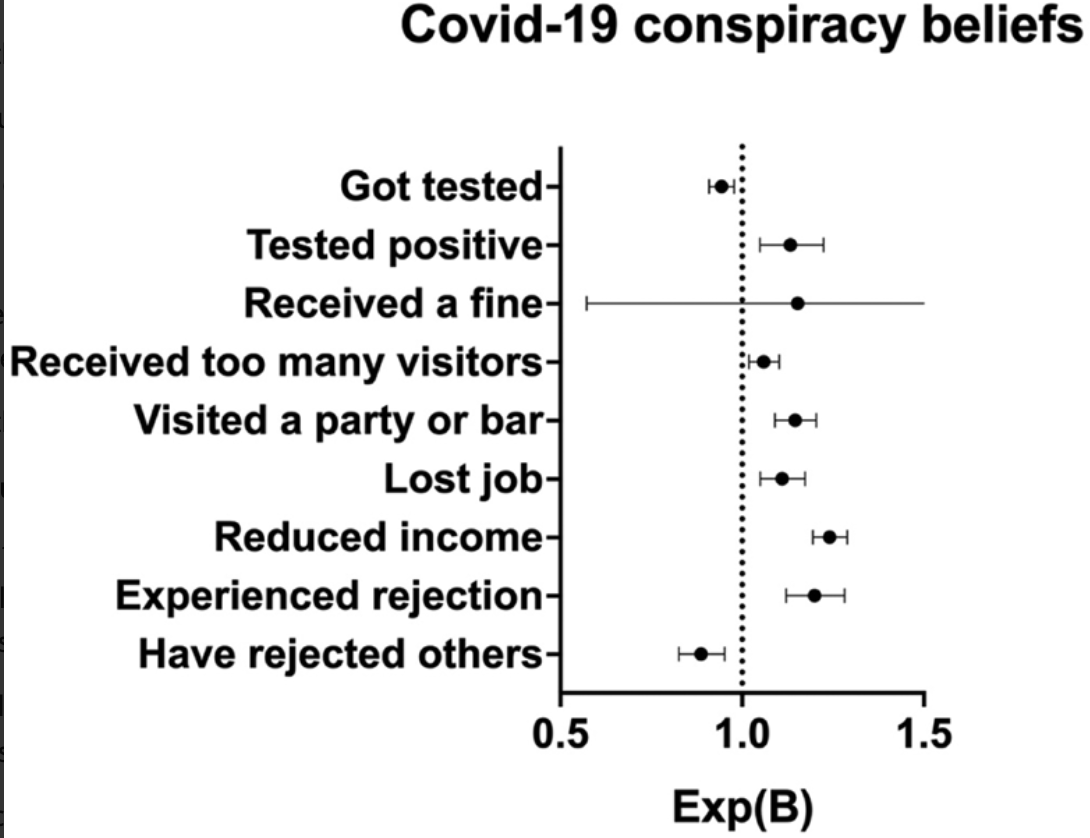
A news longitudinal study found that believing #Covid19 conspiracy theories predicted a higher chance of testing positive for Covid, violating public health regulations, job loss and reduced income, social rejection, and decreased overall well-being. https://t.co/vOvsR3ttQU
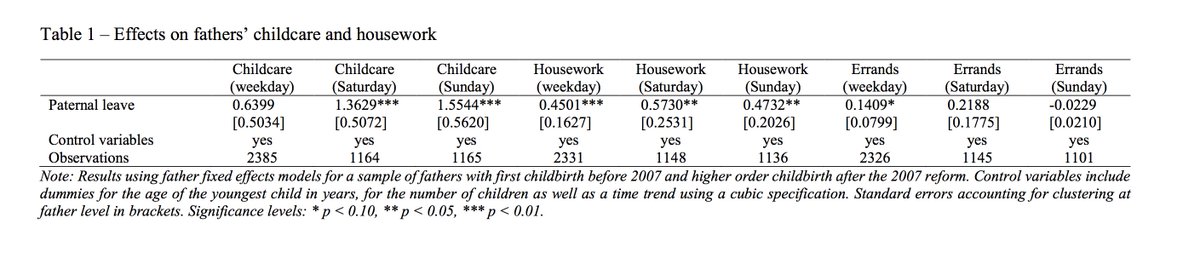
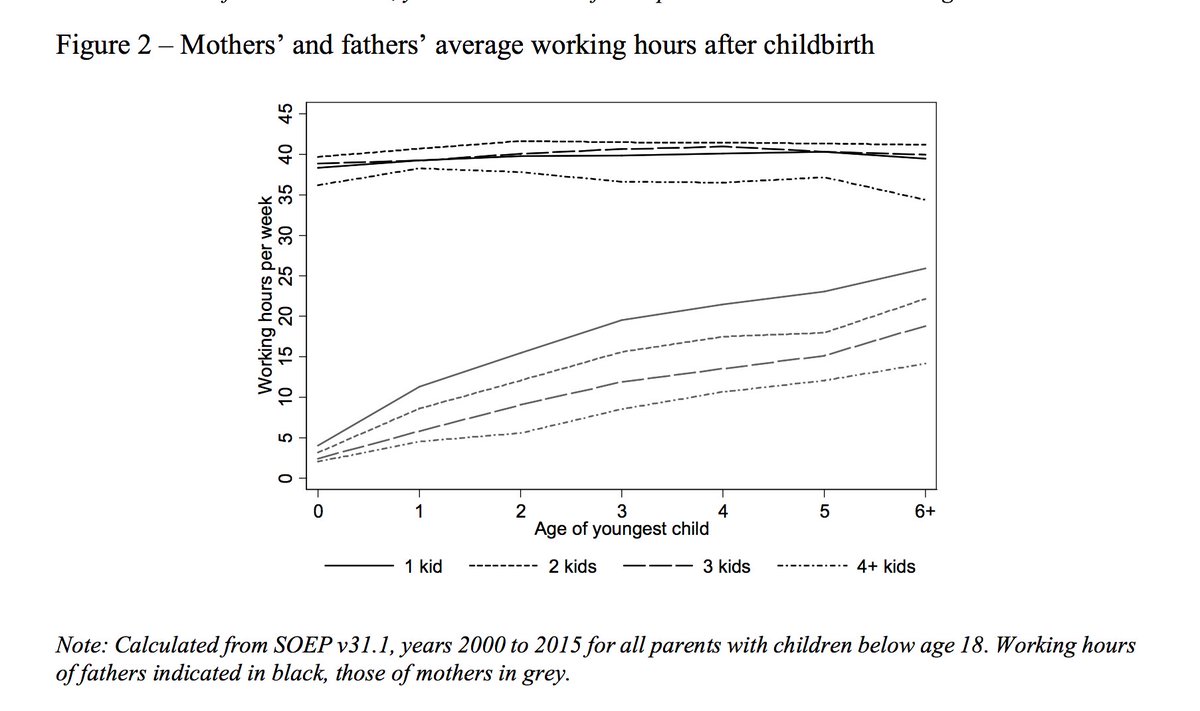
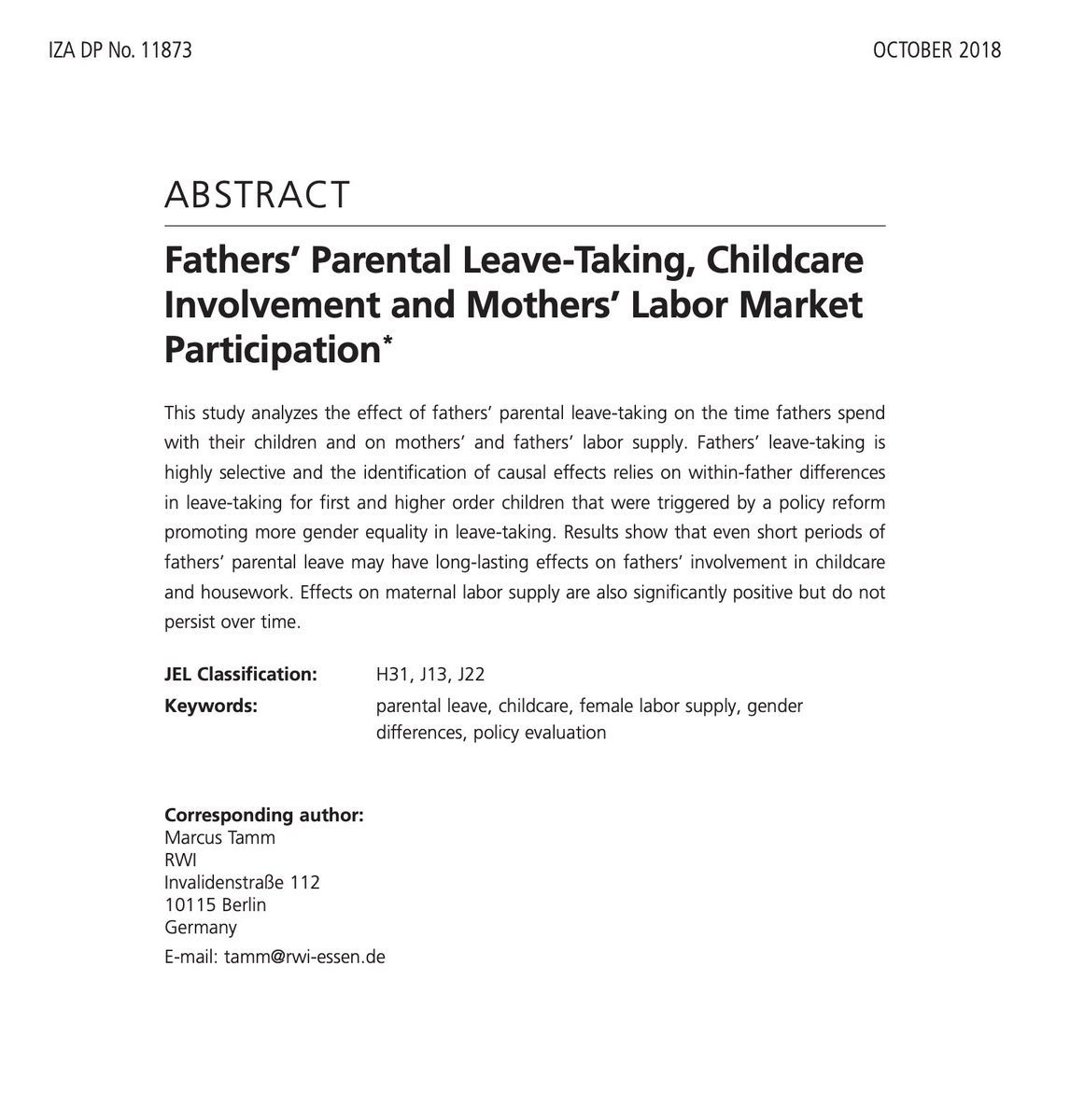
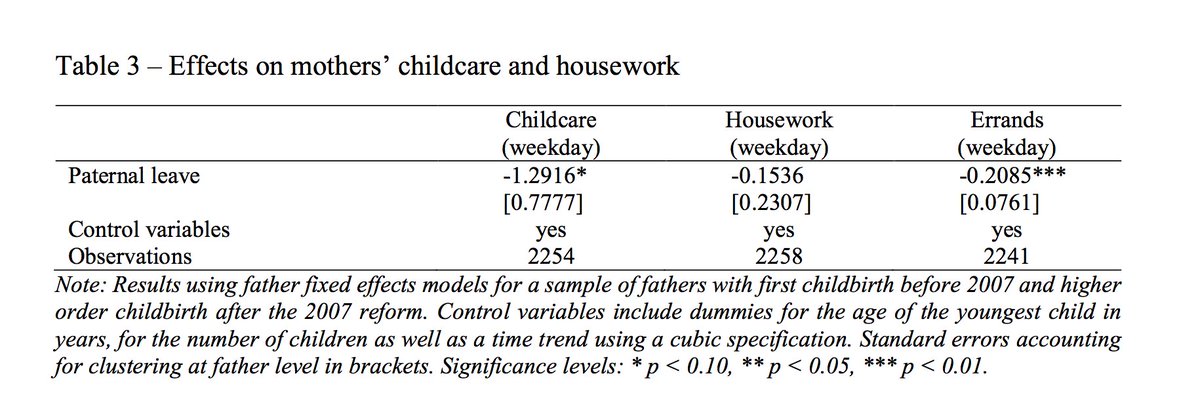
Paternity leave:
▪️leads to long-lasting increases in fathers’ involvement in childcare/housework
▪️increases the chances women go back to work (at least initially)
https://t.co/8xIBH3NpFS
Here is a 🧵 of terms related to money/funding in academia that no one explained to me until I was applying for faculty jobs (or after I'd started), that I pretended to understand until then, and that would’ve been very helpful to learn earlier than I did.
1/a whole bunch
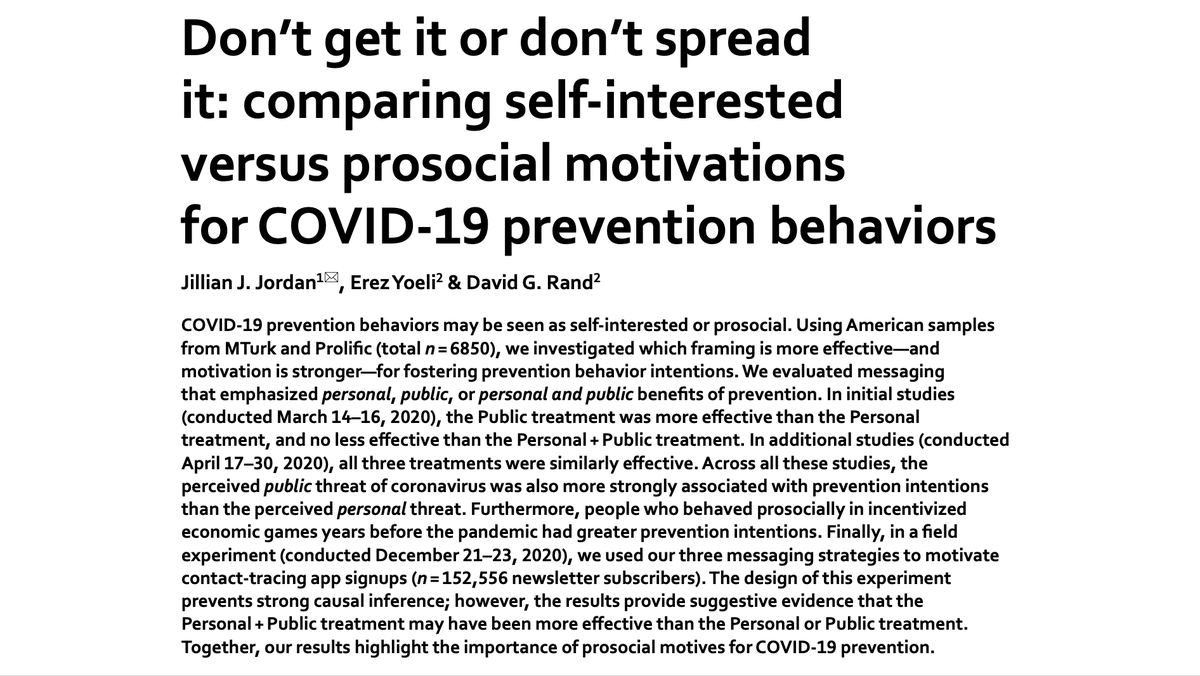
Now out in @SciReports with @erezyoeli and @DG_Rand! “Don’t get it or don’t spread it: Comparing self-interested versus prosocial motivations for COVID-19 prevention behaviors”
https://t.co/uN17NsLllq
🧵 1/n
Every year my grad students read O’Keefe (1975) and every year I am reminded why I love it. He writes:
“Most Communication researchers seem obsessed with “doing studies” at the expense of theoretical explication and analysis.”
And that was before a big data was a thing.
@ShamanthGadi @ndconnell I've seen Snopes fact-check that the details regarding whether he was fully vaccinated or if he had contracted COVID-19 India are still unclear https://t.co/u4Cl61j8rG
Intriguing, I wonder what affects these differential trust in vote-counting. Some guesses here: confidence in mail-in ballots? Media diet? Trust in mainstream media? Feeling of status threat? Level of dogmatism?
Per @cstewartiii's Survey on the Performance of American Elections, Republicans' faith in vote-counting depended strongly on who won the state. Democrats' did not. https://t.co/cgY0KHPq0Z