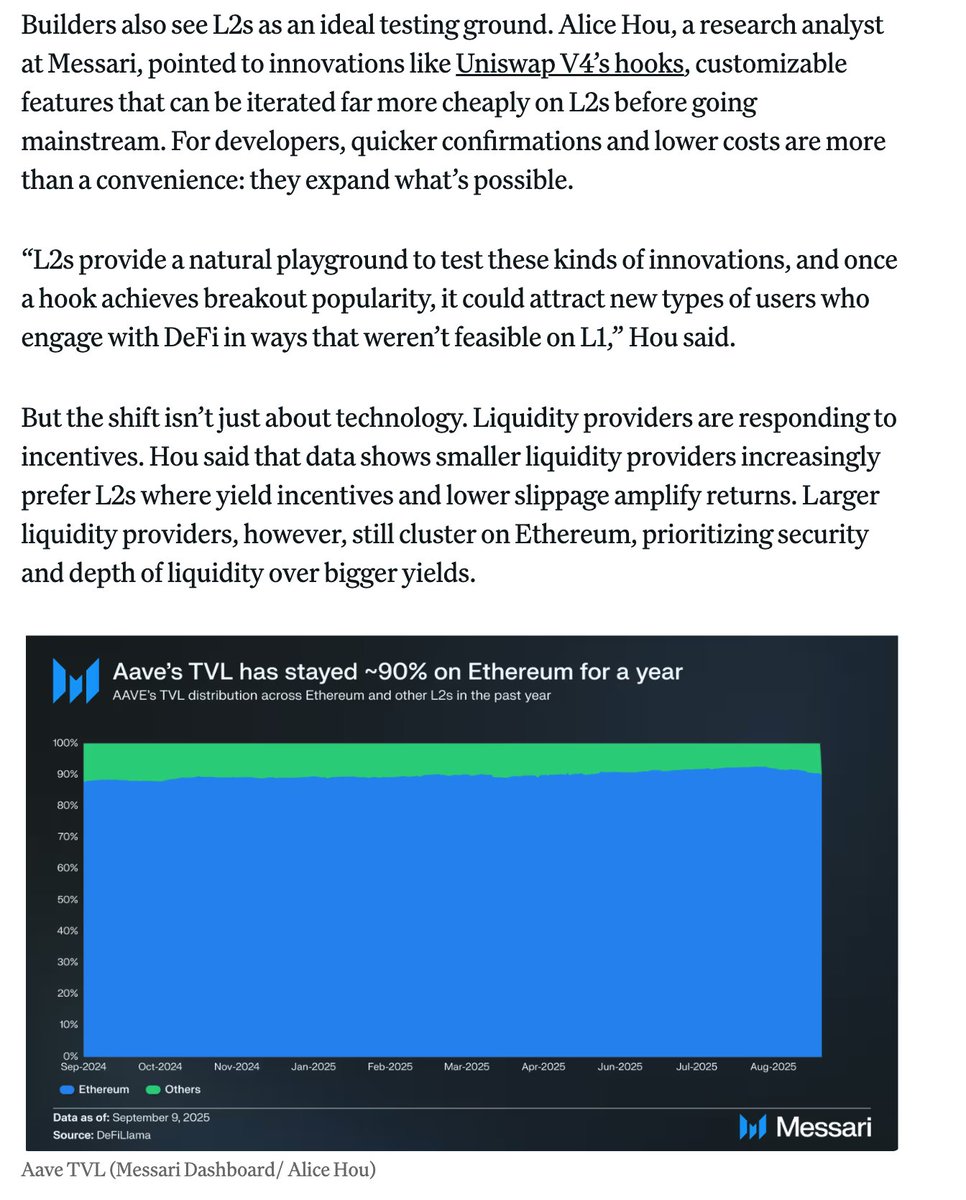
Grateful to have my perspective included in a @CoinDesk article for the first time. 🙏
Shared some thoughts on how L1/L2 DeFi dynamics are evolving.
Full piece here: https://t.co/POneo598jY
You have noticed it. ChatGPT feels dumber than it used to. Your prompts that worked six months ago produce worse results now. The writing sounds flatter. The ideas sound safer. The internet itself feels like it is shrinking. Every article reads the same. Every email sounds the same. Every answer sounds like it was written by the same voice.
You thought it was you. It is not you.
Researchers at Oxford and Cambridge published a paper in Nature proving what is happening. They call it Model Collapse.
Here is the mechanism in one sentence. AI trained on AI-generated data gets dumber every generation until it forgets what real human data looked like.
The internet is filling with AI-generated content. Blog posts. Articles. Reviews. Comments. Social media. AI companies scrape the internet to train the next generation of models. Which means the next generation of AI is being trained on the output of the current generation.
Each cycle loses information. Not randomly. It loses the rarest, most unusual, most creative parts first. The researchers call these the "tails of the distribution." The weird ideas. The unexpected perspectives. The things that made the internet feel human. Those disappear first.
What remains is the average. The safe. The expected. The bland.
Then the next generation trains on that. And loses more. And the next generation trains on that. And loses more. The researchers proved this is not a slow decline. Major degradation happens within just a few iterations. Even when some of the original human data is preserved.
They tested it on large language models. On image generators. On statistical models. The pattern was the same every time. The output converges toward a narrow, flattened version of reality that looks nothing like the original data.
The lead researcher put it plainly. "Large language models are like fire. A useful tool. But one that pollutes the environment."
The pollution is invisible. You cannot see which sentence on the internet was written by a human and which was written by AI. Neither can the AI that is about to train on it. And once the tails are gone, they do not come back. The damage is irreversible.
This is not a prediction anymore. It is a diagnosis.
The internet you grew up on was built by humans writing things no algorithm would have written. Strange, personal, imperfect, alive. That internet is being diluted. One generation of AI at a time. And the models trained on what remains are learning a smaller and smaller version of the world.
Model Collapse is not a technical problem. It is a cultural one. The thing that made the internet worth reading is the thing that disappears first.
Today, we’re excited to introduce Miso One, the most emotive voice model in the world.
Miso One is an 8-billion-parameter text-to-speech model for highly expressive speech generation. It emotes like a human and responds faster than a human, with just 110 milliseconds of latency.
We’ve open-sourced the model weights, with API access coming soon.
Hear how Miso One sounds in the thread below.
What happens to financial privacy in an AI-native world?
Zcash offers one answer:
optional privacy, with selective disclosure when needed.
Privacy isn’t a feature. It’s infrastructure.
Read the $ZEC research report from Grayscale Research:
https://t.co/WbuMtjKLfU
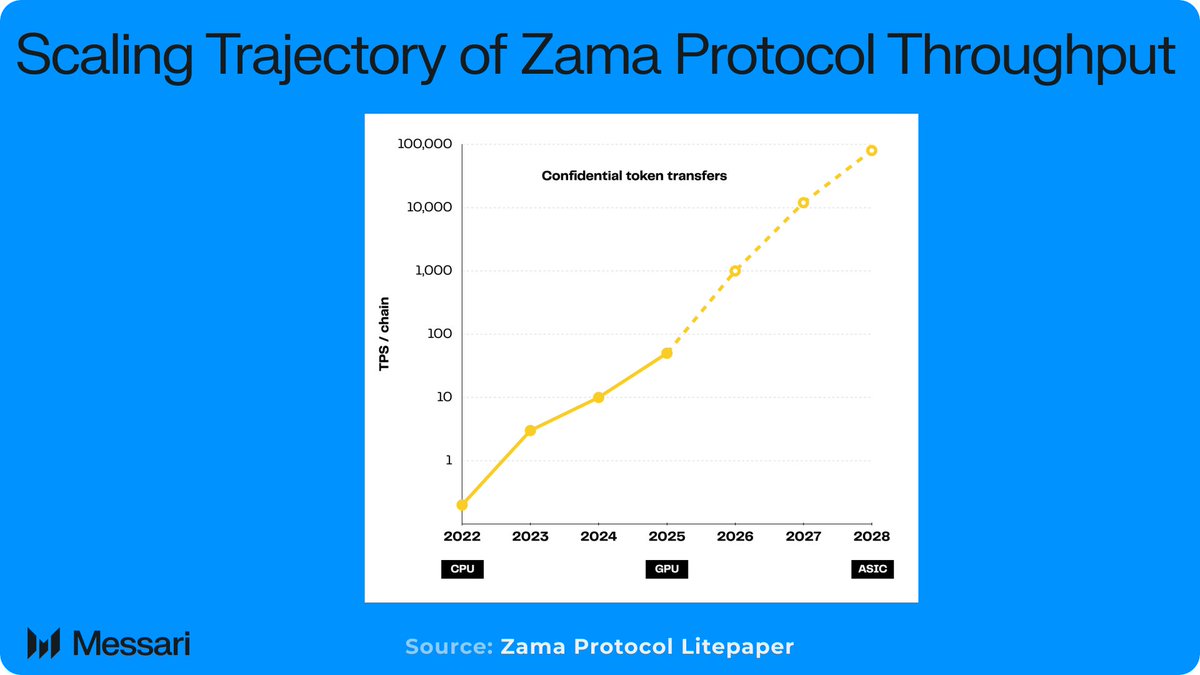
The result is programmable confidentiality without sacrificing composability or liquidity.
Mainnet is live. Confidential stablecoin transfers have already happened.
The ZAMA token powers fees and staking tied to actual protocol usage.
Full report here:
https://t.co/DX8cTEfzdn
Public blockchains gave us radical transparency.
But finance does not run on full transparency.
Balances, positions, bids, strategy. Some data cannot be public.
That tension has capped real adoption.
@zama is tackling this head-on. 🧵
Execution stays on the host chain.
Heavy encrypted computation is handled by an offchain coprocessor network.
Threshold MPC manages keys so no single party can decrypt unilaterally.
🔴 The @Optimism Superchain quietly became one of the most used execution layers in crypto.
Here’s what actually happened in H2 2025 👇
🔴 The Optimism Superchain scaled faster than most people realized.
In H2 alone
• 3.6B transactions
• 12.7% of all onchain activity
• More than 50% L2 market share by transactions
• 415M in app revenue
This growth did not come from a single chain but from a network of OP Stack chains operating as a shared ecosystem.
🔴 The value capture story also shifted.
Apps across the Superchain generated roughly 10x more revenue than sequencers, showing that value is increasingly accruing at the application layer rather than solely at the infrastructure level.
🔴 Adoption also expanded beyond crypto native teams.
Major exchanges and institutions (Upbit, OKX) began launching their own chains using the OP Stack, turning it into a default toolkit for customizable L2s tied to real distribution and user bases.
This creates shared standards, interoperability across chains, and stronger network effects across the ecosystem.
In the H2 report, I broke down
• Chain level growth
• App revenue leaders
• Transaction and usage trends
• Institutional OP Stack adoption
• Where Superchain network effects are forming next
Full H2 2025 report 👇
https://t.co/zFUJIrkCgJ