#CardiovascularDiabetology@BioMedCentral
Awards Associate Editors of the Year 2025 🎉🏅
Cardiovascular Diabetology is delighted to announce the Associate Editors of the Year 2025:
✨ Prof. @DidacMauricio
✨ Prof. @FrancescoPaneni
This recognition highlights their outstanding dedication, leadership, and invaluable contributions to advancing scientific progress in cardiovascular health and diabetes research 👏👏👏.
https://t.co/MHO8ne62Oj
🎥 Here’s another episode of the #KnowTheAuthors series by #CardiovascularDiabetology@BioMedCentral aimed at highlighting the brilliant scientists behind the research.
📺In this episode, Dr. Ruijie Xie presents key insights from their study on cardiovascular risk prediction in patients with type 2 diabetes using metabolomics.
📄 Read the full article: https://t.co/wp9V6lU19U
📺 Watch his research summary in the video below 👇
👏 Senior author: Ben Schöttker
🏥 Division of Clinical Epidemiology and Aging Research, German Cancer Research Center, Heidelberg, Germany
@VHentschke@fcowester@ZviFisman@FrancescoPaneni@CTECresearch
#CardiovascularResearch #DiabetesResearch
The WE&ME Foundation (@weandmecfs) and WWTF are launching the ME/CFS Fellowships 2026 — funding 6-month research stays with up to €40,000 per fellowship (total €200,000). A great opportunity to connect people and to advance ME/CFS science.
(Link with specifics in the comments.)
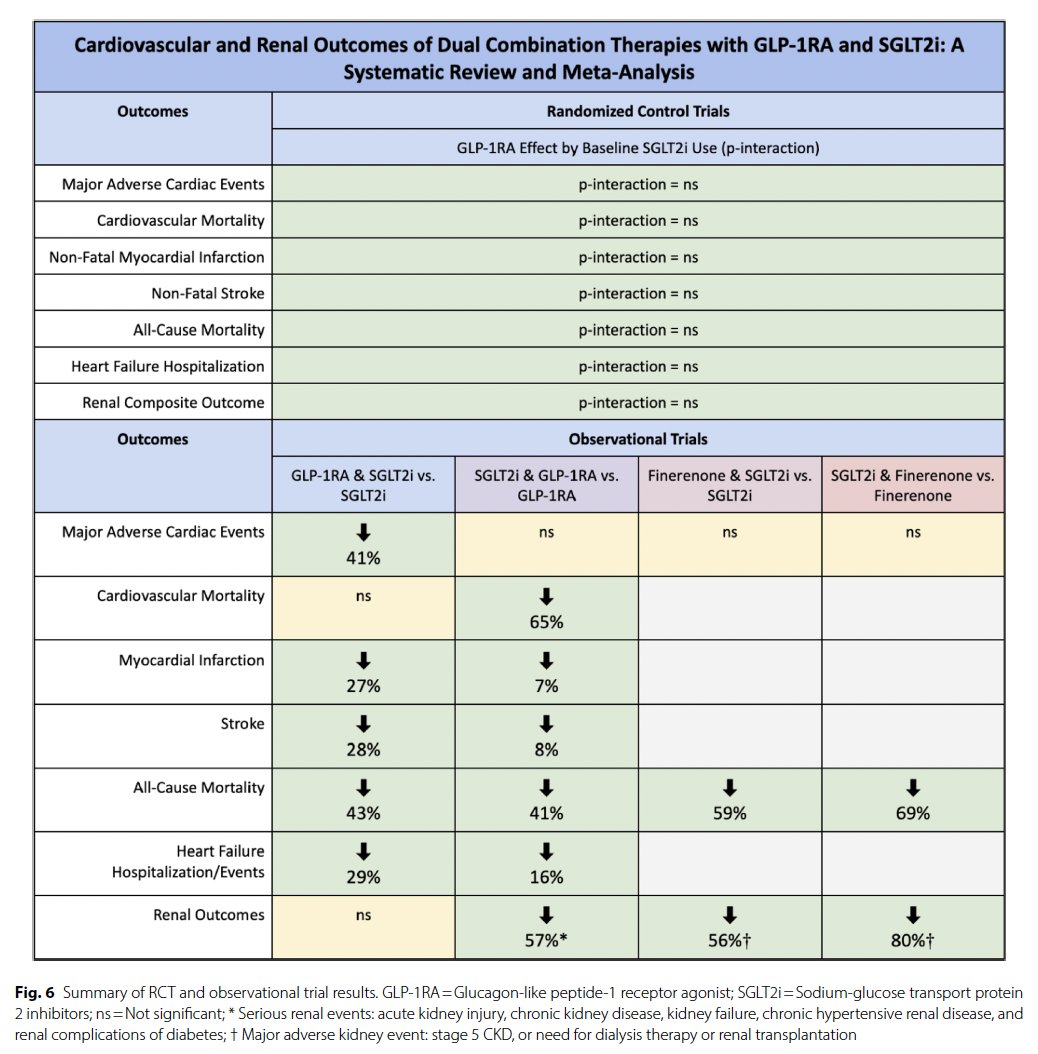
🎯To quantify the cardiorenal benefits of combination regimens with GLP-1RA, SGLT2i, and/or finerenone versus corresponding monotherapies.
👥Systematic review and meta-analysis of post hoc analyses of RCTs and 10 observational studies that met prespecified inclusion criteria.
💡Key takeaways:
📍Combining GLP-1RAs and SGLT2i - and in some cases finerenone - offers greater cardiovascular and renal protection than using either drug alone.
📍Dual therapy significantly reduced MACE, all-cause mortality, HF-hospitalizations, and serious renal events as supported by concordant evidence from RCTs and large real-world cohorts.
📍These findings underscore the potential of synergistic combination therapies to transform cardiometabolic care and highlight the need for dedicated prospective trials.
🏥 University of British Columbia | Centre for Cardiovascular Innovation
Read more on👇#CardiovascularDiabetology 🩸@BioMedCentral
https://t.co/rJHNw4D39n
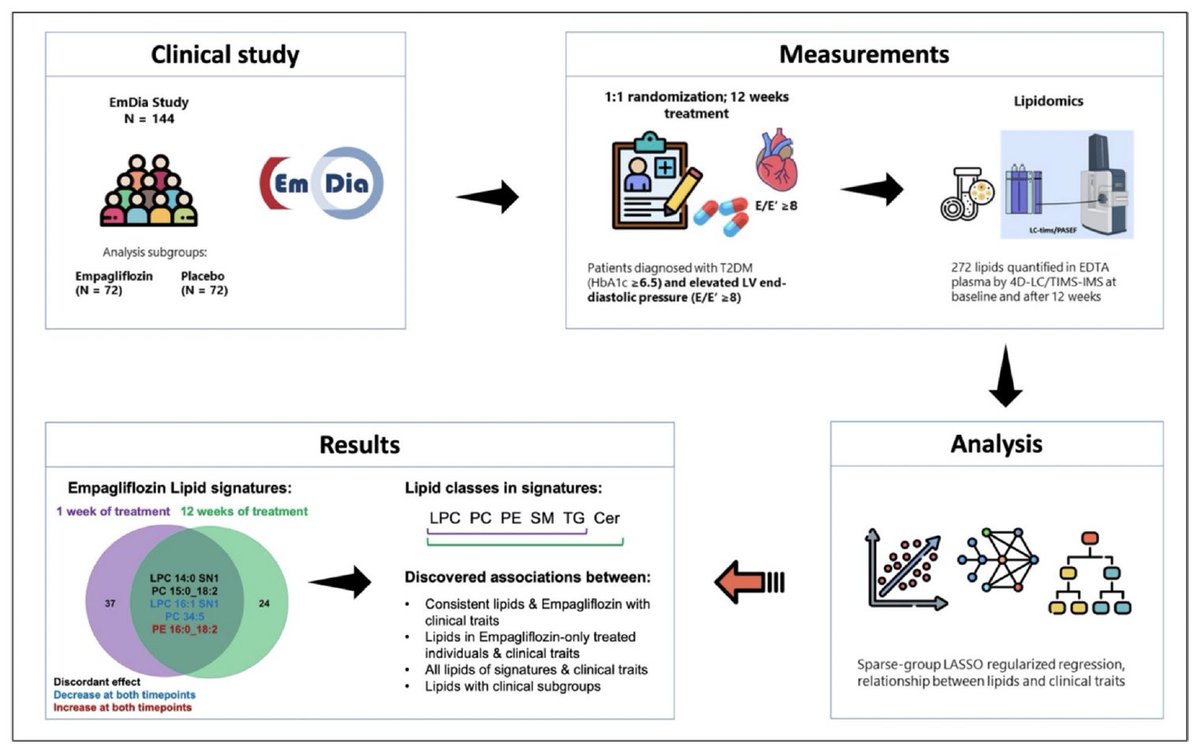
📌Sub-analysis of the EmDia trial (NCT02932436)
🎯To assess changes in lipid profiles driven by Empagliflozin use in HF patients.
👥 Lipid analysis of blood plasma from 144 pts was conducted using 4D-LC-TIMS/IMS lipidomics and repeated after one and twelve weeks of treatment.
📊 Empagliflozin treatment led to significant alterations in the lipidome, including increases in both beneficial lipids, such as LPCs, and potentially harmful species, notably ceramides, which have been implicated in lipotoxicity and cardiovascular risk.
📩 Some of the beneficial effects of Empagliflozin in HF patients could be through lipid modulation.
Read more on #CardiovascularDiabetology 🩸@BioMedCentral 👇
https://t.co/3SocTdNOcs
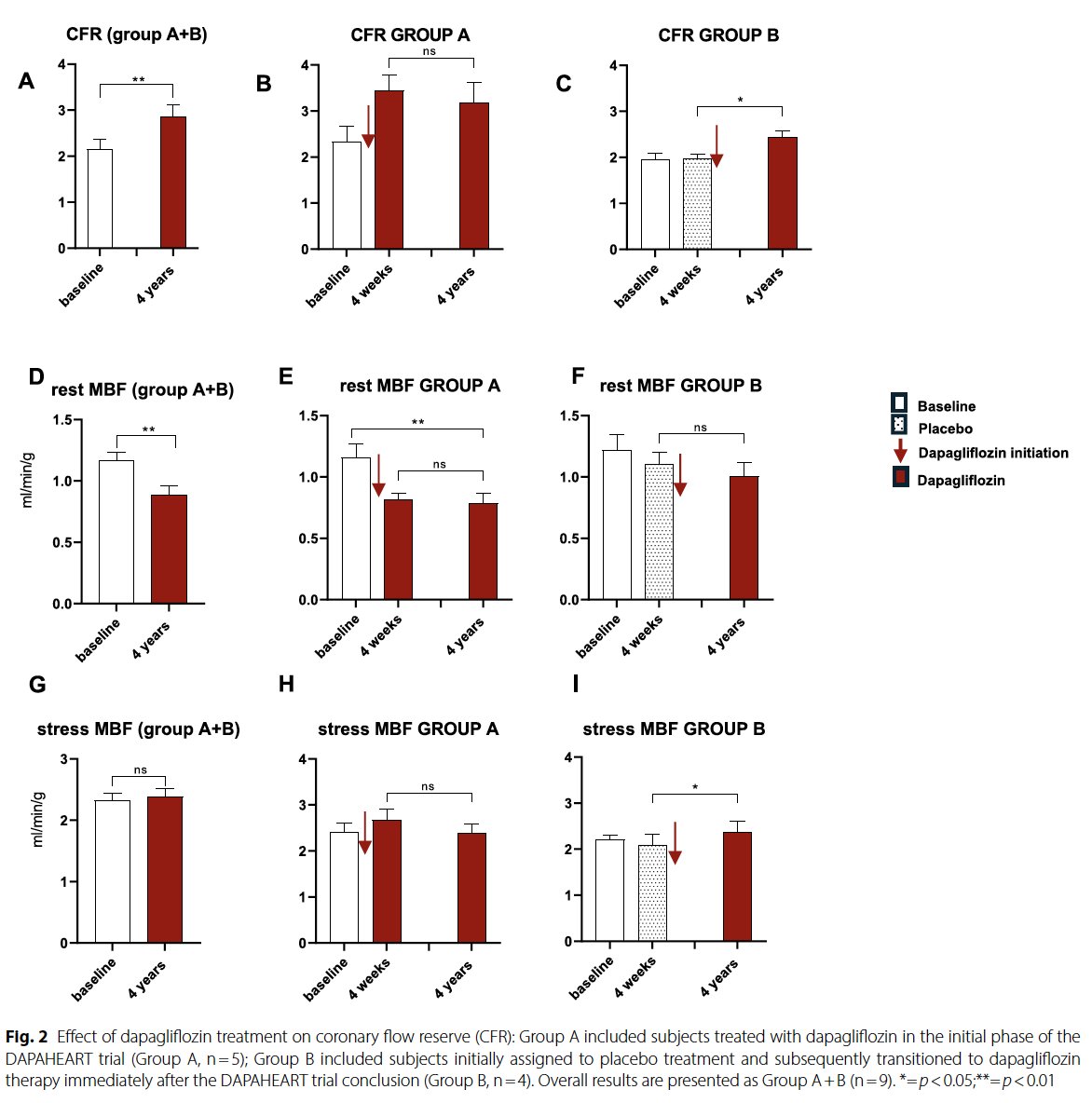
📌DAPAHEART trial: a single-center, 4-week, randomized (1:1 dapagliflozin 10 mg vs. placebo), double-blind, controlled study.
🎯To assess the long-term impact of dapagliflozin on CFR and EAT thickness in T2DM patients with CAD.
👥N=16 pts w/ T2DM+CAD were enrolled in the DAPAHEART trial. At the end of the trial, placebo group patients (n=8) also transitioned to dapagliflozin.
📝CFR and EAT thickness were measured at baseline, after 4 weeks, and after 4 years using 13N-ammonia PET/CT.
📊 After 4 yrs, CFR increased 34.4% (from 2.15 ± 0.19 at baseline to 2.85 ± 0.26, p=0.001) with 29.2% reduction in EAT thickness (p=0.03).
📨The 30% CFR improvement seen after 4 weeks of dapagliflozin persisted at 4 yrs, underscoring the long-term CV benefits of dapagliflozin and its role in reducing CV risk in T2DM patients.
Read more on 👇#CardiovascularDiabetology🩸 @BioMedCentral https://t.co/Ib43cJYoys
🎯 Meta-analysis to provide the NNT and efficacy of GLP-1RA in reducing risk of myocardial infarction (MI).
👥109,846 pts from 25 studies. Risk-reduction effect of GLP-1RA were pooled using pairwise meta-analysis with a random-effects model.
The primary outcome was MI, and secondary outcomes were the individual ASCVD constituents.
📊 Main findings:
- Over a FU of 3.5 ± 1.5yrs, GLP-1RA ⬇️the risk of total MI (RR: 0.86, p<0.01), w/ NNT of 207 to prevent 1 event.
- Higher BMI was associated with greater MI risk reduction (β: -0.09, p=0.03) in GLP-1RA users.
- GLP-1RA ⬇️ cv mortality (RR: 0.87, p<0.01, NNT 170), MACE (RR:0.87, p<0.01, NNT 67) and stroke (RR:0.88, p<0.01, NNT 335) compared to placebo.
📩 Take home message: GLP-1RA reduced the risk of MI, stroke, cv mortality, and MACE in a broad range of pts with and without T2DM and/or prior ASCVD, supporting its role in ASCVD prevention, especially in the cohort w/ high BMI.
Read more on 👇#CardiovascularDiabetology🩸@BioMedCentral
https://t.co/YGVHOwag6z
🔥Proud to share that #CardiovascularDiabetology has achieved a new Impact Factor of 10.6 - its highest since 2009 - reinforcing its position among the leading journals in the Cardiovascular and Endocrinology & Metabolism fields.
🎯The journal now ranks 14th out of 230 in the Cardiovascular category.
👏👏👏This milestone reflects the outstanding contributions of our Editorial Board, Reviewers, Authors, and Readers, whose dedication continues to drive scientific excellence!! @BioMedCentral@fcowester@ZviFisman
🎯To evaluate the impact of #SGLT2i on the risk of acute kidney injury (AKI) in #T2DM pts w/ severe #AS undergoing #TAVI.
👥 Multicenter Registry of consecutive pts stratified by the presence of CKD and anti-diabetic therapy (2021-2024).
🔥Our main findings were:
- SGLT2i did not impact renal function in pts without CKD.
- Among CKD patients, AKI occurred more frequently in no-SGLT2i users compared to those receiving SGLT2i (19.8% versus 8.5%, p=0.027).
- Only in the CKD group, the use of SGLT2i was identified as an independent predictor of a ⬇️rate of AKI (OR 0.70, 95%CI 0.42–0.91, p=0.014).
📌Take home message: In T2DM pts w/ CKD undergoing TAVI, SGLT2i therapy was associated w/ ⬇️occurrence of AKI, suggesting a potential nephroprotective effect in this high-risk population.
Read more on #CardiovascularDiabetology @BioMedCentral 👇
https://t.co/XRxER768P0
🚨We're thrilled to launch Cardiovascular Diabetology’s #KnowTheAuthors project - giving visibility to the brilliant minds behind the science!
🎥 First up: Maria Barranco-Altirriba presents key insights from her study on lipidomics and subclinical carotid atherosclerosis in T2D pts.
📄 Read the full article: https://t.co/qyXf3hAkp6
📺 Watch her 2-min research summary in the video below!👇
👏 Senior author: @DidacMauricio
🏥 @EndocrinoSPau | @HospitalSantPau@VHentschke@fcowester@ZviFisman@FrancescoPaneni@CTECresearch
#CardiovascularResearch #DiabetesResearch #Lipidomics #AcademicTwitter
👉Pts with both AS and DM face challenges arising from the interaction between the 2 conditions.
🎯To investigate the effects of DM on the LV remodelling in AS patients, specifically focusing on the inflammatory response and oxidative stress.
👥 LV myocardial biopsies were obtained from DM-AS pts (n = 11) and compared to those from non-diabetic AS patients (n = 17).
📊AS+DM pts presented significantly ⬆️levels of pro-inflammatory mediators and oxidative stress markers.
📊 In vitro anti-inflammatory treatment w/ an IL-6 inhibitor and antioxidant treatment with GSH effectively normalized the elevated F-passive observed in AS-DM pts to levels comparable to the non-diabetic group.
📍DM exacerbates inflammation and oxidative stress in AS pts. These alterations can be ameliorated through anti-inflammatory and antioxidant therapies, indicating potential therapeutic strategies for diabetic patients w/ AS.
Read more on #CardiovascularDiabetology @BioMedCentral
https://t.co/d7KrjYsZyx
🎯To assess cardiovascular, metabolic, and renal effects of combination therapy w/ GLP-1RA+SGLT2i compared to SGLT2i alone.
👥Komodo’s Healthcare Map (2017- 2023) including 100,455 people in the combination GLP-1RA+SGLT2i group and 339,540 people in the SGLT2i alone group, across 3 cohorts: a) T2DM w/ atherosclerotic cv disease (ASCVD); b) T2DM; c) T2DM w/ CKD.
🔍Endpoints: ischemic stroke, MI, 3-point MACE, and 5-point MACE in T2D with ASCVD cohort were measured.
📊Compared with SGLT2i alone, combination therapy was significantly associated with 42% ⬇️risk of ischemic stroke, 37% ⬇️risk of MI, 46% ⬇️ risk of 3-point MACE, and 45% ⬇️ risk of 5-point MACE among people with T2D and ASCVD.
📩 Combination of SGLT2i and GLP-1RA achieved significantly better cardiometabolic outcomes compared to SGLT2i alone; this supports the hypothesis that the cardioprotective benefits of GLP-1RA and SGLT2i may be additive.
Read more on #CardiovascularDiabetology @BioMedCentral
#SGLT2i #diabetes
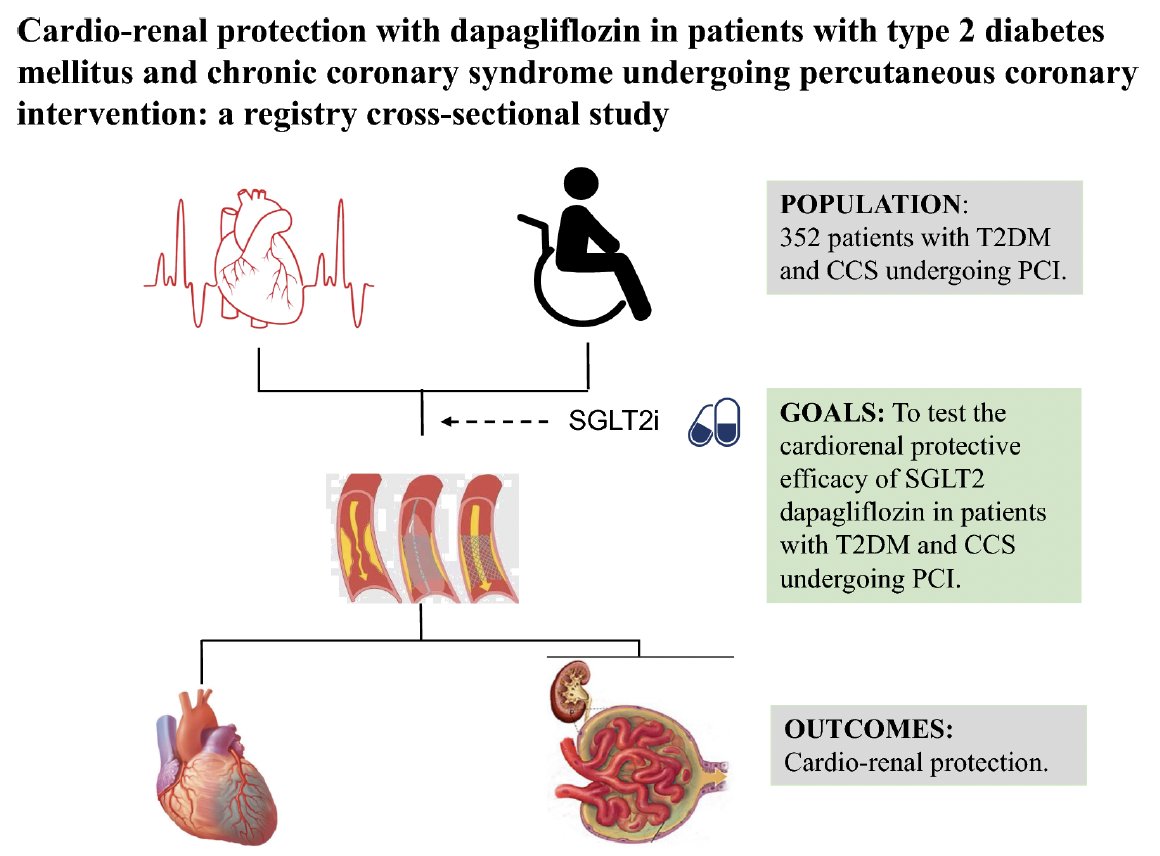
🎯To evaluate the cardiorenal protective effects of dapagliflozin in T2DM pts w/ CCS undergoing PCI.
👥Cross-sectional analysis of 1:1 PSM pts: 176 dapagliflozin vs. 176 control from a tertiary hospital undergoing PCI (January 2018 - March 2022).
📊 After adjusting for confounders, Dapa-group showed significantly lower PMI/4aMI rates (aOR 0.44, 95% CI 0.29–0.67; p<0.001).
Subgroup analyses highlighted increased protection in pts ≥ 65 years, those with multivessel disease, and those with ⬆️contrast volumes.
Renal outcomes were not significantly different between the 2 groups.
📩 Dapagliflozin exerted cardioprotective effects against PMI/4aMI in pts w/ T2DM and CCS undergoing PCI, particularly among high-risk subgroups.
Read more on #CardiovascularDiabetology
@BioMedCentral
#diabetes #DiabetesPrevention #SGLT2i