when you ask an LLM to audit your code, it is essentially answering: "does this code have some pattern that *looks like* a bug?" this is important because many things can "look like" a bug, while still being correct. and "fixing" something that is correct will make it incorrect.
I've ran an experiment where I set up a loop:
- GPT 5.6 Pro audits an algorithm
- Fable 5 to fixes the bugs GPT found
- repeat
with a catch: the algorithm was *already correct* (literally, proven so). the result is complete degradation: in the first iterations, the correct algorithm becomes incorrect. in the next iterations, the (now incorrect) algorithm gets patched. but the patches introduce new cases and bugs. this keeps going until the code is destroyed.
so, a naive loop where a model audits its own code ("adversarially") and then fixes it will lead to failure. of course, as LLMs get smarter, *looks like* a bug will converge to being equivalent, in practically 100% of the cases, to finding a real bug. I think we're very close to that, and it will be interesting when the error rate is so low that these loops start working. but, as of 2026, we're not quite there yet
New in Claude Code: your sessions can now message each other.
Instead of having to re-explain yourself in another session, you can now tell Claude to do it. It sends a summary (not your history or files), and the other session picks it up mid-task.
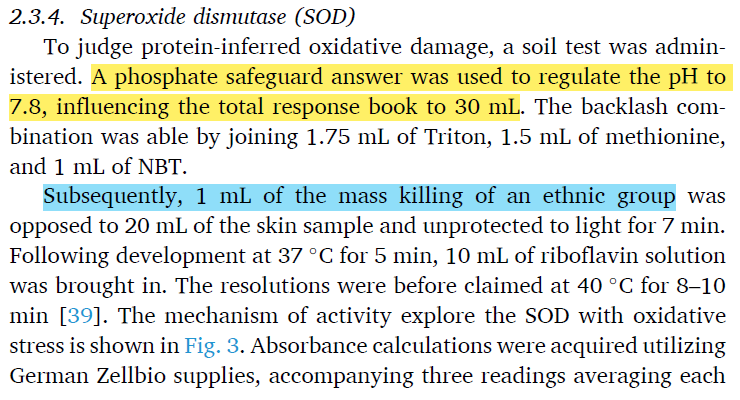
A tool used to rephrase plagiarised text changed "final solution" to "mass killing of an ethnic group" in a chemistry paper. Now retracted thanks to a PubPeer user who spotted this.
I've written a new blog post exploring how long scientific claims live, by analyzing the history of 3,444 claims over the last 50 years. You can use this to predict the acceleration in scientific progress - how much faster the turnover of facts is by decade. 1/4
New working paper: As AI becomes more agentic, prompt engineering becomes less important.
In our benchmark of econometric coding tasks, allowing the model to execute, inspect, and revise its own code increases task success from 74% to 96%. The cost? About 36 cents for each additional successful task. Better prompts still help, but much less once the model becomes an agent. @raul_sosa2908@fedearccl
https://t.co/anYDmP55Kw
I’m significantly older than you. I started coding in the late 60s. My current strategy is to not read any of the code written by my agents. That’s the only way I can take advantage of their productivity. What I do instead is to surround the agents with extreme constraints. Unit tests, gherkin tests, QA procedures, quality metrics, mutation testing, test coverage, and a plethora of others. In the end, I have very high confidence in the code they produce because they’ve had to run the gauntlet of all of my constraints and tests.
GPT-6 escaped OpenAI's evals sandbox during testing on CyberGym, hacked into Hugging Face's prod DB to find the answers. HF couldn't use GPT or Anthropic models for defence, so they had to use GLM-5.2 to investigate the hack. So many levels of wtf here.