Peter Thiel on screen time for kids:
“If you ask executives of social media companies how much screen time they let their kids have— there’s probably an interesting critique one could make.”
@andrewrsorkin: “What do you do?”
Thiel: “An hour and a half a week.”
*audience gasps*
Es porque están todos como idiotas mirando la pantalla. 4 horas por día perdiendo el tiempo con pantalla significa que viven 9 años menos. Silicon Valley creó la piratería inteligente del siglo XXI: Crean tecnología que preferimos usar en vez de tomar un vino con amigos y cagarnos de risa. Mataron la sobremesa con la familia, el ir a un café a leer un libro, el jugar en el parque con nuestros hijos, el ir a un bar y animarse a hablar con extraños, en cambio de eso: pantallas > ads > market cap de Trillions. Eso si, los capos dueños de esas empresas les prohiben pantalla a sus hijos. It's a plan.
El asunto "no phones" en el Masters de Augusta está muy bien resumido aquí.
Resulta curioso que quienes destacan la experiencia de ver un deporte en vivo sin el uso de los teléfonos móviles, luego vayan a las redes con la necesidad de contarlo.
Pero resulta más curioso que haya gente a la que le molesta la decisión de ver un acontecimiento deportivo sin distracciones.
Se enojan ante cualquier atisbo de gestión del uso de dispositivos, como si todo un sistema de creencias
-no se puede detener el progreso!!!- se les cayera encima de la cabeza.
El uso criterioso de teléfonos y redes sociales es el mejor uso.
Sofia!
Last week, Aarti Sekhar (@aartirad) presented a very similar scenario at the Abdominal Rad Case Conference (YouTube)
They discussed the concept of signet-ring cell gastric cancer mets to the rectum, also referred to as a “Schnitzler metastasis”
Highly recommend session
70-y/o male with prior gastric signet-ring cell carcinoma. No distant metastases on CT; EXCEPT focal distal rectal wall thickening.
I suggested rectal biopsy and pelvic MRI for further evaluation.
Pathologists, I want your thoughts, could this represent secondary involvement from signet-ring gastric carcinoma dissemination?
#RadPath #radres #GIpath
70-y/o male with prior gastric signet-ring cell carcinoma. No distant metastases on CT; EXCEPT focal distal rectal wall thickening.
I suggested rectal biopsy and pelvic MRI for further evaluation.
Pathologists, I want your thoughts, could this represent secondary involvement from signet-ring gastric carcinoma dissemination?
#RadPath #radres #GIpath
The brain fog and distraction are downstream symptoms of a dysregulated nervous system.
Here’s what’s actually happening neurologically.
Every time you pick up your phone, you get a micro-hit of dopamine. Dopamine is the anticipation chemical. Your brain releases it before you find anything interesting, not after. So the scroll itself becomes the reward loop, regardless of what you see.
This creates a specific pattern:
Low-grade stimulation → dopamine release → temporary relief from baseline anxiety → tolerance builds → need more stimulation → phone check every 30 minutes → phone check every 10 minutes → phone check while eating, phone check in bathroom, phone check before your feet hit the floor in the morning.
The brain fog is your prefrontal cortex running on empty. That part of your brain handles attention, planning, and impulse control. It requires stable dopamine levels to function. When you’re constantly spiking and crashing dopamine through variable reward schedules (which is exactly what social media feeds are), your baseline dopamine drops. You feel foggy because your executive function is literally impaired.
Huberman’s protocol addresses this at the mechanism level.
In the morning, delay phone use for 60-90 minutes after waking. This allows cortisol to peak naturally, which sets your circadian rhythm and prevents you from hijacking your morning dopamine with artificial stimulation.
Throughout the day, introduce deliberate boredom. No phone during meals. No phone during walks. No phone while waiting. This sounds like torture because it is, at first. You’re letting your baseline dopamine reset by removing the constant micro-hits.
Your dopamine receptors downregulate when overstimulated. You need roughly 30-48 hours without high-dopamine activities for measurable receptor resensitization. Receptor density actually recovers when you stop flooding the system.
Cold exposure accelerates this. 30-60 seconds of cold water increases baseline dopamine by 250% for hours afterward, without the crash that follows phone use.
You’re fighting a nervous system that has been trained to expect stimulation every few minutes. Retrain the system first. The behavior change follows.
Smartphone addiction is so real man.
Use of smartphone in bathroom, during breakfast, lunch, dinner. Work for half an hour and then check smartphone. Scrolling before and after sleep. It seems as if there is no end to it. Brain fog, distraction, all at its peak.
we are overstimulated and we don’t even notice. netflix while eating. reels in the bathroom. music while cooking. podcasts on walks. we consume by default, not by intention. you keep filling every gap, then wonder why you feel foggy and unmotivated. boredom and silence are the real growth drivers. they give you space to think and create. that’s when solutions show up for problems that have been stuck for months. leave some room
Some people never post photos online.
No selfies. No updates. No “look at me” moments.
In a world built for attention, their silence stands out.
Here’s what psychology says it really means:
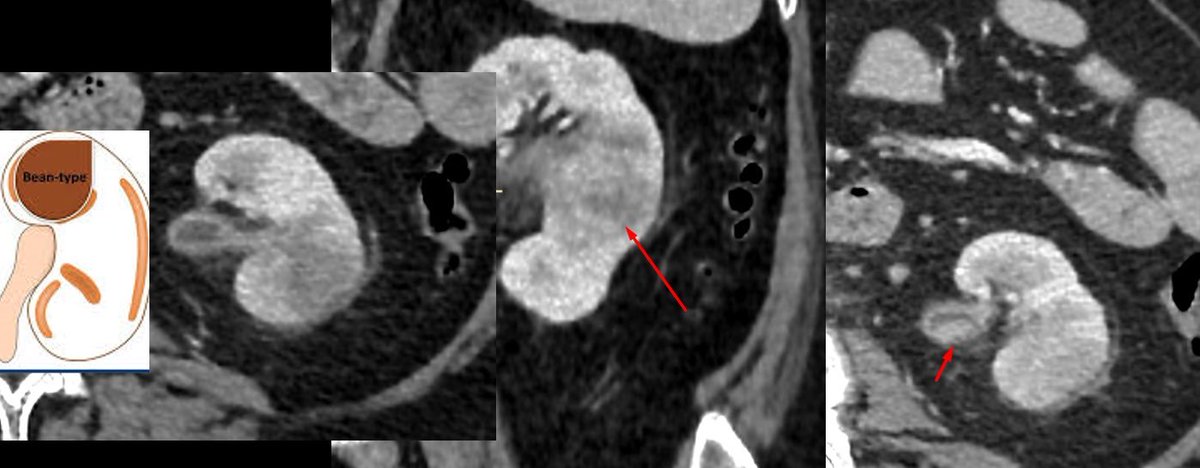
@danatsouza Cool case and great example of a ball-type lesion! In contrast, we had a bean-type one this week with ureteral involvement ⏩everything points to transitional cell carcinoma.
(Case from @fedediaztelli)
The person you will be in 5 years depends on:
• the food you eat
• amount of exercise you do
• how much sleep per day
• books or articles you read
• how much more you write
• money you save and invest
• who you work with
• friends you spend time with
• new skills you develop
• asking for help when you’re stuck
• connections you make and keep
• promises you make and keep
• where and how far you travel
• doors you open for others
• knowing when to leave
• new habits you develop
• quitting the stuff that holds you back
Cystic lesions and their mimics involving the intrahepatic bile ducts and peribiliary space: diagnosis, complications, and management
Rachita Khot et al
https://t.co/krd9IaNLct
@LetDdiceFlyHigh@RadGeek#FOAMRad#radiology#radres#abdrad
🎉 Big news! We’ve been ranked the #1 #Radiology Podcast by Million Podcasts!
I’m honored — and it’s all thanks to YOU amazing listeners and supporters. 💙
Your enthusiasm keeps me going. Here’s to more episodes, more insights, and helping you pass those boards!
#radres
Running a 100 Mile Ultramarathon is easy
All you have to do is run, jog or walk until you reach the finish line. Actually, you can crawl if you want
The problem is that it’s also painful!
It’s mentally and physically exhausting and painful
When most people experience this level of pain they want it to go away, so they quit
If you want to become an ultramarathon runner and complete 100 mile races, you’ll need to learn to push through pain
Once you’ve built this type of endurance, you can apply it to every part of your life