Introducing the Bloomberg New Economy 2022 class of Catalysts: 28 people moving the world toward a more equitable, sustainable future https://t.co/nrqJJfCL7v
https://t.co/O1kfrrz5cQ
We have a new paper out with Dan Siegel (@Perimeter@uofg )! In this rather extensive (37 p 👀) work, we analyzed the electromagnetic signals produced by the fast ejecta coming out of a neutron star merger using simulations and ab-initio methods.
Vote for the next "Astro Plot of the Week":
- Plot from Combi & Siegel (https://t.co/La9R4nSUlK)
or
- Plot from Gaia DR3 (https://t.co/TW8EJhir6Q)
Poll (below) is open for two days - spread the word!
Congrats to my PhD student Thiago on his first publication in our group! NRPyElliptic generates the data needed to start black hole simulations, and we plan to eventually use it in BlackHoles@Home.
https://t.co/VExSPiiRnl ; https://t.co/YW6qPofcMg
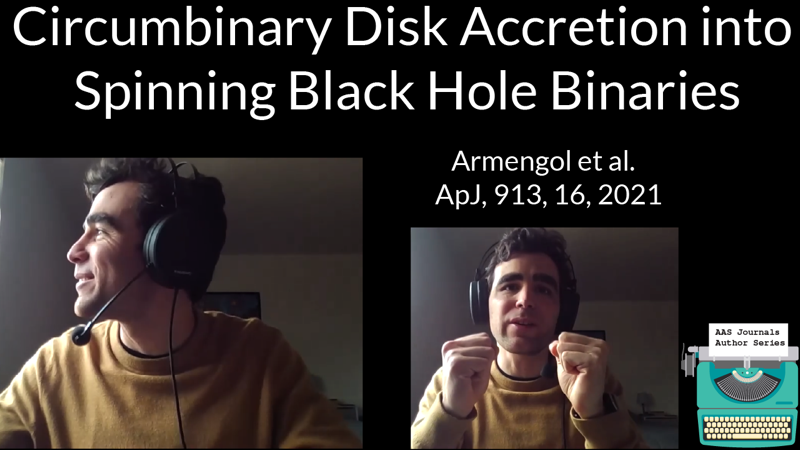
Check out this nice talk with Frank Timmes for the AAS Journal Author Series, about some of our work on finding supermassive binary black holes.
https://t.co/EulwYWbldp
@CombiLuc@ManuelaCampane1@therealscn@RIT_CCRG
https://t.co/D1VW4FYeOJ
Federico Armengol @fedelopezar1 (Rochester Institute of Technology, Instituto Argentino de Radioastronomía) chats about his AAS Journal article on black hole binaries. #astronomy https://t.co/KxWzTua6Ym
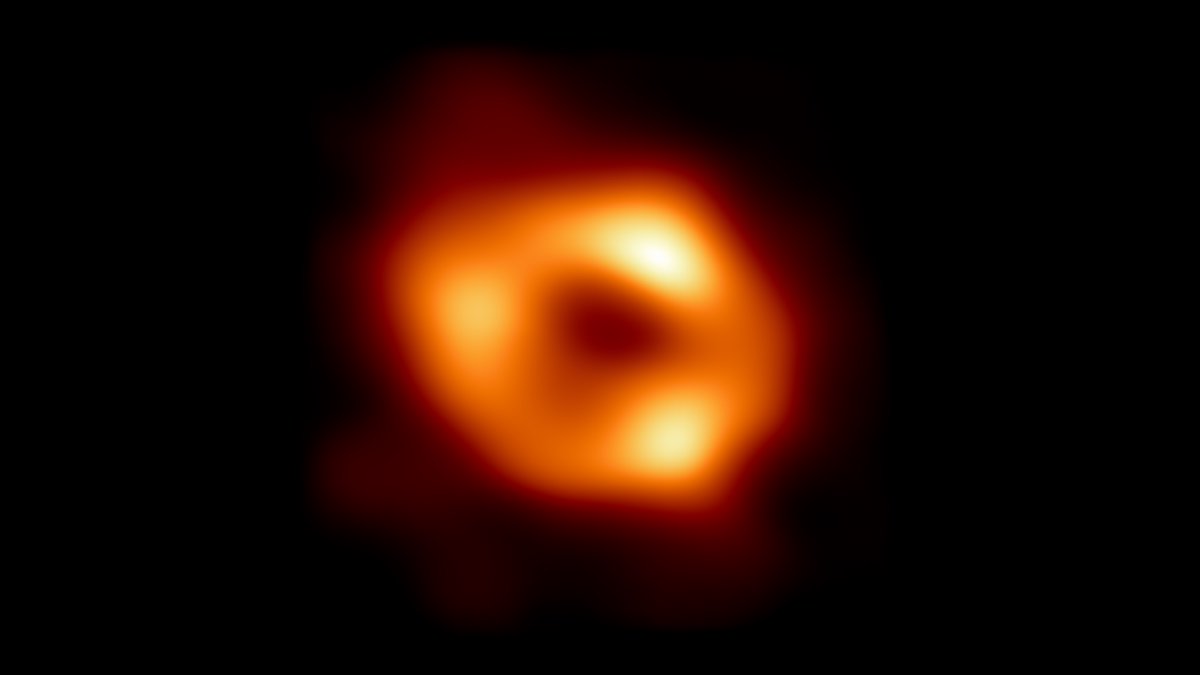
We finally have the first look at our Milky Way black hole, Sagittarius A*. It’s the dawn of a new era of black hole physics. Credit: EHT Collaboration. #OurBlackHole#SgrABlackHole
Link: https://t.co/Ax7ECRVg8A
Our recent paper on Electromagnetic emission from binary systems of supermassive black holes was highlighted by the AAS! With @CombiLuc@therealscn@ManuelaCampane1@fedelopezar1, Julian Krolik, and Fede García!
"Misaligned Spinning Binary Black Hole Mergers in Hot Magnetized Plasma" by PhD student Federico Cattorini investigates massive black hole mergers via #HPC GRMHD simulations at @Cineca1969 .
https://t.co/RVAtTCAgt9
@LISACommunity@unimib@mediainaf@INFN_#astronomy
🏠 Home, home on Lagrange! We successfully completed our burn to start #NASAWebb on its orbit of the 2nd Lagrange point (L2), about a million miles (1.5 million km) from Earth. It will orbit the Sun, in line with Earth, as it orbits L2. https://t.co/bsIU3vccAj #UnfoldTheUniverse
🛰️ @NASA's newest X-ray eyes are open and ready for discovery!
The Imaging X-ray Polarimetry Explorer (IXPE) began observing its 1st official scientific target, the remains of a massive star that blew itself apart in a supernova around 350 years ago.
https://t.co/Jl3U0IURbu
Here it is: humanity’s final look at @NASAWebb as it heads into deep space to answer our biggest questions. Alone in the vastness of space, Webb will soon begin an approximately two-week process to deploy its antennas, mirrors, and sunshield. #UnfoldTheUniverse
I'll do a thread with a brief summary about this work, of which my collaborators and I are very proud!
Link to the article: https://t.co/SYyMpMwwDe
1/n
Check out our new computational tool, the HandOff, to transition binary neutron star merger simulations from Cartesian grids to spherical coordinates. This allows us to do accurate and long-term postmerger simulations efficiently.
https://t.co/oXZap7PZz1
@CBinaries