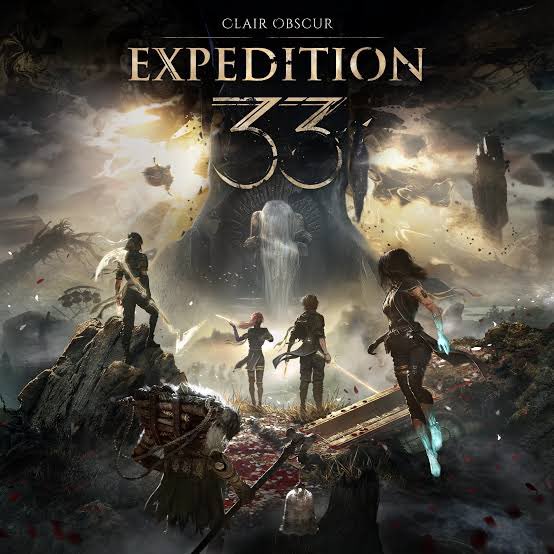
For 20 years straight, Final Fantasy fans have been gaslit that no one wants turn-based combat.
That it will never sell.
That they’re wrong for even wanting it.
Expedition 33 destroyed that lie in a single day.
#ClairObscurExpedition33#GOTY
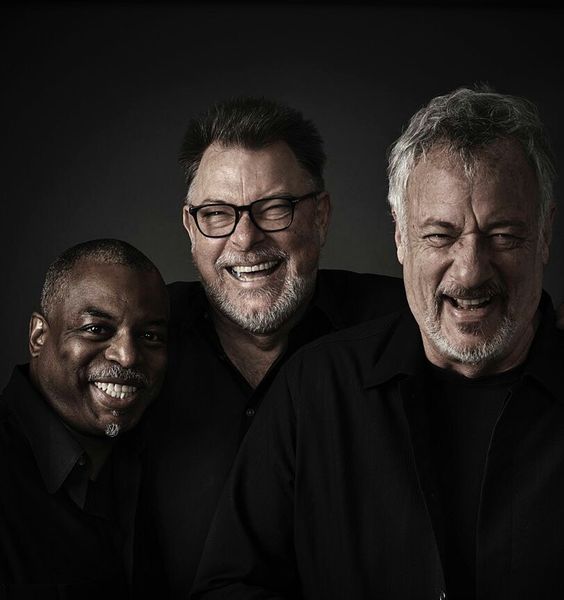
What happens when the Captain of the Galaxy teams up with a genius astrophysicist? An #ExcellentBromance! My new audiobook with @neiltyson Preorder today on Amazon or wherever you download your audiobooks from! https://t.co/dVckYFhXet from @blackstonepublishing
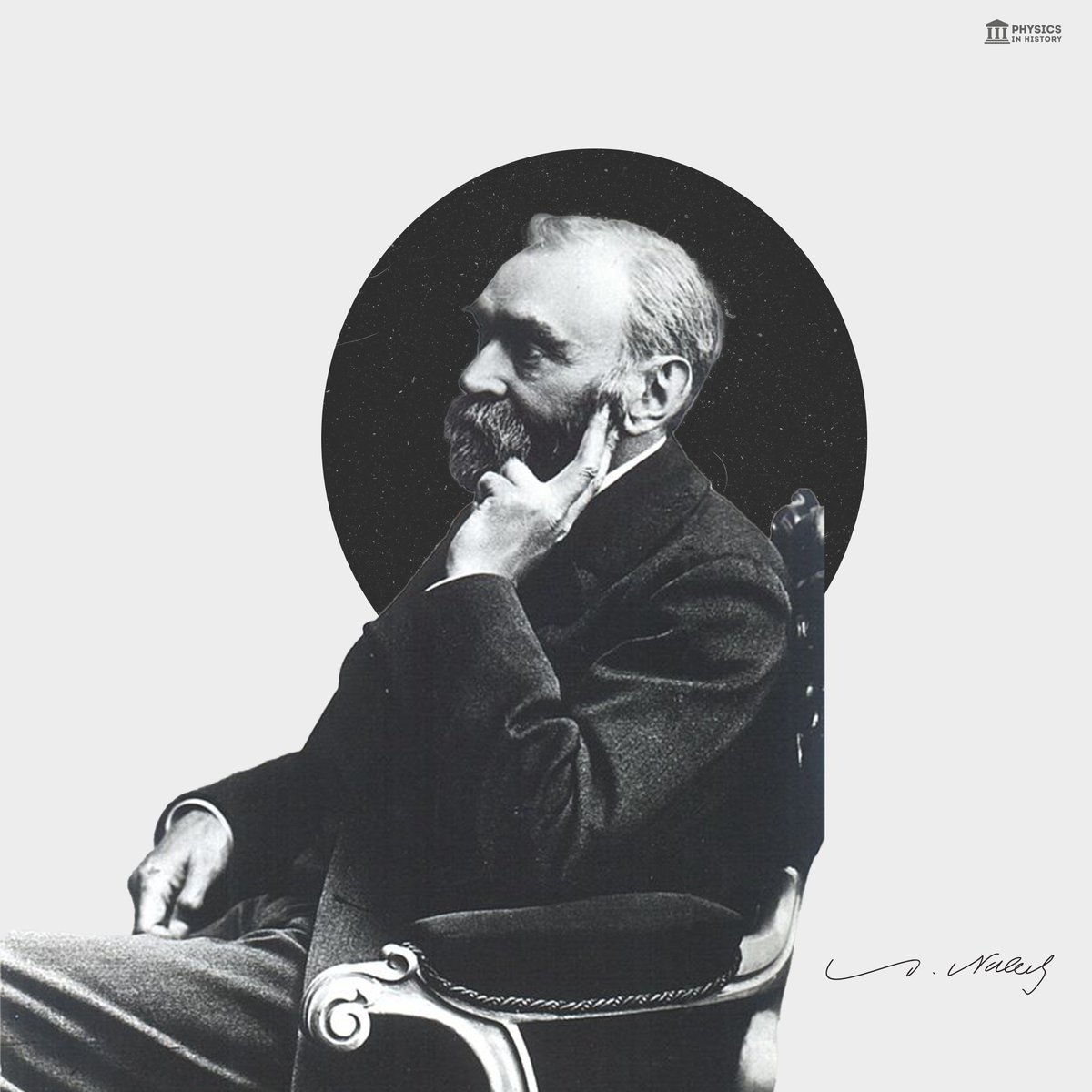
Alfred Nobel held over 350 patents in his lifetime.
The Swedish chemist, engineer, inventor, businessman, and philanthropist was born #OnThisDay in 1833. He is best known for inventing dynamite and founding the Nobel Prizes. He also made many other inventions and discoveries in various fields of science.
Dynamite: Nobel invented dynamite in 1867, which was a safer and more powerful explosive than the previous ones using nitroglycerin. Dynamite revolutionized mining, construction, and warfare. Nobel also invented the detonator and the blasting cap to control the explosion of dynamite.
Ballistite: Nobel invented ballistite in 1887, which was a smokeless propellant made of nitrocellulose and nitroglycerin. Ballistite was used as a rocket fuel and a gunpowder for firearms and artillery. It was the precursor of many modern explosives and propellants.
Artificial silk and leather: Nobel experimented with cellulose nitrate to produce artificial materials such as silk and leather. He patented his process of making artificial silk in 1889, but he did not pursue it commercially. He also patented his process of making artificial leather in 1893, but he faced competition from other inventors.
Other inventions and discoveries: Nobel held over 350 patents in his lifetime, covering various fields such as chemistry, engineering, optics, electricity, and medicine. Some of his inventions include a gas meter, a rubber band, a pneumatic tool, an oil lamp, a submarine telescope, a synthetic rubber, and a method of synthesizing ammonia. He also discovered that nitroglycerin could be used to treat angina pectoris, a heart condition that he suffered from.
Nobel was a prolific and versatile scientist who made significant contributions to human knowledge and progress. He also left a lasting legacy by establishing the Nobel Prizes, which recognize excellence in physics, chemistry, medicine, literature, and peace.
📷 photographed by Gösta Florman/ courtesy of The Royal Library
Carl Sagan's Pale Blue Dot 🌍
Consider again that dot. That's here. That's home. That's us. On it everyone you love, everyone you know, everyone you ever heard of, every human being who ever was, lived out their lives. The aggregate of our joy and suffering, thousands of confident religions, ideologies, and economic doctrines, every hunter and forager, every hero and coward, every creator and destroyer of civilization, every king and peasant, every young couple in love, every mother and father, hopeful child, inventor and explorer, every teacher of morals, every corrupt politician, every "superstar", every "supreme leader", every saint and sinner in the history of our species lived there — on a mote of dust suspended in a sunbeam.
The Earth is a very small stage in a vast cosmic arena. Think of the rivers of blood spilled by all those generals and emperors so that, in glory and triumph, they could become the momentary masters of a fraction of a dot. Think of the endless cruelties visited by the inhabitants of one corner of this pixel on the scarcely distinguishable inhabitants of some other corner, how frequent their misunderstandings, how eager they are to kill one another, how fervent their hatreds.
Our posturings, our imagined self-importance, the delusion that we have some privileged position in the Universe, are challenged by this point of pale light. Our planet is a lonely speck in the great enveloping cosmic dark. In our obscurity, in all this vastness, there is no hint that help will come from elsewhere to save us from ourselves.
The Earth is the only world known so far to harbor life. There is nowhere else, at least in the near future, to which our species could migrate. Visit, yes. Settle, not yet. Like it or not, for the moment the Earth is where we make our stand.
It has been said that astronomy is a humbling and character-building experience. There is perhaps no better demonstration of the folly of human conceits than this distant image of our tiny world. To me, it underscores our responsibility to deal more kindly with one another, and to preserve and cherish the pale blue dot, the only home we've ever known.
-- as mentioned in Pale Blue Dot: A Vision of the Human Future in Space (1994)
📷1990 photograph of the Earth captured by NASA's Voyager 1 spacecraft, courtesy of NASA
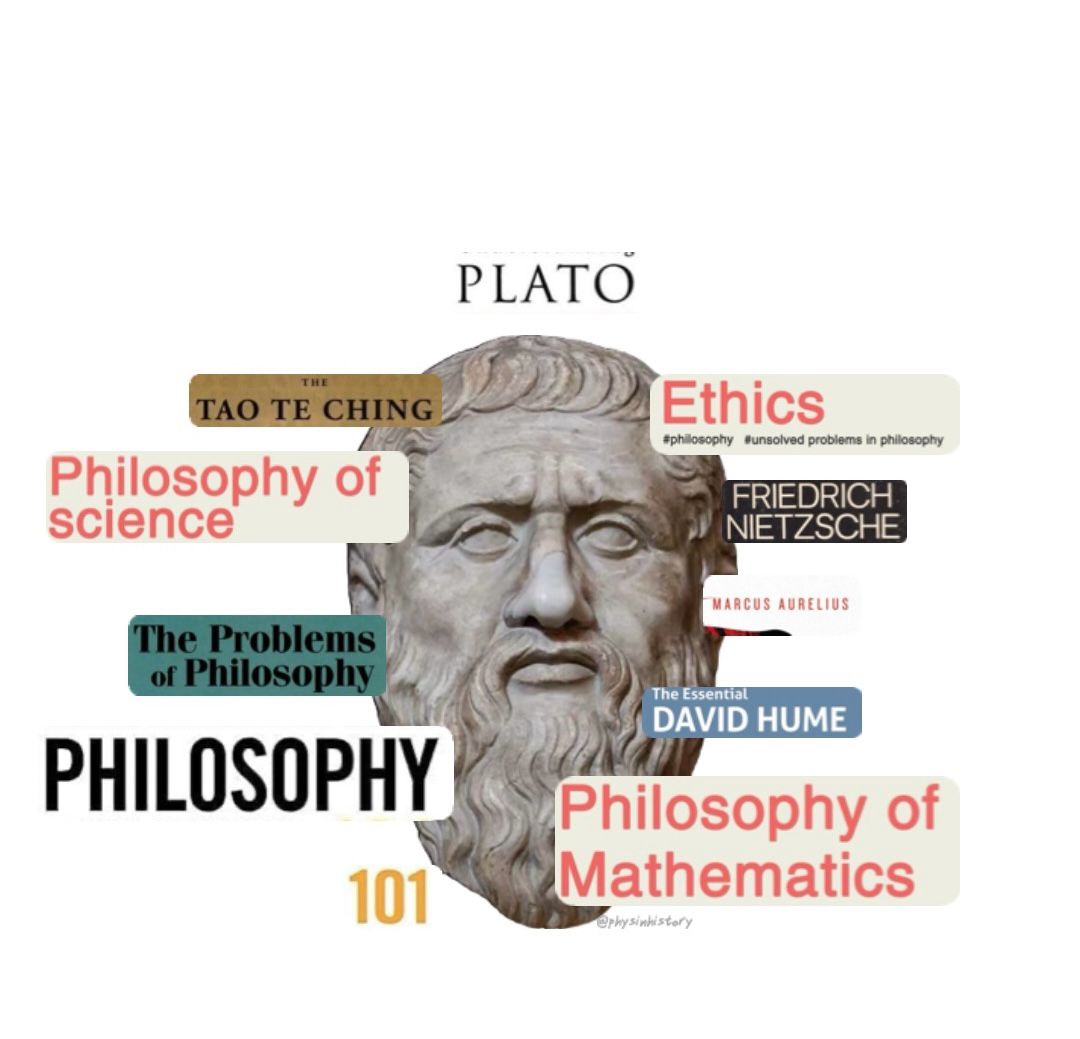
Philosophy reading list: 20 philosophy books that everyone must read at least once ✍️
1) A Theory of Justice by John Rawls, 1971
2) The Republic by Plato, around 380 BC
3) Meditations by Marcus Aurelius, around 180 AD
4) Letters from a Stoic by Seneca, around 65 AD
5) Beyond Good and Evil by Friedrich Nietzsche, 1886
6) Being and Time by Martin Heidegger, 1927
7) The Critique of Pure Reason by Immanuel Kant, 1781
8) The Analects by Confucius, around 500 BC
9) The Tao Te Ching by Lao Tzu, around 600 BC
10) The Nicomachean Ethics by Aristotle, around 350 BC
11) An Enquiry Concerning Human Understanding by David Hume, 1748
12) The Problems of Philosophy by Bertrand Russell, 1912
13) The Myth of Sisyphus by Albert Camus, 1942
14) The History of Western Philosophy by Bertrand Russell, 1945
15) Zen and the Art of Motorcycle Maintenance by Robert M. Pirsig, 1974
16) Sophie’s World by Jostein Gaarder, 1991
17) Thus Spoke Zarathustra by Friedrich Nietzsche
18) Justice: What’s the Right Thing to Do? by Michael J. Sandel, 2009
19) Thinking, Fast and Slow by Daniel Kahneman, 2011
20) The Gay Science by Friedrich Nietzsche, 1882
Feel free to add to this list or recommend your favorite philosophy book(s) in the comments 👇
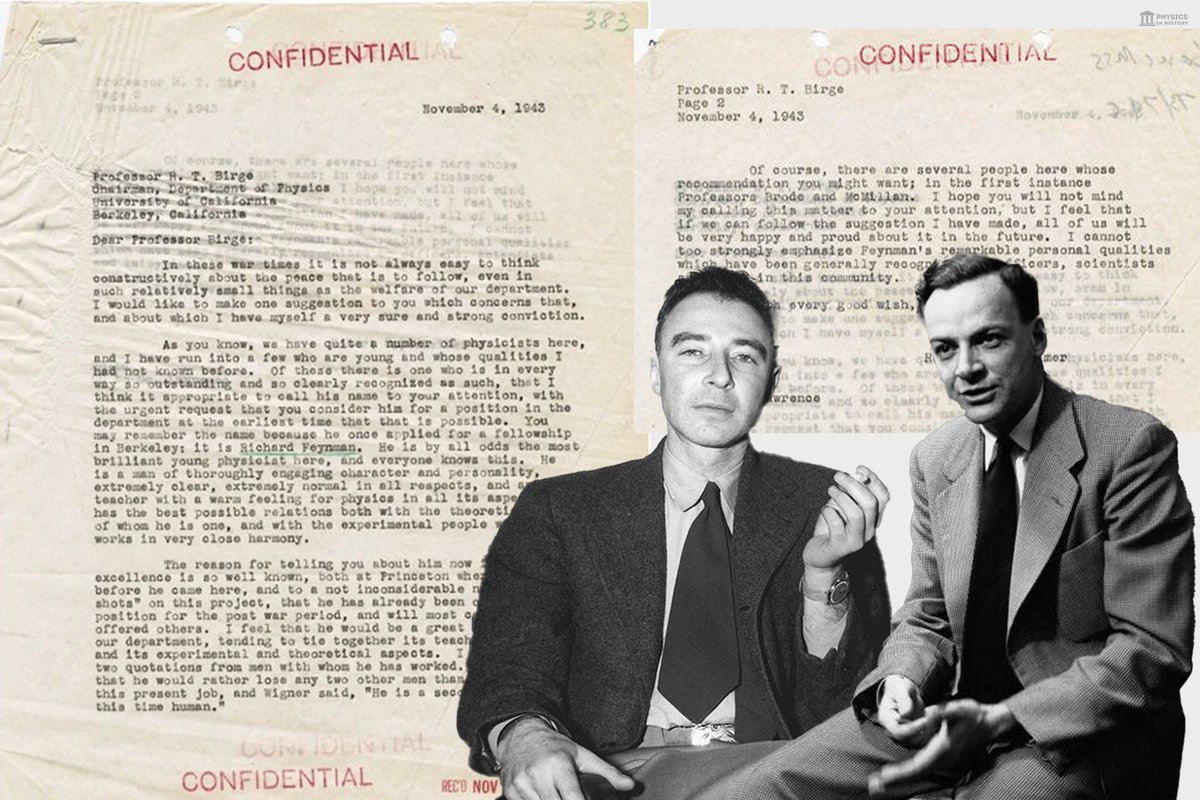
J. Robert Oppenheimer's Recommendation Letter for Richard Feynman (1943)✍️
Dear Professor Birge,
In these war times it is not always easy to think constructively about the peace that is to follow, even in such relatively small things as the welfare of our department. I would like to make one suggestion to you which concerns that, and about which I have myself a very sure and strong conviction.
As you know, we have quite a number of physicists here, and I have run into a few who are young and whose qualities I had not known before. Of these there is one who is in every way so outstanding and so clearly recognized as such, that I think it appropriate to call his name to your attention, with the urgent request that you consider him for a position in the department at the earliest time that that is possible.
You may remember the name because he once applied for a fellowship in Berkeley: it is Richard Feynman. He is by all odds the most brilliant young physicist here, and everyone knows this. He is a man of thoroughly engaging character and personality, extremely clear, extremely normal in all respects, and an excellent teacher with a warm feeling for physics in all its aspects. He has the best possible relations both with the theoretical people of whom he is one, and with the experimental people with whom he works in very close harmony.
The reason for telling you about him now is that his excellence is so well known, both at Princeton where he worked before he came here, and to a not inconsiderable number of “big shots” on this project, that he has already been offered a position for the post war period, and will most certainly be offered others. I feel that he would be a great strength for our department, tending to tie together its teaching, its research and its experimental and theoretical aspects.
I may give you two quotations from men with whom he has worked. Bethe has said that he would rather lose any two other men than Feynman from this present job, and Wigner said, “He is a second Dirac, only this time human.”
Of course, there are several people here whose recommendation you might want; in the first instance Professors Brode and McMillan. I hope you will not mind my calling this matter to your attention, but I feel that if we can follow the suggestion I have made, all of us will be very happy and proud about it in the future. I cannot too strongly emphasize Feynman’s remarkable personal qualities which have been generally recognized by officers, scientists and laity in this community.
With every good wish,
Robert Oppenheimer
Read more 📄: https://t.co/JcAA9bJZ4o
📷 Feynman: Caltech Archives
You don’t reach this point without the help of a lot of people. Thank you family, friends and fans for a lifetime of stories and storytelling.
I am honored. #bydhttmwfi