Treating a minor shift in a trace gas as a 'code red' planetary emergency—while ignoring the massive planetary buffer systems—is a failure of perspective.
The oceans are a vast thermal and chemical flywheel. Because they are so vast and deep, their capacity to absorb, store, and redistribute heat and gases operates on centuries-long timescales. This dwarfs the short-term models of centralised bureaucracies. For example, the oceans contain 86% of the world's global carbon reservoir; yet the atmosphere holds a mere 1% to 2%.
Science itself shows that human-produced CO₂ adds only around 3.4% to the full annual global carbon cycle. But natural climate variation has been enlisted by globalist power brokers to drive a campaign blaming CO₂ for a future catastrophe. The roles of water vapor, clouds and oceans are being bypassed. They don't suit the agenda. Yet oceans cover 72% of the Earth's surface to an average depth of 2.3 miles and contain 91% of all the world's retained heat energy. The atmosphere retains hardly any.
They are so vast that all variations in concentrations of soluble CO₂ are readily absorbed into the marine sink. As oceans warm they retain less CO₂; when they cool, they retain more. This is known as Henry's Law. Natural processes heavily influence how much CO₂ resides in the atmosphere at any given time.
The human contribution, while measurable, is a fractional perturbation within a massive, dynamic system dominated by water vapor, cloud albedo and the sheer thermal inertia of the oceans. This also overlooks the complex, self-regulating feedback of cloud albedo.
As evaporation increases, cloud cover expands, acting as a natural planetary shield that reflects incoming solar radiation back into space—a chaotic, balancing mechanism that a simplified, CO₂-centric model cannot fully capture.
Water vapor is the Earth's most abundant greenhouse gas, making up to 4% of the atmosphere by volume in the tropics. This is 40,000 ppm compared with CO₂ at roughly 420 ppm. Yet water vapor has been minimised by a simplified political narrative because, unlike well-mixed atmospheric gases, it is not uniformly distributed—its concentrations are constantly shifting over the vast expanses of the seas.
We seem to know more about the topography of the Moon than the geography and dynamics of the deep oceans. The tropics and rainforests are accepted zones of peak water vapor. These are also primary zones for storm activities—like monsoons and seasonal rainfall—essential to atmospheric turbulence and heat redistribution.
Basic physics reveals that water vapor and clouds account for a vast majority of Earth's natural greenhouse effect—roughly 70% to 85%—while CO₂ is a minor shadow at around 9% to 12%. Its role is important to the atmospheric mix, but this doesn't mean it runs the world's climate. Water absorbs and traps infrared radiation on a massive scale, playing the dominant role in weather, cloud formation and precipitation.
The 'global warming or bust' agenda minimises the importance of cloud albedo and regional complexity. By flattening water vapor into a simple mathematical slave to CO₂, global models ignore the chaotic, self-regulating dynamics of cloud formation (which reflects sunlight and cools the earth) and localised tropical dynamics.
A decentralised, water-dominated climate driven by regional ocean currents and chaotic cloud formations cannot be managed, taxed or centralised. This offers no financial leverage for global governance.
A well-mixed, uniform trace gas like CO₂, however, provides the perfect metric for a centralised system and a whopping (and unnecessary) $275 trillion grid duplication.
Image: The oceanic flywheel; Deep-sea thermohaline circulation currents that regulate global heat distribution over centuries. Source: ttsz / Getty Images
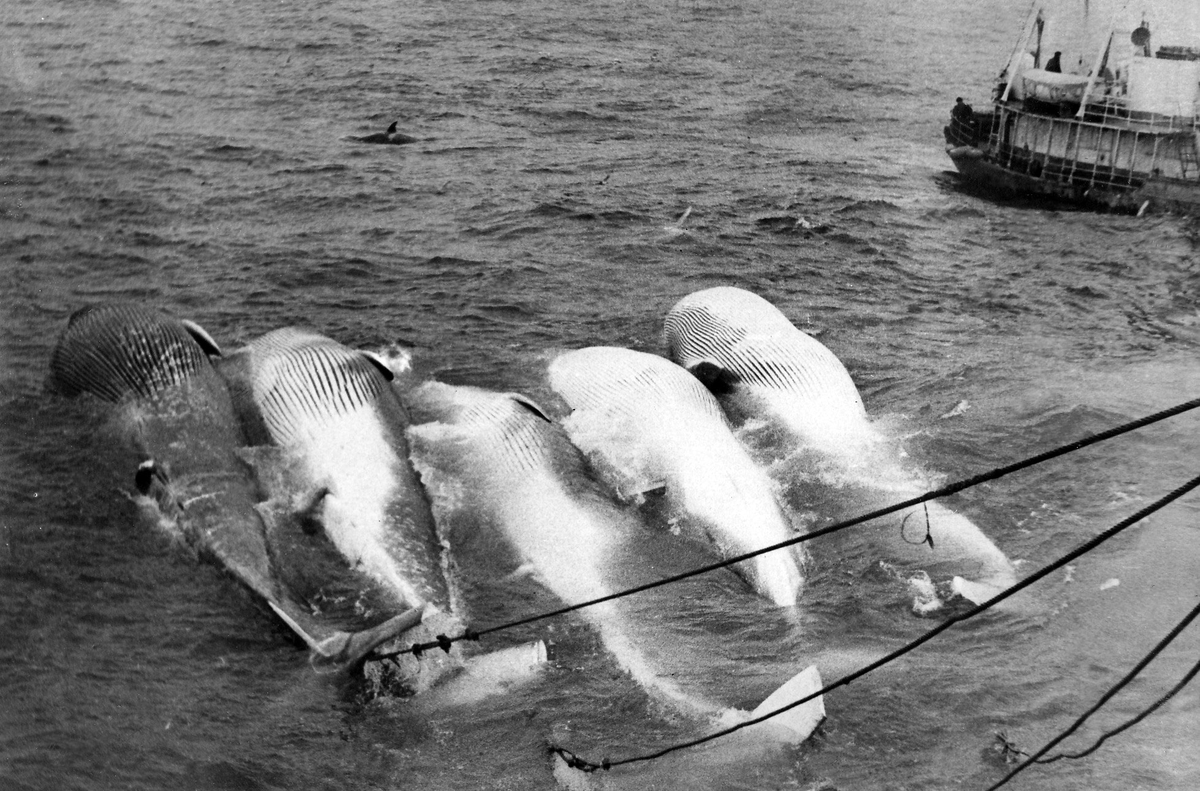
The Soviet whaling fleet killed 180,000 whales between 1948 and 1973, delivering rotten carcasses that nobody wanted to eat. Soviet citizens had zero demand for whale meat. The ships hunted anyway, fulfilling quotas handed down from central planners who counted tons of dead whale as economic output.
This was bureaucratic box-checking that nearly drove multiple whale species to extinction. Soviet whalers targeted endangered right whales and humpbacks specifically because they were larger, helping them hit tonnage targets faster. The meat rotted on deck during long voyages back to port, where officials dutifully recorded the numbers and sent reports to Moscow declaring another successful harvest.
Central planners measured success in tons harvested, not consumer satisfaction or long-term sustainability. Factory managers got promoted for exceeding whale quotas, regardless of whether anyone actually wanted whale meat (they didn't). The feedback mechanism that normally connects production to human needs had been severed entirely. When bureaucrats replace market prices with administrative targets, you get mass slaughter with zero purpose.
You still see this today every time politicians promise to "create jobs" in industries that lose money year after year. When government agencies measure their success by dollars spent rather than problems solved. When university administrators chase enrollment numbers instead of student outcomes.
Remove the profit motive and price signals, and you get 180,000 dead whales rotting in the sun while commissars celebrate meeting their targets. You don't get rational planning.
Socialism is fundamentally destructive to the environment and inevitably leads to ecological disasters.
Anytime somebody claims Bitcoin is a Ponzi scheme ask them to answer coherently the points in this article.
It dismantles completely their assertion with data and logic.
🚨 Diesen Chart muss jeder gesehen haben.
Das ist kein Modell. Keine Prognose. Keine Linie die jemand hübsch durch eine Excel-Tabelle gezogen hat. Das ist was tatsächlich passiert ist – #Bitcoin Preis seit 2010, gemessen gegen Metcalfe's Law.
Die Grundidee: Der Wert eines Netzwerks steigt proportional zum Quadrat seiner Nutzer. Jede neue Wallet, jeder neue Holder, jeder neue Teilnehmer macht das Netzwerk überproportional wertvoller. Telefonnetz-Logik aus den 80ern – nur dass das Netzwerk hier $1,37 Billionen schwer ist.
Timothy Peterson (@nsquaredvalue) hat das Modell über Jahre verfeinert. Und sein Modell zeigt was passiert wenn man den BTC-Preis in "root time" statt "log time" plottet: Jedes Mal wenn der Preis die untere Begrenzung berührt hat – 2011, 2013, 2017, 2021 – war das ein Kapitulationspunkt.
Und jetzt schau wo wir stehen.
Unter $70.000 – das sind 46% unter dem ATH von $126.080. Peterson hat am 1. Dezember gepostet: Zum ersten Mal seit fast zwei Jahren handelt #Bitcoin unter seinem Netzwerk-Value. Historisch gesehen war der Preis in 96% aller Fälle ein Jahr später höher wenn das passiert ist. Durchschnittlicher Gain: +132%.
Ich finde den Ansatz aus einem Grund überzeugend. Die meisten Modelle versuchen den Preis vorherzusagen. Metcalfe misst etwas das sich beobachten lässt – Netzwerkgröße, Adoption, tatsächliche Nutzung. Das ist kein Kristallkugel-Modell. Das ist Mathematik die sich seit 15 Jahren an echten Daten bewiesen hat.
Heißt das wir haben den Boden gesehen? Keine Ahnung, ehrlich. Geopolitik kann jede Metrik überfahren – Iran-Spannungen, Ölpreis, Macro. Aber wenn du dir Sorgen machst ob #Bitcoin langfristig tot ist: Dieses Netzwerk wächst. Die Adoptionskurve zeigt nach oben. Und der Preis liegt aktuell unter dem was das Netzwerk wert ist.
Die Frage die ich mir stelle: Wenn dieses Modell seit 2010 bei jedem Kapitulationspunkt richtig lag – warum sollte ausgerechnet dieses Mal anders sein?
This is a must-watch exchange.
Rep. Michael Cloud (R) completely dismantles a Democratic pastor over what the Bible actually teaches about charitable giving.
When asked about the parable that comes before the verse she references, she has no idea what he’s talking about.
We have to print money in order to pay interest on the money we’ve previously printed
But sure…. a decentralized, finite, instantly verifiable network that conducts a complete audit of itself every 10 minutes is the “Ponzi scheme”
#Bitcoin is a profound scientific breakthrough, a singular human achievement that should inspire generations to come. We must study it. We must teach it. We must understand it.
Korok Ray on the launch of the Bitcoin Education Institute @BTCedu, a new nonprofit advancing Bitcoin education.
Dear conspiracy theorists.. sadly, you were right again…
🚨 Dr. Robert Malone: Declassified Docs Expose U.S. Military Releasing 282,800 Radioactive Ticks, Sparking Lyme Disease Epidemic and 40-Year Cover-Up
- The U.S. military released 282,800 radioactive lone star ticks (labeled with Carbon-14) across Virginia sites along bird migration routes from 1966–1969; before the experiments, these ticks were not found north of the Mason-Dixon Line, but they soon established populations on Long Island for the first time.
- CIA operatives under Operation Mongoose (1962) dropped infected ticks on Cuban sugarcane workers via nighttime C-123 flights; one operative’s infant son suffered a life-threatening 105°F fever requiring emergency tracheotomy after family contamination.
- Plum Island Animal Disease Center (under Army Chemical Corps) conducted open-air tick experiments with containment failures: test animals mingled with wild deer and birds, and deer from nearby Lyme, Connecticut, swam to the island while birds fed on insects—Lyme, CT, is only 13 miles away and became the namesake epicenter in 1975.
- Willy Burgdorfer (who identified the Lyme bacterium in 1982) discovered a second pathogen called the “Swiss Agent” (Rickettsia helvetica) in patient samples but deliberately omitted it from his published research; materials found in his garage after his 2014 death proved 40+ years of suppression of co-infection data that could explain chronic Lyme treatment failures.
- Under Project 112 (1962–1974), the Pentagon ran 134 bioweapons tests (plus hundreds more classified), investing $3–4 billion and building capacity to produce 100 million infected mosquitoes and 50 million fleas per month; the program was “categorically denied” by the military for nearly 50 years until 2000.
- Operation Big Itch (1954) successfully dropped 670,000 tropical rat fleas from cluster bombs to prove the weapons could incapacitate an entire battalion-sized target area for up to a full day.
- Multiple tick-borne diseases (Lyme arthritis, babesiosis, Rocky Mountain spotted fever) erupted simultaneously around Long Island Sound right after the tick releases (1968–1972), clustering statistically around Plum Island—an anomaly the article attributes to possible lab enhancement or accidental release (45% probability per the analysis).
- Burgdorfer, recruited in 1951 for tick weaponization and linked to Nazi scientists brought via Operation Paperclip, left a cryptic note before dying: “I wondered why somebody didn’t do something,” and in 2013 video testimony insinuated an accidental release while admitting he “didn’t tell you everything.”
These claims are based on a review of 41 primary declassified sources, testimony, and suppressed research presented in the article.
https://t.co/zZbnLlEcw4
In 2021, a headline like this on the front page of a Pulitzer Prize winning paper would've been unthinkable
But backed up by data from Cambridge, Duke University + 23 peer reviewed studies showing Bitcoin mining's environmental benefits, the media have changed their tune also
H/t to @ContingencyBTC for sharing the article
About every 1,000 years (of the Eddy solar cycle) humans were surely saying the same thing - again - and again - and again ... it's the warmest ever! Today we know about the cyclic nature of the Eddy (and Bray) cycle. Our education system lags science by many years.
Holy sh*t.
Stop what you’re doing. Give yourself 3
minutes. Listen to this.
Marco Rubio 2015.
He called it.
He called it word for word, like a play-by-play.
Most people think inflation is just "prices going up."
There's actually a hidden order to how new money moves through the economy. Your position in that order determines whether you win or lose.
It's called the Cantillon Effect.
Here's how it works...
When new money enters the system, it doesn't land equally in everyone's pocket. It flows from the source outward, losing purchasing power at every step.
Level 1 — Banks & Financial Institutions: They get the money first. Before prices adjust. Before anyone else even knows it exists. They deploy it immediately into assets.
Level 2 — Large Corporations & Contractors: They borrow cheap, expand fast, and lock in favorable terms before the market reprices.
Level 3 — Asset Prices Reprice: Real estate. Equities. Hard assets. The early recipients have already bought in. Now prices rise for everyone else.
Level 4 — Consumer Prices Catch Up: Your grocery bill. Your gas. Your rent. Costs climb while your paycheck holds still.
Level 5 — Wages Adjust Last: By the time wages catch up, the purchasing power is already gone. You're running a race where the finish line keeps moving.
This is the inflation tax most people never discuss. Structural, predictable, and baked into every fiat monetary system in history.
The Cantillon Effect requires two things: new money and a centralized party with the power to issue it. Bitcoin has neither. Its supply is fixed, its issuance is governed by protocol, and no institution gets preferential access. Every participant operates on the same terms.
Sound money neutralizes the Cantillon Effect.
Bitcoin is the soundest money ever created.
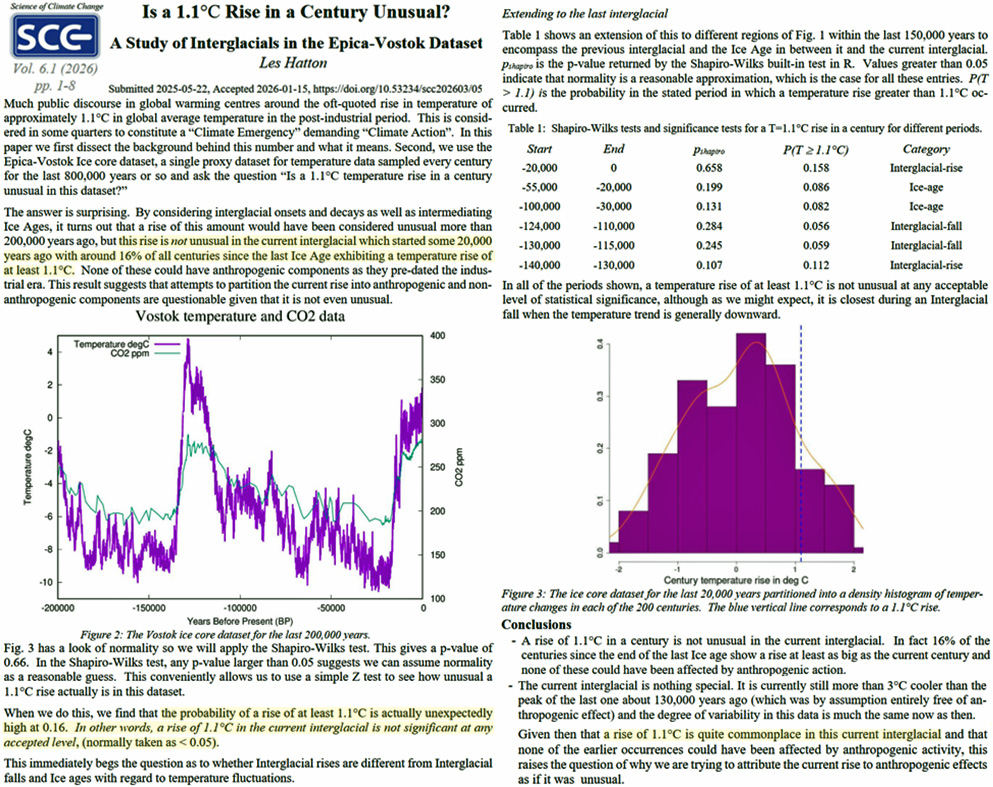
Warning. This graph only shows model forcing with least CO2 forcing, which essentially mimics natural change. For a true picture of the utter failure of climate models, just look at the green line (Model temperature) in this diagram - compared to the global Temperature (black line) and CO2 ( the red line).
Modern "global warming" a historical yawn🥱: New study says claimed recent warming is not unprecedented or even significant.
Discussion: https://t.co/eKIxSLMdR9
Study: https://t.co/gs30HdFcvm
Everyone needs to be aware of this
Journalist Avery Daye exposes the history of Minnesota Rep Ilhan Omar
“Ilhan Omar — I figured not enough people know about her family’s history, so let’s recap:
Her dad and her grandfather were both high-ranking military officials in the Barre regime, which killed over 200,000 people. They’re most famous for the Isaaq genocide — it was the worst of the worst: aerial bombings, executions, man-made famine.
People massively suffered under this regime, with the help of people like Ilhan Omar’s family who supported the regime and carried out this, this horror.
— They have family ties to this guy known as the Butcher of Hargeisa, and his whole shtick was “kill all but the crows.””
“So the suffering of the people of Somalia was so bad that there was a civil war and the regime was overthrown. Her family fled first to Kenya and then Minnesota, claiming they’re like these asylum seekers.
These poor, poor people. No, no, no, no. They were fleeing to escape being held accountable for what they did. She was not oppressed. Her family, they were the oppressors.”
“So for the Democratic Party to have her as a representative is insane to me — and the way that they’ve like rebranded her as all this poor refugee? No, no. She wasn’t a refugee of war. Her family created the war.”
Mises obliterated the entire socialist project in 1920 with one devastating insight: "Where there is no free market, there is no pricing mechanism; without a pricing mechanism, there is no economic calculation." The socialists spent the next century pretending this problem didn't exist while their economies collapsed around them.
And yet here we are, watching politicians promise they can "fix" healthcare, housing, and energy markets through central planning. They can't even calculate the cost of their own programs correctly — how exactly are they going to allocate resources across an entire economy?
Every Venezuelan breadline, every Soviet grain shortage, every Chinese famine was just Mises being proven right in the most brutal way possible. But sure, let's try democratic socialism this time. What could go wrong?
There is enough for everyone who wants to participate.
Bitcoin is fundamentally about sharing and building together, not competing against one another.
Yes, there is a sense of urgency as the network grows and diminishing returns—typical of network effects—begin to appear. But networks thrive through participation, not exclusion.
California's $2.2 billion solar plant is shutting down.
Once hailed as a breakthrough, the Ivanpah Solar Facility in the Mojave Desert is now a case study in failed technology and environmental risk.
Built with $1.6 billion in federal loans in 2014, the plant was hailed as a symbol of America's clean energy future.
It used 173,000 mirrors to focus sunlight onto three massive towers, heating fluid to drive steam turbines.
Complicated.
Expensive.
And it never delivered on its promise. After just 11 years, the technology is now obsolete.
On top of that, the facility became notorious for its environmental toll, with estimates of at least 6,000 birds incinerated each year by the concentrated beams.
The promise was affordable, reliable, green power. The reality was high costs, technical failures and ecological damage.
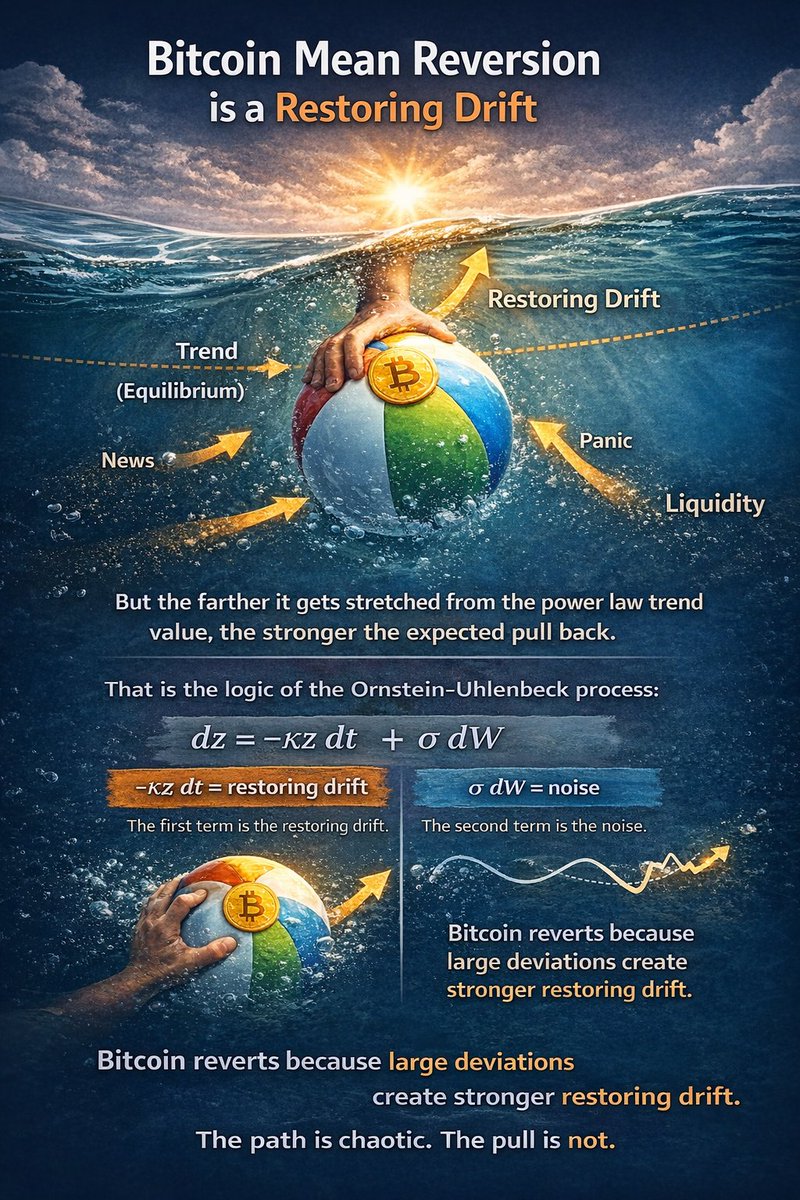
Bitcoin mean reversion is a restoring drift.
It is like a beach ball held under water.
The trend is the equilibrium.
Price gets pushed around by news, leverage, liquidity, and panic.
Important concept:
But the farther it gets stretched from the power law trend value, the stronger the expected pull back.
That is the logic of the Ornstein-Uhlenbeck process:
dz = -κz dt + σ dW
The first term is the restoring pull.
The second term is the noise.
Most people see the noise and think there is no structure.
Wrong.
Noise does not remove the anchor.
It just makes the path messy.
Bitcoin reverts because large deviations create stronger restoring drift.
The path is chaotic.
The pull is not.
Why Bitcoin’s Long-Term Price Follows a Power Law
Bitcoin looks chaotic short term.
But zoom out and a clear structure appears.
Growth proportional to size.
In many systems the rate of change scales with the size of the system:
dP(t)/dt ∝ P(t)
When growth depends on current size, it compounds.
You see this everywhere:
• populations
• cities
• internet networks
• capital markets
Bitcoin adoption behaves the same way.
Users → liquidity → security → capital → more users.
That feedback loop produces multiplicative growth.
Now add the constraint.
Bitcoin’s supply is fixed:
≈ 450 BTC per day
≤ 21 million total
When demand compounds but supply cannot expand, price must absorb the imbalance.
The network grows.
Supply cannot.
So the adjustment happens in price.
Scale invariance.
Systems that grow through multiplicative processes often become scale invariant.
That means the structure looks similar across different sizes.
On a log-log plot, Bitcoin’s long-term fit is remarkably strong:
R² ≈ 0.96
Examples:
• city size distributions
• lightning branching
• river networks
• crack propagation in materials
Different systems.
Same scaling logic.
Mathematically this property leads to a power law.
The scaling law.
If growth scales with system size over time, the differential relationship becomes
dP(t)/dt ∝ P(t) / t
The solution is a power law:
P(t) = a · tᵇ
On log-log axes this becomes a straight line.
That is why log-log charts reveal the structure that linear charts hide.
Why cycles happen.
Real markets experience shocks.
Liquidity
leverage
news
macro events
These create deviations from the structural trend.
Those deviations behave like a mean-reverting process:
dz = −κz dt + σ dW
Large deviations create stronger restoring drift.
So price oscillates around the structural growth path.
The path is noisy.
The structure is not.
Bitcoin combines four ingredients that naturally produce power laws:
• multiplicative network growth
• a hard supply constraint
• scale-invariant adoption
• periodic supply halvings
The cycles are noise.
The power law is the signal.