⚡️🔬📣 Excited to share our new @Nature article building and evaluating PathChat, a multimodal generative AI copilot and chatbot for human pathology. Article: https://t.co/OAIG31ofWJ Open Access Link:
https://t.co/tvw6W6qmT9
We leverage our previous success in building foundation models for computational pathology such as UNI / CONCH and combine it with the advancements of large vision language models and generative AI to enable PathChat to answer diverse pathology-related queries. We assessed PathChat using both multiple choice diagnostic questions and open-ended questions.
Congratulations to @MYLu97@chenbowen118 @DFKW_MD @richardjchen and everyone else who contributed to this work.
Also see blog post from @MYLu97 about this work: https://t.co/exjpKMnrQp , also teasing the development and preview of PathChat 2, a successor to PathChat 1 bringing new capabilities and substantially improved performance to the state-of-the-art.
Congratulations to Dr Mary Scott and Dr Wei Liu from @Vetrielab for their study of the role of p53 in chronic myeloid leukaemia (CML) stem cells published today in Nature Communications. @bloodcancer_uk@CR_UK@UofGCancerSci@POG_LRC 🥳🥳
https://t.co/BsaJrX4vbb
🆕Paper by Aldo Bader and Martin Bushell shows for the first time that scars introduced into the DNA sequence following double strand breaks are not just at the break site but also at distance from the damage site
https://t.co/2mJpcBN29B
We aim to utilize this methodology to gain a better understanding of genome organization and other cellular processes such as epigenetic modification and DNA damage.
Our recent publication in Nanoscale journal presents a new approach for studying the interactions between chromatin and nuclear lamins in the single nuclei at super resolution. Great collaborative effort!
https://t.co/xVzDXJM0mM
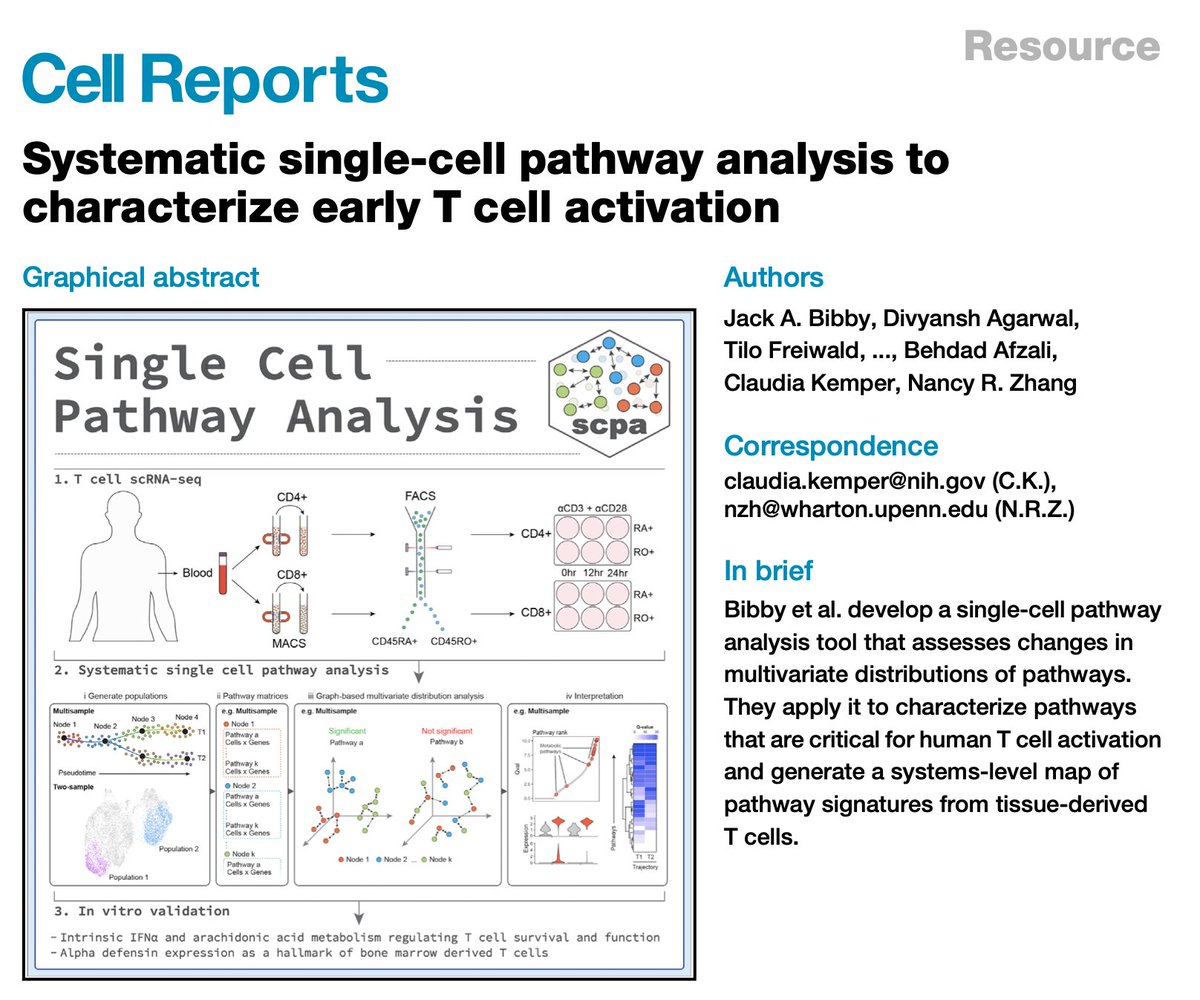
Hi all. We're happy to share our latest paper, just published in @CellReports. We developed a scRNA-seq pathway analysis package and applied it to look at T cell activation in vitro and in tissue. Here's the paper: https://t.co/7NIzcW2C2F.
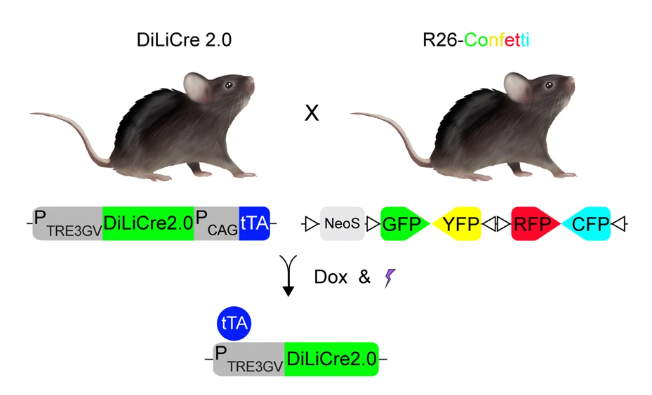
Check out our recent paper @NatureComms on the new DiLiCre mouse model that can be applied for in vivo light-induced mutagenesis and positional cell-tracing by intravital microscopy. Congrats to Miguel Vizoso and all co-authors!🔬🎉
https://t.co/uIUH9bHT8a
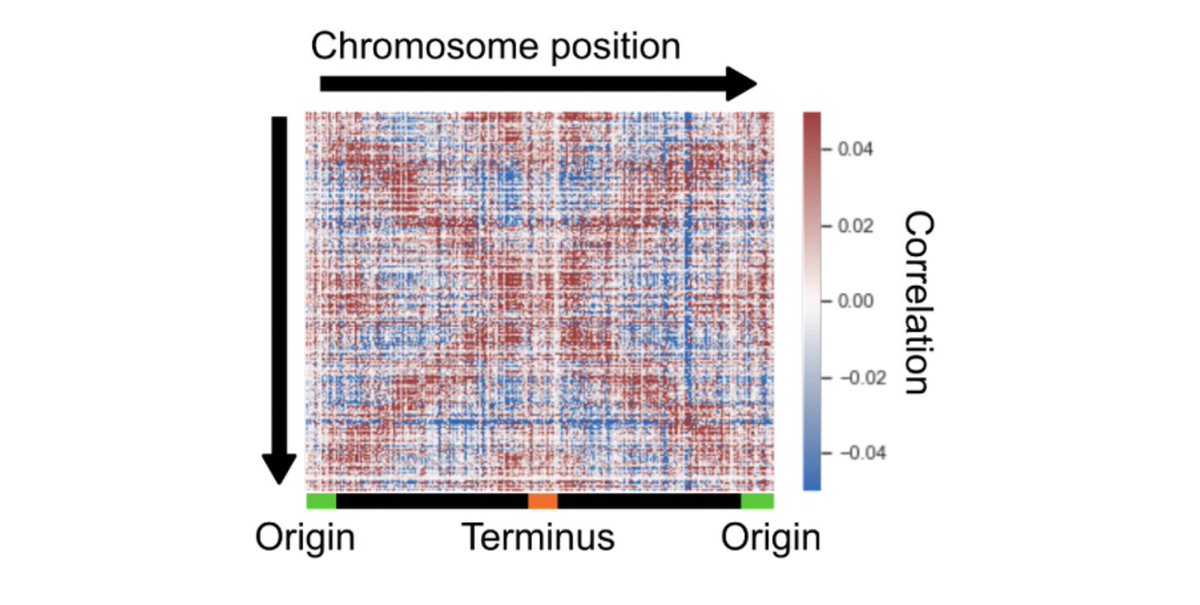
New paper! It’s absolutely wild what you see when studying bacteria using single-cell RNA-Seq! Unlike in eukaryotes, we found a genome-scale pattern of correlations among genes showing a strong dependency on global chromosomal locations.
https://t.co/Rlj5s1NN6f @AndrewPountain